
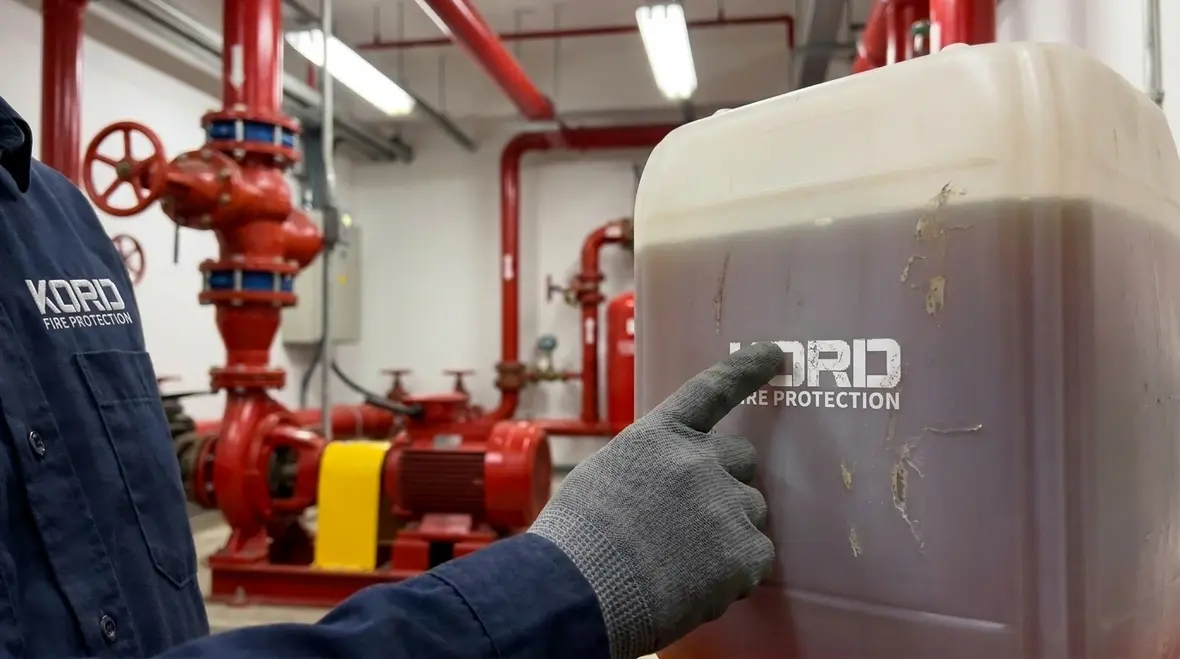
NFPA 18 Section 9.3: Labeling Requirements for Wetting Agent Products
Quick Answer: NFPA 18 section 9.3 sets specific labeling expectations for wetting agent products used in fire protection systems to ensure users can identify contents, dilution, hazards, and compatibility. Proper labeling supports safe handling, correct mixing, and reliable inspection and maintenance across commercial facilities.
For a broader system view before getting into labels, it helps to review this NFPA 18 overview on wetting agents, which connects the chemical side of the system to practical fire protection use in the field.
What NFPA 18 section 9.3 is trying to prevent
NFPA 18 addresses fire protection systems and related hazards with a strong focus on operational reliability. Section 9.3 targets a common real world failure chain: unclear or incomplete wetting agent labels lead to wrong product selection, incorrect dilution ratios, improper storage, and incorrect maintenance practices. Those errors can degrade foam or wetting performance, increase corrosion risk, and complicate troubleshooting after discharge testing.
For facilities with industrial hazards, large retail occupancies, warehouses, and mixed-use properties, the practical outcome is straightforward: labels must enable maintenance teams and contractors to confirm the correct chemical, the correct concentration, and the correct use conditions without guesswork.
In this context, the NFPA 18 section 9.3 wetting agent product labeling requirements function as a verification layer that supports ongoing compliance, documentation, and safe handling during inspections, refills, and system modifications.
Where wetting agent labeling matters most in commercial operations
In day to day operations, wetting agent labels directly influence four high risk workflows:
- Receipt and storage: Verifying that the correct agent arrived, is compatible with the system, and matches the facility’s chemical inventory and SDS.
- System refilling and dilution: Ensuring the dilution method and target concentration are followed exactly to maintain hydraulic and fire performance characteristics.
- Inspection and testing support: Providing traceability so technicians can confirm what is installed before conducting function tests, sampling, or flushing.
- Maintenance and component compatibility: Avoiding chemical mismatches that can affect seals, pumps, valves, and piping surfaces.
When labeling fails during any of these steps, it often surfaces later during service calls as performance loss, recurring alarms, or corrosion indicators. Tight labeling controls reduce those outcomes by making the correct product and concentration verifiable at the point of use.
What the labels must communicate under section 9.3
NFPA 18 section 9.3 is focused on usability and traceability. Wetting agent labels should clearly communicate information that allows authorized personnel to apply the product correctly and safely. While the exact wording varies by product and manufacturer, commercial compliance typically expects labels to include at least the following types of information:
1) Product identity and traceability
The label should identify the product unambiguously, including manufacturer identification and product designation. This supports inventory controls and makes it possible to verify that the chemical used during refills matches what was originally installed.
2) Concentration, dilution guidance, and intended use
The label should support correct dilution and concentration targets. This is the most operationally sensitive element because wetting agents are not “one size fits all.” Incorrect concentration can reduce wetting effectiveness, change solution viscosity and pump behavior, and impact performance in time critical fire scenarios.
3) Hazard communication and handling requirements
Labels should communicate hazards and required safe handling information so contractors and facility staff can manage exposure controls. This helps align chemical handling procedures with training, PPE selection, and storage rules.
4) Compatibility and system limitations
Labels must support safe use within the boundaries of the product’s compatibility. In practice, this means the label should not leave room for interpretation about whether the agent can be used with the facility’s system configuration, materials, and maintenance practices.
5) Batch or lot identification, shelf life, and storage conditions
For commercial facilities, labels often need to support traceability through batch or lot numbers. Storage conditions and effective life information also reduce the risk of using degraded products after long storage periods, shipping delays, or temperature excursions.
To align wetting agent work with broader system requirements, facilities typically cross check labeling with manufacturer installation instructions and SDS. For a practical overview of how wetting agents integrate into fire protection system design and use, see: NFPA 18 overview on wetting agents.
Common labeling and compliance failure points
Even when manufacturers provide labels, field failures occur during receipt, storage, transfer, and maintenance. The most common issues seen in audits and service reviews include:
- Labels damaged or unreadable: Labels become faded, detached, or smeared during transport or bulk storage. Technicians lose traceability during refills.
- Decanting or in house repackaging: If product is transferred into unlabeled containers or generic totes, the facility creates an immediate compliance gap and safety hazard.
- Out of date dilution records: Facilities sometimes retain old internal SOPs or mixing charts that do not match the current product brand or formulation.
- Wrong product in the chemical inventory: Similar packaging and procurement cycles lead to incorrect agent use, especially across multiple sites or contractors.
- Missing lot and effective life verification: Without lot or shelf life data, the maintenance team cannot confirm whether the chemical remains within usable conditions.
- Label details conflict with system requirements: If labels provide inconsistent dilution guidance relative to system design documents, teams may default to assumptions.
Commercial facilities reduce these risks through chemical management controls such as dedicated storage areas, inventory tracking, labeling audits before refills, and controlled transfer procedures. A maintenance partner should also verify documentation during periodic service visits.
How to implement labeling controls that stand up to inspections
Compliance does not end at the container label. The facility’s process must ensure that labeling remains meaningful during real maintenance cycles. A robust approach includes:
Document traceability across the full supply and service chain
Facility records should link wetting agent product identifiers to refill dates, technician sign off, and any sampling results. This makes it possible to demonstrate what was installed and when, even if labels later degrade.
Use a controlled transfer policy
For any decanting into smaller containers, the receiving container should retain a clear copy of product identity and dilution guidance. If the facility does not use pre labeled containers, it should not repack product.
Integrate label checks into pre work planning
Before system refills or maintenance, technicians should verify that the label matches the approved product and the facility’s system documentation. This aligns work instructions with the installed chemical state.
Ensure staff and contractors follow the same verification steps
Many failures occur when subcontractors bring products that are “close enough” in appearance. Standardization requires a defined acceptance checklist that focuses on identity, dilution method, hazard information, and compatibility statements.
Kord Fire Protection supports commercial compliance through ongoing testing, maintenance planning, and documentation practices designed to keep wetting agent systems reliable. Where applicable, integrating service schedules with broader inspection practices also reduces the risk of skipped verification steps. For facility based service support in Australia, see: Australian fire sprinkler services.
For additional industry context on fire pump systems and how water delivery performance connects to overall fire protection reliability, refer to fire pump room inspection issues and fixes.
FAQ: NFPA 18 section 9.3 wetting agent product labeling requirements
Next step: Get labeling and maintenance alignment verified
Commercial wetting agent labeling compliance succeeds when containers, dilution records, and maintenance procedures agree. Kord Fire Protection can help align your NFPA 18 documentation, chemical management controls, and service practices so your system remains reliable between inspections. Contact Kord Fire Protection to schedule a compliance review and maintenance plan update.

Join Our Newsletter!
Get the latest fire safety tips delivered straight to your inbox From our Newsletter.



