
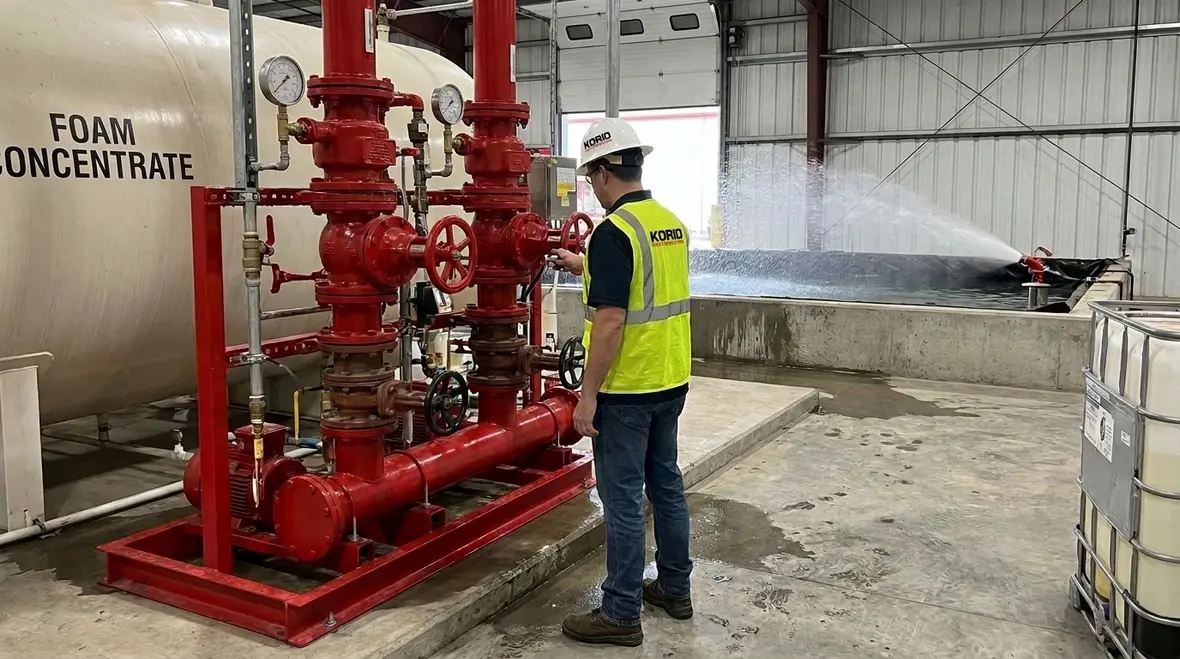
NFPA 16 Section 9.3: How Often Must a Foam-Water System Be Tested?
Quick Answer
NFPA 16 Section 9.3 requires foam water systems to be tested at specific intervals defined by the standard and the system design, with more frequent inspections in critical readiness periods. In practice, most facilities use a formal ITM frequency foam-water systems program to confirm proportioning, flow, and foam quality.
Why Section 9.3 Testing Matters for Foam Water Readiness
Commercial foam water systems depend on precise balance between water supply, foam concentrate chemistry, and delivery hardware. A system can appear “ready” while still failing key performance points, such as incorrect foam concentrate proportioning, partially restricted piping, degraded valves, or changes to water supply pressure that reduce discharge performance.
NFPA 16 Section 9.3 focuses on ensuring that the foam water system functions as designed, not just that it is visually present. This is where an ITM frequency foam-water systems approach becomes operationally important, because readiness depends on repeatable checks performed on a defined cadence.
For the full standard context and how Section 9.3 integrates with the broader document, see NFPA 16 Standard guidance from Kord Fire Protection.
What NFPA 16 Section 9.3 Requires, In Practical Terms
Section 9.3 establishes the testing requirements needed to verify foam water system performance. The intent is to confirm that the system will produce the correct foam solution and that the delivery components will operate within expected limits. The standard generally addresses both periodic testing and the type of performance verification that must occur.
Testing is not only “did it flow?”
Facilities often assume that because water flows during a test, the foam system is functional. NFPA 16 performance checks go deeper. Foam water systems require verification that the proportioning and discharge conditions create the intended foam solution quality and that control components perform reliably.
- Concentrate proportioning accuracy (correct mix of foam concentrate and water)
- Operational functionality (valves, pumps, and control sequences)
- Delivery performance (proper output at the hazard location)
- System stability (repeatable performance across tests)
So, How Often Must Foam Water Systems Be Tested?
NFPA 16 establishes required testing frequencies that facilities must meet, but the exact cadence for your system depends on the system type, hazard requirements, and the inspection and testing plan established under the authority having jurisdiction. The most common compliance failure occurs when testing intervals are determined informally rather than aligned with the standard’s expectations and documented procedures.
In most commercial, industrial, and retail settings, facilities implement a structured ITM frequency foam-water systems plan that typically includes:
- Routine inspections performed on a frequent basis to catch obvious problems early, such as valve issues, obvious leaks, and concentrate condition concerns.
- Periodic functional testing performed at defined intervals to verify system components operate and proportion correctly.
- More comprehensive performance checks scheduled to validate foam solution characteristics and overall delivery performance.
Kord Fire Protection typically supports clients by translating NFPA 16 testing language into a facility specific schedule tied to equipment configuration, seasonal operating considerations, and historical performance. This reduces the risk of “missed” intervals or tests that do not validate the required performance points.
If your team is coordinating this work with broader system support, fire protection services in Southern California can help connect inspection timing, documentation, and corrective actions before small scheduling gaps turn into larger compliance headaches.
Typical Foam Water Test Activities Under an ITM Frequency Program
A compliant ITM frequency foam-water systems program uses repeatable procedures that verify both readiness and performance. Below are the test activities most often tied to Section 9.3 expectations in real facilities, especially where foam water systems protect hazards with variable operating conditions.
1) Verify proportioning and concentrate condition
Proportioning failures can occur without any visible alarms. Concentrate can be contaminated, diluted, or degraded by storage conditions. Foam concentrate can also be affected by time, temperature cycling, and improper handling.
Testing should confirm that the proportioning device or system delivers the specified foam concentrate ratio and that the solution quality remains consistent with the design basis.
2) Operate controls and confirm correct sequences
Foam water systems rely on proper sequence control. Testing should confirm that activation logic, valve actuation, and pump control occur as required. Any hesitation, valve mispositioning, or failure to reach operating conditions can cause unacceptable performance at the hazard.
Common failure points include sticking valves, control wiring or pilot circuit issues, and pump performance drift.
3) Evaluate discharge performance conditions
Even when proportioning is correct, the foam discharge can be compromised by water supply pressure fluctuations, partially blocked strainers, internal piping restrictions, or nozzle condition problems.
Effective testing confirms the system can deliver foam solution to the intended area with expected behavior, rather than only verifying the presence of flow.
4) Document results and track trends
Documentation should clearly capture test dates, measured values where applicable, and any corrective actions. Trend tracking helps facilities avoid recurring failures and supports audit readiness during insurance reviews or AHJ follow ups.
Compliance Challenges That Cause Missed or Ineffective Foam System Testing
Even when facilities schedule tests, compliance can still fail if the test method does not validate required performance points or if the testing interval slips. The most frequent issues in commercial settings include:
- Testing frequency is “calendar based” without system specific alignment, leading to under testing during high risk periods.
- Proportioning is not verified, even though foam quality is the core performance requirement.
- Equipment drift goes unnoticed, such as pump performance changes, valve wear, or pressure variation in supply lines.
- Testing procedures are not standardized, which creates inconsistent results and weak documentation.
- Maintenance is deferred due to downtime concerns, increasing the likelihood of failures during real events.
Kord Fire Protection helps facilities manage these issues by building an ITM frequency foam-water systems schedule that ties testing tasks to the facility’s risk profile and system configuration, then executing with disciplined documentation and corrective action follow through.
How to Build an AHJ Ready Testing Schedule for Your Facility
A strong foam water system testing plan should include the following elements:
- Confirm the system design basis including concentrate type, proportioning method, discharge arrangement, and control sequence.
- Map NFPA 16 Section 9.3 requirements into a written test plan with dates and responsible parties.
- Define acceptance criteria for proportioning and operational performance based on manufacturer and design expectations.
- Coordinate shutdown and operating constraints to avoid deferred work that compromises system readiness.
- Maintain a compliance record package for audits, insurance, and AHJ reviews.
When facilities need ongoing support, Kord Fire Protection provides commercial service coverage focused on repeatability, performance verification, and documentation quality aligned with NFPA 16 expectations. For additional background on the standard, reference NFPA 16 Standard overview and service alignment.
Frequently Asked Questions
Get Your Foam Water Testing Cadence Confirmed
If your facility needs an NFPA 16 aligned testing schedule, Kord Fire Protection can help you confirm your ITM frequency foam-water systems plan, validate performance verification steps, and produce audit ready documentation. Contact Kord Fire Protection to review your current testing intervals, identify gaps in proportioning and discharge performance checks, and schedule corrective actions before the next compliance window.

Join Our Newsletter!
Get the latest fire safety tips delivered straight to your inbox From our Newsletter.



