NFPA 16 Section 8.4 Proportioning Testing for Foam Water
Quick Answer
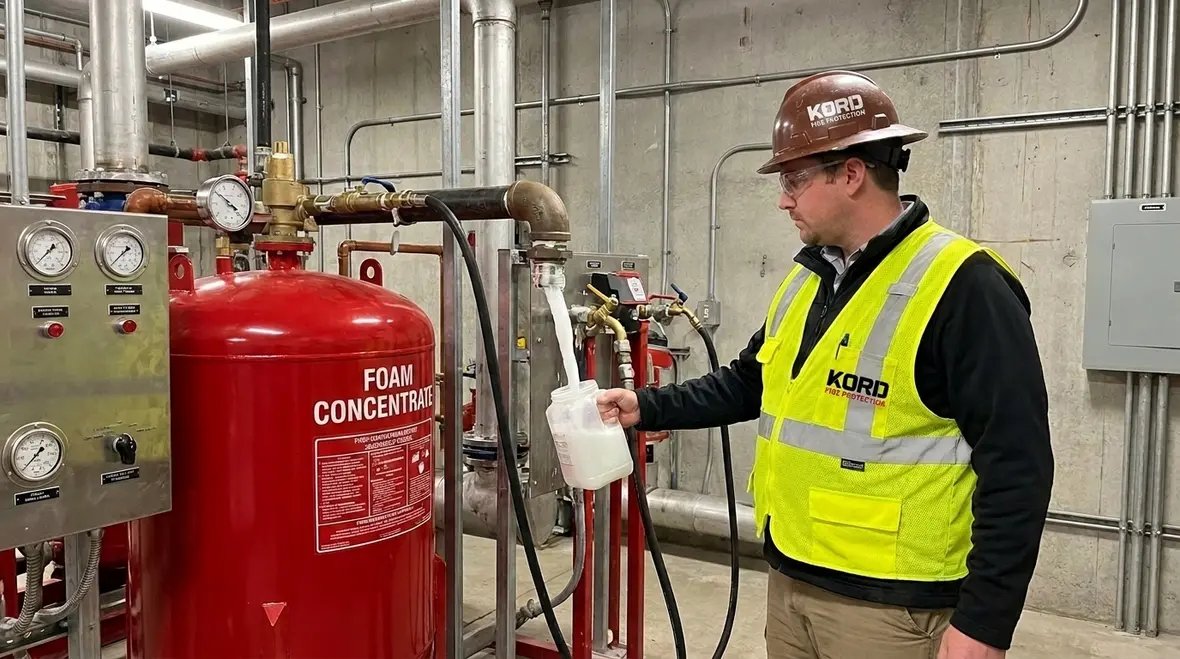
NFPA 16 Section 8.4 requires proportioning system testing for foam water sprinkler systems to confirm the foam concentrate blends correctly with water and delivers the right solution at the right time. In plain terms, this test helps prove the system will work when fire shows up uninvited. Kord Fire Protection can help facilities keep that process accurate, compliant, and far less stressful.
For industrial, retail, and commercial sites, NFPA 16 proportioning testing is not just a box to tick. It is a practical check on whether a foam water system can actually do its job under pressure. The foam water system proportioning test confirms that the right mix reaches the discharge points, while fire suppression foam proportioning verification helps show the system stays reliable over time. In the first 100 to 150 words, that is the heart of the matter, because if the mix is wrong, the whole performance can go sideways faster than a movie sequel nobody asked for.
When a site handles flammable liquids, high value stock, or process risks, testing matters. It protects people, property, and operations. It also helps managers stay ahead of failures that can turn a routine maintenance day into a very bad headline. If your facility needs a broader partner for fire suppression system services, it makes sense to connect that support with foam testing from the start.
Why NFPA 16 Section 8.4 Matters for Real Sites
NFPA 16 Section 8.4 focuses on testing the proportioning system so the foam concentrate and water combine at the correct ratio. That ratio is the soul of the system. Too little foam concentrate, and performance drops. Too much, and the system may waste product or behave outside design limits.
For facilities, the test matters because foam systems often protect hazards that sprinkler water alone cannot handle well. These include fuel storage areas, chemical handling spaces, loading docks, and production zones. Therefore, testing supports both safety and continuity. It also gives duty holders a clearer view of system health before an incident does the ugly paperwork for them.
What a Proportioning Test Checks
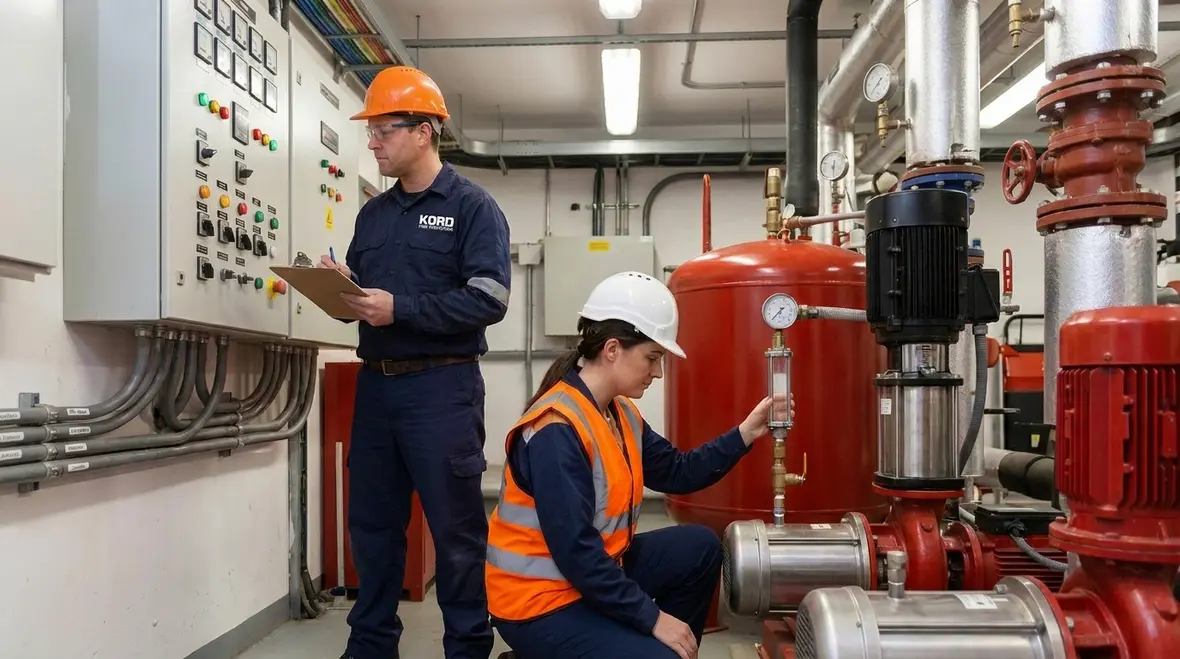
A proper test looks at more than whether pumps turn on. It checks whether the system draws, mixes, and delivers foam solution within the expected range. In many cases, technicians review flow, pressure, concentrate supply, pump operation, valve action, and discharge quality.
System side
- Equipment condition
- Valve position
- Piping health
- Pump performance
- Concentrate storage
Performance side
- Correct blend
- Stable flow
- Expected discharge
- Response that matches the system design
This dual view helps teams see both the hardware and the outcome. After all, a system can look impressive in a plant room and still miss the mark when it counts. Fire does not care how tidy the tag is on the panel.
It also helps explain why proportioning verification belongs in a serious maintenance program, not in the folder of things everyone promises to get to next quarter. Facilities that already prioritize foam fire suppression system maintenance and testing usually have a much easier time spotting drift early and correcting it before performance starts playing tricks.
How the Foam Water System Proportioning Test Works
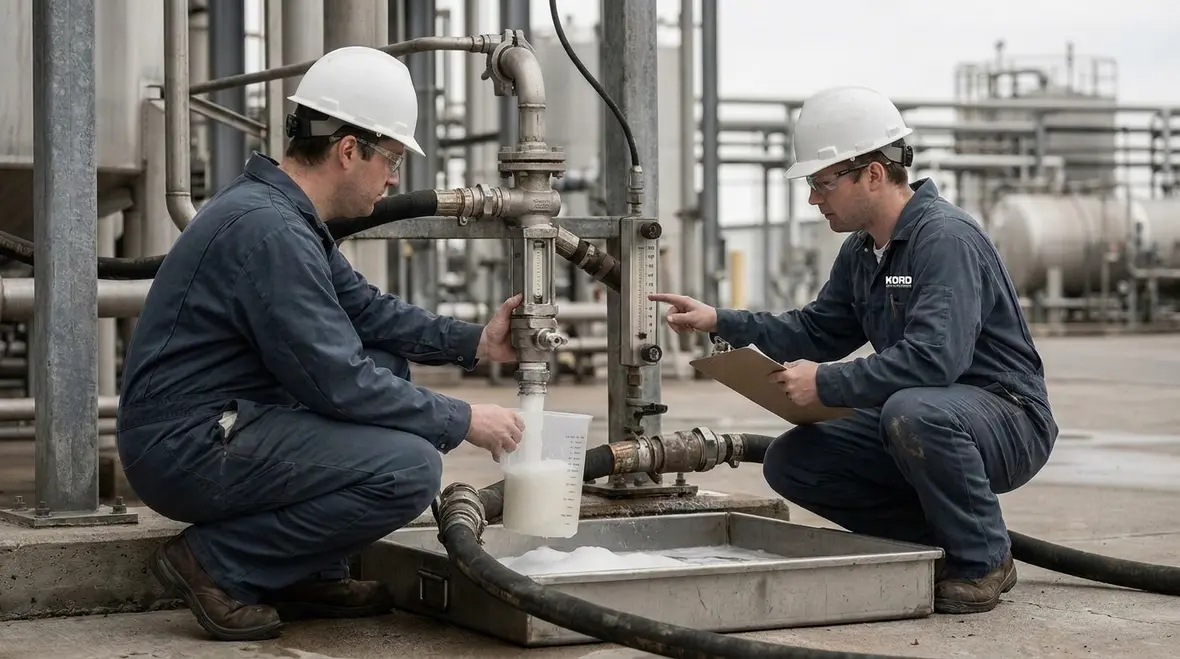
Technicians usually follow a planned sequence. First, they review the system design and site conditions. Next, they isolate the test area and confirm safety controls. Then they run the proportioning system under conditions that reflect real use as closely as possible.
During the test, they verify whether the concentrate enters the water stream at the correct rate. They may measure discharge samples or check indicators that show the blend remains within acceptable limits. In addition, they compare results with the system design and applicable standards.
This process matters because a foam water system can drift over time. Valves age. Pumps wear. Concentrate can settle, separate, or degrade if storage conditions slip. So, the test acts like a health check, only with more hoses and fewer waiting rooms.
A practical testing sequence
- Review drawings, hydraulic intent, and proportioning method
- Confirm concentrate type, condition, and available volume
- Coordinate isolation, drainage, runoff control, and access
- Operate the system under representative flow demand
- Measure ratio performance and compare results with design expectations
- Document findings clearly so future tests can track changes over time
That last step matters more than many people think. Good reporting turns one test into a baseline for the next one. Without clear records, teams end up comparing today’s result to a vague memory and a coffee-stained note that says something like “looked okay.”
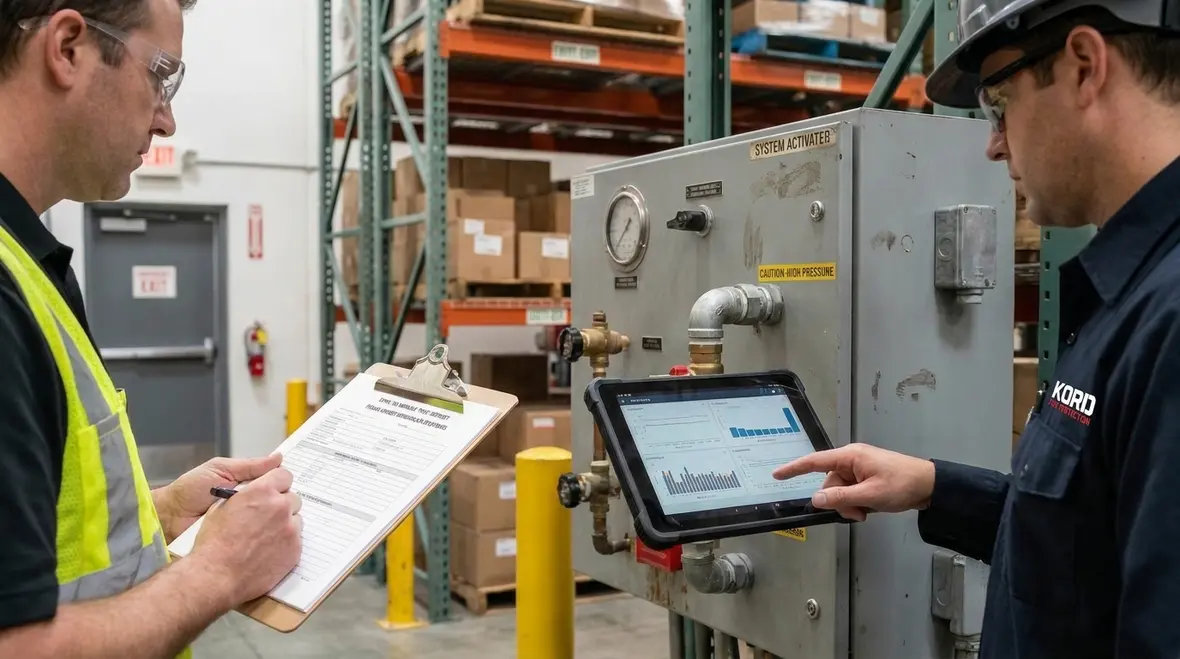
Common Issues Found During Fire Suppression Foam Proportioning Verification
Testing often reveals problems that sit quietly until inspection day. Some are small, and others are the kind that make managers lean back and say, “Well, that is not ideal.” Common issues include blocked strainers, incorrect valve settings, low concentrate levels, pressure imbalance, pump faults, and worn components.
These problems do not always cause a full failure right away. However, they can still reduce system reliability. That is why regular fire suppression foam proportioning verification helps teams fix small issues before they become big ones. In a risk environment, small issues love to become expensive issues.
Issues that commonly turn up
- Blocked strainers that restrict proper flow
- Incorrect valve settings after service or shutdown work
- Low or degraded concentrate affecting ratio quality
- Pressure mismatch across proportioning components
- Pump wear that changes expected performance
- Documentation gaps that make trend tracking harder than it should be
If that list sounds annoyingly realistic, that is because it is. Foam systems are excellent when maintained well, but they are not magic. They are mechanical and operational assets, which means they respond very honestly to neglect.
Why Kord Fire Protection Becomes a Vital Partner
Kord Fire Protection can play a vital role in this service because it helps facilities manage the technical side without guesswork. Their support can cover inspection, testing, fault finding, corrective works, and ongoing maintenance planning. As a result, site teams gain a partner who understands both compliance pressure and operational reality.
Kord Fire Protection can also help coordinate testing around business hours, shutdown windows, and access limits. That matters for busy sites where downtime costs real money. Moreover, a skilled partner can explain results in clear language, which saves time for facility managers, asset owners, and safety teams. Nobody needs a jargon parade when all they want is a system that works.
For readers who want to understand the broader context, Kord Fire Protection also covers the foam fire suppression system guide, which pairs nicely with a testing-focused discussion like this one. And if you are specifically reviewing standard language and application details, it is also worth linking directly to NFPA 16 standard content where available.

What Facilities Should Ask for Before Testing
Before scheduling an NFPA 16 proportioning testing program, facilities should confirm the system design basis, concentrate type, test method, access needs, and any required shutdown coordination. They should also make sure records are ready, because good paperwork can save a lot of headaches later.
Useful planning points
- Current drawings and system data
- Foam concentrate details and compatibility
- Test timing that suits operations
- Safety controls for staff and assets
- Clear reporting after the test
When these items are ready, the process becomes smoother and faster. More importantly, the results become easier to trust. It is much easier to make smart maintenance decisions when the testing scope, method, and records all line up instead of arguing with each other in three different folders.
FAQ
Conclusion
NFPA 16 Section 8.4 testing keeps foam water sprinkler systems honest, ready, and built for real risk. For facilities, the right partner makes the work easier and the results stronger. Kord Fire Protection can help deliver testing, reporting, and practical support that keeps systems compliant and dependable. When the next inspection comes around, a prepared site sleeps better.
- Verify foam and water mix accuracy
- Catch issues before they grow teeth
- Support compliance and readiness
- Reduce stress around inspections and shutdowns

Join Our Newsletter!
Get the latest fire safety tips delivered straight to your inbox From our Newsletter.