NFPA 16 Section 8.6 Foam Water Hydraulic Sign Requirements
Quick Answer
NFPA 16 Section 8.6 requires a clear hydraulic design information sign for foam water sprinkler systems. This sign helps crews, inspectors, and owners see key system data fast. For sites reviewing broader system readiness, Kord Fire Protection’s fire sprinkler system service can fit naturally into planning around installation quality, inspection access, and long-term upkeep.
In busy facilities, details matter. A NFPA 16 hydraulic sign, a foam water system identification sign, and a fire suppression design placard do more than sit on a wall and look official. They give people the facts they need when time is short and pressure is high. That matters in warehouses, fuel areas, processing plants, shopping centres, and other sites where foam water systems protect valuable assets. And yes, this is the sort of sign that does not wait politely for a better day. It has one job, and it does it well.
What NFPA 16 Section 8.6 Requires
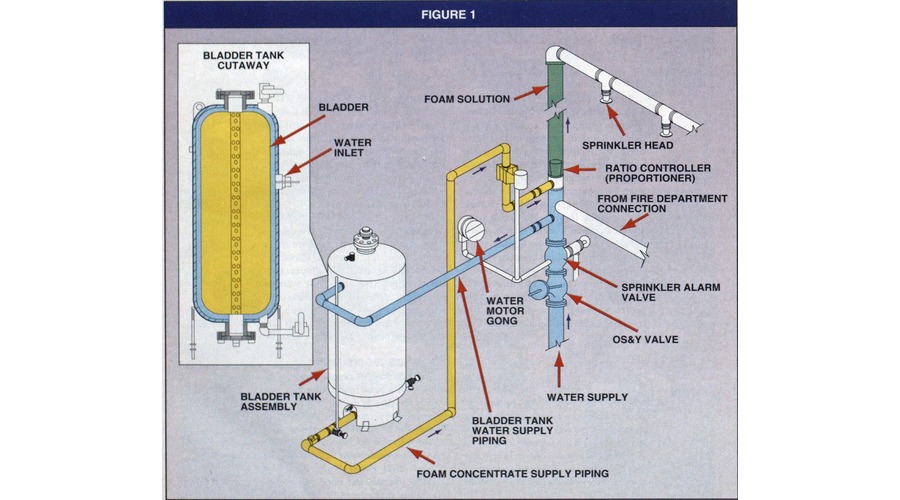
NFPA 16 Section 8.6 calls for a hydraulic design information sign to be placed for foam water sprinkler systems. The purpose is simple. It gives critical system data in one visible spot so trained people can verify the design basis without digging through folders, emails, or a drawer full of “important” papers that has somehow become a black hole.
In practice, the sign should help identify the system design details that support inspection, testing, maintenance, and future changes. Because foam systems often protect high risk areas, clear information reduces confusion and helps people make safer decisions. As a result, the sign supports both compliance and everyday site control.
The Core Purpose Behind the Placard
This is really about speed and accuracy. When a technician, inspector, or facility manager needs to confirm how a system was designed, the answer should not depend on whether someone can find an old file in five minutes. The sign is the shortcut to the facts. It brings the design basis out into the open where it can actually help people do their jobs.
Why the Sign Matters for Site Safety and Compliance
A foam water system can only perform as designed if the right pressure, flow, density, and foam concentrate details are known and available. Therefore, the hydraulic sign becomes a practical tool, not just a code item. It helps facility teams confirm whether a system still matches the approved design after upgrades, tenant changes, or plant expansions.
For Australian industrial and commercial sites, this is especially useful where operations change often. A retail distribution centre may add racks. A processing plant may alter a hazard zone. Meanwhile, a shopping centre may remodel tenant spaces. Each change can affect fire suppression needs. The sign helps keep the system story straight, which is more than some paperwork can say after a long week.
Why Visibility Beats Good Intentions
A requirement hidden in a binder does not do much during a live inspection or a fast moving incident. A visible sign does. It gives people a common reference point and reduces the chances of assumptions, mismatched records, or a lot of confident nodding from people who are actually guessing.
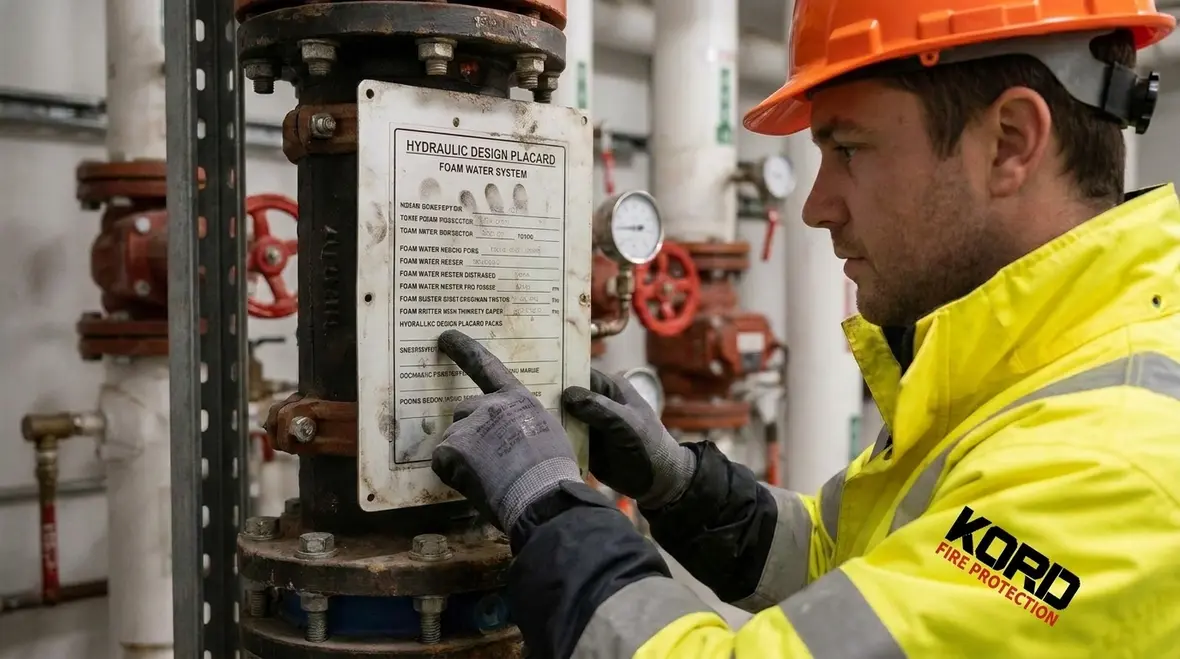
What Information Belongs on a Foam Water System Identification Sign
The exact layout can vary by project and authority requirements, but the sign should clearly show the hydraulic design information needed for the installed system. Common details may include:
- System type and protected area
- Design density or application rate
- Design area used for calculation
- Required water supply and pressure data
- Foam concentrate type and proportioning details
- Hydraulic basis or reference points
- Relevant system limits and notes
In other words, the sign should tell the next person what the system was built to do. That person may be an inspector, a technician, or a manager trying to keep the site running without surprises. And surprises, as every facility team knows, rarely show up with good manners.
Useful Details That Save Time Later
Good signage is specific enough to guide decisions but clear enough to read quickly. If the wording is vague, incomplete, or buried in clutter, the sign loses value. The best versions are straightforward, durable, and easy to understand at a glance, especially when several contractors or facility teams may interact with the same system over time.
How Kord Fire Protection Becomes a Vital Partner
Kord Fire Protection can play a vital role from the start of the job through to handover and beyond. For one thing, the team can help ensure the fire suppression design placard meets the needs of the project and the expectations of the site. In addition, Kord Fire Protection can support the practical side of compliance by making sure the sign is accurate, durable, and placed where people can actually see it.
This matters because a sign that exists only in theory is about as useful as a fire hose made of spaghetti. Kord Fire Protection brings technical knowledge, site awareness, and a focus on real world use. That means better coordination with designers, builders, operators, and maintenance teams. It also means fewer delays when documents, site conditions, or final system details need review.
Where it fits, it also makes sense to align this signage requirement with broader system planning and NFPA 16 standard guidance so the placard reflects the installed protection strategy rather than becoming an afterthought added at the end.
Sign Purpose
- Shows the system design basis
- Supports inspection and testing
- Helps future modifications stay safe
- Gives fast access to key information
Kord Fire Protection Support
- Reviews project needs
- Helps prepare accurate signage
- Supports compliant placement
- Assists with service and ongoing care
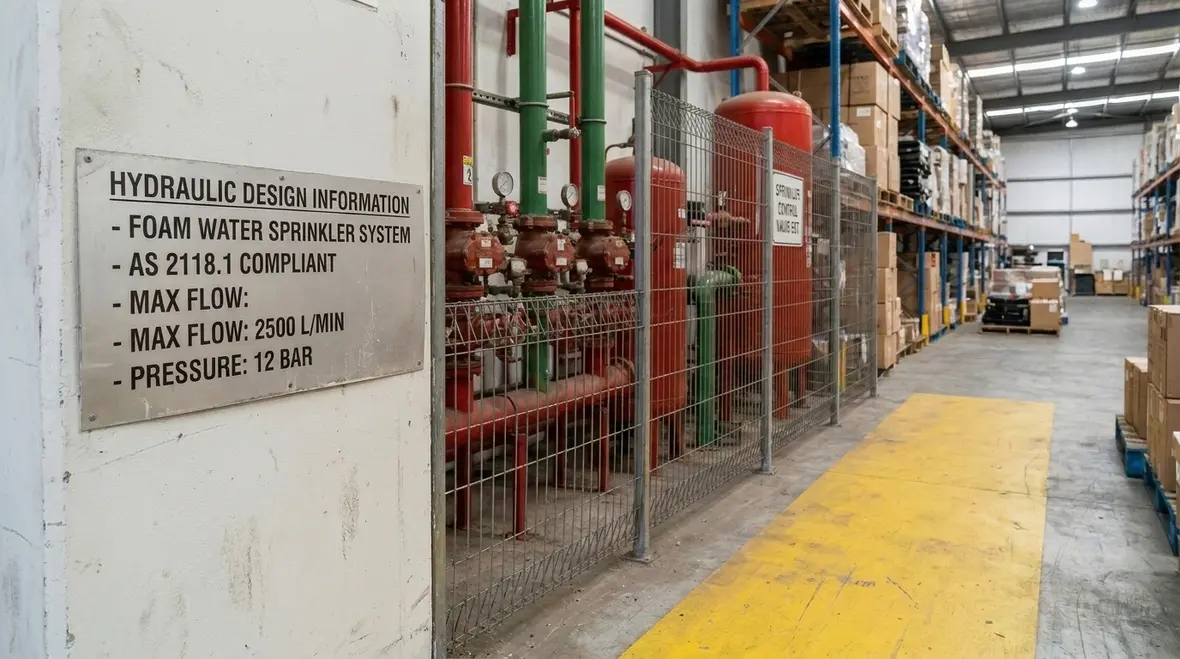
Where the Sign Should Be Placed in Real Facilities
Placement matters almost as much as the content. The hydraulic design sign should sit where it can be found quickly and read with ease. Typically, that means close to the relevant foam water system equipment or in a position tied to the control or riser area. However, the exact location should suit the building layout and site access rules.
In large commercial and industrial properties, the best location is the one that saves time during inspections and emergencies. If a person has to hunt for the sign, the sign has already lost some of its value. So, clear placement wins every time.
Placement Tips That Keep It Practical
The sign should be visible, durable, and positioned where trained personnel naturally go when checking the system. That often means near risers, control assemblies, proportioning equipment, or associated system access points. It should also stay readable after normal site wear, not disappear behind stored materials, temporary partitions, or a heroic stack of boxes that was only supposed to be there for one day.
How the Sign Supports Inspections, Maintenance, and Audits
During inspection and testing, technicians need quick confirmation that the installed system still matches the approved design. Because foam water systems can be affected by equipment replacement, tenant fit outs, or production changes, the sign acts as a reference point. It helps spot mismatches before they become costly problems.
Likewise, auditors and site managers can use the sign to verify that records match the physical installation. This creates a cleaner compliance trail and smoother maintenance planning. As a result, the site spends less time explaining what should be there and more time knowing it is there.
A Small Sign With a Large Administrative Payoff
This is one of those rare compliance items that is genuinely useful in daily operations. It helps with documentation discipline, makes inspections more efficient, and gives future project teams a reliable starting point before they touch a protected area. For sites with frequent changes, that is a major advantage.
Why Australian Sites Should Treat This as More Than a Box to Tick
Across Australia, many facilities operate in high consequence environments where downtime is expensive and risk is serious. Therefore, a foam water system identification sign should never be treated as a last minute add on. It helps protect workers, assets, and operations by giving fast access to the design facts that matter.
And while the sign may not be the star of the show, it is the stage manager. Quiet, useful, and absolutely critical when the curtain rises and everyone suddenly needs answers.
FAQ
Conclusion
NFPA 16 Section 8.6 is not just about a sign. It is about clarity, safety, and smarter system management. For Australian industrial, retail, and commercial facilities, Kord Fire Protection can be a strong partner for this work.
When the job needs accuracy, durability, and compliance, Kord Fire Protection helps make the foam water system sign do its job properly. That is a small detail with a very large payoff when people need information fast.

Join Our Newsletter!
Get the latest fire safety tips delivered straight to your inbox From our Newsletter.