
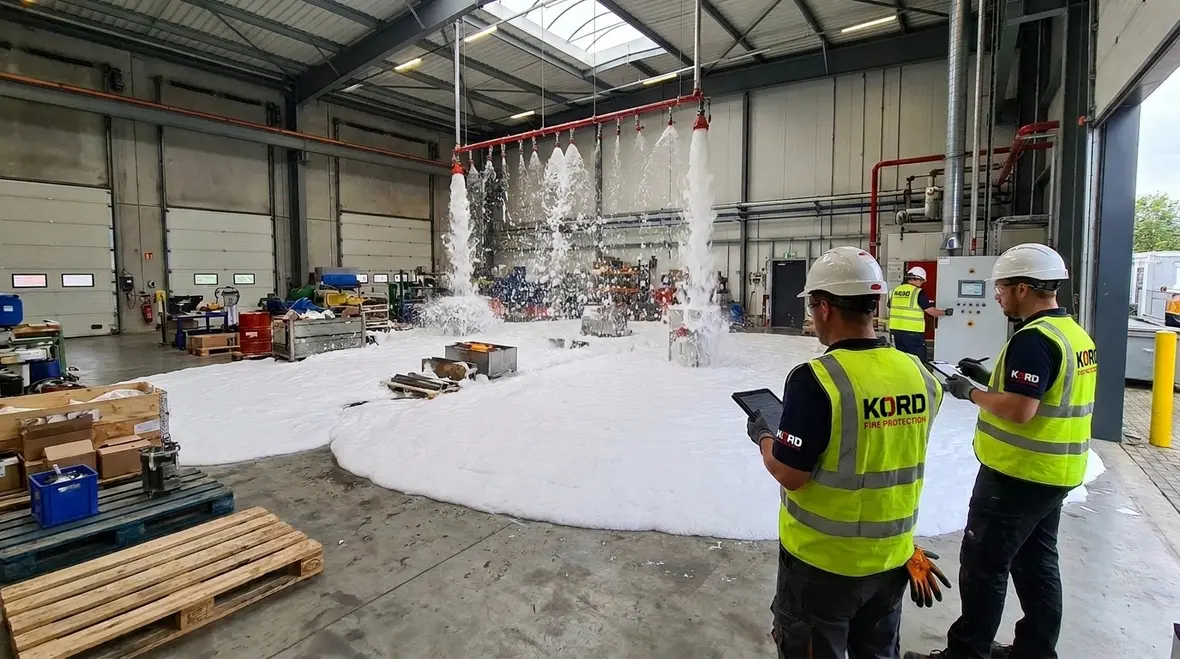
NFPA 16 Section 8.3 Foam Discharge Testing for Foam Water
Quick Answer: NFPA 16 Section 8.3 requires system tests that discharge foam from foam water deluge and spray systems to prove the setup works under real conditions. For industrial, retail, and commercial sites across Australia, this test helps confirm coverage, flow, and foam quality. Kord Fire Protection can help plan, perform, and document the work with less disruption and more confidence.
Facilities that want a broader maintenance path can also review Kord Fire Protection’s foam fire suppression systems service page to connect discharge testing with ongoing inspection, maintenance, and system readiness.
NFPA 16 foam discharge testing for real site safety
NFPA 16 foam discharge testing checks whether a foam water system can actually do the job it was built for. In simple terms, it is not enough for the equipment to look ready. It must release foam in the right amount, in the right pattern, and at the right time. That matters in places where flammable liquids, process areas, loading bays, and high risk storage zones can turn a small problem into a major event.
For industrial and commercial sites across Australia, this kind of test supports compliance and also gives owners a clear view of system health. It is part of a practical fire safety plan, not a paper exercise. And yes, foam tests may look a little dramatic, but that is the point. Safety gear should perform like a lead actor, not an extra.
What NFPA 16 Section 8.3 means for foam water systems
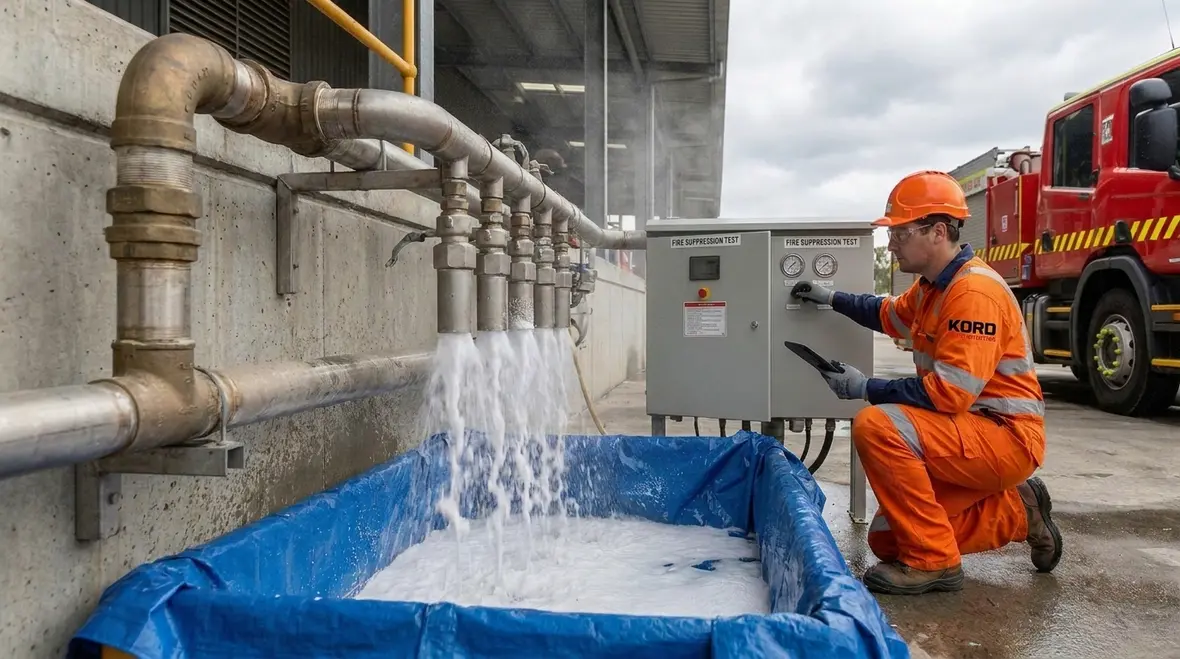
Section 8.3 focuses on system tests that discharge foam from foam water deluge and spray systems. The goal is to confirm that the system can deliver foam solution across the protected area as designed. This includes the water supply, proportioning equipment, discharge devices, and the foam concentrate itself.
During a foam water system acceptance test, the team checks whether the system starts correctly, mixes properly, and reaches the intended hazard zone. If one part falls short, the full system may not protect the site during a real fire. That is why this step matters so much for facilities that handle fuels, chemicals, or valuable stock.
This is also where site teams get something more useful than assumptions. They get visible proof. A clean valve room and a tidy gauge line might look reassuring, but appearance does not confirm discharge quality. Foam has to travel, expand, and cover the hazard area the way the design intended. Otherwise, a system that seems ready can still fall short when reality gets loud.
What the test is really proving
A discharge test is really a performance check across the whole chain. It shows whether the water supply stays stable, whether the proportioning setup behaves properly, whether discharge devices are clear, and whether the foam blanket forms in a way that protects the actual hazard. In short, the test asks one blunt question: if a fire starts here, will this system respond the way everyone expects?
How the foam discharge test is carried out on site
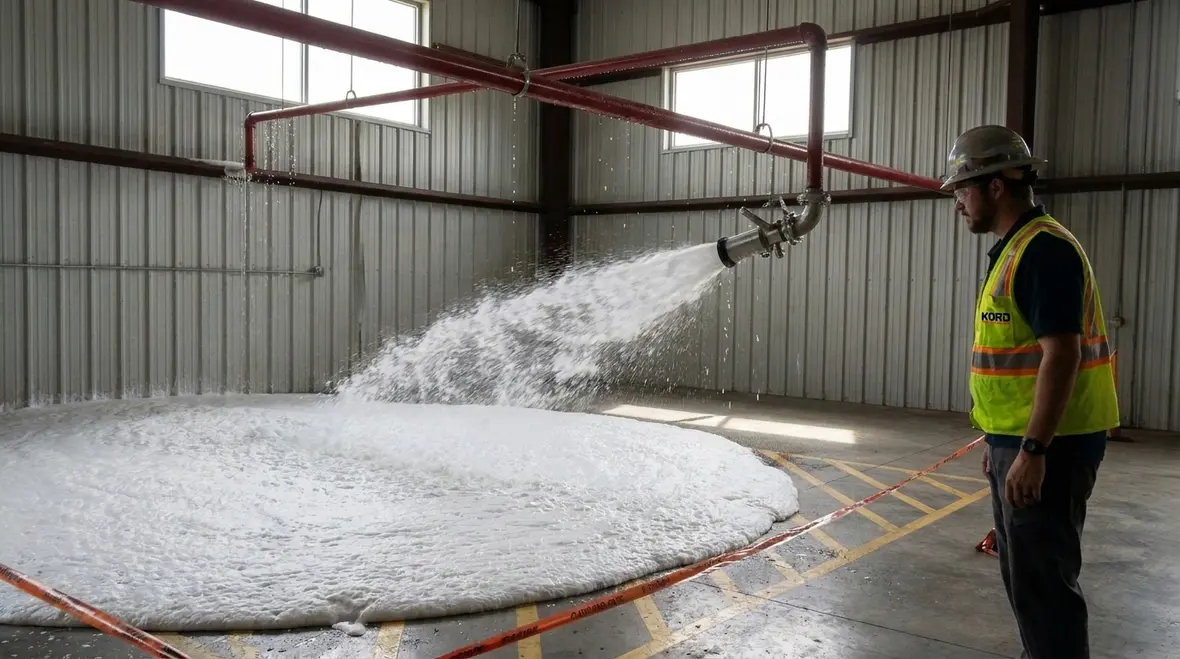
A proper fire suppression foam testing program starts with planning. First, the site is reviewed so the test can fit the building layout, production needs, and safety controls. Then the team isolates the test area, confirms water supply conditions, and prepares drain paths or recovery measures where needed.
Next, the system is activated and foam is discharged from the relevant deluge or spray devices. The team watches for several key signs: correct activation, proper foam expansion, even coverage, stable pressure, and smooth proportioning. After that, the site is inspected for leaks, valve issues, nozzle blockages, and any signs of poor mixing.
Because each site is different, the test plan must match the actual risk. A fuel storage area will not behave like a warehouse mezzanine, and a retail back of house zone will not act like a processing plant. Common sense still has a job in fire protection, thankfully.
Typical steps during a planned discharge test
Review the hazard area, system layout, and test objective
Coordinate isolation, notifications, and safety controls
Confirm water supply and proportioning readiness
Activate the system and observe discharge timing and pattern
Check foam quality, coverage, and consistency
Inspect hardware after discharge and document findings
That last step matters more than people think. Good documentation turns a one day event into a usable record for maintenance planning, audits, insurer questions, and future comparison. If the next test shows drift, the team has something solid to compare it against instead of relying on vague memories and someone saying, “I think it looked better last time.”
Why this test matters for industrial and commercial sites
Foam systems protect hazards where water alone may not control the fire well enough. That makes NFPA 16 foam discharge testing especially important for sites with liquids, plant rooms, manufacturing lines, tank farms, service yards, or large storage areas. If the foam blanket does not form properly, the system may fail at the exact moment it is needed most.
Key benefits
Regular testing helps a site:
Confirm system performance under real flow conditions
Identify weak points before an emergency
Support compliance records and audit readiness
Reduce the chance of costly damage or downtime
Build confidence for managers, operators, and insurers
For Australian businesses, that last point can be very useful. No one wants to explain a failed system after the fact. It is a much better story when the test happens first.
How Kord Fire Protection supports the job
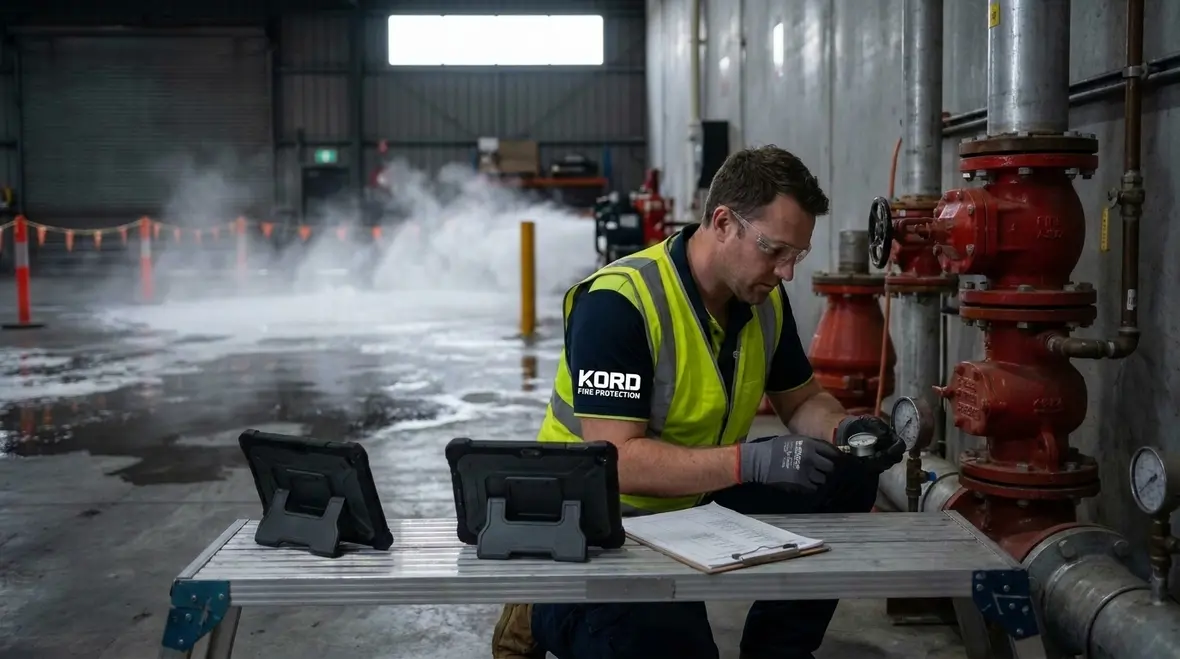
Kord Fire Protection can become a vital partner in this service because foam testing is not just about turning valves and watching bubbles do their thing. It takes planning, technical skill, and a clear understanding of site risk. Kord Fire Protection can help assess the system, organise the test process, manage safety controls, and document the results in a way that supports ongoing compliance.
For busy industrial, retail, and commercial facilities, that support can make a real difference. The site gets less disruption, the team gets clearer reporting, and the system gets tested by people who understand what matters. That means fewer surprises and a smoother path from inspection to action.
If the site team is also comparing broader testing obligations, Kord Fire Protection’s foam fire suppression system testing NFPA 25 Section 11.3 guide adds helpful context around ongoing testing expectations for special hazard facilities.
What a good partner brings to the process
A strong fire protection partner brings more than tools and test gear. It brings experience, planning, and calm control when the system is live. That matters because foam discharge testing can affect operations, drains, alarms, and safety zones. A skilled provider helps coordinate those moving parts without turning the day into a scene from a disaster movie.
Kord Fire Protection can help with:
Test planning and scheduling around operations
System checks before discharge
On site support during the test
Post test review and reporting
Follow up recommendations if repairs or adjustments are needed
This approach saves time and lowers stress. Just as important, it helps decision makers act on facts instead of guesses. For teams that want to review the core standard context, Kord Fire Protection also covers that in its NFPA 16 standard resource.
Dual column view of test focus and site value
Test focus
Foam delivery pattern
Proportioning accuracy
Pressure and flow checks
Device condition
Documentation
Site value
Confirms full hazard coverage
Helps ensure proper foam quality
Supports reliable discharge performance
Reveals wear, blockage, or damage
Strengthens audit and compliance records
FAQs for foam water deluge testing
Keep the foam system ready before trouble arrives
NFPA 16 foam discharge testing gives a site real proof that its foam water system can perform under pressure. For Australian industrial and commercial facilities, that is not a nice extra. It is smart risk control.
Kord Fire Protection can help turn this requirement into a smooth, well managed process. Contact Kord Fire Protection to plan your foam water system acceptance test and keep your protection ready for the moment that matters.

Join Our Newsletter!
Get the latest fire safety tips delivered straight to your inbox From our Newsletter.



