
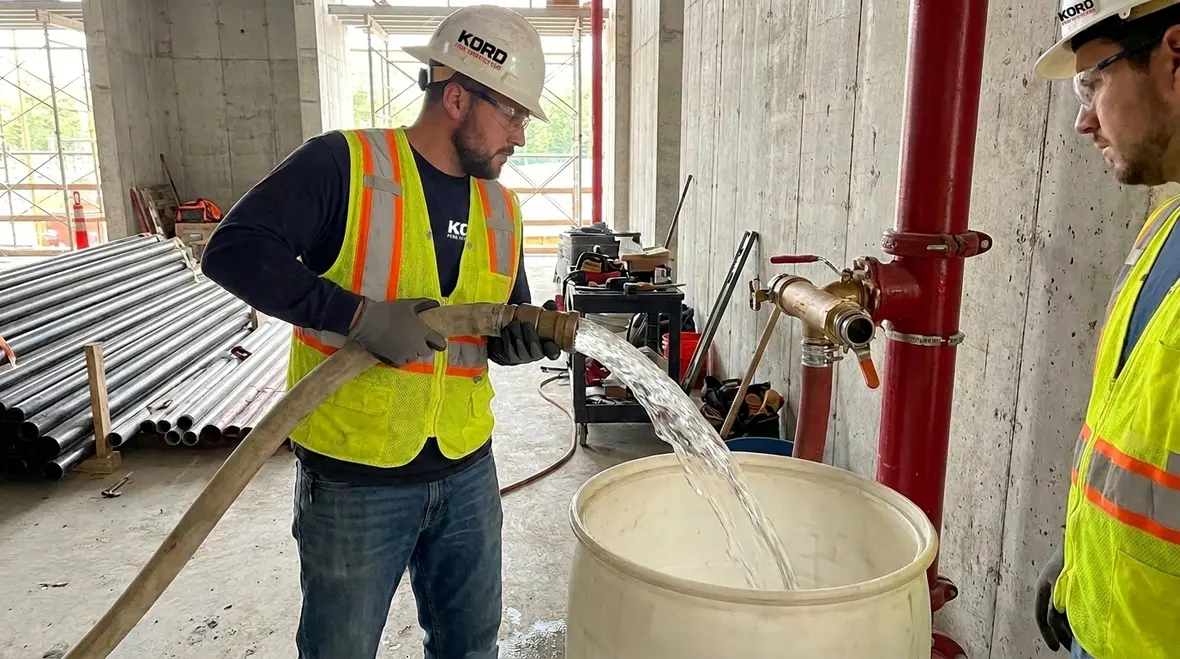
NFPA 16 Section 8.1: Flushing Supply Piping Before Acceptance
Quick Answer
NFPA 16 Section 8.1 requires flushing supply piping before acceptance to remove debris, pipe scale, and construction contaminants that can impair foam-water system hydraulics. For reliable discharge and compliance, facilities must follow the standard’s flushing method, duration, and acceptance checks using documented results.
If you’re looking at this step as part of a bigger readiness plan, it also helps to review NFPA 16 pipe flushing for foam-water system performance and foam fire protection system concentrate guidance near the start, because flushing rarely lives alone and the system usually behaves better when someone is actually minding the details.
What NFPA 16 Section 8.1 is trying to prevent
NFPA 16 Section 8.1 focuses on one practical failure mode that happens after installation, during testing, and even after long construction delays: contamination in the piping. When the flushing of supply piping foam-water systems is incomplete or poorly performed, solids and residues can migrate into control valves, proportioning components, regulators, and nozzles. The result is often subtle at first, then increasingly costly: partial flow, unstable foam quality, increased pump run time, and inconsistent discharge patterns.
For commercial facilities, this risk is amplified by common jobsite realities: threaded fittings, changes in direction, wet work near construction dust, temporary caps that loosen, and debris introduced during late-stage trades coordination. NFPA 16 treats flushing as an acceptance step, not a “nice to have,” because the system must perform as designed when installed.
Where flushing fits into the foam-water system commissioning sequence
Flushing is typically executed after the supply piping is installed and the system components are in place to support safe flow. The order matters because the facility must avoid introducing new contamination after flushing and must protect sensitive hardware. In practice, commissioning teams align flushing with these checkpoints:
-
Pre flush inspection: verify pipe routing, supports, hangers, labeling, and that caps or temporary plugs do not remain in the line.
-
Hydrostatic and leak testing coordination: where required by project scope, ensure pressure tests do not leave residues that later need removal.
-
System configuration: confirm valves and flow paths are positioned to allow flushing while preventing damage to downstream components.
-
Flushing run and acceptance evidence: conduct flushing using the required method and capture documentation the owner can produce during audits.
When commissioning teams skip or compress flushing, problems tend to surface during functional testing or inspection testing later. That can trigger repeat maintenance work, extended downtime, and potential nonconformities tied to acceptance documentation.
How facilities perform flushing correctly (and where they go wrong)
NFPA 16 requires flushing that effectively removes contaminants from the supply piping before acceptance. The intent is to ensure the water supply provided to the foam system is clean enough to operate valves, proportioning devices, and discharge components as designed. Successful flushing typically depends on three elements: controlled flow, stable discharge observation, and careful handling of termination points.
1) Establish controlled flow through the supply piping
The flushing of supply piping foam-water systems must create sufficient hydraulic action to move and capture particulate debris. Facilities typically use a temporary flushing source or approved test connection and verify that the flow path encourages debris transport out of the system rather than trapping it at low points or dead ends.
Common failure points:
-
Disconnected or mispositioned valves that cause flushing to occur through only part of the piping network.
-
Unaddressed low points, pockets, or closed headers that retain sediment even when upstream lines appear clear.
-
Excessively low flow that “washes” but does not mobilize scale or construction debris.
2) Maintain safe discharge points and confirm what is leaving the system
Flushing discharge must be managed so the facility can observe the effectiveness of the process. Teams should ensure discharge is directed to safe locations and that they can evaluate clarity and debris removal using the acceptance criteria established by the project team and aligned with NFPA 16 requirements.
Common failure points:
-
Temporary hoses or couplings that degrade and shed material during flushing.
-
Inadequate containment or site controls that prevent clear observation and delay corrective actions.
-
Premature termination after an initial “clean water” appearance that later reveals residual debris.
3) Protect foam system components from debris and shock
Foam-water systems include equipment that is sensitive to particulates and, in some configurations, to sudden changes in flow. Even when flushing is required, facilities must manage bypasses, valve positions, and component protection so flushing action occurs in the supply piping without damaging downstream hardware.
Common failure points:
-
Allowing debris to pass into proportioning or control components before lines are verified clean.
-
Incorrect reassembly after flushing that leaves partially closed valves or incorrect actuator positions.
-
Missing strainers, relief devices, or protective caps that are required during earlier phases and not returned properly.
These issues can lead to misdiagnosis during later testing, where the root cause traces back to acceptance flushing rather than to a mechanical failure.
Compliance documentation and inspection readiness
NFPA 16 acceptance expectations require evidence that flushing occurred and that the result met the standard’s intent. For commercial, industrial, and retail environments, owners often face recurring compliance audits, insurer reviews, or third party inspection schedules. Well maintained documentation helps facilities avoid delays and reduces the likelihood of repeating work.
Facilities should ensure the flushing record includes at minimum:
-
System identification, zones or sections flushed, and dates.
-
Flushing method and flow configuration used, including valve positions and test connections.
-
Acceptance observation notes, such as debris characteristics and the basis for termination.
-
Any corrective actions taken if debris persisted, including any re flushing requirements.
-
Sign off by the commissioning or qualified fire protection contractor.
Owners also benefit from integrating flushing evidence into their broader inspection, testing, and maintenance program. For a clear overview of how NFPA 16 is structured and how these acceptance steps connect to ongoing requirements, refer to NFPA 16 Standard guidance from Kord Fire Protection using the anchor text provided.
Real world challenges in commercial facilities (what breaks the plan)
Even with a written procedure, facilities commonly struggle during flushing of supply piping foam-water systems due to operational constraints and construction coordination. Key issues include:
-
Occupied buildings: flushing may require temporary water discharge management, noise planning, and tenant protection while maintaining safety controls.
-
Multi trade timelines: pipework can be “ready” while upstream trades still open, cut, or modify nearby areas. That creates contamination after flushing unless strict work control is enforced.
-
Complex piping layouts: large retail facilities, warehouses, and industrial plants often include multiple headers and branch lines that require careful zone flushing sequencing.
-
Valve lineup errors: a single misplaced valve can cause bypass flow, leaving sections unflushed while other sections appear clear.
-
Inadequate access: some valves and drain points may be hard to reach, leading to improvised discharge solutions that increase risk and reduce observation quality.
Kord Fire Protection supports commercial owners with commissioning support, verification practices, and maintenance planning so the system accepts cleanly and stays reliable through the life of the installation. This includes coordinating flushing documentation with the broader NFPA 16 compliance workflow and practical operational realities on site.
How Kord Fire Protection helps keep acceptance from turning into rework
Flushing is the point where “hidden issues” can either be removed or locked in. Kord Fire Protection emphasizes repeatable, defensible execution so the system moves into testing with fewer surprises. Typical support includes:
-
Pre flushing checks for piping readiness, valve lineup, and discharge setup.
-
Flushing execution aligned to NFPA 16 Section 8.1 intent, with acceptance evidence captured for owner records.
-
Close out verification to ensure no new contamination was introduced after flushing.
-
Maintenance minded handoff so inspection, testing, and upkeep requirements remain straightforward for facility staff.
This approach helps reduce the risk of clogged components, inconsistent foam delivery, and time consuming corrective actions that can delay acceptance and increase total project cost.
Frequently Asked Questions
Call to action
If your foam-water system is nearing acceptance, confirm that flushing of supply piping foam-water systems is planned as a documented, verifiable step aligned with NFPA 16 Section 8.1. Contact Kord Fire Protection to review your commissioning procedure, flushing sequence, and acceptance documentation needs so your project moves forward with fewer surprises and clearer compliance readiness.

Join Our Newsletter!
Get the latest fire safety tips delivered straight to your inbox From our Newsletter.



