NFPA 16 Section 8.3: System Tests That Discharge Foam — Deluge and Spray
Quick Answer: NFPA 16 Section 8.3 requires objective system testing that actually discharges foam for deluge and spray foam water systems, verifying flow, pressure, proportioning, and distribution. These tests support readiness for emergency foam application and reveal failures that inspections cannot.
For a broader compliance roadmap, see NFPA 16 Standard guidance from Kord Fire Protection. If you want the service side near the top too, Kord Fire also offers foam fire suppression system services that fit naturally with inspection, testing, repairs, and ongoing readiness planning.
What does NFPA 16 Section 8.3 require for deluge and spray?
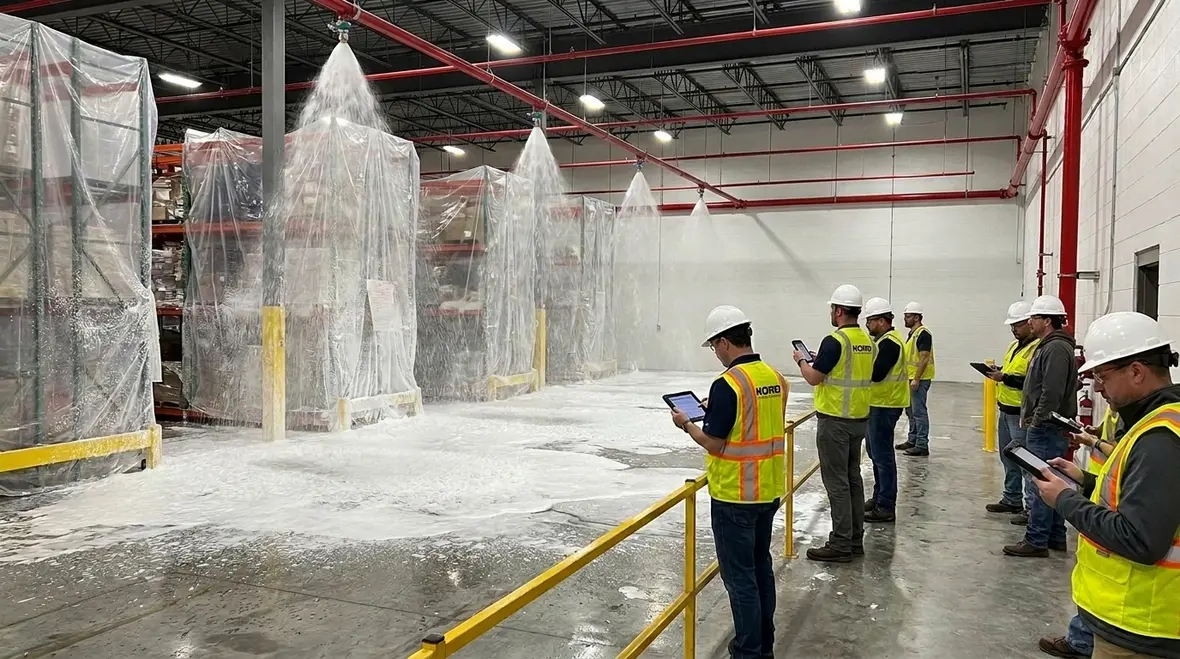
NFPA 16 Section 8.3 addresses system tests that discharge foam and focuses on functional verification beyond visual inspection. For facilities managing commercial, industrial, and retail hazards, these tests confirm that the system delivers the correct foam solution to the correct points under real operating conditions. In practice, foam discharge tests deluge spray systems validate water supply performance, valve operation, proportioning accuracy, and distribution through discharge outlets.
Facilities often assume that non discharging flow tests represent compliance readiness. Section 8.3 is designed to prevent that assumption by requiring a foam discharge test methodology that demonstrates the system can produce and deliver foam as intended.
When do foam discharge tests apply to deluge and spray systems?
Foam systems under NFPA 16 often serve hazards where the risk profile demands rapid foam blanket formation or controlled application. Deluge and spray arrangements share common reliance on timely water flow, correct foam concentrate proportioning, and dependable foam solution delivery to the discharge piping and outlets.
Section 8.3 applies when the standard calls for system tests that discharge foam to demonstrate performance. Kord Fire Protection typically plans these tests around operational realities such as production schedules, customer downtime constraints, and logistics for generating and collecting foam discharge safely.
Common compliance triggers for Section 8.3 testing
- System commissioning or re commissioning after major modifications to piping, valves, foam proportioning equipment, or discharge outlet layout
- After component replacement that can affect proportioning accuracy, flow rates, or valve reliability
- When maintenance history indicates potential performance drift such as recurring alarms, poor discharge patterns, or unstable water pressure
- When inspection results or hydraulic evidence raise questions about distribution uniformity
What gets verified during foam discharge testing?
Section 8.3 tests are not primarily paperwork exercises. They are functional demonstrations. The goal is to prove the system can create usable foam and deliver it through the intended path at the required performance level.
1) Water supply and system hydraulics
Deluge and spray foam systems depend on water flow and pressure stability. Foam discharge tests typically verify that:
- Water supply can achieve the design flow within required pressure bands
- Valves open to full flow position without delay, sticking, or partial travel
- Pressure losses in piping do not prevent adequate performance at proportioning equipment and discharge outlets
A key failure point involves water pressure drop during operation that reduces foam expansion or compromises blanket formation characteristics. Even when pumps start properly, real discharge reveals whether hydraulics match design assumptions.
2) Proportioning and foam concentrate concentration
Correct foam concentration controls the finished foam quality. During foam discharge tests deluge spray systems, technicians verify concentrate proportioning by observing the proportioning device behavior under real flow. Common issues include:
- Incorrect concentrate type installed or mismatched concentration settings
- Proportioning pump wear, calibration drift, or suction issues
- Air entrainment at concentrate supply resulting in inconsistent foam solution output
- Metering inaccuracies caused by changes in line sizes, strainers, or check valve performance
These problems may not surface during water only testing because foam concentrate interaction and solution formation occur only during foam discharge.
3) Valve operation and actuation timing
Deluge systems typically rely on fast, reliable valve actuation to release water and then foam solution. Spray systems require controlled discharge behavior to ensure designed spray patterns deliver foam solution effectively.
Foam discharge testing validates that control components operate as intended, including:
- Actuation sequence timing from initiation to full discharge
- Correct position of control valves during discharge
- Absence of oscillation, incomplete opening, or leakage that changes discharge characteristics
4) Distribution at discharge outlets
The final proof involves where the foam solution goes. Section 8.3 testing confirms that foam reaches the expected discharge outlets and produces acceptable distribution performance for the protected hazard.
Operationally, this step often reveals installation mismatches such as:
- Discharge outlet blockage from construction debris or strainers partially clogged
- Incorrect nozzle or outlet selection
- Improper piping pitch or air pocket formation that changes flow distribution
- Misaligned outlet arrangements causing uneven coverage
How do teams conduct foam discharge tests without disrupting operations?
Commercial facilities often cannot treat foam discharge as a convenient shutdown activity. Effective compliance planning centers on safety, environmental controls, and system readiness while minimizing downtime.
Pre test planning for compliance and safety
- Site coordination: schedule testing during low occupancy or planned outages, and coordinate with operations for rapid clearance
- Environmental controls: plan containment, runoff management, and recovery where required by local policy
- Hot work and electrical safety: confirm ignition source management and ensure panels and wiring are protected from foam residue
- System readiness: verify foam concentrate availability, label verification, and proportioning device condition
- Instrumentation: ensure pressure measurement points, flow verification methods, and data capture plan support post test documentation
Common operational failure points during discharge testing
Teams frequently see problems that compliance stakeholders might not expect. These are practical and preventable with proper procedure and pre verification:
- Inaccurate foam concentrate concentration: often due to calibration drift or suction issues
- Strainer contamination: reduces discharge and changes distribution even when pumps run
- Delayed valve actuation: caused by control air issues, mechanical binding, or pressure variations
- Unexpected water supply behavior: friction losses differ from design after modifications or line aging
Kord Fire Protection supports this process by performing structured test planning, documenting observed system performance, and correcting root causes before the system returns to service. This approach protects commercial uptime while meeting the intent of Section 8.3.
Documentation and maintenance follow through after Section 8.3 tests
NFPA 16 compliance is sustained through more than successful test events. After foam discharge tests deluge spray systems, the facility must close out performance gaps and manage residual impacts such as residue cleanup, component servicing, and corrective actions.
What good closeout looks like
- Recorded system pressures and flow indicators before, during, and after foam discharge
- Proportioning verification data showing concentration consistency
- Valve actuation observations including timing behavior and evidence of full travel
- Distribution review indicating discharge performance at outlets
- Cleaning and restoration plan for foam residue on exposed surfaces and affected hardware
- Maintenance actions taken to correct deficiencies and prevent recurrence
Maintenance actions that often follow foam discharge
Foam discharge testing can accelerate wear or expose contamination. Typical follow on maintenance includes:
- Strainer inspection and cleaning
- Checking proportioning components for calibration and wear
- Verifying valves and actuators after test exposure
- Confirming that control circuitry remains clean and functional
- Re verifying system readiness checks required by your maintenance program
By treating Section 8.3 as part of a continuous maintenance cycle, commercial facilities reduce the chance of repeat failures at the next inspection interval.
Frequently Asked Questions
Call to action: schedule compliant Section 8.3 testing
Plan foam discharge tests deluge spray systems with a team that understands both the standard intent and the operational realities of commercial facilities. Kord Fire Protection helps you schedule testing, verify foam concentration and distribution, document results, and complete corrective maintenance so your system stays compliant and reliable. Contact Kord Fire Protection to assess your deluge or spray foam system and build a practical Section 8.3 testing plan.

Join Our Newsletter!
Get the latest fire safety tips delivered straight to your inbox From our Newsletter.