
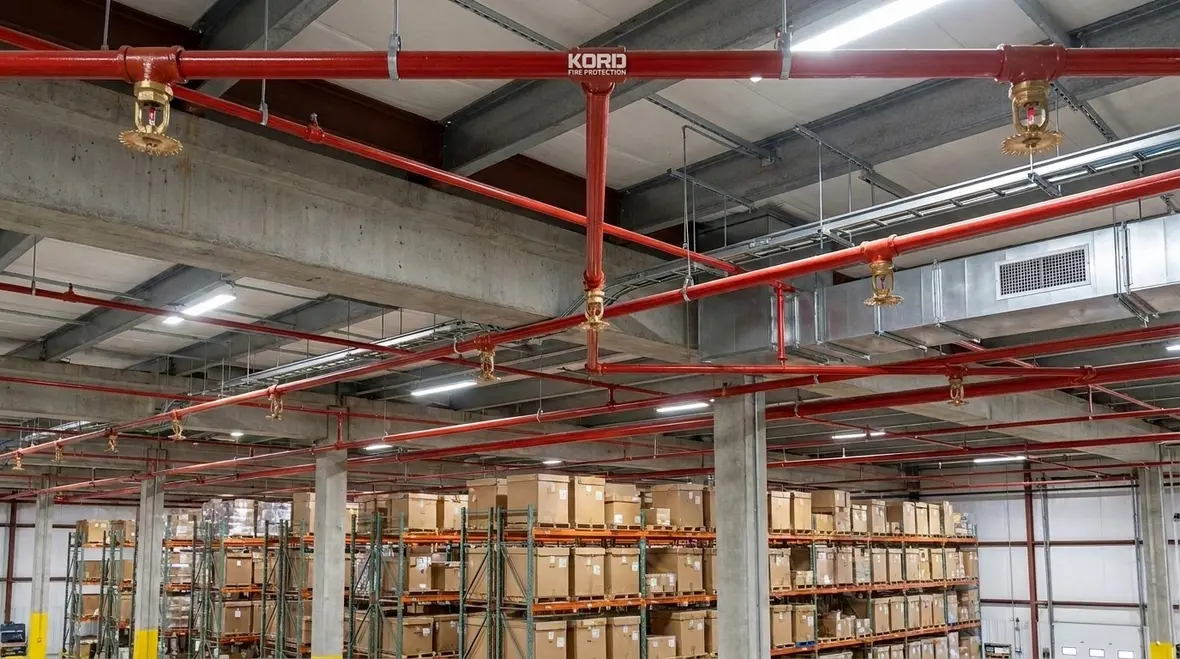
NFPA 16 Section 7.6: Sprinkler Spacing and Location in Foam-Water Systems
Quick Answer: NFPA 16 Section 7.6 governs how foam-water sprinklers are spaced and positioned so foam application meets design intent. Compliance depends on ceiling or rack geometry, obstruction rules, and correct sprinkler type and discharge pattern, with inspection and maintenance required to prevent drift and misalignment.
Why foam-water sprinkler spacing and location decisions matter
Foam-water protection relies on coverage and delivery consistency. In practice, foam-water sprinkler spacing and location determine whether the system produces the intended foam blanket depth, application rate, and distribution pattern over the hazard area. When installers adjust layout for construction constraints or when maintenance later replaces parts without matching the original design, coverage can shift, resulting in reduced foam effectiveness during a fire.
Commercial fire protection teams typically focus on the “design versus installed reality” gap. Warehouses, aircraft hangars, retail back rooms, and process areas often contain changes in ceiling height, open structures, beam pockets, HVAC moves, lighting retrofits, and rack modifications that can degrade performance if the foam-water sprinkler spacing and location do not remain compliant and functional.
For facility operators and contractors managing ongoing compliance, aligning installation and maintenance practices with NFPA 16 is essential. Kord Fire Protection supports commercial facilities with inspections, testing coordination, and corrective action planning based on current standards. See the full overview here: NFPA 16 Standard Guidance. For facilities also reviewing service support, Kord Fire’s fire sprinkler system service page is a useful next stop for inspection, maintenance, and repair coordination.
What Section 7.6 requires and how it affects the built environment
NFPA 16 Section 7.6 addresses sprinkler spacing and location to ensure the foam-water system delivers foam where it is needed, using the correct discharge geometry. The standard’s intent centers on preventing coverage gaps and preventing overlap patterns that can create unintended application behavior.
Spacing impacts coverage and foam blanket uniformity
Foam-water sprinkler spacing and location must follow the approved design because the sprinkler discharge pattern, throw distance, and foam development are not interchangeable between manufacturers, models, and spray characteristics. Spacing that is too wide can create dead zones. Spacing that is too tight can create local over application that displaces foam out of position before it stabilizes.
Location impacts obstructions, drift, and effective application
Even when spacing is correct on paper, real-world obstructions can interrupt discharge. Examples include:
- Ceiling beams, trusses, and soffits that create shadowed coverage regions
- Lighting rows, sprinkler escutcheon modifications, and decorative ceilings
- HVAC supply and return ducts positioned to alter airflow and foam fall characteristics
- Storage rack changes that raise or lower the effective hazard interface
NFPA 16 Section 7.6 ties spacing and location directly to obstruction control. When facilities renovate, they often introduce new penetrations or modify the ceiling plane without evaluating how it changes foam-water sprinkler spacing and location compliance.
How designers and installers translate Section 7.6 into an installable layout
Successful foam systems require disciplined translation of engineered drawings into the field. This process typically includes layout verification, obstruction mapping, and record accuracy for later inspections.
Step 1: Confirm the correct sprinkler type and discharge characteristics
Foam-water sprinkler spacing and location are not one size fits all. The system layout assumes a specific sprinkler designation and performance envelope. Substituting a different head can change throw distance and discharge pattern, which directly changes coverage. Any substitution should follow approved design or documented engineering evaluation.
Step 2: Verify ceiling or mounting plane assumptions
Foam-water systems often mount in locations where the mounting plane is assumed stable. However, tenant improvements frequently add soffits, cable trays, or suspended equipment. If the mounting plane changes, the foam may land too high, too low, or too far to one side, altering the effective application.
Step 3: Build obstruction and interference checks into the layout
Installers should map obstructions before fastening and should confirm that each sprinkler aligns with the spacing plan relative to beams, ducts, and lighting. A common failure point is “as installed” drift. Even small shifts can create a coverage hole near a wall or rack aisle where foam must be consistent.
Step 4: Control field documentation
Commercial facilities frequently rely on shop drawings, redlines, and as-built packages. If the as-built record does not reflect foam-water sprinkler spacing and location as installed, later inspections can miss nonconformities or fail to interpret the system correctly during impairment reviews.
Inspection, maintenance, and the failure points that show up in the real world
NFPA 16 Section 7.6 compliance is not a one-time acceptance event. In occupied facilities, the sprinkler layout can change due to repairs, ceiling access work, and equipment upgrades. Kord Fire Protection helps facilities manage these risks through targeted inspection strategies and maintenance coordination aligned with commercial expectations.
Facilities managing broader foam readiness may also benefit from Kord Fire’s foam-water sprinkler system inspection requirements article and the foam fire suppression system maintenance and testing resource for related compliance context.
Common issues tied to spacing and location
- Physical misalignment: Sprinklers moved or re-centered during ceiling repairs, rack relocations, or pipe adjustments.
- Obstruction introduction: New conduit, cable trays, lights, or duct sections added after installation.
- Incorrect replacement components: Using the wrong sprinkler type or thread connection leads to altered discharge and positioning.
- Damaged or obstructed sprinkler inlets: Paint overspray, debris, or installation accessories that remain on the head.
- Pipe hangers and supports drift: Long runs can shift slightly over time, changing head coordinates.
Operational checks during commissioning and periodic reviews
During commissioning, teams should verify the foam-water sprinkler spacing and location against approved documentation and confirm obstruction compatibility. Periodic reviews should include physical verification of head condition, clearance around the sprinkler, and whether construction changes affected the coverage geometry.
For many commercial and industrial sites, impairments and maintenance work create the highest risk periods. When a head or pipe section is serviced, personnel should validate that the installed position matches the original plan and that no obstructions were introduced during the repair.
Compliance in commercial facilities: what owners should require
In practice, compliance success depends on how owners manage change. NFPA 16 is clear that the system must perform as designed. For commercial, industrial, and retail occupancies, owners should require documented controls over design updates, tenant improvements, and rack or ceiling modifications.
Owner action items for day-to-day management
- Change review process: Evaluate any ceiling work, duct changes, lighting retrofits, or rack modifications for impact on foam-water sprinkler spacing and location.
- Maintain as-built records: Keep updated layout drawings and ensure maintenance teams have the latest plan set.
- Replacement control: Require that any sprinkler replacement matches the approved model and maintains the designed position.
- Site walkthrough verification: Conduct periodic field checks focusing on areas most likely to change, such as entry bays, rack aisles, and mechanical spaces.
How Kord Fire Protection supports ongoing readiness
Kord Fire Protection works with facility teams to support NFPA 16 compliance through inspection planning, documentation support, and corrective action guidance. This reduces the likelihood of coverage gaps caused by unauthorized layout drift, obstruction changes, or incorrect component replacement. Learn more about the standard and compliance support with NFPA 16 Standard Guidance.
Frequently Asked Questions
Next step: verify your installed layout against Section 7.6
If you want to reduce risk from coverage gaps, confirm that your foam-water sprinkler spacing and location still match the approved design after construction, tenant work, or rack changes. Kord Fire Protection can support field verification, inspection planning, and corrective actions to maintain NFPA 16 performance intent. Schedule a compliance review today to protect life safety, property, and operational continuity.

Join Our Newsletter!
Get the latest fire safety tips delivered straight to your inbox From our Newsletter.



