
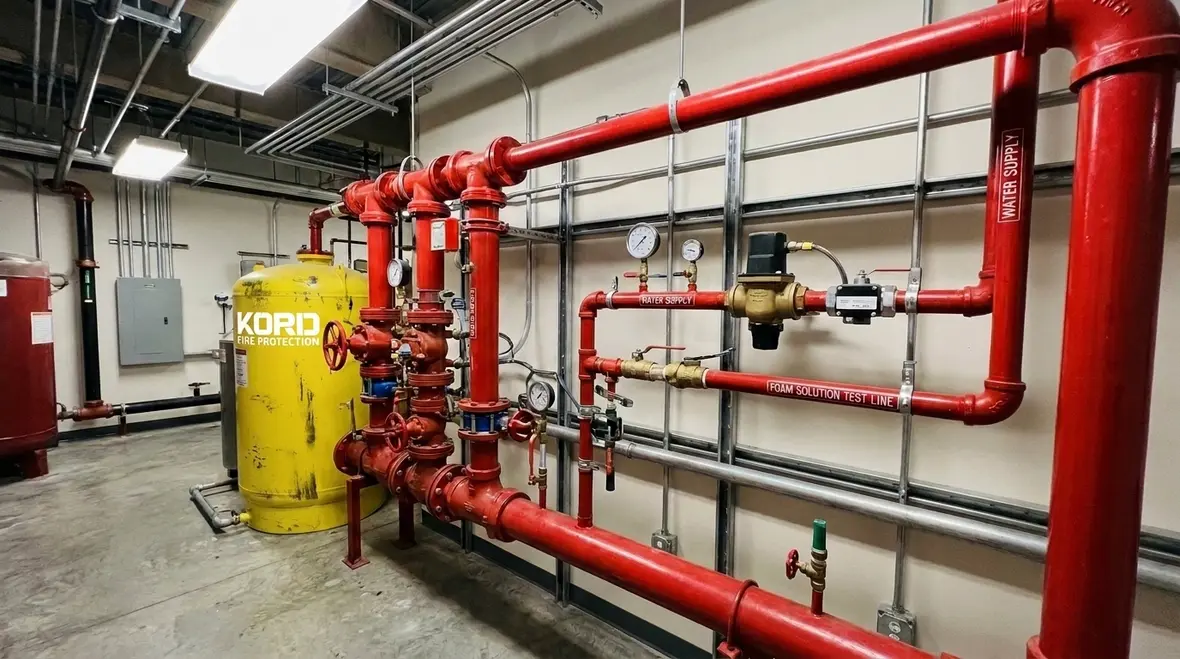
NFPA 16 Section 7.1: General Design and Installation Rules for Foam-Water Systems
Quick Answer: NFPA 16 Section 7.1 sets baseline design and installation requirements for foam water systems so they perform correctly during a fire. It covers system configuration, component placement, hydraulic considerations, installation practices, and the practical rules that reduce failure during discharge and maintenance.
Facilities that are tightening up their broader readiness work often pair this review with foam fire suppression system maintenance and testing, since it helps connect installation details to the real-world inspection and performance issues that show up later. ([kordfire.com](https://kordfire.com/foam-fire-suppression-system-maintenance-and-testing/?utm_source=openai))
Why Section 7.1 Matters for Foam Water Reliability
Commercial facilities often install foam water systems to protect hazards that conventional water supplies cannot adequately address. NFPA 16 Section 7.1 focuses on the core details that make these systems dependable when they must operate under real fire conditions. In practical terms, it governs how general design installation foam-water systems are configured, how components connect, and how installed work supports predictable flow, correct foam generation, and maintainable operation over the life of the facility.
Because foam water systems combine water flow control, foam concentrate delivery, and discharge device performance, installation errors can create symptoms that look like “the system did not work,” even when individual parts appear functional. Section 7.1 aims to prevent those issues by requiring consistent installation practices and sound system design assumptions.
What the Rule Requires at a High Level
Section 7.1 establishes general design and installation rules that apply across foam water system types. These rules typically address four compliance themes that drive real-world outcomes:
- System arrangement and component compatibility so hydraulic demand and foam concentrate proportions remain correct.
- Proper installation workmanship including routing, support, labeling, and connection practices that prevent drift, leaks, or misalignment.
- Correct operating interfaces between detection or actuation, proportioning, and discharge devices.
- Maintainability and inspection readiness so annual and periodic testing does not require excessive disassembly.
Facilities that treat foam water systems like standard sprinkler piping often miss the unique performance requirements of foam concentrates and proportioning equipment. A failure in any part of the chain can reduce concentrate delivery, alter discharge characteristics, or cause unreliable operation under stress.
Design and Installation Details That Commonly Cause Noncompliance
1) Foam Proportioning and Water Supply Interface
Foam water systems rely on correct concentrate proportioning across the range of design flows. Even when the system is engineered properly, installation defects can distort expected flow and pressure. Common problem points include:
- Unapproved fittings or changes to pipe internal roughness that alter hydraulic performance.
- Incorrect valving arrangement that restricts flow or introduces unintended flow bypass paths.
- Piping offsets and unsupported sections that allow movement and stress connections at the proportioning components.
Commercial facilities typically operate in environments where maintenance teams frequently access valves and gauges. Installation practices must preserve calibration and prevent accidental changes to setpoints, strainer condition, or actuator travel.
2) Discharge Device Placement, Orientation, and Obstructions
Section 7.1 rules function as a foundation for ensuring discharge devices deliver foam where the hazard expects it. Installation errors that affect performance include incorrect mounting height, wrong orientation, or obstructions that disrupt foam blanket formation.
In retail and light industrial occupancies, it is common to find later renovations that introduce shelving, signage, or structural modifications near discharge devices. These changes can be noncompliant if they interfere with discharge patterns or require re-evaluation of system coverage.
3) Piping Supports, Hangers, and System Stability
Foam water systems often include small or concentrate sensitive components. Vibration, building movement, and thermal expansion can stress joints if supports and hangers do not meet the intent of the installation rules. Key risks include:
- Leaking joints near proportioning equipment or concentrate lines.
- Misalignment between components that affects flow sensing or actuation.
- Valve and check device binding due to pipe stress.
A stable piping layout reduces maintenance disruptions and helps inspection teams verify that components remain in the original installation condition.
4) Workmanship That Affects Inspection, Testing, and Readiness
Noncompliance often appears during testing and inspection rather than at initial acceptance. Inspectors and technicians rely on access points, labeling, and installation features that allow safe, repeatable testing. Installation rules in Section 7.1 support that operational reality.
Examples include how teams route drain lines, how they provide access to strainers and proportioning components, and whether the system includes practical means to confirm correct operation during functional tests.
Commercial Compliance Challenges by Occupancy Type
General design installation foam-water systems typically serve distinct hazard profiles. The compliance challenges differ across common commercial and industrial environments:
Industrial and Manufacturing
- Frequent layout changes that can move obstructions into discharge paths.
- Maintenance activities that introduce temporary bypasses or unplanned valve repositioning.
- Higher risk of concentrate storage and handling issues when procedures are not tightly controlled.
Warehousing and Distribution
- Racking and workflow changes that affect discharge patterns over time.
- Pressure and flow fluctuations due to operational demand that requires consistent system verification.
- Storage environment conditions that can accelerate corrosion in piping or supports if not installed and maintained correctly.
Retail and Light Commercial
- Renovations that add fixtures near foam discharge outlets without a design review.
- Limited in-house technical capability, increasing reliance on service partners for testing and recordkeeping.
- Operational pressure on downtime schedules that can lead to shortcuts during testing unless controls are formal.
Across all these facilities, compliance depends not only on installation, but also on disciplined maintenance and documentation practices that sustain the system’s original hydraulic and foam proportioning intent.
Maintenance and Testing Considerations Tied to Section 7.1 Intent
NFPA 16’s general design and installation rules support later operational testing by ensuring components install correctly and remain accessible. Foam water systems need routine attention because foam concentrates and system components can degrade, clog, or shift in performance over time.
From a practical standpoint, maintenance teams should focus on recurring failure points that stem from installation and operational interfaces:
- Strainer contamination that reduces flow and affects proportioning accuracy.
- Valve position drift due to unauthorized adjustments or frequent operations.
- Concentrate line integrity issues such as leaks or damage that can go unnoticed until testing.
- Discharge device obstruction from renovations or stored materials that alter performance.
Kord Fire Protection supports commercial facilities with inspection readiness strategies, testing support, and documentation that align with NFPA 16 expectations. Their role becomes especially important when facilities undergo change management events like tenant turnover, building renovations, or equipment replacement that can impact foam water system performance. Related Kord resources on inspection plans, testing procedures, and owner readiness reinforce the same practical concerns around proportioning, flow verification, and documentation discipline. ([kordfire.com](https://kordfire.com/nfpa-25-foam-system-inspection-testing-maintenance-plan/?utm_source=openai))
For additional reference material and broader NFPA 16 guidance, review: NFPA 16 Standard overview at Kord Fire Protection.
How to Verify an Installed Foam Water System Against Section 7.1
Verification should focus on both physical installation quality and system performance assumptions. A strong process typically includes:
- Document review: compare installed as-built drawings, component listings, and system configuration to the design basis.
- Field inspection: confirm discharge device placement, orientation, and access for inspection and testing.
- Hydraulic and flow path confirmation: verify piping routing, valve arrangement, and absence of unapproved components.
- Operational readiness checks: confirm actuation interfaces, labeling, and that concentrate delivery components are protected and maintainable.
- Maintenance alignment: ensure strainer access, drain arrangements, and concentrate handling procedures support scheduled service.
Facilities that perform these steps early prevent later red tag conditions and reduce the probability of “test day surprises.” This is where Kord Fire Protection can help coordinate compliance efforts and ensure ongoing performance rather than one time acceptance.
Frequently Asked Questions
Next Step: Get Your Foam Water System Verified and Kept Compliant
If your facility has a foam water system, compliance cannot be treated as a one time task. Schedule a service review to verify installation details, confirm maintainability, and align documentation with NFPA 16 expectations. Kord Fire Protection helps commercial, industrial, and retail facilities reduce testing surprises, correct common failure points, and maintain dependable foam water performance through ongoing inspections, testing, and maintenance.

Join Our Newsletter!
Get the latest fire safety tips delivered straight to your inbox From our Newsletter.



