
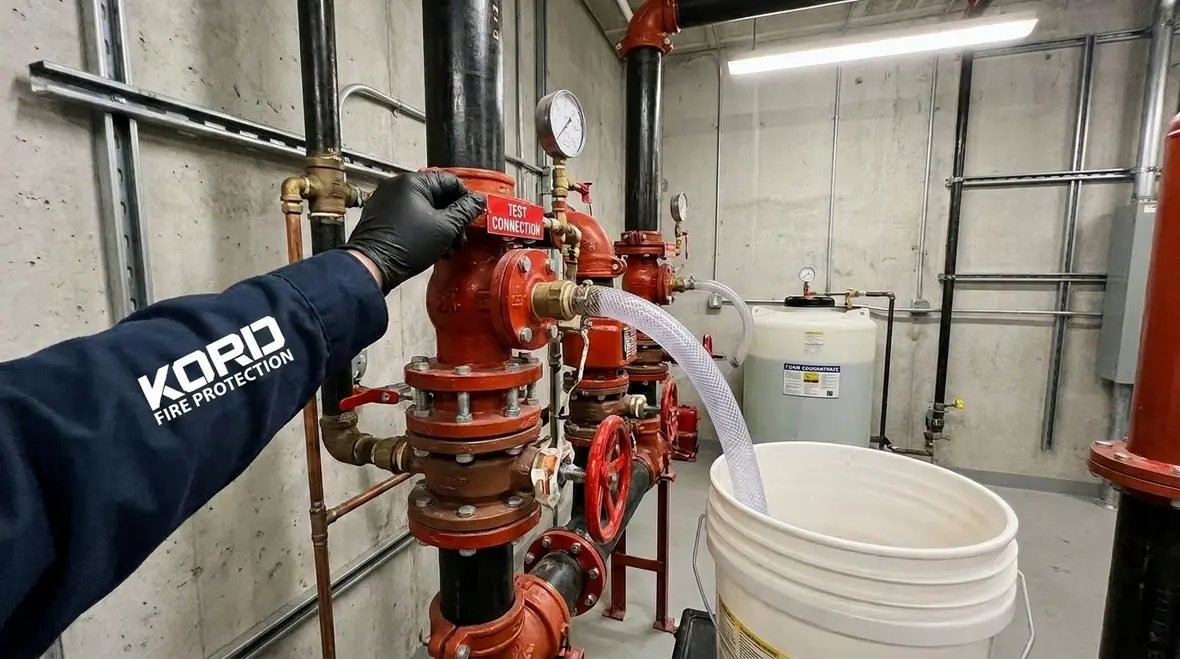
NFPA 16 Section 6.12: Test Connections for Foam-Water Systems
Quick Answer: NFPA 16 Section 6.12 requires properly installed, accessible test connections for foam-water systems to verify performance, flow, foam solution delivery, and correct operation. Test connections support commissioning, routine inspection, and practical troubleshooting without compromising system readiness.
For commercial fire protection teams managing foam-water hazards, test connections foam-water systems NFPA 16 often become the difference between a controlled, repeatable acceptance test and an improvised, noncompliant field exercise. Section 6.12 focuses on how those connections support verification of system function, including foam concentrate and solution handling, while maintaining protection integrity.
Facilities working through this part of the standard often pair it with foam fire suppression system maintenance and testing so the test connection layout, inspection routine, and documentation process all stay aligned with real operating conditions.
Why NFPA 16 Section 6.12 test connections matter in real facilities
In industrial, warehouse, and retail environments, foam-water systems must operate reliably under demanding conditions. Testing matters because foam proportioning and concentrate delivery are not “set and forget.” Typical failure points include clogged screens, partially closed control valves, air entrainment, undersized piping for the test method, incorrect concentrate type or viscosity behavior, and cross connection risks during maintenance.
Section 6.12 test connections provide a controlled pathway to confirm system response using repeatable procedures. When facilities lack proper test connections, staff frequently resort to bypassing components, loosening fittings, or using unauthorized drain paths. Those shortcuts can create hazards, damage equipment, and invalidate test results.
For a broader compliance baseline, facilities can reference the NFPA 16 standard overview from Kord Fire Protection to align maintenance and testing practices with recognized requirements.
What Section 6.12 requires: the operational intent
NFPA 16 Section 6.12 centers on providing test connections that enable verification of foam system components and performance. The intent is straightforward: the system must be testable without compromising the foam-water fire protection function.
In practical terms, compliant test connections support tasks such as:
- Checking foam solution availability and movement through the proportioning and delivery path.
- Confirming correct flow conditions during commissioning and scheduled testing.
- Verifying valve operation, including correct positioning and freedom of movement.
- Confirming that test discharge is managed safely and does not introduce back pressure or contamination.
Facilities should also treat test connections as part of the maintenance plan. Even if no one “uses” them in daily operations, their performance depends on cleanliness, accessibility, and correct configuration at the time of testing.
Common compliance challenges: access, labeling, and physical arrangement
1) Accessibility during normal operations
Commercial installations frequently place proportioning equipment, valves, and foam-water piping in mechanical rooms, behind rack systems, or within congested service corridors. If a test connection requires removing guards, moving permanent equipment, or blocking egress, crews may delay testing or use unsafe methods. Section 6.12 expectations translate into practical accessibility: the connection should be reachable and usable in a typical maintenance window.
2) Correct labeling and configuration control
Test connections that are unlabeled, swapped with drain points, or incorrectly valved after service create a recurring failure mode. A technician may believe they are flowing foam solution through the intended pathway when the system actually routes water to a drain line. Labeling should clearly identify the purpose, associated valves, and the expected discharge location.
3) Discharge management and water handling
Testing discharges foam solution and water. Facilities must manage discharge to protect slip hazards, preserve electrical safety, and prevent contamination of process areas. Where a test connection discharges into inadequate drainage or near control panels, teams may postpone testing. That delays compliance and can lead to missed issues like partial blockage or incorrect concentrate delivery.
How crews should test using Section 6.12 connections (procedure and equipment focus)
Although exact testing steps depend on the system design and local authority requirements, the field objective stays the same: use the test connection to obtain a controlled verification of foam-water performance. A compliant procedure typically includes planning, controlled flow, verification of valve positions, and restoration to fire-ready configuration.
Step 1: Confirm system status and safe test setup
- Coordinate with site safety procedures for water discharge, PPE, and slip control.
- Verify that test valves are clearly identified and not mixed with drain or sampling ports.
- Confirm that any test discharge piping provides stable drainage and does not create unintended back pressure.
Step 2: Verify valve operation and flow path integrity
Test connections depend on correct valve behavior. Crews should verify that valves can move through their intended positions without binding, sticking, or leaking. Common indicators of trouble include inconsistent flow during test, abnormal sound from the proportioning equipment, and visible evidence of air or contamination in the discharge.
Step 3: Validate foam proportioning delivery behavior
Foam-water systems rely on correct concentrate handling and delivery conditions. During testing, crews should confirm that the foam solution path actually receives the intended flow and that any proportioning components respond as designed. When test connections are missing, blocked, or incorrectly piped, technicians may not be able to verify this condition reliably.
Step 4: Return the system to fire ready condition and document results
After testing, crews must restore normal valve positions, verify that the test configuration has been removed, and ensure the system returns to a ready state. Documentation should record test conditions, observed performance, and any corrective actions required. Facilities that repeatedly re-test without documentation often fail audits because they cannot demonstrate consistent verification.
Failure points tied to test connections in foam-water systems
Section 6.12 connections can still fail to deliver meaningful results when systems and maintenance are not managed carefully. Key failure points include:
- Blocked or partially blocked test connection components: debris, scale, or residue can reduce flow and mimic equipment malfunction.
- Damaged fittings and leaking joints: leaks can alter discharge rate and invalidate observations.
- Incorrect test valve linkage: a valve may be “open” but connected to the wrong portion of the system due to piping or historical service changes.
- Improper test discharge routing: back pressure or blocked drains can distort results and pose safety risks.
- Loss of accessibility: obstructed access leads to deferred testing and reduced accountability.
Because foam systems involve proportioning and concentrate handling, a small issue can create a large operational effect. Kord Fire Protection supports commercial facilities with planning, inspection discipline, and practical maintenance workflows so test connections remain serviceable and results remain defensible.
Internal alignment: building a repeatable compliance and maintenance plan
Many commercial facilities struggle because testing happens inconsistently across shifts, contractors, and maintenance cycles. A repeatable plan reduces operational risk and improves audit readiness.
A strong plan includes:
- Dedicated test connection maps: a simple diagram showing connection location, valve IDs, and discharge points.
- Access control checks: periodic verification that access routes remain clear and safe for the expected test method.
- Valve and fitting maintenance schedules: routine checking for leakage, binding, and tamper evidence.
- Documented restoration: standardized return-to-service steps after testing.
Kord Fire Protection helps facilities implement this discipline by coordinating inspections, testing, and maintenance that align with NFPA 16 expectations and real-world facility operations.
Frequently Asked Questions
Conclusion and Call to Action
NFPA 16 Section 6.12 test connections foam-water systems are not a minor detail. They determine whether verification is controlled, repeatable, and defensible during commissioning, inspections, and troubleshooting. Kord Fire Protection supports commercial facilities with test readiness planning, hands-on testing discipline, and maintenance that keeps connections accessible and functional. Contact Kord Fire Protection to review your foam-water test connection layout, identify practical risks, and strengthen ongoing compliance.
If your team is tightening procedures across the broader suppression program, Kord Fire’s fire suppression system services can help connect inspections, testing, repairs, and ongoing readiness without turning compliance into a guessing game.

Join Our Newsletter!
Get the latest fire safety tips delivered straight to your inbox From our Newsletter.



