
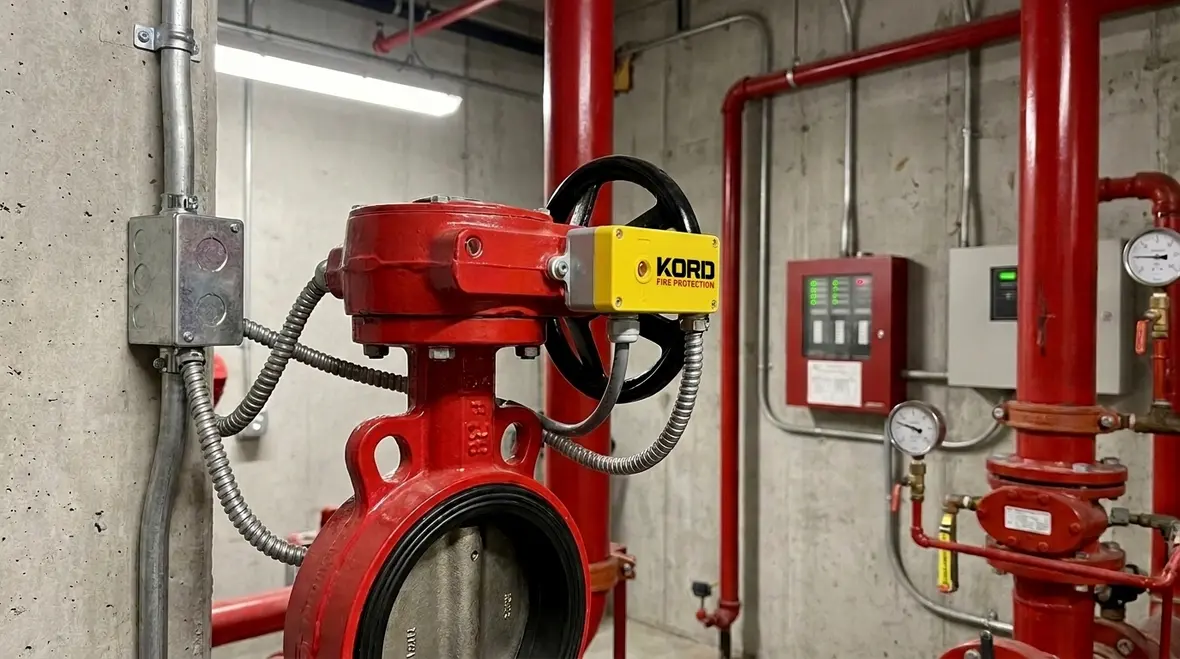
NFPA 16 Section 6.11: Valve Supervision in Foam-Water Systems
Quick Answer: NFPA 16 Section 6.11 requires effective supervision of valves used in foam-water systems to prevent unauthorized changes and to ensure system readiness. In practice, this means monitoring valve position and integrity with reliable supervisory switches, alarms, and maintenance checks.
Facilities that want a broader service context for foam system readiness can also review Kord Fire Protection’s fire suppression services, which include foam fire suppression support and NFPA-compliant inspections. ([kordfire.com](https://kordfire.com/fire-suppression/?utm_source=openai))
What “valve supervision foam-water systems” means in real facilities
In foam-water systems, valve position directly controls water flow, foam concentrate delivery, and overall discharge performance. NFPA 16 Section 6.11 addresses this by requiring supervision of the valves involved in the system so that abnormal conditions are detected quickly. For facilities managing multiple life safety systems, valve supervision foam-water systems becomes a maintenance and documentation issue, not just an installation requirement.
Commercial, industrial, and retail properties commonly face compliance gaps when supervisory devices drift out of calibration, wiring gets disturbed during renovations, or valves are painted or adjusted without updating the supervisory indication. A strong supervision program reduces the risk that the system sits “ready on paper” but cannot operate as designed.
Why NFPA 16 Section 6.11 focuses on valves (not just pumps and detection)
Foam-water performance depends on controlled hydraulic conditions and correct chemical delivery. Valves that route water, admit foam proportioning components, isolate sections for service, or control diversion paths create single-point failure opportunities if their status remains unknown.
- Unauthorized or accidental valve movement can place the system in a non functional configuration.
- Supervision gaps may allow a critical valve to be closed during inspection or maintenance without notification.
- Faulty indications can lead to delayed corrective action after the system is tested or after a supervisory alarm occurs.
NFPA 16’s supervision intent supports reliable alarm notification and faster troubleshooting, especially in facilities where operators are not life safety specialists and rely on the supervisory alarm and record trails.
Which valves typically require supervision in foam-water setups
While Section 6.11 applies to valves in foam-water systems as addressed by NFPA 16, field application typically centers on valves whose position affects system capability. In many foam-water arrangements, supervisory coverage commonly includes:
- Control and sectional valves that isolate portions of the foam-water network.
- Foam solution inlet or concentrate proportioning related valves where incorrect position prevents proper foam generation.
- Dilution and mixing valves that affect the foam water ratio and discharge pattern.
- Valves in water supply interfaces that control the system’s ability to receive the intended flow.
Because system schematics vary, the supervision list should come from the approved installation drawings and the engineering basis for operation. Commercial property owners often need a coordinated review that ties valve identification numbers to supervisory zones so technicians can test and record the correct points during each inspection cycle.
For a broader overview of the NFPA 16 requirements framework, including operational coordination and related inspection concepts, see: NFPA 16 standard guidance from Kord Fire Protection.
How supervision is implemented: mechanisms, indications, and alarms
1) Supervisory devices that prove valve position
Valve supervision foam-water systems generally use supervisory switches or equivalent devices that provide an electrical indication of valve position. These devices must correspond to the actual mechanical position of the valve stem or handle, not just the presence of power in the cabinet.
- Mechanical linkage to valve position ensures the supervisory device reflects real travel or position limits.
- Positive indication avoids ambiguous states that can occur when linkage is loose or worn.
- Clear labeling links the supervisory indication to the correct valve on the riser diagram and test procedure.
2) Alarm and monitoring: what must happen when a supervised valve changes
Supervision is only effective if it creates an actionable signal. Most facilities connect supervisory valve indications to a monitoring panel or fire alarm control unit process that generates a supervisory alarm and logs the event. A proper setup includes:
- Distinct supervisory alarms for valve abnormal condition so maintenance personnel can isolate the cause quickly.
- Alarm acknowledgment workflow that supports prompt response and documentation.
- Event logs retained long enough to support trending and corrective action.
Commercial buildings with remote monitoring or multiple reporting layers should ensure that the valve supervision alarm reaches the correct responsible party. Delayed notification is a common reason “supervised” systems fail to improve readiness.
3) Power supervision and wiring integrity
Supervisory switches depend on correct electrical pathways. Typical failure points include:
- Faulty terminations after tenant work, ladder access, or cabinet servicing.
- Damaged conductors in damp or high vibration locations.
- Corrosion at field connections that slowly increases resistance and creates false indications.
- Improper circuit supervision at the control panel, which can mask open circuit conditions.
During maintenance, technicians should inspect conduit routing, terminal tightness, and ensure that supervisory wiring remains consistent with the as installed and as maintained drawings.
Common compliance and operational challenges (and how they get fixed)
NFPA 16 valve supervision for foam-water systems fails most often due to practical issues rather than design intent. The following challenges show up across retail back-of-house rooms, industrial valve galleries, and warehouse pump houses.
Challenge: The valve was moved during service, but supervision was not validated
Valves get closed for maintenance, replacement, or isolation testing. If staff do not verify supervisory return to normal and record the outcome, the system may remain in an altered condition while the fire protection team is unaware.
Best practice: tie every manual valve movement to a procedure that includes verifying the supervisory indication returns to normal before leaving the area.
Challenge: The supervisory switch is mechanically out of adjustment
Linkage slippage, stem wear, or non original components can create a mismatch between valve travel and switch travel. This can generate false normal conditions or intermittent supervisory alarms.
Best practice: schedule periodic position verification tests and confirm the supervisory switch activation point matches the valve’s designed open and closed states.
Challenge: Renovations alter labeling, wiring, or valve configuration
Commercial facilities frequently undergo construction activity near fire protection cabinets and valve rooms. Even minor changes can lead to misidentified valves or modified circuits.
Best practice: require a change management review that updates valve supervision point mapping, signage, and documentation after any modification.
Challenge: Paint, corrosion, and access barriers reduce reliability
Valves may be painted for aesthetics or corrosion control in ways that obstruct linkage or slow mechanical movement. Access barriers also delay response during alarms.
Best practice: maintain clear access for technicians, and verify that supervisory linkages remain free-moving and unobstructed.
Inspection, testing, and maintenance: what a strong program includes
A compliant valve supervision foam-water system program depends on more than a periodic visual check. It requires structured inspection, evidence-based testing, and corrective actions that close the loop.
Inspection routine
- Verify supervisory alarms and indications match the valve’s current verified position.
- Check device integrity: mounting security, wiring condition, and labeling legibility.
- Confirm tamper resistance and that no bypass conditions exist.
Testing and recordkeeping
- Perform functional checks that validate the supervisory indication changes appropriately when the supervised valve moves.
- Document test method, observed results, valve identification, and any corrective actions.
- Use consistent terminology aligned with the valve schedule and system diagram.
Preventive maintenance and corrective action
- Lubricate or service valve components as allowed by the manufacturer to preserve designed travel.
- Replace worn linkage parts or out of tolerance supervisory devices.
- Repair or reterminate damaged field wiring, and verify correct supervisory circuit behavior after service.
Facilities also benefit when maintenance teams coordinate with commissioning style verification, especially after system modifications. Kord Fire Protection supports ongoing compliance by performing focused supervision validation, maintaining clear documentation, and helping owners close gaps identified during inspections and test cycles.
Frequently Asked Questions
Call to action
Valve supervision foam-water systems require disciplined testing, clean documentation, and reliable supervisory devices that match real valve position. Kord Fire Protection helps commercial facilities verify supervisory points, test valve indication performance, and correct the wiring or mechanical issues that commonly undermine compliance. Contact Kord Fire Protection to schedule a valve supervision focused inspection and build a maintenance plan your operations team can sustain between annual service cycles.

Join Our Newsletter!
Get the latest fire safety tips delivered straight to your inbox From our Newsletter.



