
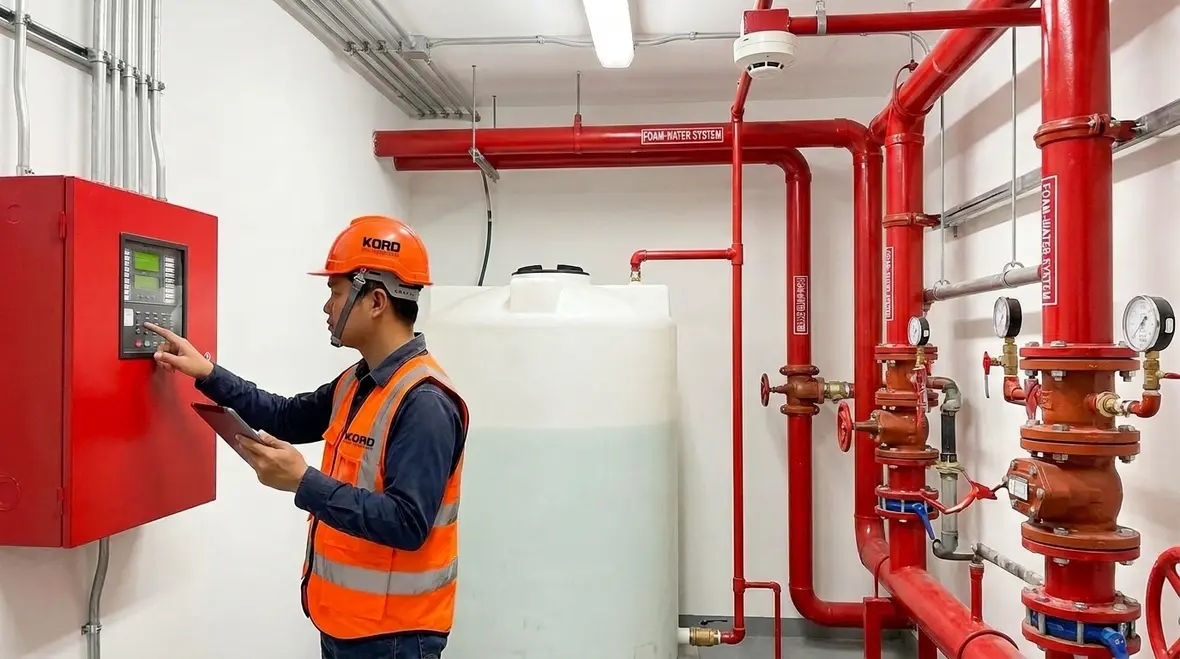
NFPA 16 Section 6.10: Automatic System Detection for Foam-Water Systems
Quick Answer: NFPA 16 Section 6.10 requires automatic detection that rapidly identifies fire conditions and triggers foam-water system operation. The intent is dependable actuation, proper signaling, and verified system readiness through inspection, testing, and maintenance. Facilities must design, document, and maintain detection performance consistently.
Facilities coordinating detection with long-term service planning often pair this work with foam fire suppression system maintenance and testing so detection, actuation, and documentation stay aligned instead of becoming three separate headaches.
What Section 6.10 is trying to achieve
NFPA 16 Section 6.10 focuses on the automatic detection function that initiates foam-water system response. For commercial, industrial, and retail properties, the core compliance challenge is not only having detectors installed, but also ensuring they work as an integrated system: sensing the right condition, reporting reliably, and transferring actuation to foam-water controls without unnecessary delays or nuisance behavior. This is the operational backbone behind automatic detection foam-water systems and the practices that keep them effective year after year.
To support compliance and reduce operational downtime, facilities should align design details with the current NFPA 16 requirements and a documented inspection, testing, and maintenance plan. For a baseline view of the standard and how it is commonly applied, reference: NFPA 16 standard requirements.
Where detection fits in the foam-water actuation chain
In foam-water systems, detection drives the sequence. Section 6.10 expects the facility to achieve consistent system response by ensuring detection, signaling, and control logic work together. Typically, the chain involves:
Initiating device layer such as heat, smoke, or flame detection based on the hazard and environment.
Control and signaling layer including panel logic, supervision, and alarm signaling paths.
Actuation and release layer that opens the correct valves or triggers the correct equipment to discharge foam-water.
Flow and verification expectations that confirm the system actually enters the intended discharge state.
Common failure points arise when the detection strategy does not match the hazard behavior. For example, a detector type chosen for general spaces may not reflect fast flame growth in a flammable liquid area, or it may be prone to nuisance actuation from steam, dust, cooking residues, or HVAC-driven stratification.
How automatic detection foam-water systems should be engineered and documented
Compliance relies on clear documentation and careful alignment between the hazard description and the detection strategy. Section 6.10 management typically requires the facility to demonstrate that detection coverage, mounting placement, and control integration reflect the intended operational response.
1) Hazard and environment match
Detectors must be selected and arranged based on expected fire signature and ambient conditions. Areas with high airflow, condensation, aerosols, or heavy dust require disciplined selection and placement. The goal is to avoid two extremes: late response to the fire signature or excessive nuisance activations.
2) Control logic and supervision
Detection must interface with the foam-water control logic so that actuation occurs as designed. Supervisory wiring, fault monitoring, and alarm routing often require verification, including ensuring that device troubles do not mask the ability to actuate. Facilities commonly overlook changes to fire alarm panels, network wiring, or altered point mapping that can break actuation pathways while leaving the building alarm sounding.
3) Coordination with system components
Automatic detection depends on downstream components staying operational. The facility should validate that actuation pathways, valves, solenoids, release circuits, and power supplies behave correctly under normal and alarm conditions. Any change to electric release equipment, low voltage power, or valve response time can shift system performance outside design assumptions.
Inspection and testing realities for commercial facilities
NFPA 16 compliance does not end at installation. Detection performance must be verified over time. For many facilities, inspection and testing becomes the highest risk compliance period because changes happen between inspection cycles: maintenance activities alter ceilings, tenants change storage layouts, and contractors relocate ceiling-mounted equipment or add obstructions.
What inspectors typically verify
Detector condition: cleanliness, physical integrity, correct spacing, and appropriate placement relative to obstructions.
Supervision and trouble signals: that faults are detected and reported as required.
Functional response: that a simulated or actual initiating condition results in the intended actuation sequence for the foam-water system.
Alarm and annunciation: that the correct zones and control indicators identify the affected area.
Common operational challenges
Hidden obstructions: seasonal merchandising setups, temporary partitions, and structural additions can block detector fields of view.
Environmental drift: HVAC changes can alter smoke transport patterns and delay detector response.
Interconnection changes: panel firmware updates or point reassignments can disrupt foam-water actuation even when building evacuation functions remain normal.
Maintenance-induced faults: disconnected input modules, damaged wiring jackets, or incorrect actuator resets after prior tests.
Failure modes that derail actuation from detection to foam-water discharge
Section 6.10 effectively demands reliability. The most preventable failures cluster around the detection-to-control interface. Typical failure modes include:
Detector sensitivity mismatch: detectors that do not reach the intended response threshold for the hazard signature.
Zone mapping errors: a detector reports alarm to the building fire system but not to the foam-water release logic.
Control circuit interruption: open or short faults, improperly supervised circuits, or control panel logic changes.
Valve or release not responding: delayed or failed valve actuation that prevents foam-water discharge even after detection.
Insufficient verification: periodic tests do not confirm the full actuation and discharge sequence end to end.
For facilities seeking to minimize these risk points, Kord Fire Protection supports proactive compliance programs that include coordinated detection and system actuation verification, documentation, and correction tracking. This approach strengthens audit readiness and reduces the chance that detection passes inspection but actuation fails under real conditions.
How Kord Fire Protection helps maintain ongoing compliance
Commercial operations often require careful scheduling, limited downtime, and repeatable testing procedures. Kord Fire Protection helps facility teams manage automatic actuation requirements with structured field verification and clear reporting. This includes:
Planning inspection and testing work to avoid disrupting business-critical operations.
End to end verification of detection signaling through foam-water actuation paths.
Documentation support that helps demonstrate compliance readiness to AHJs and internal safety stakeholders.
Maintenance and remediation tracking that reduces repeat failures caused by unresolved deficiencies.
When facilities treat automatic detection foam-water systems as an ongoing operational asset rather than a one-time installation, detection performance becomes easier to defend during inspections and easier to maintain across tenant and layout changes.
Frequently Asked Questions
Conclusion and call to action
Automatic detection foam-water systems succeed only when detection, control logic, and actuation work together and stay verified. Facilities should review detection coverage, confirm wiring and point mapping, and validate end to end actuation during routine testing. Kord Fire Protection can help with inspection planning, functional verification, documentation, and remediation so your foam-water detection system remains compliant and dependable. Schedule a compliance review today.

Join Our Newsletter!
Get the latest fire safety tips delivered straight to your inbox From our Newsletter.



