
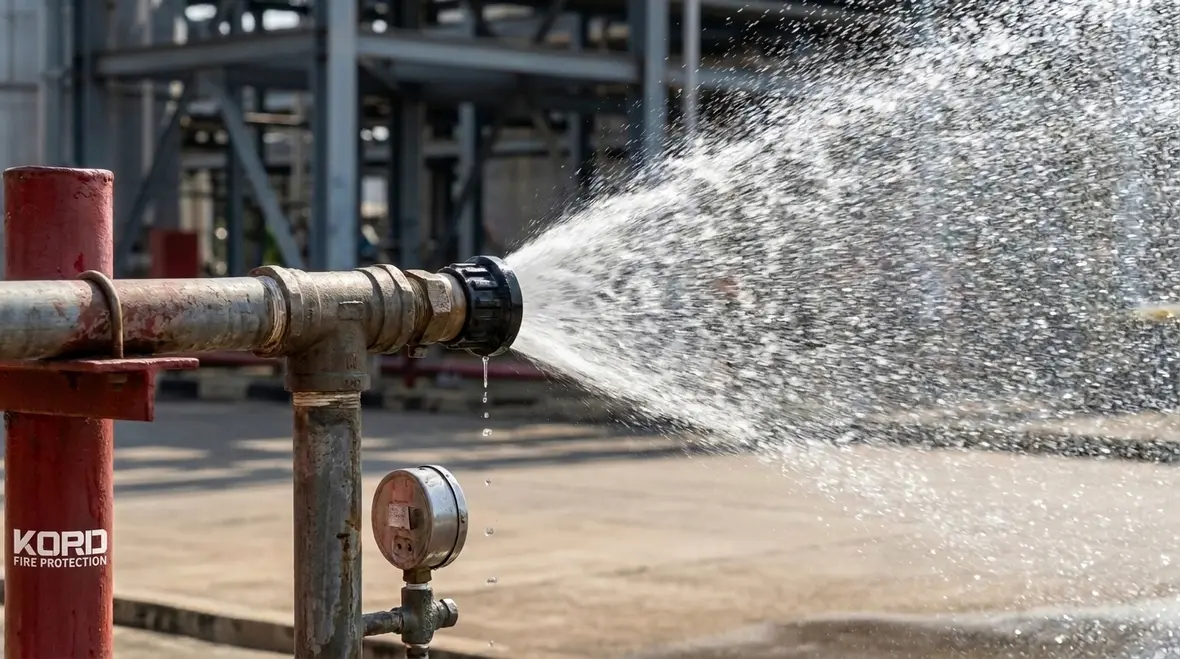
NFPA 15 Section 8.1: The 20 psi Minimum Operating Pressure Rule for Outdoor Nozzles
Quick Answer
NFPA 15 Section 8.1 sets a baseline hydraulic requirement for outdoor spray nozzles: the system must provide a minimum nozzle pressure of 20 psi at the remote discharge points. Proper compliance depends on correct hazard design, piping loss calculations, nozzle elevation, and reliable pump performance.
What NFPA 15 8.1 Is Trying to Prevent
Outdoor water spray systems face a repeatable set of real world problems: long pipe runs, elevation changes, friction loss buildup, nozzle performance variations, and seasonal maintenance lapses that quietly reduce effective flow. NFPA 15 8.1 addresses these risks with the 20 psi minimum operating pressure rule for outdoor nozzles. In practice, this drives how engineers document NFPA 15 8.1 hydraulic calculations minimum nozzle pressure 20 psi outdoor and how contractors verify that the installed system can still meet that requirement under test conditions.
Commercial facilities such as industrial plants, warehouses, and retail centers often struggle when design assumptions and field realities diverge, including undersized piping, unaccounted fittings, or worn or mispositioned nozzles. Kord Fire Protection supports ongoing compliance with commissioning, verification testing, and maintenance practices that preserve hydraulic performance over time.
If you are building the bigger maintenance picture around this requirement, Kord Fire Protection’s water spray system inspection, testing, and maintenance guide fits naturally here because it connects nozzle condition, discharge planning, and documentation to long term reliability. ([kordfire.com](https://kordfire.com/nfpa-25-water-spray-system-inspection-testing-and-maintenance/?utm_source=openai))
Understanding the 20 psi Outdoor Nozzle Pressure Requirement
NFPA 15 Section 8.1 establishes that outdoor nozzles must receive a minimum operating pressure of 20 psi at the nozzle to ensure the spray pattern and discharge characteristics meet design intent. The critical compliance point is not the pump discharge pressure by itself. Inspectors and engineers evaluate the pressure at the nozzle end of the calculation model, reflecting the true hydraulic path from the pump to the remote operating nozzle.
Why the rule matters to actual discharge performance
Outdoor nozzle performance typically depends on stable pressure to achieve the required spray characteristics. If the nozzle pressure drops below the minimum threshold, several operational outcomes can occur:
- Reduced flow per nozzle relative to design intent
- Altered spray angle and coverage
- Weakened distribution uniformity across the protected area
- Potential mismatch with calculated fire water application rates
What counts as “outdoor” in hydraulic verification
Compliance hinges on how the system is classified for the outdoor hazard area and where the discharge points connect. A recurring field issue occurs when the system layout changes between design and installation, such as relocation of piping or nozzle positioning near building transitions. These changes can shift the remote nozzle location and change the pressure at discharge, even when pump setup remains unchanged.
To reduce that risk, facilities should ensure the final as built drawings match the hydraulic model inputs, including nozzle location, elevation, and valve and piping configuration.
How NFPA 15 8.1 Hydraulic Calculations Demonstrate Compliance
Meeting the rule requires a documented hydraulic path analysis that verifies the nozzle end pressure for the most demanding conditions. The process typically includes selecting the design operating point, calculating friction and minor losses, applying elevation adjustments, and confirming that the resulting pressure at the outdoor nozzle is at least 20 psi.
1) Identify the remote nozzle and the most unfavorable hydraulic path
The remote nozzle is not always the farthest nozzle by distance. NFPA 15 modeling uses system piping and arrangement that produce the greatest total pressure loss to the nozzle under the design operating mode. That can be driven by:
- Longest equivalent length of pipe
- Most restrictive configuration of valves and fittings
- Specific branch arrangement and simultaneous operation assumptions
- Elevation difference between pump suction, system headers, and nozzle
2) Calculate pressure losses along the pipe route
The hydraulic calculation should include friction loss through pipe and minor losses from components such as elbows, tees, check valves, strainers, and control assemblies. A common compliance failure occurs when contractors install fittings with different equivalent lengths than those used in the calculation model. Even small changes can push nozzle pressure below the 20 psi minimum at the remote outdoor point.
For pump performance credibility, the calculation should reference the pump curve correctly and confirm operating pressure under the expected flow demand. If pump selection and trim constraints were conservative during design, field wear and maintenance deferrals can later reduce available pressure margin.
3) Confirm elevation effects and nozzle end pressure
Elevation changes can either increase or decrease pressure at the nozzle end depending on the relative heights of the discharge point compared to pump and header reference elevations. Hydraulic models should apply these elevation adjustments consistently across the system. The output is the nozzle end pressure used for the NFPA 15 8.1 compliance check.
Where the 20 psi test point typically shows up during acceptance
When facilities perform acceptance and periodic testing, they generally validate pump discharge pressure, flow, and system pressure points with calibrated instruments. However, operational verification is still about nozzle end conditions. Because pressure gauges rarely sit directly at the nozzle, hydraulic calculations bridge the gap from measured system pressures to the nozzle end requirement.
Where systems allow, facilities should also ensure that test connections, drains, and pressure monitoring locations do not inadvertently create additional losses or bypasses that alter system behavior compared to the designed operating configuration.
Why Systems Fall Short: Commercial Installation and Maintenance Triggers
Systems often fail the outdoor minimum nozzle pressure requirement due to a small set of repeatable factors. These are not theoretical issues. They appear in commercial and industrial projects after renovations, deferred maintenance, and late coordination between trades.
Pipe layout changes after design
Re routing for structural steel, utilities, or architectural constraints can increase friction loss. When the final routing differs from the design drawings, the hydraulic model becomes outdated. If the design engineer does not receive revised layout information, NFPA 15 8.1 hydraulic calculations minimum nozzle pressure 20 psi outdoor may not reflect installed conditions.
Valve and strainer condition drift
Valves can change flow behavior due to partial closure, misalignment, or buildup in strainers and screens. A strainer that was clean at commissioning may later become restrictive enough to reduce nozzle pressure during actual flow operation. Maintenance programs should treat strainer cleaning and valve verification as pressure critical tasks for outdoor systems.
Nozzle selection, orientation, and cleanliness
Outdoor nozzles can be impacted by debris, splash, and corrosion environment. If nozzles are swapped with similar but not equivalent models, discharge characteristics can change. Additionally, improper nozzle seating or clogged orifice conditions can reduce performance. Even when the system still produces flow, nozzle end pressure and spray quality can be inconsistent.
Pump curve mismatch or insufficient operating margin
Some facilities select pumps to just meet calculated requirements. That approach increases sensitivity to aging, wear ring changes, seal drag, and maintenance condition. Without margin, the outdoor nozzle end minimum can become difficult to maintain during routine variations, such as seasonal water supply differences or partially loaded conditions.
Industry guidance and references for understanding fire pump and system performance are helpful for teams working across disciplines. Fire pump organizations and technical communities also provide frameworks for pump testing and performance evaluation, including resources at Fire Pumps’ NFPA 20 fire pump acceptance testing guide. ([firepumps.org](https://firepumps.org/blog/nfpa-20-fire-pump-acceptance-testing-guide/?utm_source=openai))
A Practical Compliance Workflow for Facilities
To sustain NFPA 15 outdoor compliance, facilities should treat the 20 psi minimum operating pressure requirement as a system level performance metric, not just a design calculation line item. The workflow should connect engineering, installation, commissioning, and ongoing maintenance.
Step 1: Verify design inputs match as installed data
Before acceptance, compare:
- As built piping lengths, fittings, and valve types to the model assumptions
- Nozzle model numbers, elevations, and layout to the design drawings
- Control valve positions and setpoints to the intended hydraulic mode
Step 2: Commission to confirm pump and system performance
Commissioning should confirm that the pump delivers the expected pressure and flow under the design discharge scenario. Pressure instrumentation should be calibrated and positioned to support accurate hydraulic interpretation. Where feasible, facilities should document the relationship between measured pressures and calculated nozzle end pressure, using the same methodology referenced in the calculation package.
Step 3: Maintain pressure critical components
Outdoor systems should include routine maintenance that focuses on pressure impacting items:
- Clean strainers and verify valve movement
- Inspect nozzles for clogging, damage, and correct model
- Confirm discharge obstructions are absent
- Verify pump performance and maintain adequate operating margin
Kord Fire Protection helps commercial facilities maintain compliance by coordinating testing and maintenance that preserves hydraulic performance. This reduces the likelihood that later inspections find the system cannot sustain the required nozzle pressure under operation.
For further context on water spray fixed systems and how facilities align protection concepts with practical implementation, refer to NFPA 15 enhancing fire safety with water spray fixed systems. ([kordfire.com](https://kordfire.com/nfpa-15-section-5-1-general-system-components-requirements/?utm_source=openai))
Frequently Asked Questions
Conclusion: Confirm the 20 psi Margin Before the Next Inspection
NFPA 15 8.1 hydraulic calculations minimum nozzle pressure 20 psi outdoor is achievable, but only when design assumptions match installed reality and pressure critical components stay clean and properly set. Kord Fire Protection can review your hydraulic documentation, verify as built alignment, support commissioning, and maintain system performance so your outdoor nozzles remain compliant. Contact Kord Fire Protection to schedule a compliance assessment and performance verification for your water spray system.
Learn more at kordfire.com or kordelectric.com.

Join Our Newsletter!
Get the latest fire safety tips delivered straight to your inbox From our Newsletter.



