NFPA 25 Water Spray System Inspection Testing and Maintenance
Quick answer: NFPA 25 sections 10.1 through 10.5 sets the inspection, testing, and maintenance expectations for fixed water spray systems that protect industrial hazards. This article explains what those sections cover, how facilities in Australia can plan compliance work, and why Kord Fire Protection can partner to keep systems reliable when it matters most.
In a world where fire safety checklists multiply like pop quizzes, NFPA 25 keeps things grounded. And yes, water spray systems are not “set and forget.” They need attention, the calm kind you can schedule.
For sites that want a broader support structure near the top of the process, full fire protection services can fit naturally into the conversation because inspection, testing, maintenance, repairs, and documentation all work better when they are coordinated instead of scattered across separate vendors and separate clipboards. That bigger service picture also connects well with Kord Fire Protection’s NFPA 25 overview for complete water-based fire protection systems maintenance, which helps frame how fixed water spray systems sit inside the wider compliance program.
What NFPA 25 sections 10.1 through 10.5 requires for water spray systems
NFPA 25 sections 10.1 through 10.5 focuses on fixed water spray systems installed for industrial hazards, including areas where hazards and heat loads make quick control essential. In practice, these sections drive a disciplined approach to NFPA 25 water spray system inspection testing, plus the maintenance actions that keep nozzles, piping, valves, and water supplies operating as designed.
Moreover, facilities often discover that compliance is not just paperwork. It is also system performance: correct spray patterns, proper water delivery, and reliable components that do not drift over time. Therefore, the right program blends inspection, periodic tests, documentation, and repair planning.
How inspections under 10.1 keep the system ready
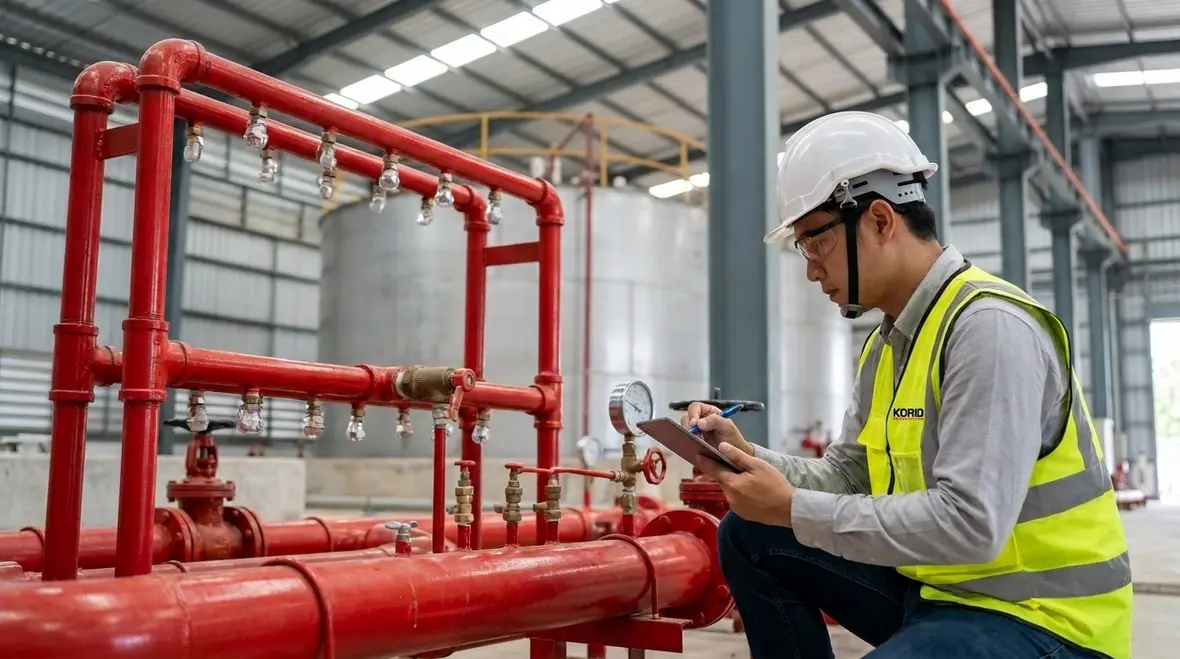
Under 10.1, the inspection actions aim to confirm that the system stays in a usable condition. First, inspectors confirm the system components remain accessible and free from damage. Then they check that valves, controls, and supervisory devices appear in their proper states.
Next, attention often shifts to conditions that quietly degrade performance. For example, corrosion in humid environments, paint overspray on valve labels, or blocked drainage paths can all reduce effectiveness. Also, misplaced storage or new plant layouts can interfere with spray distribution. That is why inspections must account for how the site changes, not just how the system looked on day one.
To keep the job practical, most facilities in Australia benefit from pairing inspection walkdowns with a short as-built versus current condition review. As a result, teams catch issues early, before the next test reveals them the hard way.
What inspectors tend to notice first
Small visual problems can signal much bigger performance issues. A valve that is technically present but awkward to access, a nozzle that picked up residue from nearby work, or a sign plate that became unreadable after years of site changes can all chip away at readiness. None of those issues feels dramatic in the moment. Together, they become the kind of quiet drift that turns an emergency system into a maybe system, and maybe is not a great fire protection strategy.
Testing under 10.2 verifies water delivery and performance
Testing in 10.2 verifies that the system performs within required limits. While the details vary by system design and hazard classification, the objective remains consistent: water must flow when commanded, and the delivery path must match the system’s intent.
During NFPA 25 water spray system inspection testing, technicians typically evaluate the functionality of supervisory and actuation components, plus key water flow indicators. Then they verify that the system responds as expected without delay. Furthermore, they confirm the system does not introduce unexpected constraints, such as partial valve closure, blocked strainers, or pressure losses that can flatten spray patterns.
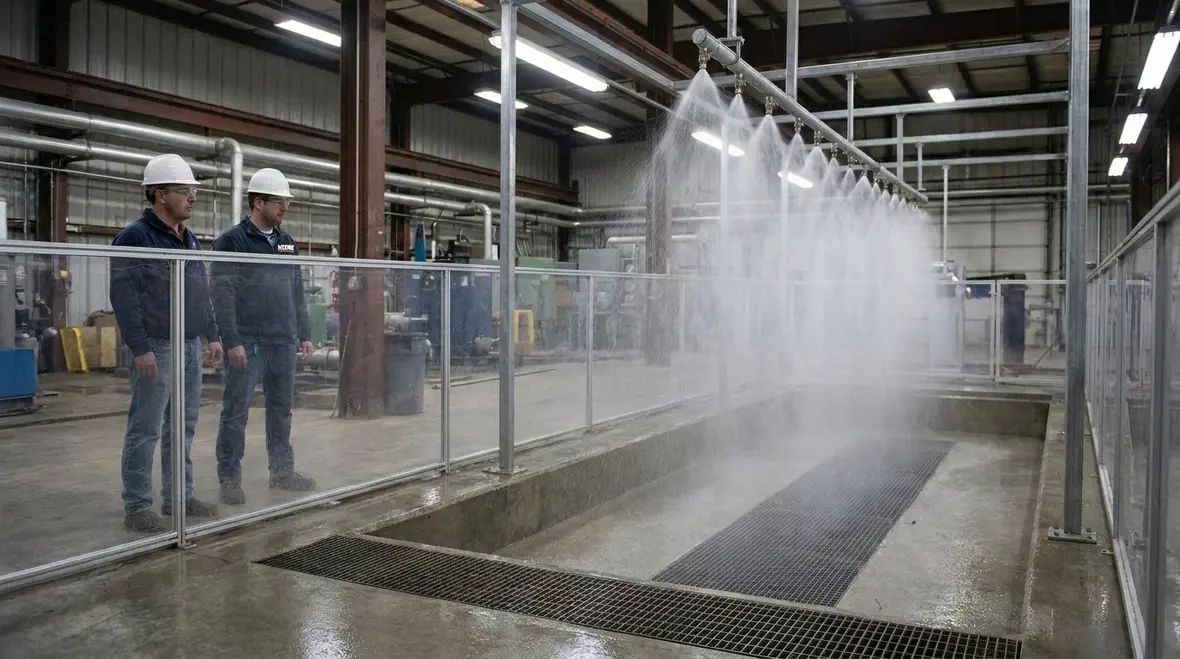
And yes, water spray tests can create a few watery surprises if the facility forgets to plan. That is why controlled procedures, drainage considerations, and coordination with operations matter. A professional test plan prevents oops moments that turn safety into a comedy of errors.
Why test planning matters before the water starts moving
A good test does more than prove the equipment can move water. It proves the site can manage the event safely. That includes access control, alarms, drainage, work permits, nearby production activities, and post-test restoration. When those details are handled properly, the test supports confidence. When they are ignored, everyone suddenly becomes very interested in where the runoff is going.
Inspection, flow, and discharge details in 10.3 and 10.4
Sections 10.3 and 10.4 expand on how facilities verify more specific aspects of performance. At this stage, the focus moves beyond does it work and toward does it work correctly in your real environment.
For many industrial sites, discharge characteristics matter because spray effectiveness depends on nozzle condition, alignment, and unobstructed coverage. Therefore, technicians may examine sprinkler and nozzle condition, check for obstructions, and confirm that the system’s spray arrangement aligns with the design intent.
Also, the facility must treat water supply readiness as a first-class requirement. If the water source is unstable, restricted, or degraded, the test results tell a story that no spreadsheet can fix. Consequently, proper system maintenance connects directly to reliable water delivery, and that link should never be ignored.
To keep workflows smooth across multiple buildings, Kord-style job planning typically groups related tasks, schedules them around production windows, and documents outcomes clearly so facilities can track trends over time.
Coverage problems rarely announce themselves politely
This is where details matter. A slightly misaligned nozzle, a new obstruction from a process change, or a water supply issue that seems minor on paper can all change actual spray performance. In industrial environments, small changes rarely stay small for long. A disciplined review helps the facility catch those shifts before they become downtime, damage, or a very uncomfortable conversation after an incident.
Maintenance under 10.5 prevents slow failure and costly downtime
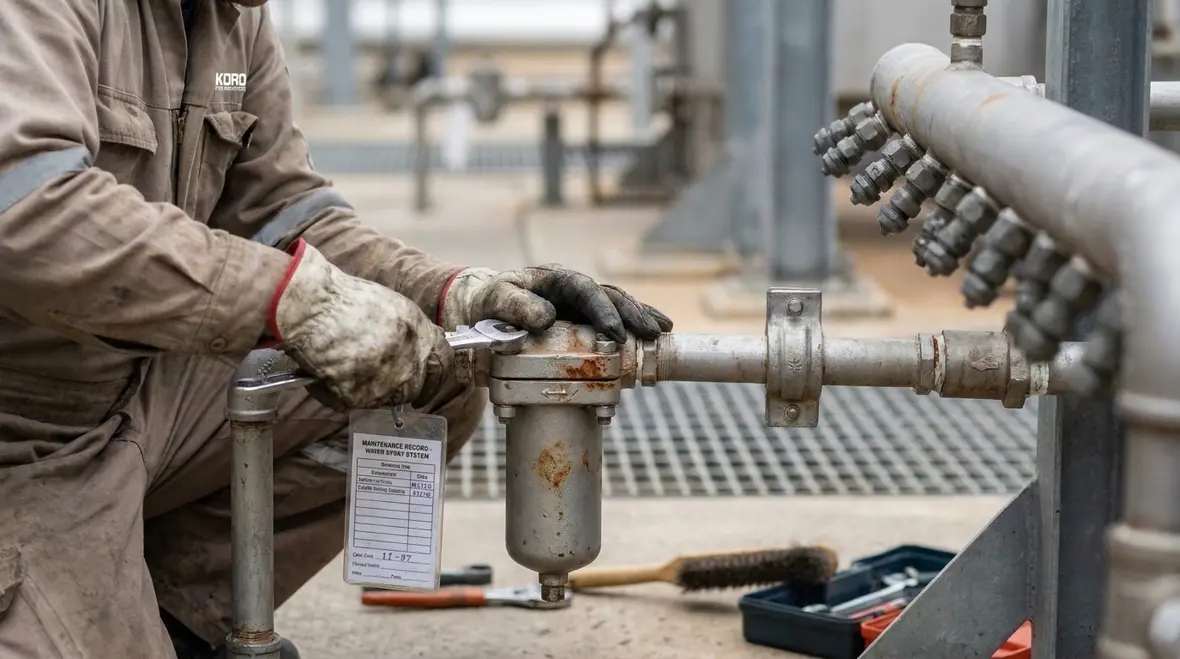
Where 10.1 through 10.4 reveal condition and performance, 10.5 ensures the system stays dependable. Maintenance actions include repairs, replacement of worn parts, and cleaning where required to keep flow characteristics stable. In addition, maintenance aligns with the reality that industrial hazards evolve: equipment changes, ventilation patterns shift, and access areas get rearranged.
Therefore, a strong maintenance plan treats the water spray system like critical infrastructure. It sets priorities, manages spares, and keeps components within acceptable operating limits. Also, it helps facilities in Australia avoid reactive work that interrupts production. After all, nobody wants to chase a system failure at the worst possible time, like a movie villain who chose the darkest hallway.
In business terms, this reduces downtime risk, protects compliance posture, and supports smoother operational continuity. In safety terms, it helps keep suppression capability where it belongs: ready, reliable, and effective.
Why Kord Fire Protection can become a vital partner for ongoing compliance
Facilities across Australia often run multiple compliance programs at once, and coordination can become messy. This is where Kord Fire Protection can act as a vital partner, helping owners and managers turn NFPA 25 obligations into an organised, serviceable system rather than a yearly scramble.
First, Kord Fire Protection can support NFPA 25 water spray system inspection testing through structured service planning that matches site risk, access constraints, and operational schedules. Then the team helps facilities maintain a consistent documentation trail, so inspections, test results, and corrective actions stay easy to trace.
Next, Kord can support integration across related fire protection elements, because industrial sites rarely live in silos. When valves, alarms, water supplies, and housekeeping habits are managed as a connected package, performance improves and surprises shrink. And when a maintenance issue appears, the response can move from we’ll look at it later to it is handled, verified, and recorded.
In short, Kord helps turn compliance into a calm routine, not a fire drill for compliance staff. That is the kind of partnership that keeps safety from becoming guesswork.
How facilities can plan NFPA 25 work across industrial, retail, and commercial sites
Even though NFPA 25 targets industrial hazard systems, facilities still need a practical cadence that works across multiple buildings and operating teams. That starts with mapping where systems sit, who controls access, and what production windows can support testing.
Then, teams should define the scope early: what gets inspected, what gets tested, and what maintenance tasks follow based on findings. After that, they can schedule corrective work so it does not pile up after testing. Additionally, facilities should coordinate water discharge planning and drainage pathways, so the test day stays controlled.
To reduce friction, owners should ask service partners for a clear plan that includes dates, component lists, expected impacts, and documentation outputs. Finally, the facility should use results to improve future performance, such as addressing recurring obstruction patterns or identifying parts that degrade faster in local conditions.
A practical rhythm beats last-minute scrambling
The smartest compliance programs usually look boring from the outside, and that is a compliment. They have dates, scopes, responsibilities, follow-up actions, and records that are easy to trace. They do not rely on memory, luck, or one heroic person who knows where everything is. When the plan is steady, the site stays steady too.
Quick overview with two-column guidance for job-day readiness
What to prepare
- Confirm access paths to valves, nozzles, and control panels
- Review latest drawings and any site changes
- Plan drainage for discharge and runoff
- Identify production constraints and safe work zones
Why it matters
- Reduces delays and improves test accuracy
- Prevents mismatches between design and current layout
- Protects floors, services, and operational areas
- Keeps testing safe for staff and contractors
FAQ about NFPA 25 water spray system inspection testing
Conclusion: Schedule your next service with a steady hand
NFPA 25 sections 10.1 through 10.5 sets clear expectations for water spray fixed system inspection, testing, and maintenance for industrial hazards. When a facility plans these tasks with care, it reduces uncertainty, protects operations, and supports real fire readiness.
Kord Fire Protection can help you build a compliant, repeatable service program and handle corrective actions with confidence. Contact Kord Fire Protection to discuss your system and schedule the next job.

Join Our Newsletter!
Get the latest fire safety tips delivered straight to your inbox From our Newsletter.