
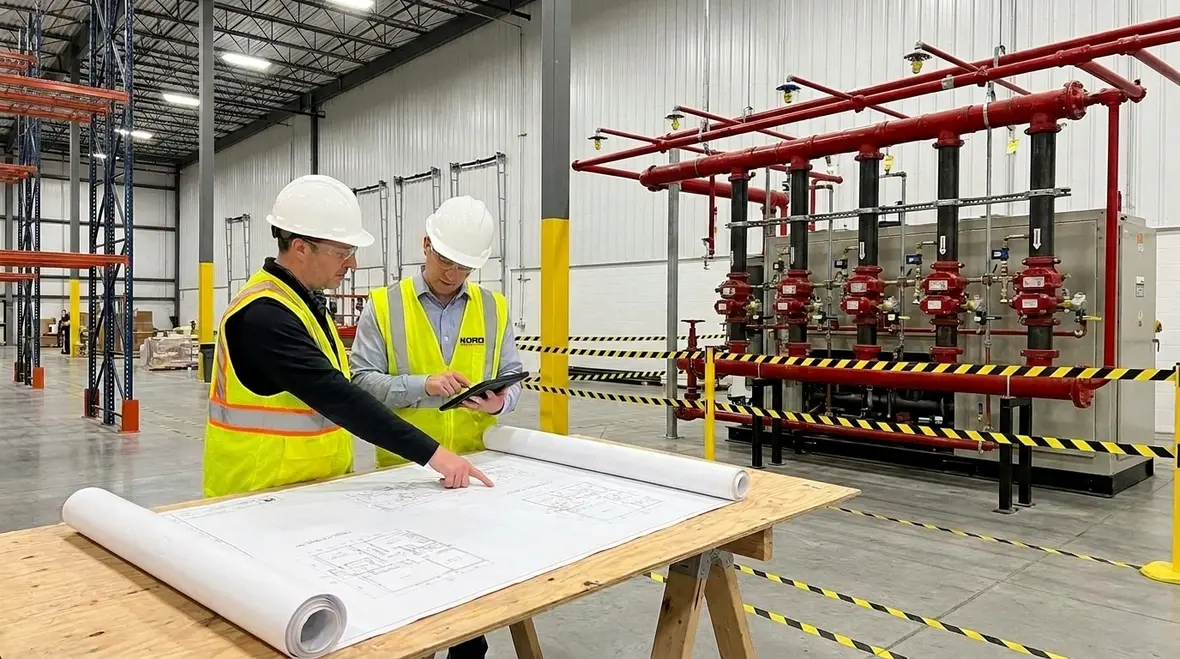
NFPA 15 Section 4.3 Qualified Personnel Water Spray Design
Quick Answer: NFPA 15 Section 4.3 sets the bar for who can design water spray systems, and that matters because these systems protect high value industrial, commercial, and retail assets from fire spread and heat damage. In plain terms, qualified people must know the code, the hazard, the water supply, and the real world site risks. Kord Fire Protection can help deliver that level of skill with calm, precise, code aligned support.
When a project calls for fire protection design that actually works outside a spreadsheet, it helps to involve a team with hands on system experience. Kord Fire Protection’s fire sprinkler system service expertise fits naturally into that conversation because system design, testing, readiness, and long term performance should never act like total strangers at the same jobsite.
Why NFPA 15 qualified personnel water spray design matters
NFPA 15 qualified personnel water spray design is not a box ticking exercise. It shapes how a system performs when heat rises, alarms sound, and every second starts to count. Section 4.3 focuses on competence, because a water spray system must match the hazard, the building, and the available water supply. Otherwise, the system can look impressive on paper and fail in the field. That would be a costly plot twist, and not the fun kind.
For industrial plants, retail centres, warehouses, and commercial facilities across Australia, the design team must understand the fire load, exposed equipment, process areas, and access limits. In addition, they must know how to balance protection with practical site use. A qualified designer does more than place nozzles on a drawing. They make sure the system will deliver the right spray pattern, density, and response for the risk.
This is exactly why the person doing the work matters as much as the hardware being specified. Nozzles, valves, and piping do not magically assemble themselves into a smart strategy. Someone has to decide how the system responds to exposure fire, how the water reaches critical surfaces, and how the design avoids blind spots, blocked discharge, and weak pressure performance. If those calls are made badly, the layout may still look neat enough to impress a meeting room while quietly underperforming where it counts.

What Section 4.3 expects from the design team
NFPA 15 Section 4.3 calls for competent personnel to handle design work. In simple terms, the standard expects the designer to have proper knowledge of fire protection principles, water spray system components, and the specific hazard being protected. Therefore, the person leading the design must understand both the code and the site conditions.
Core abilities a qualified designer should bring
- identify the hazard and its fire exposure
- select the correct water spray application method
- calculate water demand and pressure needs
- check water supply reliability and duration
- coordinate with pumps, valves, alarms, and control systems
- account for layout limits, access, and maintenance needs
As a result, the job demands more than general trade experience. It needs a person or team that knows how each part of the system behaves under stress. Even Batman would want a competent fire protection designer before trusting a warehouse full of assets.
A solid design team also knows when a hazard does not fit a generic template. Some protected areas need exposure cooling, some need equipment shell coverage, and some need layout adjustments because site geometry refuses to cooperate. The value of competence is not just knowing the rule. It is knowing how to apply the rule when reality starts being difficult.
Who qualifies as competent under NFPA 15 Section 4.3
Qualified personnel are those with proven training, experience, and code knowledge for water spray systems. They may include fire engineers, specialist designers, and experienced fire protection consultants who understand suppression and exposure protection. However, competence is not just a certificate on the wall. It also means the person can make sound decisions in the field.
For Australia based projects, this often matters even more because sites may need to align NFPA guidance with local rules, insurer demands, and operational needs. Therefore, a competent designer must understand the full picture. They should know how to adapt the design without weakening the protection. That kind of judgment separates a safe system from an expensive ornament with pipes.
Competence is part technical skill, part practical judgment
The strongest designers ask sharp questions early. What are the likely fire scenarios. Which surfaces need wetting. Are obstructions going to interrupt spray distribution. How dependable is the water source under emergency demand. Will future changes in plant layout create shadow zones. This habit of asking annoying but necessary questions is not overthinking. It is how expensive surprises get stopped before they become commissioning day disasters.

What a strong water spray design process looks like
A strong design process starts with site review. First, the team studies the hazard, the equipment, the surrounding exposure, and the fire scenario. Next, they confirm the water source and system pressure. Then they build the layout, choose the spray pattern, and set the control strategy. After that, they review the plan against the standard and the site objectives.
To make the process easier to understand, here is a simple comparison.
| Design Step | Why It Matters |
| Hazard review | Defines what the system must protect |
| Water supply check | Confirms the system can perform during a fire |
| Nozzle layout | Ensures the spray reaches the right surface areas |
| Control and alarm integration | Supports fast activation and site awareness |
| Code review | Reduces design gaps and compliance risk |
Because water spray systems often protect special hazards, the details matter. A small change in nozzle spacing or water pressure can affect performance. Therefore, the design team must stay careful from the first sketch to the final sign off.
Why process discipline matters in real projects
Strong process is what keeps a project from drifting into assumptions. A team that reviews hazard conditions properly can catch issues such as blocked spray paths, questionable equipment spacing, limited maintenance clearance, or a water source that looks fine until multiple demands hit at once. Each of those problems is easier to solve during design than after installation, and much easier than during an emergency when nobody wants to discover that optimism is not a fire protection strategy.
Teams that want more background on water spray fixed systems can also review Kord Fire Protection’s NFPA 15 water spray fixed systems guide, which adds useful context around how these systems are applied and why the standard matters in the first place.
How Kord Fire Protection supports NFPA 15 water spray projects
Kord Fire Protection can become a vital partner when a project needs NFPA 15 qualified personnel water spray design. The reason is simple. Skilled fire protection support saves time, reduces design risk, and helps facilities move from concept to compliant protection with less drama than a season finale cliffhanger.
- site reviews and hazard checks
- water spray system design support
- NFPA aligned documentation
- coordination with other building systems
- installation guidance and commissioning support
- ongoing system review for changing site needs
For industrial and commercial operators, this support can be a major advantage. Facilities often need practical answers, not just technical theory. In addition, they need a partner that understands uptime, asset protection, and the pressure of keeping operations moving. Kord Fire Protection helps bridge that gap with clear advice and reliable delivery.
That practical support matters because water spray design rarely lives alone. It has to coordinate with alarms, controls, shutoffs, pumps, access routes, inspections, and future servicing. A team that can connect those moving parts early reduces backtracking later. That means fewer revisions, fewer site clashes, and far fewer meetings where everyone politely pretends the ceiling space is somehow getting larger.
Why compliance and real world use must work together
Good compliance alone does not guarantee good performance. A system can meet a code requirement and still fall short if it ignores maintenance access, plant changes, or the way people actually use the space. Therefore, the best NFPA 15 qualified personnel water spray design balances standard requirements with day to day reality.
This matters across Australia because sites change. New equipment arrives. Storage patterns shift. Tenants move. Retail spaces remodel. Industrial lines expand. As a result, the fire protection design must stay flexible and practical. A good partner reviews these changes early, before they become a costly fire protection headache. Nobody wants to discover a spray shadow after the ceiling is already closed.
Design for the site people actually operate
The best systems respect both the standard and the day job. They allow room for inspection, account for access pathways, and acknowledge that facilities evolve over time. When design ignores those realities, people end up working around the protection instead of with it. That is usually where reliability starts to slip. Good design keeps the system useful on ordinary days so it is dependable on the worst day.
FAQ
Moving from code to action
NFPA 15 Section 4.3 places real weight on qualified design, because water spray systems protect serious assets and serious operations. For facilities across Australia, the safest path is clear. Work with experienced fire protection specialists who understand the code, the site, and the pressure of getting it right.
Kord Fire Protection can help turn that standard into a practical, effective solution. Reach out early, and let the system be ready before the first alarm ever needs to speak. That is a much better ending than hoping everything sorts itself out with heroic last minute improvisation.

Join Our Newsletter!
Get the latest fire safety tips delivered straight to your inbox From our Newsletter.



