
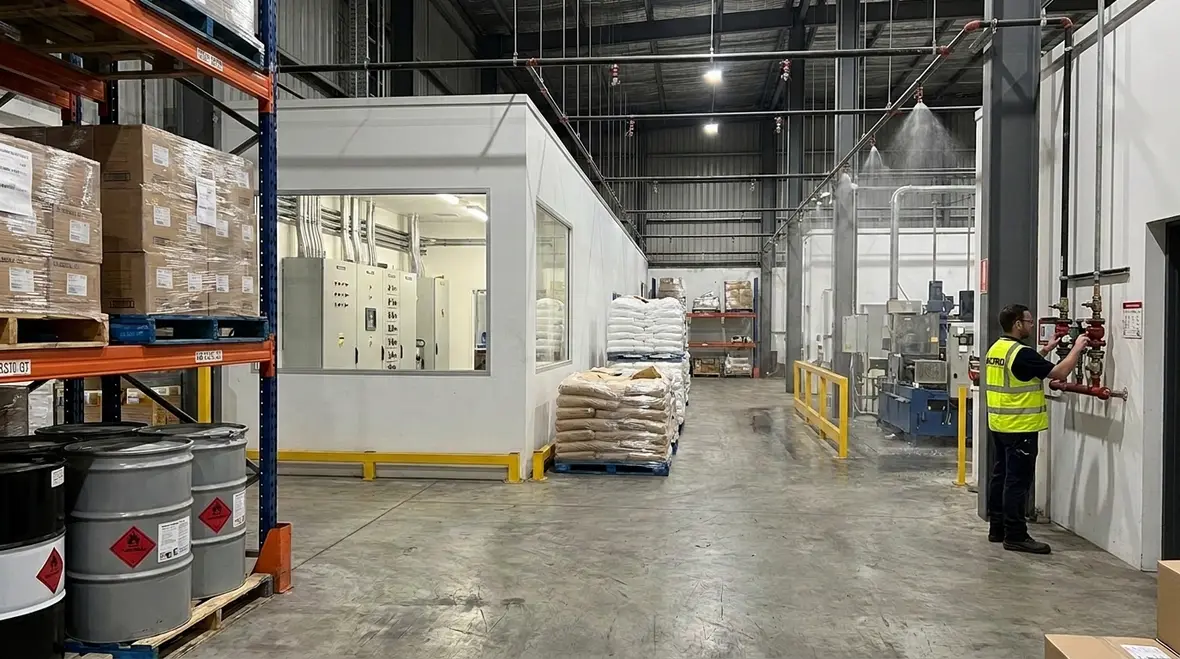
NFPA 15 Section 1.3 Application: 5 Hazard Groups Eligible for Water Spray Protection
Quick Answer: NFPA 15 Section 1.3 supports water spray fixed fire protection for specific hazard categories when system design, water supply, density, spacing, and maintenance meet the standard. The five commonly applied hazard groups include certain flammable liquids, electrical hazards, ordinary combustibles, and selected solid combustibles under controlled conditions.
Commercial facilities that evaluate water spray systems need a clear path from the hazard classification in NFPA 15 Section 1.3 to the actual engineering choices that determine performance in real fires. This article targets the practical interpretation of NFPA 15 1.3 application flammable electrical ordinary combustible hazardous solids and focuses on how designers and fire protection service teams validate that the protection concept matches the occupancy risk.
If you want a broader systems overview before getting deep into Section 1.3, review NFPA 15 enhancing fire safety with water spray fixed systems. It fits naturally here because application criteria only make sense when the water spray system itself is designed to do the job and not just look impressive on paper.
What NFPA 15 Section 1.3 Application Really Requires
NFPA 15 does more than identify when water spray can be used. Section 1.3 establishes the application framework that links hazard type to system performance requirements. In real inspections, compliance often fails not because a hazard group was misidentified, but because the installed system does not deliver the required spray pattern, density, remote actuation timing, or reliable water supply.
Most commercial owners and facilities teams discover that the gap between “eligible hazard group” and “code compliant system” lives in four operational areas:
- Water delivery reliability: pump curve, pressure, duration, and acceptable demand calculation.
- Spray distribution: correct nozzle selection, spacing, and layout to avoid dry zones.
- Control and protection of piping: drain capability, freeze protection, and corrosion management.
- Inspection and maintenance: verification of discharge performance, cleanliness, and waterway condition.
Which 5 Hazard Groups Are Commonly Eligible for Water Spray Protection?
NFPA 15 Section 1.3 Application is interpreted through the hazard group structure used by designers when selecting design criteria. In day to day engineering and commissioning, the hazard groups that typically anchor water spray eligibility for commercial occupancies include these five categories when the occupancy conditions and fire scenario match the standard’s intent for water spray effectiveness.
1) Flammable Liquid Hazard (Section 1.3 Application Flammable)
Water spray can protect certain flammable liquid exposures when the system is designed for the required discharge density, coverage, and protection duration. The core compliance challenge is achieving consistent water distribution over the hazard area so that burning fuel surfaces do not remain untreated or partially untreated.
Common failure points: inadequate coverage due to obstructions, undersized piping causing pressure loss at remote points, and nozzle misapplication that changes spray angle and droplet formation. Facilities also struggle with maintenance because nozzles can accumulate scale or residue, degrading flow and pattern quality.
2) Flammable Electrical Hazard (Electrical-Related Fire Risk)
For electrical hazards, NFPA 15 1.3 application decisions focus on preventing escalation and controlling ignition sources while using water in a way that supports the design intent. Designers typically pair hazard evaluation with equipment layout, enclosure, and protection of critical components.
Operational reality: electrical risk assessments must account for energization conditions, conductor location, and the physical separation between spray discharge and energized equipment spaces. In many facilities, the system can be eligible only where the design basis matches equipment configuration, ventilation, and likely fire growth.
For deeper system selection and life cycle considerations, see the practical overview at NFPA 15 enhancing fire safety with water spray fixed systems.
3) Ordinary Combustible Hazard (Typical Retail and Light Industrial Stock)
Ordinary combustible hazards commonly include storage and stock materials that can contribute to fire growth. Water spray eligibility depends on maintaining the correct application rate and ensuring the spray pattern reaches relevant surfaces and concealed spaces to the extent required by the standard’s design approach.
Where compliance breaks down: designers assume open layout coverage, but real sites include racking obstructions, mezzanines, carts, and ceiling obstructions that block spray. Commissioning must verify the distribution assumptions against the installed geometry.
4) Hazardous Solids (Selected Solid Fuel Loads)
Certain hazardous solids may be eligible when the water spray concept is supported by design intent and when the fuels and exposure conditions do not invalidate water spray effectiveness. Hazardous solids often present additional complexity because fire behavior can involve rapid growth, hidden ignition, or fuel-specific heat response.
Practical compliance note: facility teams must ensure the hazard classification is supported by current inventory, packaging type, and storage configuration. If the product mix changes after design, the hazard group eligibility can shift, which triggers the need for reassessment and potential retrofit.
5) Additional Electrical or Special Electrical-Related Hazard Considerations
Many commercial facilities face electrical hazard complexity beyond a simple “electrical room” label. NFPA 15 hazard classification decisions may treat additional electrical-related spaces as eligible for water spray protection when fire scenarios match design criteria, including enclosure characteristics, equipment density, and expected fire development.
Common maintenance issue: valve assemblies, strainers, and detection interfaces can drift out of tolerance. Even a compliant design can become noncompliant when critical components degrade, leaving the system unable to deliver the required flow and distribution when needed.
How Designers Convert Hazard Groups Into Real System Performance
Eligibility does not mean “install and leave.” NFPA 15 water spray performance hinges on engineering choices that must hold during commissioning and throughout service life.
Density, Coverage, and Spray Distribution
Each hazard group selection drives design criteria such as discharge density and coverage expectations. Engineers validate that nozzle placement achieves effective distribution, including adjustments for ceiling height, obstructions, and sprinkler spacing. For electrical or flammable liquid areas, the system often needs additional attention to avoid under-sprayed zones that allow fire to intensify.
Remote Actuation, Detection, and Control Interface
In commercial and industrial settings, detection and actuation must align with system configuration. A frequent operational problem is mismatched interfaces between the detection system and the water spray control valves, resulting in delayed operation or incomplete release of water. These issues typically appear during functional testing.
Water Supply Performance and Duration
Pumps, tanks, and connected controls must deliver required pressure and flow to all design points at the required duration. A hazard group may be eligible on paper, but if the supply cannot meet the flow demand at end-of-line conditions, the system becomes unreliable under real fire loads.
Commissioning and Verification
Commissioning should include verification of discharge characteristics, valve operation, and inspection of piping integrity. Organizations that treat water spray systems like static infrastructure often miss gradual degradation from corrosion, scale, or nozzle contamination. Regular verification reduces the risk of a system that appears installed but does not perform.
What Commercial Facilities Get Wrong During Compliance and Maintenance
Commercial facilities often operate under strict uptime needs, seasonal staffing changes, and inventory turnover. These factors directly affect NFPA 15 compliance for water spray fixed systems.
Hazard Group Drift from Product and Layout Changes
Hazard classification can change after design due to storage height changes, new product packaging, new storage racks, or added combustible accessories. When that happens, the original NFPA 15 1.3 application basis may no longer match the facility conditions.
Neglected Strainers, Valves, and Waterway Cleanliness
Water spray nozzles and supply components are sensitive to contamination. Scale and sediment can reduce flow and alter spray patterns. Routine maintenance should include inspection of strainer baskets, verification of control valve operation, and nozzle condition checks where required.
Dry Pipe or Preaction System Issues Where Applicable
Where systems are designed with supervisory air or dry components, small control problems can prevent timely water delivery. Inspections should verify supervisory status and confirm drain and priming arrangements operate as intended.
Inadequate Documentation for Authorities Having Jurisdiction
Facilities in retail, distribution, and light industrial settings must maintain inspection records, testing results, and maintenance logs. The documentation burden increases when modifications occur. Clear records also help demonstrate a credible maintenance program when reviewing NFPA 15 compliance.
Partnering for Ongoing NFPA 15 Water Spray Compliance
Water spray systems require continuity. NFPA 15 compliance depends on design intent being sustained through service life. A dedicated fire protection partner helps facilities manage inspections, testing, corrective actions, and documentation across seasonal and operational changes.
Kord Fire Protection supports commercial compliance with structured service planning that addresses both performance verification and maintenance execution. For additional guidance aligned with fixed water spray system concepts, Kord Fire Protection also offers insights on fine water mist fire suppression and ultra fog systems, especially where nozzle performance and distribution strategy become part of the bigger fire protection conversation.
Kord Fire Protection supports commercial compliance with structured service planning that addresses both performance verification and maintenance execution. For additional guidance aligned with fixed water spray system concepts, Kord Fire Protection maintains resources at kordelectric.com and kordfire.com.
For broader fire pump and water supply background that often supports NFPA 15 system design discussions, review NFPA 25 fire pump testing requirements guide.
Frequently Asked Questions
Call to Action
Verify your hazard group classification, confirm the water spray design assumptions match the installed layout, and schedule commissioning and ongoing maintenance with a qualified commercial fire protection team. Kord Fire Protection can help you document compliance readiness, close performance gaps before inspections, and maintain reliable operation for NFPA 15 1.3 application flammable electrical ordinary combustible hazardous solids scenarios. Contact Kord Fire Protection today to plan your next NFPA 15 compliance review and testing cycle.

Join Our Newsletter!
Get the latest fire safety tips delivered straight to your inbox From our Newsletter.



