
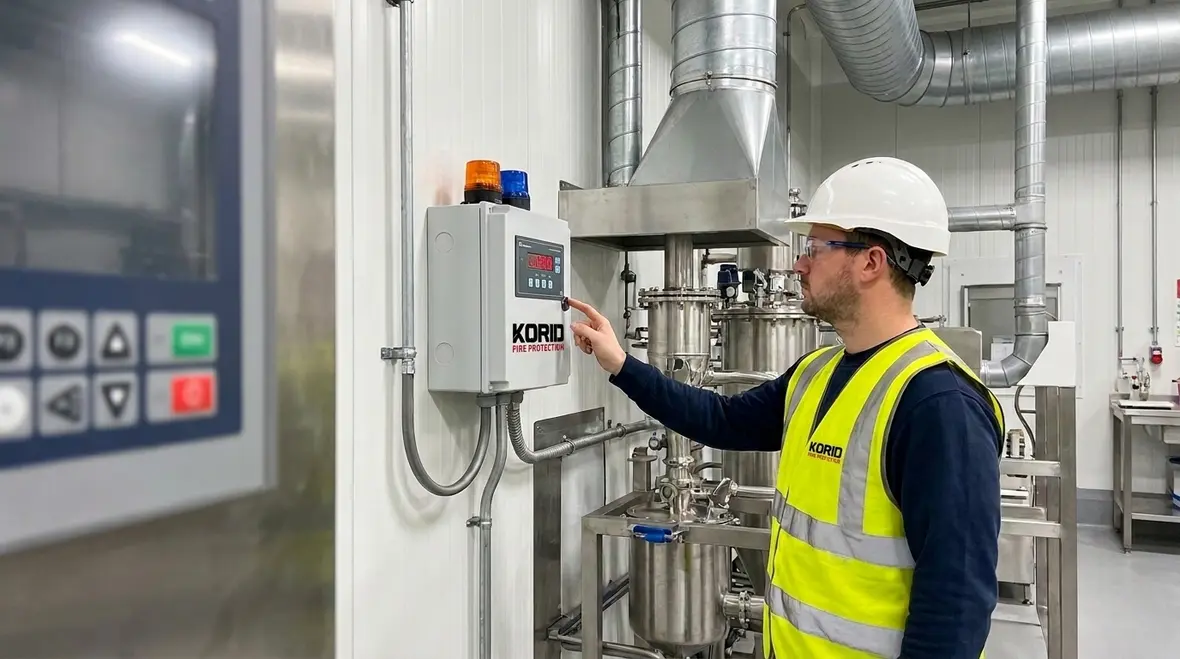
NFPA 36 Section 7.10: Flammable Vapor Detection in the Extraction Area
Quick Answer
NFPA 36 Section 7.10 requires engineered flammable vapor detection in the extraction area to identify hazardous vapor concentrations early and support safe shutdown and alarm functions. Compliance depends on correct detector placement, calibration, wiring integrity, and documented maintenance to keep performance reliable.
Facilities that want a broader compliance framework beyond detection hardware can also review complete fire protection services for commercial and industrial properties through Kord Fire Protection, especially when inspection schedules, maintenance, and corrective actions need to work together instead of living separate chaotic little lives.
What does NFPA 36 Section 7.10 require in the extraction area?
Commercial and industrial extraction operations rely on early warning. NFPA 36 flammable vapor detection requirements focus on placing detectors so they can reliably detect flammable vapors where they accumulate, while ensuring the system initiates appropriate alarms, interlocks, and protective actions. Section 7.10 addresses detection as a life safety and risk control measure, not a convenience feature, and it expects verifiable performance through inspection and maintenance.
In practice, the most common compliance gap is not the presence of sensors. It is the mismatch between assumed vapor behavior and real site conditions, followed by incomplete testing or drift out of calibration. Kord Fire Protection supports facilities with field-ready inspection and maintenance programs that align with how extraction areas actually operate, including maintenance access, detector longevity, and operational verification.
Where detectors belong and why placement drives compliance
NFPA 36 treats detector coverage as a functional requirement. Detectors must be installed to sense vapors in the extraction area based on expected vapor generation, ventilation patterns, and process airflow. Placement typically considers vapor stratification, proximity to potential release points, airflow direction, and access for maintenance.
Key placement considerations for extraction areas
- Proximity to likely release sources: Vapors typically originate from extraction steps, transfer points, seals, valves, pump seals, and any equipment used to move or process extraction solvents.
- Airflow and ventilation regime: Local exhaust systems, general ventilation supply and return locations, and duct layouts influence where vapors accumulate first.
- Detector height and stratification: The heavier or lighter nature of the specific vapor affects whether detection should target lower or upper zones.
- Obstructions and thermal effects: Structural beams, ducting, elevated platforms, heaters, or heat from nearby process equipment can alter vapor transport and sensor response.
- Maintenance access and protective spacing: Installed positions must allow routine bump tests, calibration, cleaning, and verification without compromising coverage.
Facilities often install detectors where wiring is easiest rather than where vapor behavior indicates first detection. That approach can lead to nuisance alarms or, worse, delayed detection during the early buildup phase. Site-specific documentation of placement logic supports inspection readiness.
How the detection system functions during normal and abnormal operation
A compliant system in the extraction area is built around functional outcomes. When vapor levels reach setpoints, the detection system must generate alarms and support protective actions that reduce hazard exposure.
Typical functional components
- Detectors: Flammable vapor sensors sized for the target fuel or vapor and configured for the correct measurement range.
- Control panel or monitoring system: Evaluates sensor signals, provides alarm outputs, and may integrate with building management or process control.
- Alarm outputs and interlocks: Audible and visual alarms, relay outputs, and shutdown or isolation logic as required by the facility’s safety design.
- Wiring and power integrity: Protected cabling, proper termination, and stable power supply behavior.
Common failure points during real-world inspections
- Sensor drift or fouling: Contaminants, coating residues, and sensor aging degrade response accuracy.
- Incorrect calibration target: Using the wrong gas for calibration or mismatched sensor type can invalidate readings.
- Loss of signal or partial faults: Loose terminals, damaged conductors, or network communication issues may not always trigger the expected fault behavior.
- Configuration mismatches: Alarm setpoints and time delays may not align with the safety basis for the extraction area.
- Interlock logic errors: Systems can alarm without performing the intended shutdown or isolation actions due to incorrect wiring or control code.
Kord Fire Protection helps facilities verify not only that sensors respond, but that the end-to-end system behaves correctly. That includes checking outputs, confirming that relays and shutdown sequences activate as designed, and documenting results for audit readiness.
Testing, inspection, and maintenance: the part that determines whether the system works
NFPA 36 Section 7.10 compliance is performance based. Written procedures and field verification matter. Facilities typically need a documented maintenance program covering inspection intervals, sensor verification, calibration, and functional testing of alarms and protective actions.
Operational verification activities that keep systems reliable
- Start-up checks and drift verification: Confirm sensor output stability and baseline behavior following maintenance or commissioning.
- Calibration and bump testing: Use the correct calibration method and gas, and ensure calibration records reflect the actual detector set.
- Cleaning and inspection: Remove contaminants when approved and document the condition of the sensor element and cover.
- Alarm and relay verification: Confirm that alarm outputs activate and that any shutdown or isolation interlocks perform as intended.
- Fault monitoring verification: Validate that fault signals occur correctly for open circuits, short circuits, and loss of sensor conditions.
Many facilities schedule testing but skip verification of interlock actions during routine service. During emergency scenario walkthroughs, that gap becomes visible. A best practice is to plan testing routes that confirm both annunciation and protective functions without interrupting production longer than necessary.
If your facility wants a practical, compliance-focused service approach, Kord Fire Protection can help design and execute a maintenance plan that supports NFPA 36 readiness for commercial, industrial, and retail extraction environments.
Documentation and inspection readiness for audits and insurance reviews
Inspection outcomes often turn on the documentation package as much as the hardware. NFPA 36 flammable vapor detection requirements expect you to demonstrate that the detection system meets the intent of the standard over time.
Documents and records typically expected
- Detector list with device model, location, and setpoints
- Wiring and schematic references for alarm and control integration
- Maintenance records including calibration, bump tests, and sensor replacement history
- Functional test results showing alarm activation and interlock operation
- Corrective action records for failures, out of tolerance readings, and repeat test outcomes
To strengthen internal control, facilities should ensure records tie to the specific detector and location. When multiple extraction lines exist, mixing records across areas can create audit issues and prolong remediation.
How Kord Fire Protection supports NFPA 36 Section 7.10 compliance
Extraction areas evolve due to process changes, ventilation upgrades, equipment swaps, and solvent handling variations. That means the risk profile and detection performance can change without visible hardware changes to the detector itself.
Kord Fire Protection provides ongoing commercial service that addresses the practical realities of maintaining flammable vapor detection systems. Support typically includes inspection planning, functional verification, calibration and maintenance execution, and documentation that supports readiness for inspections, insurance reviews, and internal audits.
For more guidance on risk control principles that complement flammable vapor detection strategies, facilities can also explore building fire safety emergency planning for commercial facilities as a related Kord Fire Protection resource.
Frequently Asked Questions
Call to Action
Ensure your extraction area detection system performs as intended under NFPA 36. Schedule a compliance-focused inspection and verification with Kord Fire Protection to confirm detector placement logic, calibration accuracy, alarm performance, and protective interlocks, with documentation built for audit readiness. Act early to reduce downtime, prevent nuisance events, and protect personnel and property.

Join Our Newsletter!
Get the latest fire safety tips delivered straight to your inbox From our Newsletter.



