
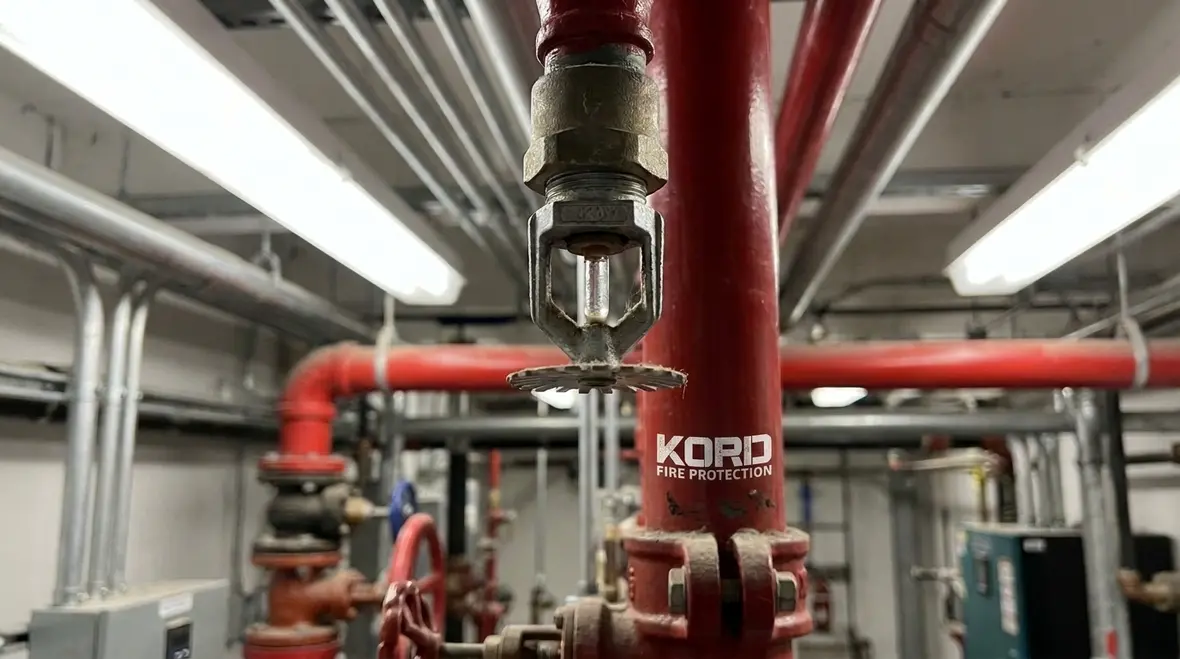
NFPA 15 Section 1.2 Purpose: The Engineering Principles Behind Water Spray Minimums
Quick Answer
NFPA 15 Section 1.2 defines the intent behind water spray system design minimums so performance stays consistent across real-world hazards, temperatures, and obstructions. The section drives engineering judgment, verification testing, and field experience to prevent under-protected coverage and unreliable spray behavior.
NFPA 15 1.2 purpose engineering principles test data field experience helps explain why “minimums” are not arbitrary numbers. They represent engineering boundaries that account for how sprinkler and spray devices distribute water, how hydraulics behave at installation realities, and how maintenance affects performance. For commercial facilities, this section acts as the bridge between design intent and measurable protection.
Near the top of any real-world compliance conversation, it helps to connect this topic back to practical system support. Kord Fire Protection’s fire sprinkler system service page fits naturally here because ongoing inspections, repairs, and maintenance are exactly where engineering minimums either stay real or quietly drift into wishful thinking.
Why NFPA 15 Section 1.2 Purpose Exists (And Why It Matters in Commercial Buildings)
NFPA 15, Section 1.2 Purpose establishes the engineering rationale for water spray system design and application. Its core intent is to ensure the system delivers the required water distribution and density to control heat and fire growth for the hazard it serves.
In a commercial environment, small deviations compound quickly. Changes in ceiling configuration, obstructions, process heat, or maintenance practices can reduce spray effectiveness even when the system was designed to “meet the calculations.” Section 1.2 purpose engineering principles test data field experience supports the idea that design minimums require validation against real installation performance, not just plan review compliance.
Operationally, this matters to facility owners because water spray systems are typically installed where shutdown impacts business continuity and where code compliance expectations are high. Fire marshals and insurers often look for evidence that design, installation quality, and ongoing inspection practices align with the engineering basis of minimums.
What the Engineering Principles Actually Control: Water Distribution, Cooling, and Reliability
Water spray performance relies on physics and practical installation variables. Section 1.2 purpose reflects that the system must deliver water in a way that is effective for the target hazard. The engineering principles influence three practical outcomes.
1) Spray pattern and distribution at the hazard surface
Water spray nozzles and spray sprinklers do not simply discharge water. They form a spray pattern with droplet sizes and trajectory that determine how quickly water reaches the relevant surfaces. Minimums are linked to distribution concepts that prevent dry spots and uneven coverage caused by drift, obstruction, or incorrect mounting geometry.
Field issue: ceiling obstructions, ceiling slopes, and suspended fixtures can interrupt the spray. When obstructions move over time or when renovations add new equipment, the original distribution may no longer match the intent of the engineering principles.
2) Hydraulics that preserve flow under pressure losses
Hydraulic minimums address how pressure and flow behave through piping, fittings, and valves. Flow delivery at the remote end of the system is rarely identical to flow conditions assumed on a clean as-built drawing. Maintenance activities, partial obstructions, or valve positioning can change actual pressure at the spray devices.
Field issue: sediment in water supply components, damaged strainers, or gate valves that are not fully open can reduce flow despite a system that “still has water.” Section 1.2 purpose reinforces that minimum performance must survive these real conditions.
3) Cooling effectiveness and fire growth control
Water spray is typically intended to control heat and suppress fire growth through cooling, wetting, and suppression at the seat of heat. Minimum design criteria aim to achieve sufficient water application over a time window that matches fire dynamics for the hazard category.
Field issue: systems that run but deliver lower-than-intended application rate may delay activation performance or reduce heat absorption. That shortfall can be difficult to see during routine visual inspection, which is why the engineering basis demands test verification and disciplined maintenance.
Where Test Data and Field Experience Intersect the “Minimums” in Section 1.2
NFPA 15 1.2 purpose engineering principles test data field experience is best understood as a feedback loop. Engineering test data informs minimum design criteria, while field experience identifies how systems drift from that baseline due to installation, alterations, and maintenance realities.
How test data influences design boundaries
Test data supports assumptions about discharge characteristics, spray reach, water distribution coverage, and performance under defined conditions. The standards use this foundation to create minimum application expectations that remain effective when installed within the prescriptive and engineering constraints.
How field experience exposes common performance gaps
Commercial facilities generate recurring deviation categories. These are not “edge cases” but common life-cycle events:
- Renovations and tenant buildouts that add obstructions, change ceiling heights, or alter airflow pathways.
- Device relocation or replacement with equivalent models that may differ in spray characteristics.
- Piping changes that adjust routing and create additional pressure loss.
- Maintenance drift where strainers, filters, and valves receive inconsistent servicing.
- Water supply variability due to seasonal changes, supply pumps cycling, or temporary pressure issues.
Field experience also validates inspection findings that can correlate with engineering risk. For example, repeated issues with corrosion, partial blockage, or inaccessible valves often indicate elevated probability of underdelivery during an actual event. Compliance therefore requires ongoing verification, not one-time acceptance.
Practical Compliance Challenge: Proving Minimum Performance in Real Systems
For many facilities, the compliance question becomes procedural: how does an organization demonstrate that minimum performance remains intact after installation and through ongoing operations?
Design review and hazard alignment
Section 1.2 purpose supports the need to confirm the selected hazard classification aligns with actual combustibles, storage arrangement, and process conditions. If the hazard changes, the system may no longer match the engineering basis that the minimums were built around.
Hydraulic verification and obstruction control
Engineering calculations rely on assumptions about spacing, locations, and ceiling geometry. Compliance often requires strict control of obstructions and accurate measurement of installation conditions. When teams lack field-to-drawing discipline, engineers may not receive updated as-built information.
Inspection, testing, and maintenance alignment
Effective compliance requires that inspection procedures support performance. That includes verifying water supply conditions, checking component condition, and confirming that devices remain unobstructed and correctly positioned.
Kord Fire Protection supports commercial, industrial, and retail facilities with ongoing testing and maintenance planning that is grounded in practical system operation. For deeper context on fixed water spray systems and how service supports compliance, see: NFPA 15 enhancing fire safety with water spray fixed systems.
Common Failure Points That Undermine Section 1.2 Purpose Outcomes
Minimums protect against predictable failure mechanisms. The most common field failure points typically fall into four operational categories.
Water delivery shortfalls
Reduced flow or pressure at spray devices can occur from valve mispositioning, clogged strainers, damaged check valves, or corrosion-related restrictions. These issues often do not prevent water from reaching the system, but they reduce delivery below what the engineering minimums assume.
Spray disruption from obstructions
Ceiling fixtures, ducts, storage racks, signage, and suspended equipment can distort the spray coverage. Renovations can also alter airflow and sprinkler throw trajectories in ways that were not present at initial installation.
Device mismatch or incorrect placement
Even when the system “looks correct,” incorrect device selection, incompatible models, or placement errors can affect spray pattern. Equivalent components can still introduce different discharge characteristics that impact distribution.
Maintenance gaps that accumulate over time
Strainers and filters can clog gradually. Water quality issues can accelerate internal corrosion. If maintenance intervals do not match system demand, reliability decreases. Maintenance records become a key compliance artifact because they show that the system continues to perform against the engineering intent.
For additional technical background related to fire pump systems that often drive water spray availability, reference: NFPA 25 fire pump testing requirements guide.
How Kord Fire Protection Supports the “Minimums” Beyond Paper Compliance
Meeting NFPA 15 Section 1.2 purpose is not only a design exercise. It is an operational commitment that must be maintained across equipment aging, tenant changes, and facility schedules.
Kord Fire Protection positions compliance around real-world system behavior by supporting documentation discipline, maintenance scheduling, and field verification practices. That includes ensuring that systems remain aligned with installation conditions and hazard realities after modifications.
For commercial facility leaders managing multiple assets, reliable service planning reduces downtime risk and improves audit readiness. Companies in the Kord Fire Protection ecosystem operate across commercial and industrial portfolios including Kordelectric.com and kordfire.com.au, supporting consistent approach to performance-based compliance delivery.
When organizations need ongoing support to protect engineered minimum performance, they can coordinate with Kord Fire Protection to maintain water spray systems in an operationally defensible state.
Frequently Asked Questions
Conclusion: Keep Engineering Minimums Real in the Field
NFPA 15 Section 1.2 purpose ensures water spray minimums reflect measurable engineering outcomes, not just plan intent. Commercial facilities protect assets best when they treat minimums as a life-cycle performance target: verify hydraulics, control obstructions, maintain devices, and document results. Kord Fire Protection can help you keep systems aligned with the engineering basis through scheduled testing, maintenance, and compliance support. Contact Kord Fire Protection to plan your next audit-ready service cycle.

Join Our Newsletter!
Get the latest fire safety tips delivered straight to your inbox From our Newsletter.



