
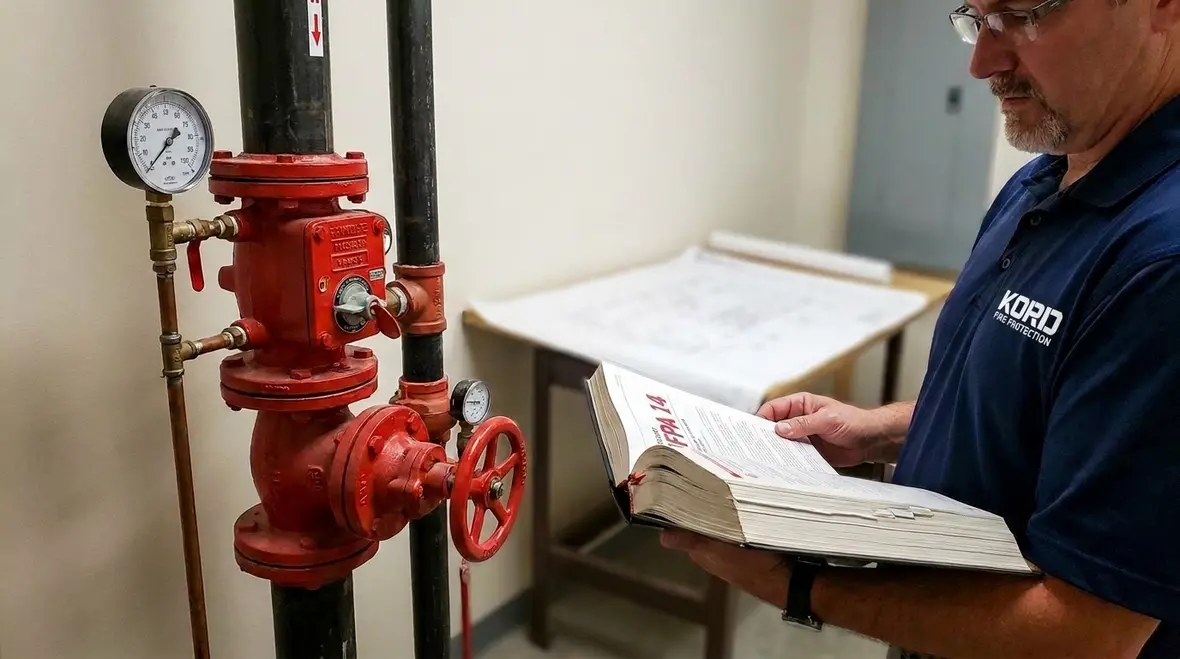
NFPA 14 Section 2.1: How the Standpipe Code’s Referenced Publications Work
Quick Answer: NFPA 14 Section 2.1 tells users how to apply referenced publications that the standpipe standard depends on for component performance, acceptance criteria, and installation details. The code references these documents by edition, and compliance requires meeting the referenced requirements as written.
For facilities managing broader system readiness, standpipe system inspection requirements and procedures offer a practical companion to this section by showing how code language becomes fieldwork and documentation.
Why NFPA 14 referenced publications matter in real projects
Commercial facilities often treat referenced standards as “supporting background.” NFPA 14 treats them as operational requirements. When a standpipe system uses components, fittings, valves, hose, nozzles, or testing methods that depend on other publications, the system design and maintenance program must align with the referenced edition. This is the core of the NFPA 14 referenced publications overview: it explains how those external documents function inside the standpipe code rather than alongside it.
In practical terms, property managers, engineers, and contractors face compliance risk when they select the wrong edition, omit required testing steps, or document inspections using non conforming criteria. Kord Fire Protection helps commercial, industrial, and retail facilities control that risk with edition management, inspection planning, and documented maintenance workflows.
What Section 2.1 requires: editions, incorporation, and compliance
NFPA 14 Section 2.1 functions as the code’s authority bridge. It identifies referenced publications and explains how NFPA 14 incorporates them for specific technical topics such as equipment listing, construction features, test methodologies, and acceptance criteria.
Edition control drives which requirements apply
The single most common compliance failure is edition drift. Facilities may maintain older hardware, but the governing code cycle adopted by the Authority Having Jurisdiction (AHJ) can reference a different edition. Section 2.1 clarifies that the referenced document edition listed in the NFPA 14 document is the edition that controls for that installation or acceptance pathway.
-
If the referenced publication edition changes, the requirements that follow that reference can also change.
-
If the facility uses components installed under an older code cycle, recordkeeping must demonstrate which edition was followed for acceptance and maintenance intervals.
Referenced requirements are not optional “best practices”
Where NFPA 14 points to an external publication, the referenced requirements become part of the compliance standard for that subject. That includes how equipment is accepted, how test performance is evaluated, and how results are documented. Standpipe systems in commercial buildings commonly fail due to incomplete acceptance documentation rather than a visible hardware defect.
Where referenced publications surface in standpipe design and maintenance
Referenced publications typically control details that directly affect operational reliability during emergencies. The following areas illustrate how that plays out across common standpipe system scopes.
Hose, nozzles, and compatibility performance
Standpipe systems must deliver predictable water flow and spray patterns under real conditions. Hose and nozzle compatibility requirements often pull from referenced equipment and testing publications. Failure points include incorrect hose length or diameter, mismatched couplings, degraded hose condition, and undocumented replacement schedules.
Valves, fittings, and workmanship tolerances
Referenced publications frequently influence how valves and fittings should be constructed, installed, and evaluated for function. For example, inspectors may verify proper labeling, unobstructed access, and correct operation of manual controls. Even when the standpipe looks “installed correctly,” internal inspection can reveal valve issues such as binding, leaks, or non conforming replacement parts.
Testing and acceptance procedures
Inspection and testing steps can rely on referenced documents for how to perform the test and how to interpret acceptance. In maintenance programs, the difference between “checked” and “tested per the referenced criteria” becomes decisive. Facilities that rely on informal checks often discover gaps when the AHJ requests test documentation.
How facilities can manage Section 2.1 compliance without slowing operations
Commercial facilities typically need a repeatable compliance process. NFPA 14 Section 2.1 creates an administrative requirement in addition to the fieldwork requirement: edition and referenced document traceability.
Build a referenced publications register for the facility
A referenced publications register maps the NFPA 14 adoption cycle used by the AHJ to the specific referenced editions and the facility systems they govern. This register should include:
-
System scope: standpipes, hose stations, valves, fire department connections, and related appurtenances.
-
Referenced edition: the edition identified in the active NFPA 14 document for the applicable code cycle.
-
Maintenance touchpoints: what the inspection team must verify and what test data must be captured.
Align the maintenance plan with testable requirements
Inspections often fail when teams rely on checklists that do not mirror referenced acceptance language. The maintenance plan should translate referenced requirements into field actions that generate usable evidence. Kord Fire Protection supports this translation by developing maintenance workflows that capture the data AHJs expect, including component condition, functional results, and corrective action records.
Plan for common failure points before the inspector arrives
In commercial, industrial, and retail properties, the most frequent Section 2.1 related failures involve missing documentation, non conforming replacement parts, and incomplete test interpretation. These issues increase during tenant turnover, remodels, and equipment substitutions. A disciplined management system reduces rework and schedule disruptions.
For standpipe and hose system implementation guidance, see: NFPA 14 safeguarding against fire hazards with standpipe and hose systems.
Documentation that passes: what to record when referenced criteria apply
Section 2.1 compliance does not end when the system is installed. It continues through inspection documentation and maintenance records. AHJs commonly verify that:
-
The inspection or test followed the required method, not a simplified substitute.
-
The equipment meets the required configuration tied to the referenced publication requirements.
-
The results can be interpreted under the acceptance criteria in the referenced publication.
Evidence matters: the chain from standard to field to report
Facilities should ensure reports link observed conditions to the relevant NFPA 14 and referenced publication requirements. For example, if hose is replaced, the documentation should include identification details and acceptance basis. If valves are tested, the report should include functional outcomes consistent with referenced procedures.
Kord Fire Protection emphasizes clear, traceable reporting so commercial facility teams can respond quickly to AHJ questions, insurance reviews, and internal audits.
Frequently Asked Questions
Next step: make referenced standards audit ready
NFPA 14 Section 2.1 ties code compliance to the exact editions and acceptance criteria in referenced publications. If your facility cannot quickly prove which referenced editions apply and how inspections and tests were performed, you risk schedule delays and corrective actions. Contact Kord Fire Protection to build a traceable standpipe maintenance program, manage referenced publication requirements, and deliver documentation that supports AHJ approvals and ongoing reliability.
If your building also depends on pump performance to support water-based fire protection, Kord Fire’s fire pump service and inspection team can help align testing, maintenance, and documentation across connected systems.

Join Our Newsletter!
Get the latest fire safety tips delivered straight to your inbox From our Newsletter.



