
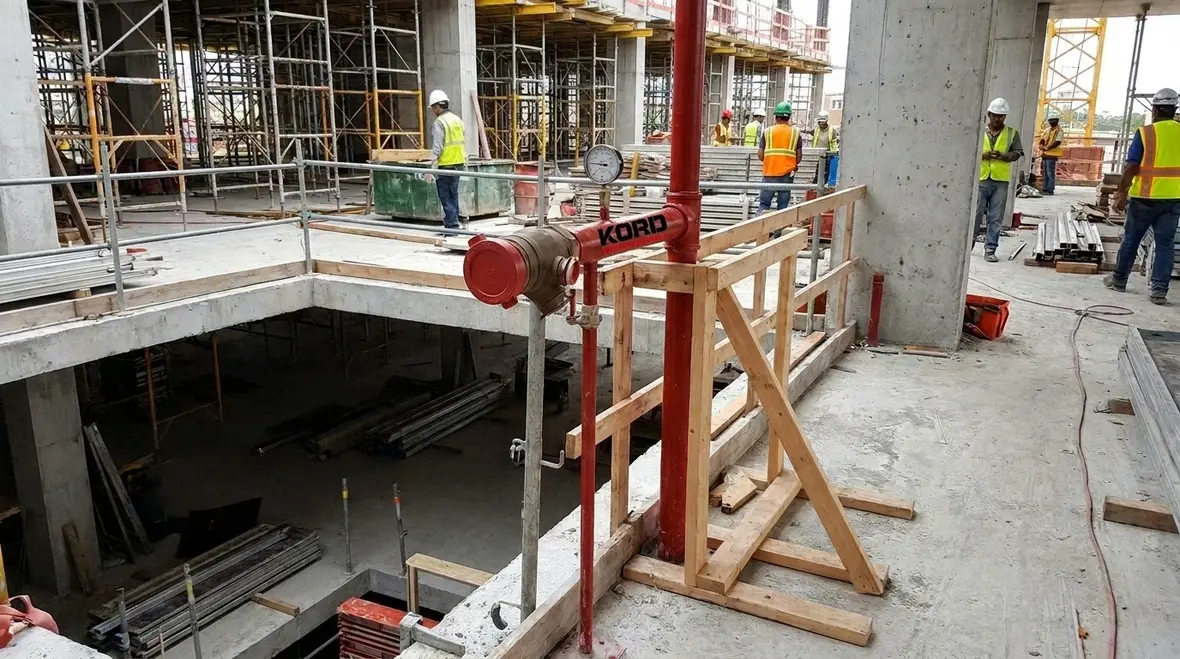
NFPA 14 Section 13.3: Temporary Standpipe Installations on Construction Sites
Quick Answer: NFPA 14 Section 13.3 addresses how to install temporary standpipes on active construction sites to provide reliable fire protection during high-risk building activity. It focuses on correct system configuration, connection practices, required equipment, and inspection and readiness so hose teams can operate safely.
What Section 13.3 is trying to solve on active job sites
Commercial construction changes fire risk every day. Unfinished floors, open shafts, temporary power, and delayed permanent fire protection create conditions where early and consistent water access can determine survivability. NFPA 14 Section 13.3 governs temporary standpipe installations construction sites so standpipes remain functional, usable, and maintainable as the site progresses.
In practice, the standard reduces three common failure modes: inadequate pipe routing, improvised or noncompatible hose valve arrangements, and systems that are not inspected or upgraded as the building and occupancy evolve. These gaps frequently conflict with the expectations of building owners, general contractors, and AHJs who want documented readiness rather than last minute demonstrations.
When temporary standpipes apply and how projects typically trigger requirements
Section 13.3 applies during construction when permanent fire protection elements are not yet fully available, but the fire protection need exists because construction hazards and occupancy risks are present. This usually occurs when crews perform work in occupied or partially occupied premises, when combustible materials accumulate rapidly, or when fire department access and water supply reliability cannot be assumed until later milestones.
For teams tightening readiness during phased construction, standpipe system inspection requirements and procedures offer a practical next step beyond design intent and help connect installation planning to documented field verification.
Early coordination reduces rework
Teams commonly treat standpipe planning as a last step. That creates operational problems once the site height, floor layout, and work staging change. A practical approach aligns mechanical routing, floor penetrations, valve locations, and connection interfaces with the construction sequence. It also accounts for site logistics so hoses and nozzles remain accessible even when scaffolding and storage move.
Commercial facilities with retail frontage, industrial process areas, or mixed-use build outs often require additional documentation for internal safety teams and corporate risk management. Kord Fire Protection supports this by translating NFPA 14 requirements into site-ready checklists, installation verification steps, and ongoing maintenance records.
Core requirements in practice: configuration that supports hose operations
Temporary standpipes must function as a dependable water supply to enable quick hose advancement. Section 13.3 centers on making sure the system is installed so water can reach the required elevation and that hose outlets provide safe, controlled access. The installation must support the intended flow and the practical realities of firefighting and training on construction sites.
Standpipe arrangement and placement
Temporary routing typically mirrors the building’s vertical structure as it grows. Installers must ensure the standpipe remains continuous through construction phases, with routing that avoids unnecessary restrictions and avoids sections that can be damaged by ongoing work. When temporary work includes connections that will later be removed, planning must ensure interim segments still meet functional expectations rather than becoming dead ends.
Valves, outlets, and compatibility
Temporary installations often fail because crews assemble hose connections that do not match the outlet configuration or because outlets remain obstructed, painted over, or inaccessible. Section 13.3 expectations include maintaining correct outlet function so that hose teams can connect, open, and operate without delay or uncertainty.
To prevent operational surprises, teams should verify outlet types, valve operation, and the physical access path. Kord Fire Protection commonly audits outlet accessibility and valve actuation during construction walks so the system stays usable rather than merely installed.
Water supply and readiness
Even a properly piped standpipe can underperform if the water supply, pressure availability, or reliability is not sustained throughout construction. Construction activity can disrupt valves, knock loose fittings, and compromise temporary supply lines. Readiness requires documented inspection and timely repairs, not just an initial acceptance test.
For broader standpipe and hose system context, see NFPA 14 safeguarding against fire hazards with standpipe and hose systems.
How temporary installations go wrong and what to control
Temporary standpipe installations construction sites face unique mechanical and administrative pressures: frequent changes, incomplete coordination, and ongoing material handling. The most common failure points come from inconsistent installation control and weak change management.
Failure point 1: Outlets blocked or not maintained
Outlets can become unusable when floor finish work, debris accumulation, or storage blocks access. Valves can remain sealed due to miscommunication, or outlet caps can be left in place longer than planned. These issues reduce effective first response time.
Control measure: maintain a visible, labeled outlet status plan and run periodic site walks to confirm outlet access paths remain open. Document corrections immediately and coordinate with the general contractor’s housekeeping and floor turnover schedule.
Failure point 2: Pipe damage during construction
Temporary pipes and fittings get struck during hoisting, material staging, and scaffolding moves. Threads, joints, and valve bodies can be damaged without obvious leaks until later pressure tests or operational demand.
Control measure: implement protective routing where needed, track standpipe segment changes by floor elevation, and repair promptly after any impact event. Kord Fire Protection helps owners establish maintenance triggers linked to construction milestones and observed hazards.
Failure point 3: Incomplete or outdated system updates
As the building height increases, the standpipe system must keep pace. A system installed early can become insufficient once floor levels or hose outlet locations change.
Control measure: treat standpipe installation as a phased system. Each phase should include verification of outlet count and location, water delivery capability, and accessibility. Maintain records that show when each phase became operational and when it was last verified.
Inspection and testing discipline that satisfies both AHJ and owner expectations
Construction sites often treat inspection as an afterthought, but temporary standpipes must remain dependable. Section 13.3 drives the operational principle that the system supports firefighting needs during the construction window, which means verification is ongoing and not limited to a single commissioning event.
What “good” documentation looks like
Owners and commercial safety programs typically require clear evidence that temporary standpipes remain functional. Effective documentation includes installation phase dates, valve and outlet verification results, and corrective actions tied to observed deficiencies.
Operational checks beyond paperwork
System checks should confirm that outlets are available, valves operate properly, and the water supply remains ready under current construction conditions. Where the project includes changing routes or temporary bypasses, documentation should identify what is in service and what is temporarily out of service and why.
Kord Fire Protection supports compliance with practical job site field methods: verification of readiness conditions, maintenance scheduling during active construction, and coordination with commissioning requirements so the temporary system transitions smoothly toward the permanent installation.
Who needs to coordinate for temporary standpipe success on construction sites
Temporary standpipe installations construction sites require aligned responsibilities across multiple parties. The most reliable projects treat standpipe readiness as part of the safety management plan rather than a standalone fire protection task.
Common coordination points
- General contractor: maintains access pathways, protects pipe runs, and communicates construction changes that impact standpipe routing and outlet locations.
- Fire protection contractor: installs according to required configuration and manages phased updates, labeling, and functional verification.
- Owner and safety team: sets expectations for documentation, inspection cadence, and responsiveness to deficiencies.
- AHJ: expects evidence that the system is usable during the construction phase and that deficiencies are corrected quickly.
When teams share the same “source of truth” for inspection findings and system phase status, they reduce downtime, avoid repeated access conflicts, and support a smoother audit trail for commercial facility compliance.
Frequently Asked Questions
Conclusion: build readiness into the construction workflow
NFPA 14 Section 13.3 exists to keep temporary standpipe installations usable during the highest risk period of construction. Owners and contractors that treat standpipe readiness as a living system, with phased updates, practical access control, and disciplined inspection, reduce failure points and audit risk. Kord Fire Protection helps commercial teams plan, verify, and maintain temporary and permanent standpipe and hose systems throughout construction. Contact Kord Fire Protection to schedule a site readiness assessment and compliance documentation review.

Join Our Newsletter!
Get the latest fire safety tips delivered straight to your inbox From our Newsletter.



