
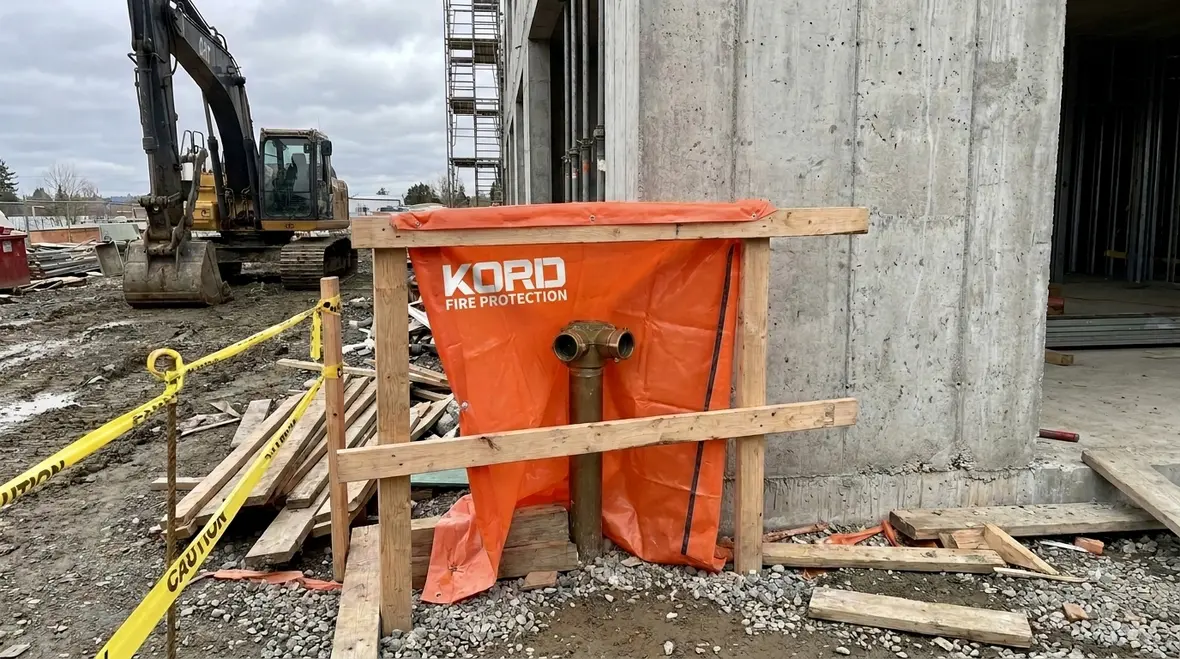
NFPA 14 Section 13.7: Protecting Hose Connections and FDCs From Construction Damage
Quick Answer
NFPA 14 Section 13.7 requires facilities to prevent damage to hose connections and fire department connection (FDC) outlets during construction. Protection measures must maintain operability, preserve coupling alignment, avoid contamination, and support timely functional testing before systems are accepted.
For teams building a broader compliance workflow, it also helps to connect this requirement with standpipe system maintenance electrical for monitoring, especially when commissioning, signal visibility, and long-term readiness all need to stay aligned.
Why Section 13.7 matters on commercial and industrial projects
On active construction sites, hose connections and FDCs become high value points of failure. Even minor dents, misalignment, thread damage, or blocked inlets can delay fire department operations or cause partial system outages. NFPA 14 Section 13.7 focuses on the practical requirement: the protection of hose and FDC connections during construction must be managed as rigorously as system installation itself.
This requirement affects commercial, industrial, and retail facilities that use standpipe and hose systems for occupant and fire department response. It also intersects with commissioning schedules, life safety sign off, and post construction maintenance plans.
What “protect from construction damage” means in the field
Section 13.7 is not limited to preventing physical impact. It also addresses conditions that can make the connection unusable when needed. In practical terms, contractors and facility teams must manage four risk categories:
- Physical damage: dents, cracks, bent adapters, broken caps, and crushed elbows.
- Mechanical impairment: thread damage, coupling distortion, missing gaskets, and blocked discharge paths.
- Contamination: debris in hose outlets, plaster dust in FDC inlets, and sealant intrusion.
- Operational inaccessibility: FDCs covered, obscured, or rendered unreachable behind temporary walls, equipment, or construction materials.
Facilities often discover these issues during acceptance testing, when correcting them becomes expensive. The safest approach treats protection as a controlled installation step, not an afterthought.
Where construction damage usually starts (and how it fails later)
1) Misplaced caps, covers, and temporary plugs
Temporary protection that is not secured properly can fall off, shift, or leave residues. A loose cap can chip threads, while temporary sealants can harden inside couplings and restrict engagement of fire department hoses.
2) Heavy traffic, forklifts, and material staging
FDC locations often sit near building entrances, loading docks, or exterior walkways where construction traffic concentrates. A protective barrier installed after staging begins may still be struck before it gets validated. The typical failure mode is bent connection hardware that still “looks usable” but does not properly seat during connection.
3) Wall work, ceiling close in, and plaster dust intrusion
During close in, hose outlet assemblies can trap fine particulates in gaskets and swivel components. Contamination rarely causes immediate rejection, but it can affect sealing at the coupling interface and increase leakage during testing.
4) Paint, overspray, and adhesives
Overspray and adhesives can build up on contact surfaces and hinder the smooth threading required for a reliable connection. If the FDC requires smooth engagement for emergency operations, construction finishing work must be controlled around the connection interface.
How teams should implement protection of hose and FDC connections during construction
Strong protection of hose and FDC connections during construction relies on defined roles, documented controls, and verification before turnover. A workable field process includes the following controls.
Define responsibilities before close in
Assign specific responsibilities among general contractor, fire protection contractor, and facility commissioning staff. The protection method should be documented on installation submittals and updated during field changes. This eliminates gaps where temporary protection is assumed to exist but is never actually installed, inspected, or maintained.
Use connection appropriate covers and barriers
Protection should preserve the connection’s geometry and functional surfaces. Covers and guards must allow safe access for inspection and final connection. Barriers should resist impact and prevent debris intrusion without introducing residues that later interfere with hose coupling or swivel movement.
Maintain clearance and accessibility
NFPA 14 acceptance is not just about hardware survival. The facility must ensure that the FDC is reachable, visible, and usable during emergencies. Temporary storage, signage, and construction materials must not block the FDC pathway or the ability to operate hose connections.
Control finishing activities around connections
Coordinate painting, stucco, and seal work with the protection plan. Overspray control and masking should be used to prevent material buildup on threads, gaskets, and sealing surfaces. After finishing, the protection system must be removed carefully to avoid residue transfer and thread impact.
Verify with an acceptance focused checklist
Before turnover testing, conduct an inspection that targets operational functionality rather than appearance alone. Verify thread condition, coupling seating surfaces, cap condition, gasket integrity, and clear unobstructed flow paths.
For additional background on standpipe and hose system safeguarding strategies, refer to this related resource: NFPA 14 safeguarding against fire hazards with standpipe and hose systems.
What to test after construction so connections stay reliable
Even when protective measures were installed, construction environments introduce variables that can affect final performance. Facility teams should plan for post construction verification that aligns with commercial commissioning expectations.
Hose connection readiness checks
- Confirm hose coupling threads engage smoothly without binding.
- Inspect gaskets and sealing surfaces for damage or contamination.
- Confirm the connection is unobstructed and free of debris.
FDC operability and interface integrity
- Verify the FDC inlet orientation, alignment, and physical integrity.
- Check that inlet caps or protective devices do not leave residue or block access.
- Confirm that valves, any required trim, and discharge pathways are accessible for functional testing.
Maintenance implications for facilities
After acceptance, maintenance must continue to protect operational readiness. Caps, guards, and access clearances should be checked during routine fire protection inspections. If a facility experiences ongoing tenant improvement or exterior work, the protection of hose and FDC connections during construction remains relevant as a recurring risk management activity.
Kord Fire Protection supports compliance through commissioning support, documented inspections, and maintenance that helps commercial facilities manage standpipe and hose system reliability across turnover cycles.
Frequently Asked Questions
Get ahead of turnover issues with a documented protection and verification plan
Construction delays often reveal damaged hose and FDC connections too late to correct cheaply. Engage Kord Fire Protection early to establish a protection workflow, validate access and interfaces before close in, and complete post construction readiness checks that support commissioning. Request an on site evaluation for your project and maintenance roadmap so your facility meets NFPA 14 expectations with confidence from rough in through acceptance and beyond.

Join Our Newsletter!
Get the latest fire safety tips delivered straight to your inbox From our Newsletter.



