
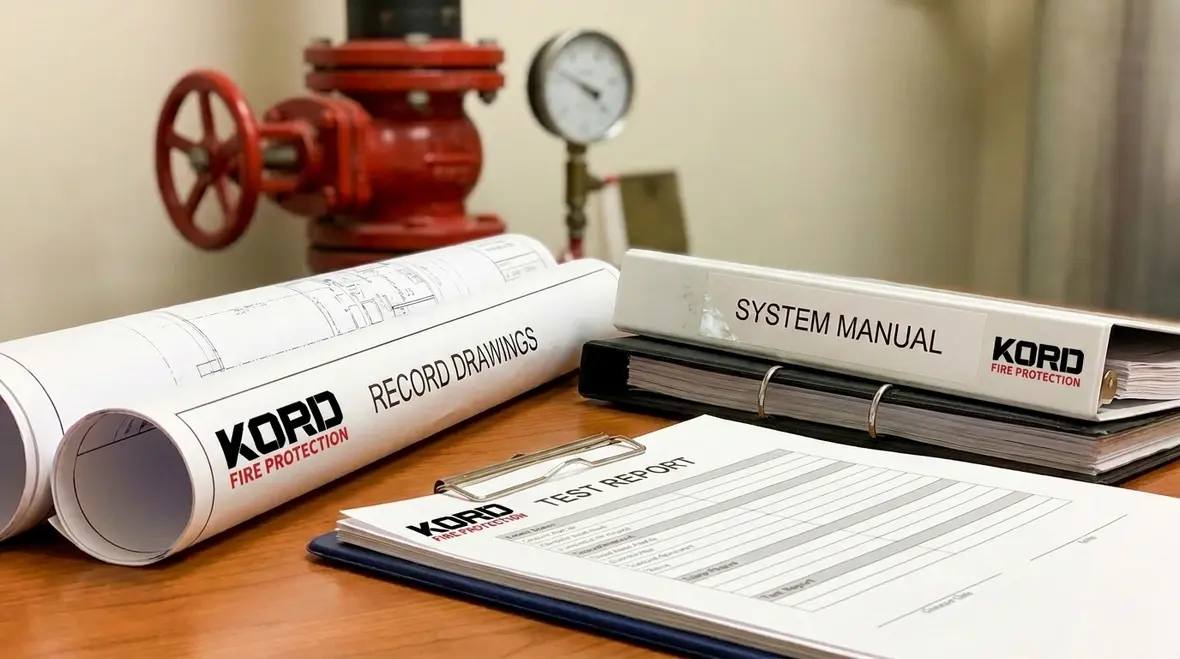
NFPA 14 Section 12.10: Record Drawings, Test Reports, and Manuals You Must Deliver
Quick Answer
NFPA 14 Section 12.10 requires facilities and contractors to deliver complete records, including standpipe record drawings, test reports, and system manuals. These documents must be accurate, up to date, and usable by operations and maintenance teams to support ongoing inspection, testing, and safe firefighting performance throughout the life of the standpipe system.
For facilities planning inspections, documentation updates, or standpipe support, fire protection services in Southern California can help connect paperwork readiness with practical field execution.
What Section 12.10 Is Really Asking For
NFPA 14 Section 12.10 focuses on one practical outcome: the standpipe system must be supported by documentation that allows the building to operate, maintain, inspect, and troubleshoot the system correctly. This requirement is not a paperwork exercise. It exists because field modifications, seasonal testing, valve lockouts, pressure loss, and component replacements often happen years after installation, and the documentation becomes the operational reference point.
In commercial facilities, the biggest compliance failures typically come from incomplete or mismatched records rather than missing tags or poor installation quality. The sections below break down what must be delivered, how to verify completeness, and how to avoid common gaps that trigger delays during acceptance and future inspection cycles. Properly prepared standpipe record drawings test reports manuals also reduce operational downtime by speeding correct setpoints, valve identification, and hydraulic expectations.
Which Deliverables Matter Most: Drawings, Test Reports, and Manuals
Section 12.10 generally drives three document categories. Each category must be accurate enough for engineering review and usable enough for technicians performing routine maintenance and periodic testing.
1) Standpipe Record Drawings (As-Built Documentation)
Record drawings must reflect the system as installed, including deviations from design documents. Facilities often discover too late that field routing, valve substitutions, hose outlet locations, or control device changes were not fully captured. For compliance and life safety, the “as built” set must include:
- System layout with approved locations of valves, hose outlets, and fire department connections.
- Pipe sizes, routing, elevations, and where possible, key dimensions needed to locate components quickly.
- Valve type and arrangement, including check valves, shutoff valves, control valves, and any specialized assemblies.
- Identification of connections and any nonstandard fittings or adapters.
- Hydraulic design assumptions and any field changes that affect pressure, flow, or distribution.
- Labels aligned with field markings so technicians can match what they see to what the drawings show.
Operationally, poor drawing accuracy leads to wasted time during inspections and increases the chance of incorrect valve operation during testing. In high turnover commercial environments, this is an avoidable risk that record drawings must prevent.
2) Test Reports (Evidence the System Performed as Designed)
Test reports must document testing performed during acceptance and any subsequent required testing events. For commercial buildings, these reports support:
- Verification that pressures and flow values meet NFPA 14 requirements and project criteria.
- Traceability for corrective actions taken after initial tests.
- Historical comparison during future maintenance and reinspection.
Well prepared test reports typically include enough detail to reproduce the verification process. The most common missing elements are instrument identification, setpoint references, and clear test conditions. A robust test report should capture, at minimum:
- Date, time, and location of each test activity.
- Test method and conditions, including whether tests were conducted under normal system conditions.
- Measured parameters relevant to standpipe performance, such as pressures at specified points and flow data where applicable.
- Equipment calibration or identification, including gauges and any data acquisition tools.
- Recorded results and pass fail determinations against the applicable criteria.
- Documented deficiencies, corrective actions, retest outcomes, and approval signatures.
This level of reporting reduces disputes and accelerates acceptance when authority having jurisdiction or facility staff reviews documentation.
3) System Manuals (Instructions for Operations and Maintenance)
Manuals must guide the people who maintain the system. A manual that only restates specifications does not help technicians in the field. It should include practical, component level instructions tied to the installed configuration.
Effective manuals usually cover:
- System overview with a clear description of how the standpipe operates under fire department use.
- Component descriptions and maintenance requirements, including valves and any specialized control assemblies.
- Operating procedures for key functions, including what technicians must do before, during, and after tests.
- Recommended inspection and maintenance intervals consistent with the facility’s maintenance plan and NFPA expectations.
- Troubleshooting guidance for common issues such as valve binding, pressure irregularities, or flow impairment.
Commercial facility standards often require that manuals be accessible to multiple departments, including fire protection maintenance, security, and facilities operations. Manuals should therefore be clear, indexed, and aligned to the record drawings and valve labeling.
How to Verify Compliance Before Delivery (Avoid the Most Common Failure Points)
Many standpipe system acceptance delays stem from documentation gaps, not field performance issues. The following verification steps reduce rework and protect compliance timelines.
Match Field Markings to Record Drawings
Walk the system and confirm labels, valve numbers, outlet identifiers, and fire department connection details on the drawings. If the field labeling changes after installation, the record drawings must update accordingly. Mismatches are one of the most frequent reasons facility reviewers request resubmittals.
Confirm Test Report Completeness and Instrument Traceability
Ensure every test report includes instrument identification and calibration status, where required by the test method. Include enough data to demonstrate that measurements represent the system performance being claimed. If a test report omits conditions or setpoints, it becomes difficult to defend results during future maintenance reviews.
Ensure Manuals Reflect the Installed Configuration
Manuals must include the specific equipment installed. If a valve was substituted or a control device model changed, the manual must reflect the final installed product and maintenance steps. Generic manuals do not satisfy the intent of Section 12.10 because they do not support correct operations of the actual system.
Commercial Facility Reality: Why Document Control Impacts Maintenance
In retail, industrial, and mixed use commercial properties, standpipe systems operate in a continuously changing environment. Tenant improvements, renovations, and seasonal operational changes can affect access to outlets, valves, and hose connections. Without consistent record drawings test reports manuals management, maintenance teams lose time and risk incorrect actions during inspections.
Document control also affects how quickly a facility can respond to:
- Post repair verification after valve replacement or piping adjustments.
- Hydraulic performance concerns after modifications that affect friction loss.
- Facility transfers where new maintenance vendors require immediate system understanding.
Kord Fire Protection supports commercial owners and contractors with documentation readiness, test planning, and maintenance support aligned with NFPA 14 requirements. This approach helps facilities keep records audit friendly and operationally practical year after year.
Integrate Section 12.10 With Ongoing Program Management
Section 12.10 sits within a broader compliance process. Record drawings, test reports, and manuals must not only be delivered once but also remain usable as the system evolves. A reliable program pairs:
- As built documentation with a change management workflow when renovations occur.
- Structured test reporting that preserves baselines and correction histories.
- Maintenance manuals that technicians can follow without ambiguity.
For a practical system level perspective on protecting against fire hazards with standpipe and hose systems, review this related resource: NFPA 14 safeguarding against fire hazards with standpipe and hose systems. It complements Section 12.10 documentation expectations by connecting operational performance to the information maintenance teams need.
Frequently Asked Questions
Call to Action
Ensure your project delivers complete standpipe record drawings test reports manuals that match the installed system and stand up to operational review. Engage Kord Fire Protection to plan testing, verify documentation accuracy, and maintain a compliant record package for long term facility reliability. Contact Kord Fire Protection today to align your Section 12.10 deliverables with commercial facility expectations and reduce future maintenance risk.

Join Our Newsletter!
Get the latest fire safety tips delivered straight to your inbox From our Newsletter.



