
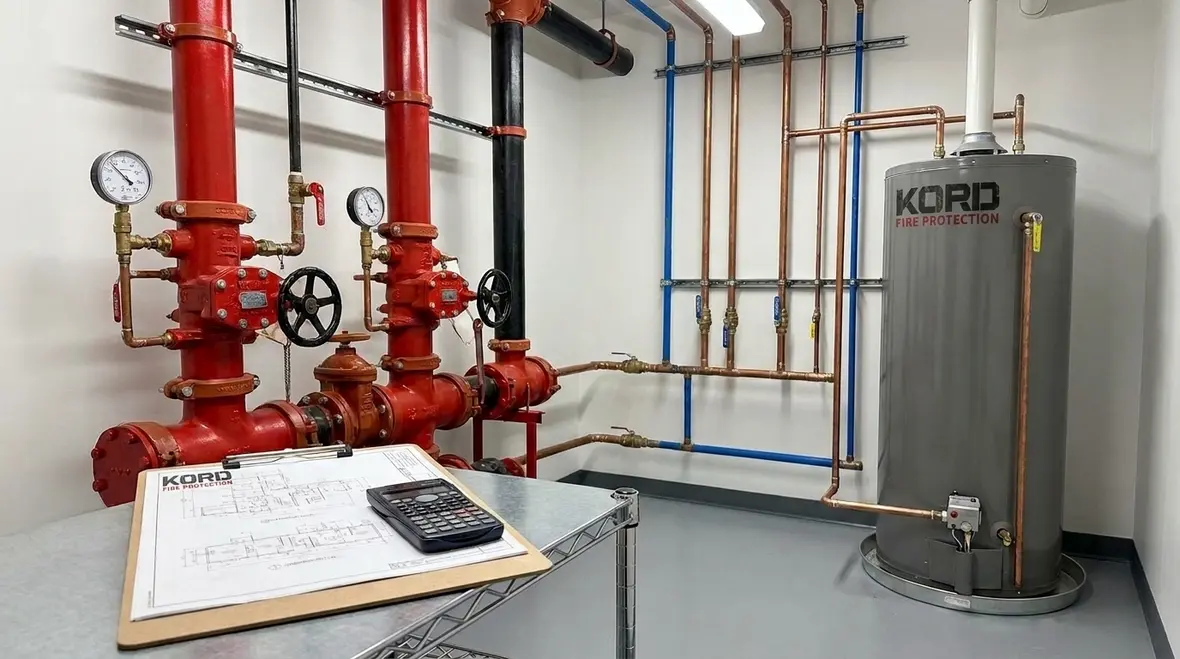
NFPA 13R Section 9.3: Calculating Domestic Demand With the Fixture Unit Tables
Quick Answer: NFPA 13R Section 9.3 uses fixture unit tables to calculate domestic water demand connected to fire sprinkler systems. Installers total the fixture unit values by type and then convert that demand to an equivalent flow for sizing. Accurate fixture counts and maintained pressure assumptions drive compliance.
Domestic water demand calculations under NFPA 13R 9.3 domestic demand fixture units common main require disciplined fixture inventory, correct table selection, and careful coordination with the system design. This section frequently becomes a compliance and inspection bottleneck in commercial and mixed use facilities when the as built plumbing does not match the design fixture schedule, or when domestic water pressure falls outside assumed conditions.
In practice, designers and installers use the fixture unit method to quantify how domestic fixtures affect the available water demand on the common main serving both sprinkler and domestic plumbing. The result informs pump sizing, pressure calculations, and the domestic flow available during sprinkler operation.
When shared water supply assumptions start affecting acceptance and performance planning, teams often also benefit from reviewing NFPA 20 Chapter 14 fire pump acceptance testing requirements so the design basis, field setup, and final testing all stay on speaking terms.
What NFPA 13R 9.3 is trying to control
NFPA 13R aims to maintain reliable fire sprinkler performance while accounting for domestic water usage on shared piping. When domestic fixtures draw water from a common main, that demand can reduce residual pressure and flow available to sprinklers. Section 9.3 establishes a structured calculation pathway so the design does not rely on optimistic field conditions.
Key compliance intent includes:
Ensuring the sprinkler system can supply design densities and flows without domestic draw causing underperformance.
Capturing the worst realistic simultaneous demand profile for domestic plumbing connected to the common riser or main.
Providing a repeatable method that inspectors can verify using fixture schedules and credible conversions.
For commercial and retail occupancies with multiple tenant improvements, this control becomes critical. A frequent failure point involves scope changes after permit issuance, such as adding break room sinks, mop sinks, or water closets without revising the fixture unit tally.
Step by step: how to apply the fixture unit tables
Section 9.3 calculations follow a consistent logic: identify fixtures connected to the common main, total their fixture unit values using the tables, convert the domestic demand to the corresponding flow impact as directed by the code section, and coordinate that with the sprinkler hydraulics. The exact mechanics depend on the adopted edition and the project specific piping arrangement, but the workflow remains the same.
1) Build a fixture inventory tied to the common main
Start with the plumbing plans and create a fixture register that includes every domestic fixture connected to the common main. Field verification matters because renovated spaces often add or relocate fixtures. Confirm:
Fixture type and model configuration where it affects classification.
Connection location relative to the common main, not merely on the same floor.
Number of fixtures per room and per zone.
Any engineered fixture count reductions due to occupancy loading assumptions.
2) Select the correct fixture unit table entries
Fixture unit tables group fixtures by water demand characteristics. Correct matching prevents underestimation. A common commercial pitfall involves using a generic fixture category when the actual fixture type belongs to a higher demand class, such as certain washing devices, or when a fixture includes specialized valves or flow restrictions that may not align with table assumptions.
3) Total fixture unit values and apply the conversion method
Once the table values are applied, sum the fixture units to determine the domestic demand quantity for the common main. The code then requires converting fixture units to a flow relationship as specified in Section 9.3. This flow relationship feeds into the hydraulic calculations that govern sprinkler performance during domestic use.
4) Coordinate with sprinkler hydraulics and system components
Domestic flow impacts the system when it shares pressure and piping. Designers must coordinate:
Riser and branch pipe sizing where domestic flow competes with sprinkler flow.
Pump curves, pressure sustaining devices, and pressure reducing components.
Backflow prevention devices and isolation valves that can affect pressure response.
Where pumps or pressure regulating devices exist, the as built performance can differ from submittal data. Maintaining pump efficiency and verifying operating pressure ranges reduces the chance that the domestic demand correction factor becomes a hidden shortfall during inspection.
How “common main” assumptions affect the calculation
Correct application of fixture unit demand depends on whether the domestic system is truly connected to the same hydraulic network that supplies sprinkler demand. When “common main” piping is arranged differently than the design intent, inspectors can reject calculations, even if the fixture count is correct.
Common compliance challenges
Tenant improvements and late scope changes: Added fixtures connect downstream of devices that were assumed to isolate domestic demand. Calculations require updates.
Incorrect takeoffs from plans: Designers may miss fixtures in corridors, service rooms, or mechanical rooms where domestic water points exist.
Valve placement and isolation strategy: Closing or missing valves can change how demand actually behaves. Operational procedures must reflect installed conditions.
Pressure conditions: Fixture unit method assumes credible conditions. Low pressure due to undersized piping or pump performance changes the outcome of the sprinkler hydraulic evaluation.
Commercial facilities often require an ongoing compliance approach rather than a one time design submittal. Kord Fire Protection supports ongoing program needs with practical verification and maintenance planning so the design intent stays aligned with the installed system. For additional background on sprinkler system installation considerations, refer to NFPA 13 overview and automatic fire sprinkler system installation, which helps teams connect design assumptions to field realities.
Operational procedures that protect the design intent
Even a correct fixture unit calculation can fail in the field if system operation changes over time. Section 9.3 domestic demand calculations become meaningful only when the system operates as intended during the life of the building.
Inspection and acceptance checkpoints
Document fixture unit basis: Keep a revision controlled fixture register tied to permit drawings and field verification notes.
Verify valve positions and backflow components: Isolation and backflow assemblies must remain functional and unobstructed.
Confirm pressure and flow test results: Periodic testing should confirm operating pressure ranges align with design assumptions.
Check for unauthorized plumbing modifications: Maintenance teams should understand that changes to domestic fixtures can affect sprinkler hydraulics through shared piping.
Maintenance practices that reduce failure points
Most domestic demand issues manifest as changes to the plumbing system after commissioning. High value maintenance controls include:
Work order controls that require engineering review for new sinks, toilets, mop sinks, hose bibs, and similar fixtures connected to sprinkler common mains.
Strainer inspection and cleaning where applicable to prevent flow restriction that can elevate pump run times or reduce available pressure.
Pressure regulator and relief device inspections where present. Drift over time can cause pressure instability during simultaneous flows.
For training context on fire pump and water supply concepts that often interface with domestic demand on shared systems, teams may also consult this fire pump testing requirements guide.
Frequently asked questions
Conclusion and call to action
NFPA 13R Section 9.3 domestic demand fixture unit calculations remain dependable only when teams control fixture counts, confirm common main connections, and maintain system operating pressure over time. Arrange a compliance review that cross checks the as built fixture register against the hydraulic basis and verifies pump, pressure regulation, and isolation components. Kord Fire Protection can help commercial owners and operators keep design intent intact through commissioning, inspection readiness, and ongoing maintenance support.

Join Our Newsletter!
Get the latest fire safety tips delivered straight to your inbox From our Newsletter.



