
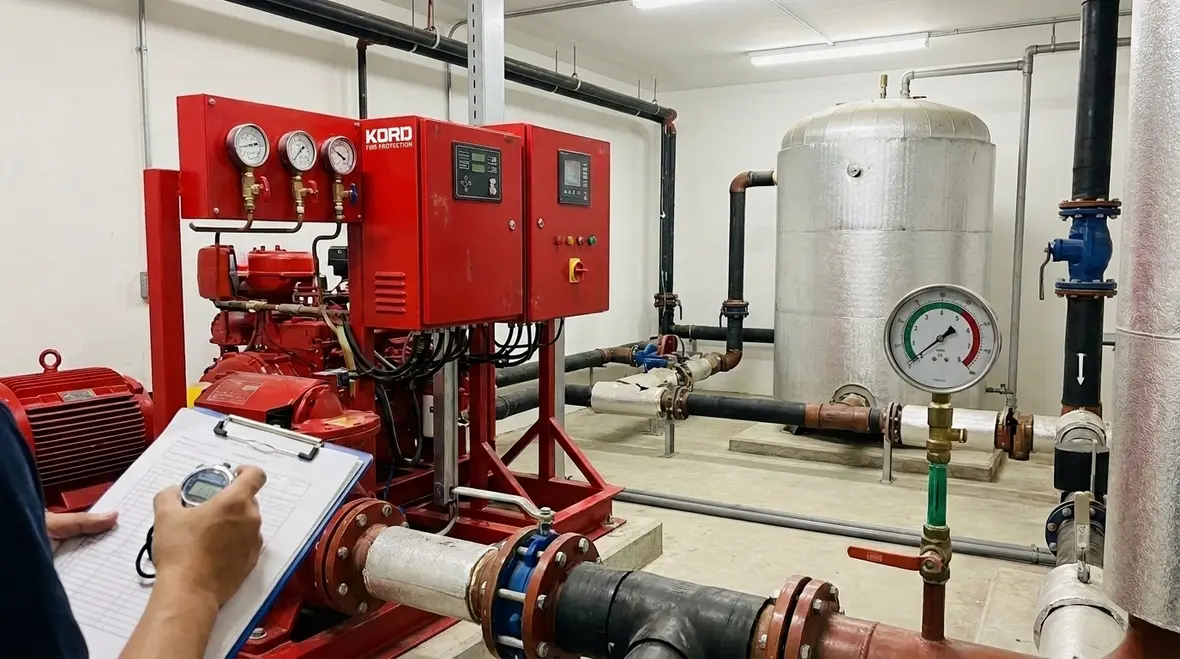
NFPA 13R Section 9.2: The 30-Minute Water Supply Capacity Rule for Residential Sprinklers
Quick Answer
NFPA 13R Section 9.2 requires that the water supply for residential sprinkler systems provide adequate flow and pressure for 30 minutes. The requirement verifies that the system can sustain design demand using the available supply, including pressure at the most remote points.
What does NFPA 13R 9.2 actually require?
NFPA 13R Section 9.2 focuses on the practical performance of the building water supply during a fire event. Instead of assuming short-duration capacity, the standard expects the supply to sustain the required sprinkler flow for a full 30 minute duration.
In plan review and field acceptance, the design team must demonstrate the relationship between:
- Required system discharge (the summed sprinkler demand based on the 13R sprinkler arrangement)
- Available water supply flow rate
- Required residual pressure at the demand point (often expressed as NFPA 13R 9.2 capacity 30 minute water supply flow pressure considerations in calculations and submittals)
For commercial and mixed use properties that include 13R residential occupancies, this becomes a key compliance checkpoint because utilities, gravity tanks, pumps, and on site water sources vary widely in sustained performance.
If you want broader context on how sprinkler standards translate into field installation practices, Kord Fire Protection’s NFPA 13 overview on automatic fire sprinkler system installation is a useful companion read near the start of any 13R water supply review.
How the 30 minute duration affects system design and hydraulics
Hydraulic calculations do more than confirm pipe sizes. The 30 minute water supply capacity rule influences decisions about pressure reliability, water source selection, and the effectiveness of operating conditions over time.
1) Sustained demand, not just peak performance
Early in a fire, a water supply can appear adequate due to initial pressure and stored volume. NFPA 13R 9.2 capacity 30 minute water supply flow pressure considerations ensure the supply does not fail as the source draws down, aerates, or loses head pressure.
Common design challenge: the system passes the “moment in time” flow test but cannot maintain the required residual pressure for 30 minutes when the supply drops to its long term operating range.
2) Water supply type matters
Design teams must evaluate the actual water source mechanism:
- Municipal supply: static and residual pressure can vary with building elevation and time of day. Sustained supply is typically validated using official utility data or field verified tests.
- On site tanks: the tank volume and available drawdown determine duration. Stratification, inlet and outlet configuration, and pump suction conditions can impact maintained pressure.
- Pumps: pump curves, system curves, and controls must support 30 minute operation, including any start up latency and pressure control behavior under sustained load.
3) The most remote point and friction losses still control
Even though Section 9.2 addresses the water supply duration, the system’s hydraulics determine whether the delivery pressure remains adequate at the most remote sprinkler location. Friction losses, elevation changes, and pipe resistance remain constant in the calculation model, but the supply pressure available over time may not.
Where compliance teams get stuck during plan review and commissioning
NFPA 13R Section 9.2 documentation and acceptance checks often fail for procedural reasons, not because the concept is wrong. The most frequent friction points occur during verification of sustained flow, pressure, and pump control logic.
Water supply testing duration and documentation gaps
It is common to see testing documentation that validates flow and pressure only briefly. Inspectors and design reviewers expect evidence that supports the 30 minute requirement. If calculations rely on utility data that does not explicitly represent sustained performance, the submittal may need revision or supplemental testing.
Pressure control and pump operating range issues
Pumps that control by variable frequency drives or duty cycling can behave differently during long duration flow. Pressure may drift as the system curve shifts or as the pump reaches its stable operating region. For 30 minute performance, commissioning should confirm that:
- Pressure control maintains the required residual pressure range during sustained discharge
- Pump cycling and alarms remain within acceptable limits
- Auto start, transfer, and handoff logic maintains uninterrupted operation
Maintenance and readiness failures that show up later
Even when initial acceptance is correct, long term compliance depends on readiness of the water supply equipment. Commercial facility standards require disciplined inspection and testing programs that align with local regulatory expectations and the system type. Equipment failure modes include:
- Corroded piping or partially blocked strainers affecting sustained flow
- Low tank level switches or float failures that limit available duration
- Impaired pump suction conditions reducing net positive suction head margin
- Control panel faults that prevent full duty operation under extended demand
For additional context on system installation expectations and how components interact at commissioning, refer to Kord Fire Protection’s NFPA 13 overview on automatic fire sprinkler system installation for practical trade insights that carry into 13R system readiness and documentation discipline.
Operational procedures to verify 30 minute water supply capacity
Real world verification should follow a repeatable process that links design assumptions to measured performance. Kord Fire Protection supports commercial, industrial, and retail clients with compliance planning, functional testing support, and documentation packages that help keep 13R systems audit ready.
Step 1: Confirm the design demand basis
Technicians validate that the hydraulic calculation basis matches the installed configuration. This includes:
- Actual sprinkler layout and arrangement
- Pipe routing, sizes, and fittings
- System elevation assumptions
- Any listed deluge or special control arrangements if used
Step 2: Validate the water supply source capability for sustained flow
Depending on the source, verification includes reviewing official supply information or performing functional tests appropriate to the authority having jurisdiction. When pumps and tanks are involved, verify expected sustained operating conditions rather than short duration snapshots.
Step 3: Commission pump and control sequences for uninterrupted performance
Commissioning should verify that controls maintain required discharge pressure and that alarms and safeties allow continuous operation. If the system includes pump pacing, duty selection, or timed stages, the commissioning run should test the behavior through the time window required by Section 9.2.
Step 4: Document acceptance evidence for ongoing compliance
Good documentation speeds up inspections and reduces rework during compliance audits. Include:
- Test setup details and instrument ranges
- Measured flow and pressure at representative points
- Operating status of pumps, controllers, tanks, and valves
- As built notes and any approved deviations
Common failure points and how to prevent them
Most failures relate to the gap between design intent and long term system reality. The following issues frequently compromise sustained performance and can trigger correction requirements.
1) Strainers and isolation valves left partially obstructed
Strainers can clog over time, and isolation valves can settle from vibration or improper maintenance. These issues may still allow initial flow tests to pass while reducing sustained flow and pressure during an extended event.
2) Tank drawdown behavior that drops residual pressure too early
Tank geometry and inlet configuration can produce pressure drop at the pump suction earlier than expected. Poorly sequenced pump start can also cause a transient dip that affects system discharge performance.
3) Pump curve mismatch under sustained operating conditions
If a pump was selected using incomplete system curve data or if field piping differs from design, performance can drift. Changes such as valve replacements or revised pipe routing can alter friction loss, forcing the pump to operate outside the intended efficiency zone.
4) Incomplete periodic maintenance on water supply equipment
Commercial facilities often maintain sprinkler systems under inspection schedules, but water supply equipment maintenance can lag. That creates a compliance risk because the sprinkler system is only as reliable as its ability to sustain demand.
For broader background on sprinkler systems and water supply concepts, this fire pump guide on how fire pumps support sprinkler systems provides additional technical reference material that can help teams understand how pumps relate to sustained fire flow.
Frequently Asked Questions
Call to Action
Ensure your NFPA 13R Section 9.2 compliance stays defensible throughout ownership, not just at installation. Kord Fire Protection can help commercial teams verify sustained water supply performance, support commissioning evidence, and maintain pump and water supply reliability through disciplined testing and documentation. Contact Kord Fire Protection to review your system basis, identify likely 30 minute capacity risks, and plan the next inspection and test actions.

Join Our Newsletter!
Get the latest fire safety tips delivered straight to your inbox From our Newsletter.



