
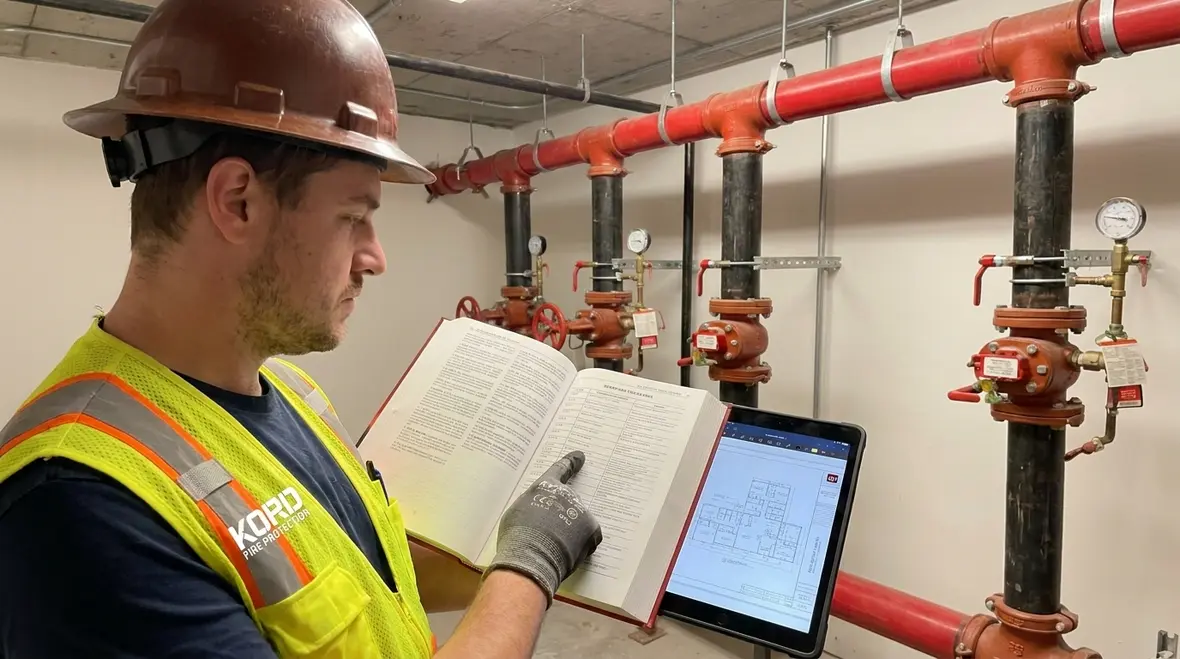
NFPA 13R Section 2.2 NFPA Publications: Every Standard Your 13R Design Relies On
Quick Answer: NFPA 13R Section 2.2 points designers and inspectors to a set of NFPA referenced publications that govern key system components, installation methods, acceptance criteria, and ongoing maintenance. Selecting the correct editions and applying them consistently reduces plan review risk and prevents operational failures in commercial properties.
Why NFPA 13R Section 2.2 matters on real projects
NFPA 13R is not a standalone document. Section 2.2 formally incorporates other NFPA publications that the sprinkler system design, installation, testing, and inspection ultimately depend on. When the referenced publications list editions is applied correctly, it supports code compliance, consistent inspection outcomes, and reliable fire control performance.
For commercial, industrial, and retail facilities, the practical impact is straightforward: the “sprinkler layout” is only one part of the system. Water supply reliability, materials compatibility, hangers and supports, alarms, supervisory interfaces, and inspection procedures all draw from the incorporated standards. That is why the NFPA 13R 2.2 NFPA referenced publications list editions must be verified and implemented at the start, not after installation begins.
What Section 2.2 typically governs in a 13R sprinkler system
Section 2.2 is where the legal foundation is set for how NFPA 13R gets enforced through other NFPA standards. In day to day terms, referenced publications usually affect five critical areas:
- Component selection and system interfaces for valves, alarms, supervisory devices, and related detection and notification tie ins where applicable.
- Installation and workmanship requirements covering piping methods, supports, and installation practices that preserve listing and performance.
- Acceptance testing and documentation so the installed system matches the design intent and can be verified in service.
- Inspection, testing, and maintenance (ITM) expectations that determine how the system stays compliant over time.
- Operational and safety procedures that inform how technicians perform checks without compromising the system.
Design teams often focus on the 13R-specific criteria for coverage and constraints. However, reviewers frequently deny or condition submittals due to missing edition verification, incomplete ITM alignment, or unclear evidence that incorporated standards were met.
Teams that want a broader service context can also review Kord Fire Protection’s fire sprinkler system service page, which fits naturally here because Section 2.2 compliance does not live in design alone. It follows the system through installation, certification, inspection, and maintenance.
How to verify the correct NFPA 13R 2.2 NFPA referenced publications list editions
Code enforcement depends on edition control. The referenced publications list editions establishes which version of each external standard applies. Using an outdated edition can create gaps in acceptance testing, maintenance frequencies, or documentation expectations.
Operational steps that reduce plan review delays
- Confirm the edition of NFPA 13R being adopted by the local authority having jurisdiction (AHJ). The same NFPA document title can correspond to different adoption cycles.
- Pull the Section 2.2 referenced publications list directly from the adopted NFPA 13R text.
- Record each referenced publication and its edition in the project compliance matrix. Do not rely on “last job” templates.
- Trace each referenced requirement to deliverables such as test procedures, hydrostatic testing criteria, valve inspection tasks, and ITM schedules.
- Align the contractor submittal package to show evidence of compliance with the correct editions, including documentation methods.
Commercial property owners also need clarity on how compliance is sustained after installation. Kord Fire Protection supports ongoing compliance planning by connecting the code edition requirements to maintenance procedures and field realities, including system access, valve supervisory conditions, and inspection workflow constraints.
What field teams should do differently when referenced standards apply
Referenced publications influence installation mechanics and acceptance practices, not just paperwork. The most common compliance challenges arise when crews treat referenced standards as “general guidance” instead of enforceable requirements.
Common failure points that create inspection issues
- Incomplete acceptance testing documentation, such as missing evidence of required tests or missing signatures tied to specific procedures.
- Valve and alarm interface gaps, where supervisory devices do not match the design intent or are not verified after testing.
- Support and installation workmanship variation, including installation practices that do not maintain the listing basis or create future access issues.
- Maintenance access conflicts that surface during ITM, especially in retail back-of-house areas or industrial service corridors.
- Water supply assumptions that do not match actual pressure and flow test results, requiring re evaluation and sometimes redesign.
To reduce these risk areas, project teams should treat the sprinkler system as an integrated water delivery and signaling system. For additional context on typical installation workflow and system scope, see this technical overview: NFPA 13 overview of automatic fire sprinkler system installation.
While that resource focuses on NFPA 13, the installation discipline it describes carries over to 13R compliance expectations, especially around verification, documentation, and how field execution supports inspection and maintenance readiness.
Maintenance and inspection alignment: the compliance reality after turnover
Section 2.2 impacts not only how the system is built, but also how it is inspected and maintained. For facilities, the highest operational cost is often not installation, but recurring inspection findings that require corrective action, downtime, or delayed certifications.
Commercial ITM planning that works
- Pre planned inspection routes that account for service access around valves, drain points, and alarm devices.
- Valve and device baseline verification at turnover, so the ITM team starts with confirmed conditions instead of assumptions.
- Clear documentation retention tied to the referenced publication edition requirements, not generic templates.
- Corrective action response times that reflect how ITM findings affect facility operations.
- Coordination with facility schedules to minimize disruption during testing and observation periods.
Kord Fire Protection helps property managers implement a practical compliance program that matches how NFPA referenced standards function in the field, including identifying access limitations early and ensuring that documentation and testing evidence remain audit ready.
For broader context on fire pump and water supply testing principles that often intersect with sprinkler system performance, fire pump focused guidance is available in the NFPA 25 fire pump testing requirements guide.
Who should own edition compliance in the project lifecycle?
Edition compliance is a shared responsibility, but it needs a single accountable workflow so the design and the field can defend the same requirements.
Recommended ownership model
- Design professional: verifies the adopted NFPA 13R and Section 2.2 referenced publications list editions, then translates requirements into the design basis and submittal content.
- Contractor: executes installations and acceptance procedures that match the incorporated standards and produces documentation consistent with those editions.
- Owner and facilities team: ensures ITM planning and vendor scopes reflect referenced standard edition expectations, including scheduling and access.
- Third party service partner such as Kord Fire Protection: validates readiness for inspection, supports corrective action closure, and maintains system performance over time.
This model matters most in commercial, industrial, and retail environments where tenant turnover, remodel cycles, and deferred maintenance can quickly degrade compliance if the original edition based requirements are not carried forward.
Frequently Asked Questions
Next step: lock the editions and protect your compliance schedule
Verify the adopted NFPA 13R edition and extract the Section 2.2 referenced publications list editions into your project compliance matrix. Then align contractor documentation and your ITM program to the same referenced requirements so inspection outcomes stay predictable. Kord Fire Protection can help validate readiness, close acceptance gaps early, and support ongoing maintenance discipline that meets commercial facility expectations. Contact Kord Fire Protection to review your 13R scope and edition alignment.

Join Our Newsletter!
Get the latest fire safety tips delivered straight to your inbox From our Newsletter.



