
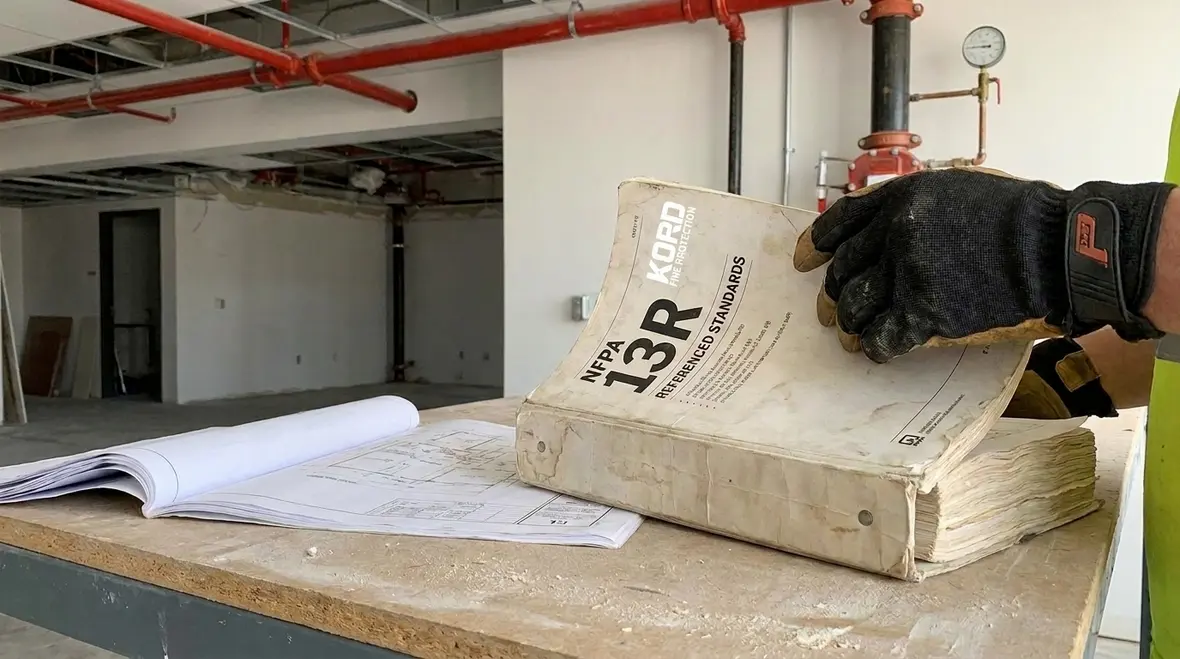
NFPA 13R Section 2.1 General: Why Referenced Documents Are Part of the Code Requirements
Quick Answer: NFPA 13R Section 2.1 makes referenced standards binding because they support enforceable technical criteria. Once incorporated, compliance does not stop at NFPA 13R language. Facilities must also meet the applicable requirements in those cited publications.
For facilities juggling inspections, repairs, and long term documentation, commercial fire sprinkler system service becomes part of staying ahead of the referenced requirements that inspectors expect to see reflected in the field.
Why NFPA 13R Section 2.1 treats referenced documents as code requirements
NFPA 13R is a prescriptive and performance-supported sprinkler installation standard, and Section 2.1 ensures the referenced documents become part of the enforceable rule set. In practice, this means the “minimum required” for system components, installation practices, tests, and records can live in standards outside NFPA 13R itself. For commercial, industrial, and retail facilities, this matters because sprinkler system acceptance relies on both the main text and the incorporated references.
When the code states that certain sections or provisions of other publications apply, the jurisdiction and the authority having inspection typically verify compliance with those referenced publications as though they appear directly in NFPA 13R. That is the essence of NFPA 13R 2.1 referenced publications general requirements: the referenced documents are not guidance only. They function as enforceable requirements.
How referenced publications become enforceable during design and installation
NFPA 13R Section 2.1 establishes a mechanism of incorporation by reference. Rather than repeating detailed product and installation criteria in every NFPA document, the standard points to other recognized technical publications. During design and installation, contractors must treat those citations as active requirements. This affects multiple parts of the project lifecycle:
- System design submittals: Material selections, component approvals, and detailing must align with the cited provisions, not merely with a broad interpretation of NFPA 13R.
- Field installation and workmanship: Methods used for routing, supports, hangers, sealing, and fittings installation often track referenced standards, especially where performance depends on correct application.
- Inspection, testing, and commissioning: Recordkeeping, test thresholds, and acceptance procedures can reference external criteria. Missing or incorrect test documentation can fail approval even when piping appears properly installed.
For example, when a referenced document requires a specific installation practice for listed components, substituting an unapproved practice can create a compliance gap that is not cured by meeting NFPA 13R’s general intent. Inspectors commonly verify the installation details tied to those referenced provisions.
What compliance looks like in the real world for commercial facilities
In commercial and retail environments, sprinkler systems frequently span multiple occupancy areas, tenant buildouts, and renovation phases. That operational reality increases the likelihood of mismatches between the current NFPA 13R edition, the referenced publications in force, and the documentation carried forward from prior projects. Typical compliance challenges include:
- Edition drift: A facility may have older approved drawings and prior maintenance records that referenced earlier editions of standards. Even if the equipment still operates correctly, the inspection process may require proof aligned to the currently enforced referenced publications.
- Component substitutions: Contractors may swap valves, fittings, or detection accessories to address supply constraints. If a referenced document requires specific listing, marking, compatibility, or installation constraints, substitutions can trigger rework.
- Documentation gaps: Maintenance teams often maintain equipment inspection logs, but not the specific evidence needed to show compliance with referenced publication requirements such as test forms, acceptance criteria, or installation checklists.
- Tenant work interfaces: During ceiling modifications or plan changes, penetrations, bracing, and clearance around sprinklers can be altered. If those details are tied to referenced requirements, small field changes can affect code compliance.
These issues directly impact operational readiness. Commercial owners should treat referenced publication requirements as part of the compliance management system, not as a one time design checklist.
Inspection and maintenance: where referenced requirements commonly fail
Section 2.1 referenced publications general requirements influence more than initial installation. Ongoing inspection and maintenance depend on the same underlying technical criteria that ensure consistent performance. The most frequent failure points typically involve verification and traceability.
1) Acceptance documentation and traceability
Even when the sprinkler system is installed correctly, approvals can be delayed if submittals do not demonstrate compliance with the referenced publications. Kord Fire Protection supports commercial facilities by coordinating inspection ready documentation packages that align installation intent with the applicable referenced criteria. This includes organized as built records, component identification, and test evidence.
2) Test execution aligned to referenced criteria
System testing relies on correct procedures, correct pressure and flow verification practices, and correct interpretation of acceptance requirements. When referenced documents define test methods or minimum verification steps, maintenance teams must execute and document them as written. Otherwise, the facility can experience repeat inspection cycles and operational downtime.
3) Maintenance intervals and component condition
Sprinkler systems remain reliable only when valves, water supply devices, gauges, and auxiliary components remain within acceptable condition parameters. Referenced publications often drive the technical expectations for how components should be maintained and verified. In practice, poorly tracked maintenance histories become the root cause of discrepancies found during inspections.
To understand how NFPA 13 related requirements tie into installation expectations, see this overview of automatic fire sprinkler system installation: NFPA 13 overview for automatic fire sprinkler system installation.
Practical implementation strategy: how to manage referenced publications during renovations
Facility teams often assume renovations only require “matching existing.” NFPA 13R Section 2.1 referenced publications general requirements challenge that assumption. When work touches portions of the system, the compliance scope commonly expands to include the applicable cited criteria. A practical approach includes:
- Confirm the enforced edition and incorporated references: Verify which NFPA 13R edition the jurisdiction enforces and identify the referenced publications tied to that edition.
- Build a compliance matrix: Map each referenced publication to relevant system elements, such as components, installation methods, and testing documentation requirements.
- Control substitutions with engineered approval: When supply chain changes occur, confirm the substitute remains compliant with the cited provisions before installation proceeds.
- Update records immediately after field changes: Renovation work often creates a documentation gap. Maintaining traceability during construction reduces later inspection friction.
- Plan for ongoing maintenance verification: Align maintenance procedures and forms with the incorporated requirements so routine checks remain inspection ready.
Kord Fire Protection functions as a compliance partner for ongoing testing, documentation support, and inspection readiness. That operational support helps commercial owners reduce inspection delays and minimize disruptions created by rework or missing evidence.
What other resources can clarify the bigger sprinkler compliance picture?
For additional context around sprinkler system design and acceptance practices, fire pump and water supply considerations can be equally important in maintaining compliant performance. A helpful reference for water supply related systems is available here: fire pumps and water supply resources.
Even when NFPA 13R focus stays on residential and limited sprinkler scenarios, the referenced documents can still drive critical technical expectations that affect commercial operations. Strong water supply performance and reliable system operation depend on correct component behavior, correct installation, and correct verification.
Frequently Asked Questions
Conclusion and call to action
Referenced documents under NFPA 13R Section 2.1 are not optional background materials. They function as enforceable requirements that shape component compliance, installation practices, and inspection ready documentation. Kord Fire Protection helps commercial facilities manage the practical realities of edition alignment, renovation impacts, testing evidence, and traceable maintenance. Contact Kord Fire Protection to review your current documentation set and renovation scope so compliance is built in from day one, not corrected after inspection.

Join Our Newsletter!
Get the latest fire safety tips delivered straight to your inbox From our Newsletter.



