
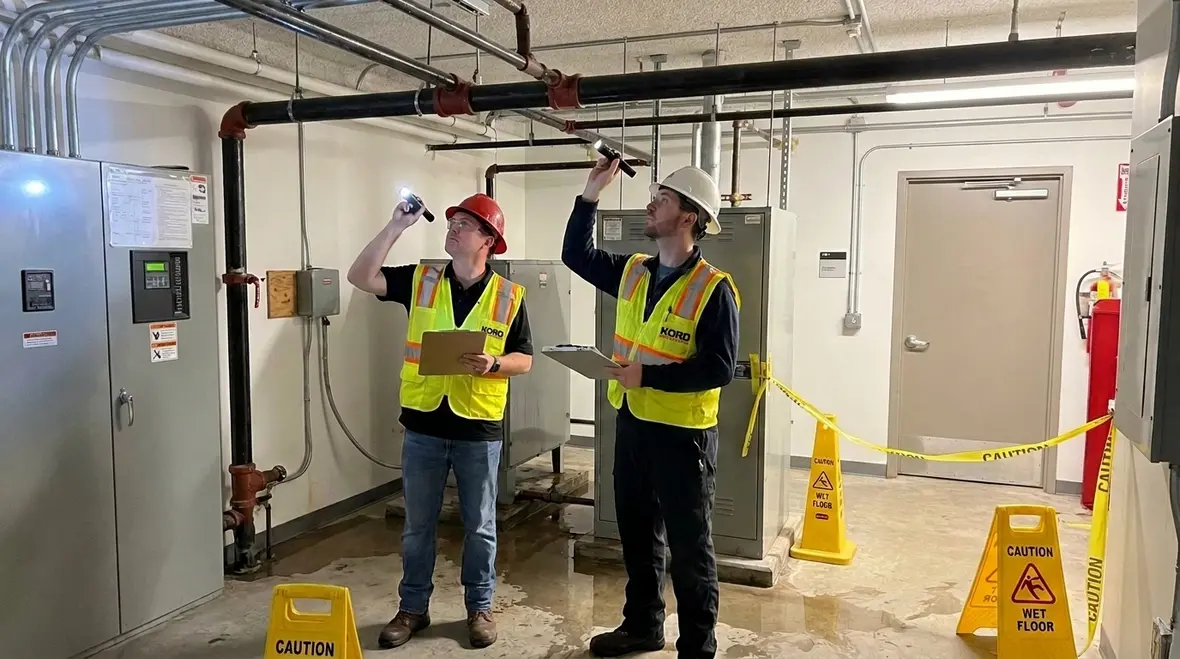
NFPA 13E Section 5.2: Post-Fire Operations in Sprinklered Properties
Quick Answer
NFPA 13E Section 5.2 sets expectations for safe, compliant post-fire actions in sprinklered buildings. It focuses on controlling hazards, maintaining inspection and documentation, restoring systems to service readiness, and verifying that impairments are managed. The goal is operational continuity without compromising fire protection performance.
If you want a broader code and installation baseline before getting deep into post-fire recovery, review NFPA 13 overview for automatic fire sprinkler system installation. For facilities that may need tighter shutdown controls during restoration, fire protection impairment management also fits naturally into the conversation.
Why NFPA 13E Section 5.2 matters after sprinkler activation
After a fire, organizations often prioritize emergency response and business recovery. NFPA 13E Section 5.2 shifts that focus into structured post-fire operations in sprinklered buildings, where safety, documentation, and system verification directly affect life safety, property loss, and ongoing compliance. In practice, commercial and industrial facilities face two competing realities: damaged systems must be controlled and evaluated quickly, and critical operations must continue as soon as conditions allow.
In sprinklered buildings, activation typically triggers water discharge, heat exposure, contamination, and potential impairment to fire protection features beyond sprinklers themselves. Proper post-fire operations in sprinklered buildings ensure that the remaining protection is reliable, that hazards are stabilized, and that the installed fire protection system returns to a verified service-ready condition.
What “post-fire operations” must achieve (scope and intent)
NFPA 13E Section 5.2 requires that post-fire response actions move beyond basic cleanup. The standard is designed to reduce the risk of hidden failures, uncontrolled hazards, and premature system restoration. It typically covers:
- Immediate hazard control and scene management to support safe work conditions.
- System condition assessment that accounts for fire damage, water impact, and thermal effects.
- Verification processes to determine what components require cleaning, repair, or replacement.
- Documentation and communication to support regulatory compliance and insurance requirements.
- Management of impairments and return-to-service decisions under a documented protocol.
Facilities commonly underestimate the second-order effects of fire and suppression water. Corrosion, mineral deposits, sediment movement in piping, and damaged detection and control devices can create performance gaps even when the main sprinkler system appears intact.
Step-by-step: operational workflow after a fire
1) Secure the site and control hazards before system work begins
Post-fire operations in sprinklered buildings start with site safety. Heat, structural damage, contaminated water, electrical hazards, and unstable building conditions can make normal maintenance unsafe. Organizations should confirm safe access and coordinate with incident command or the building emergency team before inspecting sprinkler components and related controls.
Common failure points during early recovery include reconnecting power or restoring building systems before verifying that sprinkler and alarm devices have not been compromised by heat or water intrusion. Work should not bypass impairment controls.
2) Assess sprinkler system damage using fireground knowledge and documented observations
After a fire, the sprinkler system’s condition depends on the fire scenario, duration, ceiling conditions, and discharge characteristics. NFPA 13E expectations align with a thorough post-fire assessment that focuses on:
- Sprinkler operation details (number of heads activated and where).
- Piping and hangers exposed to heat or water impacts.
- Wall and ceiling damage that can affect sprinkler coverage or obstructions.
- Alarm equipment and waterflow switches potentially affected by debris or water contamination.
- Control valves and gauges that may require inspection for internal corrosion or damage.
To support accuracy, facilities should gather fire department reports, photos, and system impairment logs. This improves the reliability of repair scope decisions and reduces the risk of returning the building to service with unresolved protection deficiencies.
3) Perform targeted cleaning, component replacement, and restoration testing
Sprinklers that discharged must be replaced with the correct listed type, temperature rating, and orientation as required by the system design and listing. Beyond replacement, post-fire operations should verify that water moved through mains and branches that may have sediment or debris. That debris can foul alarm devices and reduce water delivery reliability.
Restoration typically includes:
- Cleaning of affected piping and components as required by system condition.
- Inspection and functional verification of waterflow switches, alarms, and auxiliary devices.
- Inspection of supervisory devices and control valve conditions.
- Verification that system hardware and supports remain secure and correctly installed.
In commercial facilities, restoration often intersects with building utilities and tenant spaces. Coordinated scheduling reduces repeated access and ensures that tests occur when the building environment allows accurate readings and safe commissioning.
4) Manage impairments and control the return-to-service decision
One of the most common compliance challenges involves how quickly a facility returns to normal operations while protection systems remain partially impaired. NFPA 13E Section 5.2 emphasizes structured actions and documentation so that impairments are controlled and restoration is validated.
Post-fire operations should include a formal impairment and notification process. If any section of the system cannot immediately return to full function, the facility must maintain appropriate safeguards and follow its fire watch or equivalent risk mitigation plan consistent with local requirements and internal policy.
For installers and service teams, return-to-service verification should not be limited to visual checks. It should include functional testing and confirmation that alarm, supervision, and water delivery performance align with the system’s design intent.
Inspection, documentation, and compliance for commercial facilities
Many facilities lose compliance value by failing to document what they did and what they verified. In post-fire operations in sprinklered buildings, documentation supports:
- Regulatory compliance and duty-of-care expectations.
- Insurance claim substantiation and root cause review.
- Future maintenance planning by identifying damage patterns.
- Auditable evidence that impairments were managed and systems were returned correctly.
Practical documentation should include system identification, affected zones, component statuses, test results, and repair scope. It should also include any temporary measures used during restoration, such as controlled partial operation or compensatory safety strategies.
Facilities with multiple tenants, high turnover retail areas, or complex industrial ceiling assemblies often need stronger change control. Ceiling reconstruction and reinstallation can introduce obstructions, altered coverage, or incorrect sprinkler placement. Post-fire operations should verify that these conditions do not undermine the original design.
Where teams commonly get it wrong (and how to prevent it)
Field experience shows predictable failure points during post-fire restoration:
- Assuming local damage is isolated: Sediment and debris can travel downstream, affecting valves, gauges, and alarm devices.
- Replacing only discharged sprinklers: Heat exposure can weaken nearby components and affect seals, supports, and supervisory equipment.
- Skipping functional testing: Alarm and waterflow switch performance may not be validated until after the building is already operating.
- Allowing obstructions to remain: Repaired ceilings and stored materials can create coverage and response issues.
- Incomplete impairment control: Work may proceed without a documented risk mitigation plan when parts of the system are unavailable.
A reliable commercial partner coordinates restoration steps so that testing occurs after repairs and before return-to-service approvals. That approach reduces rework, avoids schedule drift, and improves compliance confidence.
How Kord Fire Protection supports post-fire readiness
Commercial, industrial, and retail owners need consistent sprinkler system performance across installation, commissioning, inspection, and post-fire restoration. Kord Fire Protection supports that lifecycle with services aligned to automatic sprinkler system installation best practices and ongoing compliance needs.
For context on system design and installation considerations, see: NFPA 13 overview for automatic fire sprinkler system installation.
For ongoing sprinkler system service models, see: Australian fire sprinkler services.
After a fire, Kord Fire Protection helps facilities restore protection with a methodical approach: component inspection and replacement, verification testing, documentation support, and impairment-controlled workflows. This reduces the likelihood of returning to occupancy with unresolved system issues.
Frequently Asked Questions
Conclusion and next step
Post-fire operations in sprinklered buildings require more than repairs and cleanup. NFPA 13E Section 5.2 supports controlled, documented, and verified restoration so the system performs as designed. If your facility has experienced sprinkler activation, contact Kord Fire Protection to plan the assessment, restoration testing, and return-to-service documentation. Acting quickly and methodically reduces risk, avoids rework, and supports compliance during business recovery.

Join Our Newsletter!
Get the latest fire safety tips delivered straight to your inbox From our Newsletter.



