
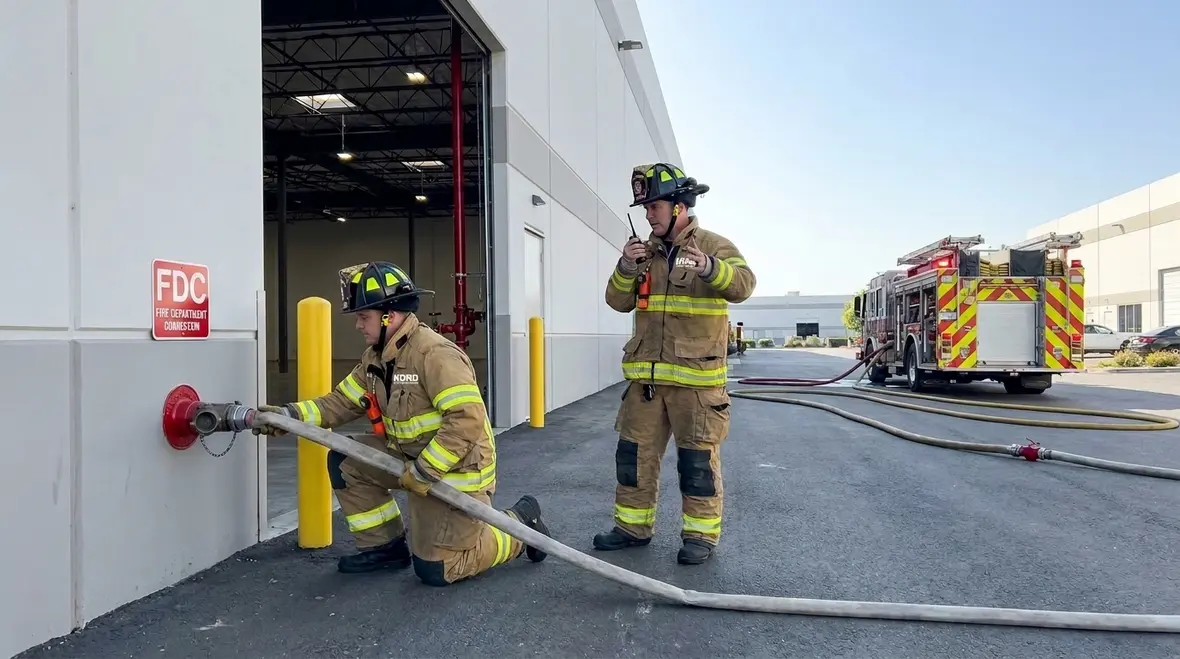
NFPA 13E Section 4.1: General Fire Department Operations Recommendations for Sprinklered Properties
Quick Answer
NFPA 13E Section 4.1 outlines practical, safety focused recommendations for how fire departments conduct operations in sprinklered properties. It emphasizes coordination, hazard awareness, water supply management, and protecting occupants and firefighters while maintaining the integrity of fire protection systems during incidents.
For a broader look at compliant fire sprinkler service and system upkeep for commercial properties, Kord Fire Protection also offers support that fits naturally with the readiness expectations discussed here.
What NFPA 13E Section 4.1 is trying to prevent in sprinklered buildings
NFPA 13E exists to help fire departments and facility stakeholders manage risk during emergency operations at sprinklered properties. Section 4.1, “General Fire Department Operations Recommendations for Protected Properties,” focuses on repeatable operational habits that reduce preventable injuries and property loss. These recommendations support a consistent approach to decisions such as when to control water flow, how to interpret system conditions, and how to avoid actions that inadvertently worsen fire spread or compromise protection.
For facility managers, the most important takeaway is that general fire department operations recommendations sprinklered properties are not theoretical. They directly influence incident command expectations, sprinkler impairment controls, fire pump behavior, valve positions, and how quickly crews can confirm system status.
Before arrival or during first operations: what the fire department should verify
Even when the sprinkler system is installed and maintained, early incident actions determine whether it supports firefighting objectives or creates unintended hazards. In line with Section 4.1 principles, fire departments are expected to establish baseline conditions, including:
- Construction type and hazards to anticipate concealed spaces, vertical and horizontal fire spread, and potential water damage scenarios.
- Location of key system features such as fire department connections, sprinkler control valves, and system supervisory devices to avoid delays and incorrect assumptions.
- Water supply capability and whether hydrant or supply limitations may affect firefighting and sprinkler performance.
- Signs of active system operation such as water flow indicators, valve tamper conditions, and visible sprinkler discharge patterns where safe to do so.
For commercial facilities, these early verifications rely heavily on accurate building documentation and accessible system hardware. A common compliance challenge occurs when control valves or connections are obstructed by storage, tenant partitions, or construction debris, which delays assessment and increases operational risk.
Coordinating with the system: operational actions that protect the sprinklered envelope
Section 4.1 recommendations place emphasis on coordination because automatic sprinkler systems operate independently of firefighting operations. Fire department tactics should support the system’s ability to control the fire while preventing unsafe conditions.
How incident command should think about water flow and system status
When the fire department arrives, it should treat the sprinkler system as a life safety protection system, not a secondary or optional feature. Practical coordination actions typically include:
- Confirming whether sprinklers operated before assuming the fire is “out” or that the system has failed.
- Avoiding unnecessary interference with sprinkler piping, valves, and supervisory devices.
- Managing pumping operations so the fire department does not unintentionally create adverse pressure conditions or disrupt system supervisory monitoring.
Water supply and pumping realities in commercial buildings
In many industrial and retail occupancies, the water supply arrangement includes pumps, tanks, or dedicated fire main configurations. Section 4.1 general guidance ties to the operational reality that water supply limits, pump starts, and system pressure transitions can affect both sprinkler performance and firefighting hose streams.
One frequent operational failure point is a mismatch between what incident command expects and what the system is actually doing. For example, if a fire pump or supply valve status changed due to maintenance, construction, or incomplete restoration after a previous incident, the fire department may see confusing indications that delay correct actions.
Facility owners can reduce these gaps by ensuring documentation aligns with the installed configuration and that valves are correctly secured after maintenance.
Maintenance and impairment control: the facility side of “general operations recommendations”
Section 4.1 recommendations are directed at fire department operations, but the effectiveness of those recommendations depends on the condition of the protected property. The biggest compliance friction usually appears when systems are impaired, modified, or not fully restored after testing.
Common impairment and condition issues
- Incorrect valve positions left after inspection or repair, including control valves not restored to normal supervision positions.
- Supervisory device discrepancies where annunciation or monitoring does not match the actual valve status.
- Blocked or inaccessible access points that prevent rapid confirmation of system components.
- Recent construction impacts such as changes to ceiling configurations, obstructions to sprinkler discharge, or delayed updating of as built plans.
Commercial compliance support matters
Kord Fire Protection supports commercial, industrial, and retail stakeholders with ongoing sprinkler system installation oversight, documentation alignment, and service planning. You can review an installation oriented overview here: NFPA 13 overview for automatic fire sprinkler system installation. For local service capabilities across the region, see: Australian fire sprinkler services.
These services help ensure that when the fire department arrives, the building information, system condition, and access expectations support safe and effective incident operations.
Facility practices that improve field decisions during incidents
Fire department operations recommendations work best when the building is “incident ready.” Under the practical intent of NFPA 13E Section 4.1, sprinklered property owners can strengthen safety outcomes through consistent operational readiness.
Operational readiness checklist for sprinklered properties
- Maintain current sprinkler plans that reflect tenant improvements, ceiling changes, and any modifications to piping routes or hazard classifications.
- Keep system access unobstructed including valve rooms, cabinet areas, and fire department connection routing.
- Ensure supervisory devices are functional so annunciations accurately represent system conditions.
- Control and document impairments with clear restoration timelines and verification after work completes.
- Coordinate with the local fire department where permitted, so responders understand where key hardware is located and how the system is arranged.
These practices do not replace NFPA standards or fire department authority, but they reduce friction between operational assumptions and the actual state of the sprinkler system.
Frequently Asked Questions
Conclusion and next step
NFPA 13E Section 4.1 supports safer, more coordinated fire department operations in sprinklered properties by emphasizing system awareness, water supply considerations, and avoiding unnecessary interference. To translate the intent into real-world incident performance, maintain accurate documentation, verify supervisory status, control impairments, and keep access points clear. Contact Kord Fire Protection to review your sprinkler system readiness and maintenance program, and to support compliance with a service plan built for commercial and industrial environments.

Join Our Newsletter!
Get the latest fire safety tips delivered straight to your inbox From our Newsletter.



