
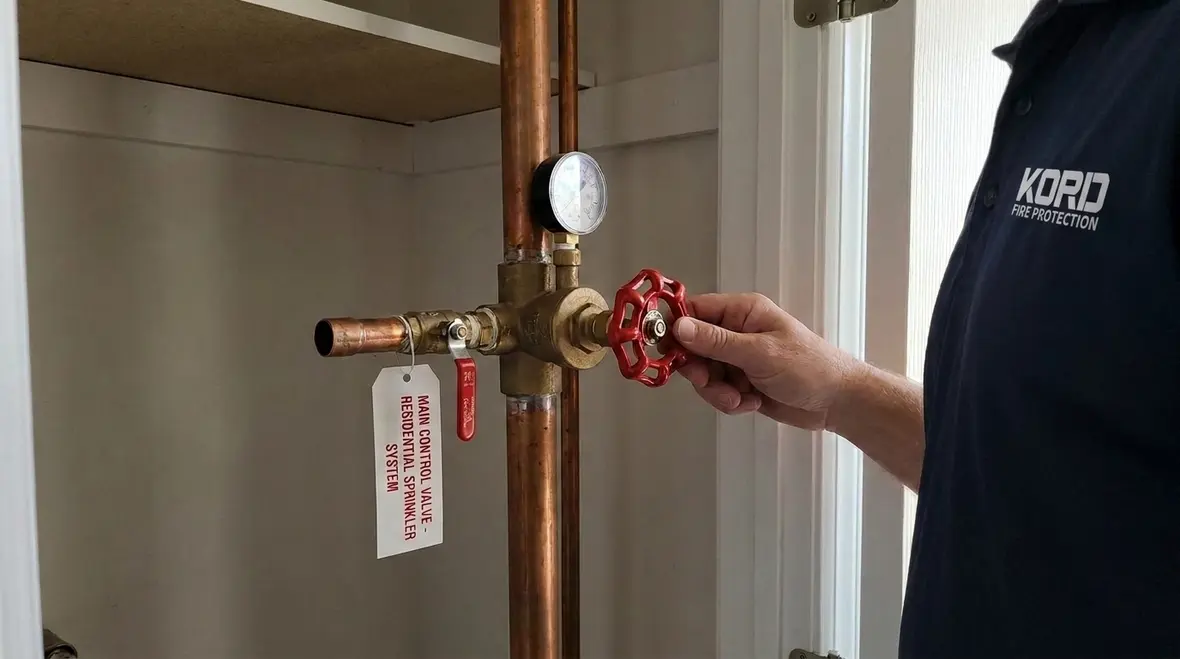
NFPA 13D Section 7.1: Control Valve Requirements for Residential Sprinkler Systems
Quick Answer
NFPA 13D Section 7.1 requires control valves that reliably supervise and regulate residential sprinkler system water flow. These valves must be accessible, clearly identified, monitored where required, and maintained so they function as intended during emergency operation. Proper installation and ongoing inspections prevent closed or impaired valves.
For teams building out a broader inspection and service plan, it helps to pair valve compliance with fire sprinkler system service and maintenance so installation, repairs, and ongoing readiness stay aligned from day one.
Why NFPA 13D Section 7.1 Control Valves Matter in Real Installations
NFPA 13D control valves sit at the boundary between a residential sprinkler system that is ready to perform and one that fails because a valve was inadvertently closed, tampered with, or left out of service. For contractors, inspectors, and property managers, NFPA 13D Section 7.1 control valve requirements residential sprinkler system installation is not just a design checklist item. It is an operational readiness standard that directly affects system performance, inspection outcomes, and maintenance cycles.
In commercial, industrial, and retail facilities that include sprinklered residential occupancies or mixed use buildings, compliance expectations usually extend beyond minimum residential practices. Facilities teams often apply their internal life safety rules, coordination with fire alarm monitoring, and tighter maintenance controls. That is where misalignment between “designed for 13D” and “operated like a 13R or 13” system can create preventable risk and inspection findings.
For a broader view of sprinkler system installation considerations, see NFPA 13 overview and automatic fire sprinkler system installation.
What Section 7.1 Expects From Control Valves
Section 7.1 focuses on controlling where and how water flow is permitted to the sprinkler system. In practice, control valves provide a safe way to take a system portion out of service for maintenance while ensuring the system returns to normal readiness immediately afterward.
Key expectations typically include the following operational outcomes:
- Access and visibility: Valves must be located so personnel can inspect and operate them without excessive disassembly.
- Clear identification: Labels and signage should allow quick verification that a valve corresponds to the intended system section.
- Reliable positioning: Valves should return to the required normal condition and remain there without drift caused by workmanship issues or improper supports.
- Supervision where applicable: When the system design or local requirements call for monitoring, the valve status must be detectable by supervisory signaling methods consistent with the overall life safety setup.
For residential sprinkler systems, the goal stays the same: maintain a clear, controlled boundary between an impaired condition and an emergency-ready condition.
Where Control Valves Fail Most Often: Field Challenges
Control valve compliance usually breaks down at the interfaces between installation quality, maintenance habits, and how the valve is supervised in the real world. Common failure points include:
1) Valves left closed after service
After inspections, drain down work, or minor component replacements, crews sometimes fail to restore valves to the normal open position. If supervision and procedural controls are weak, the system can remain in a partially disabled state until a testing event or an emergency reveals the issue.
2) Impaired valve movement
Corrosion, debris, pipe misalignment, or damaged internal components can cause valves to stick in a position that does not match the handle indicator. This creates a false sense of readiness during visual checks.
3) Improper installation support and piping stress
Valves installed without adequate support can see binding forces that affect normal operation. Over time, vibration or thermal cycling can worsen wear and lead to incomplete valve travel.
4) Conflicts between valve supervision and inspection access
Some sites require supervisory switches or monitoring. If monitoring components are installed poorly, obstructed, or not tested as part of routine inspections, valve status indications can become unreliable. When that happens, a building can “show green” while the system is not.
5) Poor labeling and documentation
Labels that fade, are missing, or do not match the as built drawings cause the wrong valve to be operated during troubleshooting. Documentation drift is a frequent commercial facility problem when renovations change system routing.
Installation and Maintenance Procedures That Support Compliance
Control valve requirements become enforceable when the system is installed correctly and maintained through a disciplined process. The following procedures align with typical inspection expectations and help teams meet NFPA 13D control valve intent.
Pre commissioning checks
- Verify valve identification: Confirm the valve label and designation match the hydraulic calculations, drawings, and system layout.
- Check physical accessibility: Ensure clearance for inspection and operation per installation constraints and site safety rules.
- Confirm normal position: Verify the valve is in the required open or normal state before system acceptance testing.
- Test supervisory indication where provided: Validate that valve position changes produce the expected supervisory signal at the annunciator or monitoring panel.
Inspection readiness routines
Visual confirmation alone does not eliminate valve risk. A best practice includes a structured inspection routine that verifies:
- Valve tamper or seal integrity where used by the system design.
- Condition of the valve body, handle, and surrounding piping for signs of damage or leakage.
- Correct supervisory status indication compared to field position.
Operational maintenance and service return to service
After any work that affects valve position or piping upstream of sprinklers, the facility should implement a return to service checklist that includes:
- Restoring valve to the normal position.
- Confirming supervisory indication returns to normal.
- Documenting the date, work order number, and personnel who verified valve status.
- Coordinating with the fire alarm monitoring logic to prevent stale supervisory states.
For pump and fire protection system resources that also emphasize inspection and operational reliability, reference firepumps.org.
How Commercial Facilities Often Integrate 13D Control Valves Into Broader Life Safety Standards
Even when a sprinkler system is designed under NFPA 13D, many sites operate under a broader governance model. Retail, industrial, and commercial property managers often add internal controls for valve supervision, access controls, and documentation control. Common integration practices include:
- Centralized inspection scheduling: Keeping valve inspections aligned with fire alarm and inspection contractor visits to avoid missed supervision checks.
- Access management: Ensuring valve rooms remain accessible to authorized service personnel without obstructing egress paths.
- Supervisory signaling harmonization: Confirming the valve supervision system communicates reliably to the same monitoring workflow used across the building.
- As built accuracy: Maintaining updated valve labeling after tenant improvements or piping modifications.
Kord Fire Protection supports property owners, facility managers, and contractors with practical compliance help that goes beyond installation. Their ongoing services typically include inspection coordination, valve readiness verification, documentation support, and maintenance planning aimed at reducing inspection findings and improving emergency reliability.
Compliance Documentation: What Inspectors Look for Beyond the Valve Itself
Control valves must exist and must function as installed. Inspectors also consider the context around the valve:
- System overview alignment: Valve designations must match drawings and the installed configuration.
- Supervision evidence: If supervisory monitoring applies, the evidence of normal and alarm status must be verifiable and maintained.
- Maintenance history: Records help demonstrate that valves have not been left impaired after service.
- Correct correction of deficiencies: Repair actions must be followed by verification that normal valve status is restored and confirmed.
These steps reduce recurring issues and help teams demonstrate a consistent compliance posture for NFPA 13D control valve requirements residential sprinkler system installation.
Frequently Asked Questions
Call to Action
If your team is installing, maintaining, or managing a residential sprinkler system, treat NFPA 13D Section 7.1 control valve requirements residential sprinkler system installation as an operational reliability program, not a one time checklist. Contact Kord Fire Protection to schedule compliance focused inspections, verify supervisory and valve readiness, and build a maintenance plan that reduces repeat findings. Proactive verification protects occupants and supports smoother inspection outcomes.

Join Our Newsletter!
Get the latest fire safety tips delivered straight to your inbox From our Newsletter.



