
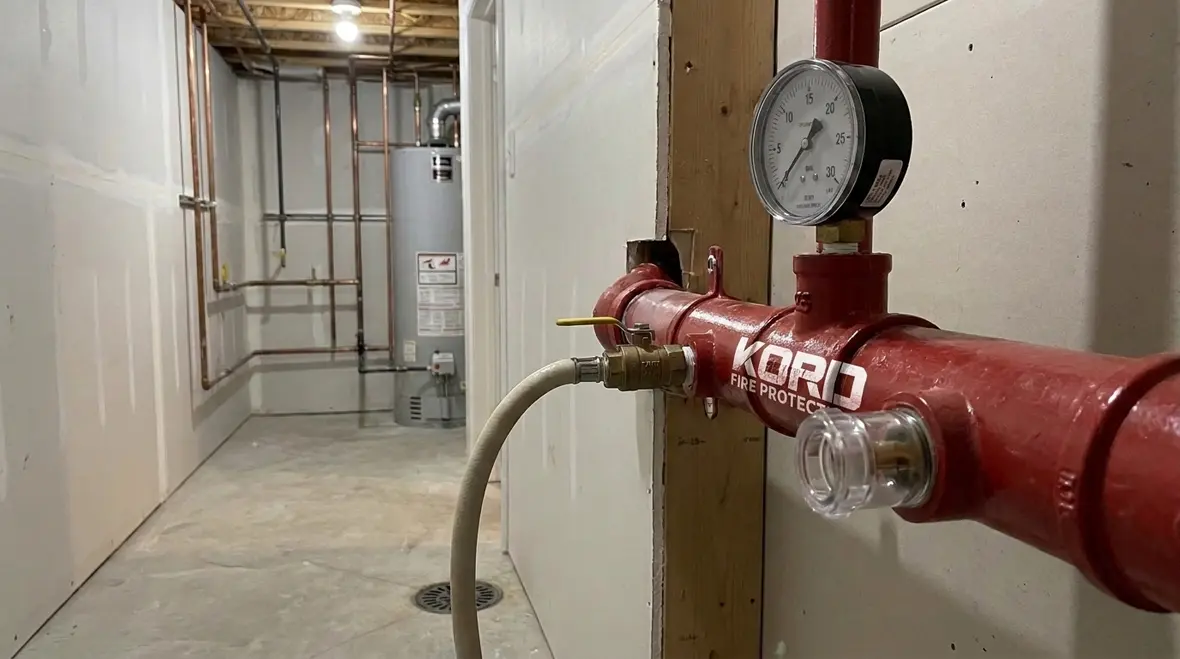
NFPA 13D Sections 7.2–7.3: Proper Drain, Test Connection, and Pressure Gauge Placement
Quick Answer
NFPA 13D Sections 7.2 and 7.3 require reliable provision for draining and testing waterflow and system performance, including where test connections and pressure gauges are placed. Proper placement supports accurate readings during inspections, reduces air entrapment, and prevents damage from improper discharge conditions.
For property teams that want systems to stay inspection-ready, fire sprinkler system service helps keep testing access, drainage, and gauge verification aligned with real-world maintenance needs.
Why Sections 7.2 and 7.3 Matter in Real Installations
NFPA 13D Sections 7.2 and 7.3 focus on system water control for two critical purposes: draining and performance testing. When these provisions fail, inspectors commonly see recurring problems such as inaccurate gauge readings, incomplete drainage, trapped air that distorts pressures, and test water discharged in a way that conflicts with drainage, separation, or scald risk controls. In residential occupancies, these failures often appear simple during construction but become costly during compliance verification, seasonal maintenance, or after modifications.
In practical terms, the NFPA 13D Sections 7.2 7.3 drain test connection pressure gauge placement residential details determine where technicians connect test equipment, where they confirm operating pressure, and how safely they release water without affecting the rest of the piping system or nearby property.
For commercial and industrial facilities that include residential style sprinkler systems, owners still expect the same outcomes: repeatable test results, documented maintenance, and equipment longevity. Kord Fire Protection supports ongoing compliance and testing readiness through installation verification, maintenance procedures, and audit support aligned with local inspection expectations.
1) Section 7.2: Proper Drain Requirements That Prevent Troublesome Conditions
Section 7.2 addresses the need for a drain arrangement that can reliably evacuate water from the system or relevant portions so that testing and maintenance can occur without leaving residual water. Although the exact arrangement depends on the system configuration, the core objective stays consistent: the system must be able to drain in a controlled manner and provide access for inspection, verification, and correction.
Operational purpose during inspections and maintenance
During routine inspections, technicians need the system to respond predictably to controlled operation. A properly configured drain supports:
- Removal of settled debris and sediment that can affect water distribution
- Reduction of trapped air that can cause false low readings or unstable pressure
- Safe, repeatable water discharge while protecting surrounding finishes and fixtures
Common compliance and workmanship failure points
- Incorrect drain routing: Discharge directed into areas that cannot safely handle test flow, leading to standing water, freezing hazards, or damage claims.
- Inadequate discharge control: Drain discharge that prevents full evacuation, leaving pockets of water that skew future tests.
- Drain valves not readily accessible: Technicians may be forced to improvise connections, resulting in inconsistent discharge and incomplete maintenance cycles.
- Valves or fittings creating check or restriction effects: Added components can change flow behavior and degrade the repeatability of test conditions.
For additional context on system installation practices that support code compliance and maintainability, refer to Kord Fire Protection’s NFPA 13 overview of automatic sprinkler system installation. While that article targets NFPA 13, the principles of reliable water supply interface, testability, and maintenance access carry over to residential design approaches used under NFPA 13D.
2) Section 7.3: Test Connection Requirements for Repeatable Verification
Section 7.3 governs the test connection used for verifying system performance. A test connection must enable connection of measurement and testing equipment without introducing uncontrolled leaks or reading distortion. This becomes critical when technicians conduct performance verification, flow verification, or trouble diagnosis.
What a proper test connection enables
- Accurate pressure monitoring at the intended measurement point
- Safe connection and disconnection of test devices
- Controlled verification of system response without disturbing unrelated piping branches
Typical field issues that cause rejected readings
- Leaks at adapters or quick connects: Even minor leakage can reduce available pressure and produce inconsistent test results.
- Improperly sealed gauge ports: Poor sealing can allow micro leaks that affect pressure stability during testing.
- Obstructions or undersized components: Restrictions between the measuring point and the gauge can create pressure drop and false conclusions.
- Missing caps or protective covers: The test connection may collect debris or water ingress, leading to maintenance delays and inaccurate readings.
From an operational standpoint, test connections should be designed so that maintenance personnel can perform verification quickly, safely, and with consistent instrumentation practices. Kord Fire Protection helps facilities preserve that operational intent by supporting testing programs, documentation, and corrective action workflows that align with inspection realities.
3) Pressure Gauge Placement: How to Avoid False Readings
Pressure gauge placement determines whether a technician measures true system pressure or an altered pressure condition influenced by location, piping arrangement, and transient flow behavior. Under the combined intent of NFPA 13D Sections 7.2 and 7.3, gauges must be located so the measured pressure supports the test purpose and aligns with how water is discharged and controlled.
Key placement considerations used in the field
- Measure at the test connection interface: Gauges should reflect the pressure available at the point where the technician verifies performance.
- Minimize line effects: Excess length, unnecessary fittings, or restrictive components between the system and gauge can create pressure drop.
- Prevent air entrapment near the measurement location: Trapped air can make gauge readings fluctuate or appear lower than actual static or flowing conditions.
- Account for discharge impacts: If the discharge path causes backpressure or turbulence, the gauge can show unstable or inaccurate readings.
Why this matters for residential systems with commercial-level expectations
Even when the occupancy is residential style, the compliance outcome is still measured by test repeatability and documented verification. Commercial and industrial facility owners often implement audit cycles and vendor accountability, so inaccurate gauge placement can cascade into rework, repeated callouts, and nonconformities. For that reason, many teams treat NFPA 13D gauge placement as an operational requirement, not just a drawing requirement.
4) Maintenance and Inspection Workflow: Making Drain and Test Equipment “Test Ready”
Proper drain and test connection arrangements support not only initial acceptance but also ongoing inspection readiness. A best practice approach ensures that drains discharge as intended, test connections accept instrumentation cleanly, and pressure readings remain credible through seasonal conditions and system aging.
Recommended operational checks used by service teams
- Access verification: Confirm that valves, gauge ports, and test fittings remain accessible without improvised extension tools.
- Functional discharge confirmation: During scheduled service, verify that discharge does not create pooling, freezing, or property damage concerns.
- Instrumentation compatibility: Use properly rated gauge fittings and adapters to prevent leaks and measurement anomalies.
- Documentation alignment: Record gauge readings, instrumentation details, and any deviations that affect comparability across inspections.
For additional technical context on fire pump and water supply interfaces that affect test pressure behavior, see this fire pump testing guide. While this resource is not specific to NFPA 13D, it supports understanding of pressure dynamics and pump related influences that can affect sprinkler system verification.
5) Practical Compliance Guidance for Residential Installations (and Mixed Use Properties)
When applying NFPA 13D Sections 7.2 and 7.3 drain test connection pressure gauge placement residential, the compliance intent should guide layout decisions and verification steps. Residential system constraints often introduce unique challenges, such as limited mechanical room space, finished surfaces that affect drain routing, and the presence of freezing climates that require reliable discharge paths.
Installation and design habits that reduce risk
- Design the drain discharge path for safe, controlled flow under test conditions.
- Provide protective measures for test fittings and gauge connections to prevent debris and water ingress.
- Use consistent piping arrangement so technicians can connect instruments without creating line restrictions.
- Coordinate with property maintenance teams so access remains clear long after final construction.
Kord Fire Protection supports commercial service programs that include residential style sprinkler systems, helping property owners maintain inspection readiness and minimize downtime. This includes pre test walkthroughs, gauge and fitting verification, corrective work scope definition, and post test documentation that supports audit cycles and insurer requirements.
Frequently Asked Questions
Conclusion and Call to Action
Proper drain, test connection, and pressure gauge placement under NFPA 13D Sections 7.2 and 7.3 protects test accuracy, improves maintainability, and reduces compliance rework. If your residential sprinkler system is due for verification, audit support, or corrective upgrades, contact Kord Fire Protection to review drain discharge arrangements, test connection accessibility, and gauge measurement reliability. Kord can help you build a test ready system and maintain compliance with documented service outcomes.

Join Our Newsletter!
Get the latest fire safety tips delivered straight to your inbox From our Newsletter.



