
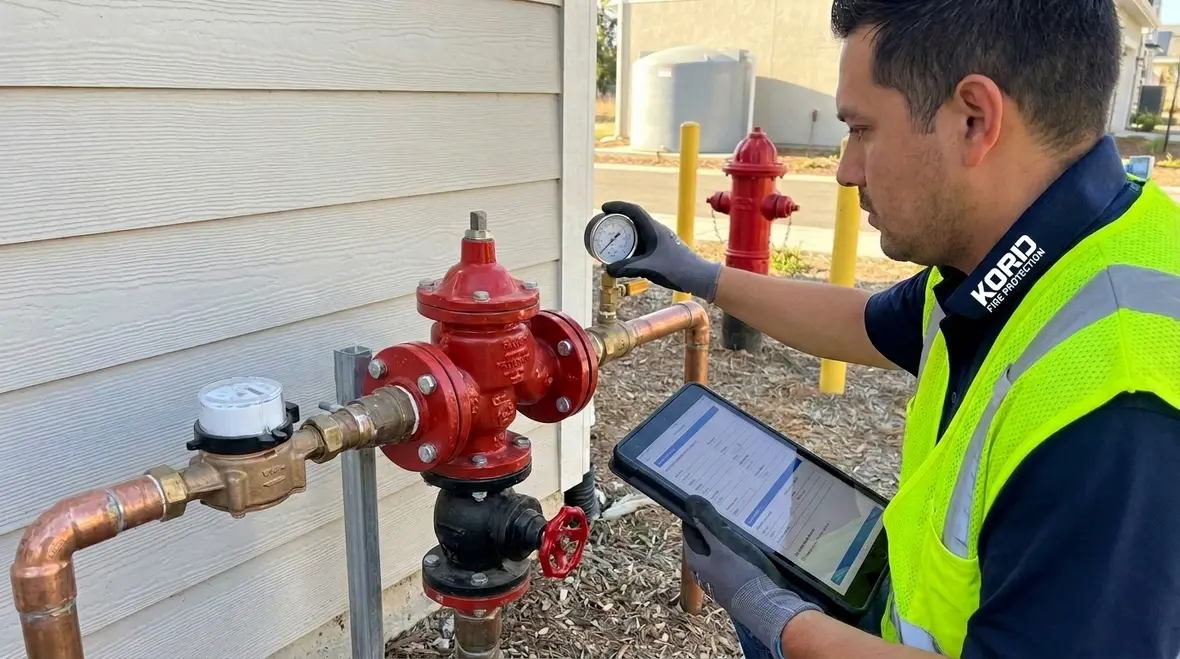
NFPA 13D Section 6.2: Acceptable Water Supply Sources for Residential Sprinkler Installations
Quick Answer: NFPA 13D Section 6.2 identifies what water supplies can serve residential sprinkler systems, with the key focus on reliable pressure, available flow, and documented capacity. Compliance typically hinges on source type, sizing method, and ongoing verification through inspections and testing.
For a broader systems installation context, see this NFPA 13 overview for automatic fire sprinkler system installation to connect water supply evaluation to the full installation and acceptance workflow.
Why NFPA 13D Section 6.2 water supply requirements matter in real projects
Residential sprinkler systems still depend on a dependable water supply. In commercial, industrial, and retail environments, the compliance risk rises when residential-style designs are used for dormitories, multi tenant residential occupancies, staff housing, or mixed use facilities. NFPA 13D Section 6.2 acceptable water supply sources residential sprinkler installations sets the baseline for evaluating whether a source can deliver the required flow and pressure over the design duration.
Because the water source directly drives system hydraulics, specifiers must treat the water supply as a first order design input, not an afterthought. Field teams must also align the water supply documentation process with inspection, testing, and maintenance procedures so the system remains compliant long after installation.
What qualifies as an acceptable water source under NFPA 13D Section 6.2?
Section 6.2 centers on the acceptability of water supplies that can support the system demand. The practical challenge is that “available” must be verifiable under realistic conditions, including normal operations, seasonal changes, and any operating constraints imposed by the facility’s water distribution system.
Typical acceptable sources fall into categories that can be evaluated for:
- Availability: The source must reliably exist during fire conditions for the required period.
- Capacity: The source must provide the calculated flow rate and pressure at the point of connection to the sprinkler system.
- Reliability: The source must be protected against common failures such as valve mispositioning, pump outages, power loss, or depleted storage.
- Documentation: The system designer must document the basis of design so the authority having jurisdiction can verify the approach.
For teams that also manage commercial fire life safety compliance, the key takeaway is consistency. If the building uses multiple water supplies for different hazards, coordination is required so the residential sprinkler demand does not create unintended drawdown, pressure loss, or cross connections that compromise other protection systems.
Municipal mains: compliance hinges on test data, not assumptions
Common field scenario
Many jurisdictions require a reliable basis of design from municipal water supply data, such as a flow test performed at relevant locations and times. Projects often fail when teams treat a historical hydrant record as current, or when the chosen connection point does not represent the system’s actual demand location.
Operational failure points
- Hydrant location mismatch: The measured pressure and flow do not match the pressure at the sprinkler system connection.
- Valve position errors: Partially closed isolation valves or check valves can reduce flow at commissioning and during later maintenance.
- System changes: New construction on the same main or reconfiguration of nearby valves can shift available flow.
- Seasonal supply variation: Wet and dry seasons can change pressure and flow characteristics in some networks.
What good practice looks like
Engineering teams should specify the exact connection point basis, require coordination with the water authority when needed, and ensure the installation includes clearly identified valves and access for future verification. Commercial facility operators should align the sprinkler water supply documentation with their broader fire risk assessment process and update it after major water system renovations.
On site tanks and gravity or pressure systems: reliability is a maintenance function
How tank based supplies typically work
When a building uses a tank, the system depends on stored water availability and the ability to maintain pressure and flow during a fire scenario. Gravity tanks rely on elevation to generate pressure, while pressure tanks and pump assisted systems rely on pumps, controls, and power availability.
Key compliance considerations
- Minimum tank level and available volume: The system design must account for real usable water, not just total tank capacity.
- Water quality and obstructions: Sediment, biological growth, and scale can reduce effective flow by fouling strainers and piping.
- Freeze protection and environmental exposure: In cold climates, improper insulation or heat tracing can lead to frozen valves, failed drains, or stuck components.
- Control and power reliability: Pump start and control logic must operate reliably under fire conditions, including fail safe states.
Common failure points during lifecycle
Even when the initial installation meets design intent, tank based systems can drift out of compliance if operators skip periodic maintenance. Common issues include missed strainer cleaning, failed alarms, ineffective transfer switching, or pump run test failures that go unnoticed until a scheduled inspection.
Pumps and pressure boosting: the weakest link is often verification
Pump systems can provide the needed flow and pressure, but compliance depends on how the system performs during a test that reflects fire operating conditions. In many residential sprinkler designs, boosting may be used to address low municipal pressure or to meet specific demand calculations. In mixed use and commercial environments, pumping systems can also interact with domestic water operations, HVAC make up systems, or other facility pumps.
Equipment mechanisms that drive performance
- Pump curves and operating points: Pumps must operate within their expected performance range. A mismatch between design assumptions and actual installation can reduce flow and pressure margin.
- Check valves and backflow prevention: Stuck or improperly seated check valves can cause loss of prime, reverse flow, or reduced pressure at the sprinkler system.
- Pressure switches and controllers: Control settings must match the design and must remain stable after maintenance.
- Strainers and filters: Fouling reduces flow and may cause pump cycling issues or pressure drops.
Commercial maintenance reality
Commercial, industrial, and retail facilities require documented maintenance routines for pumps, controls, and alarms. A sprinkler water supply strategy becomes sustainable only when testing is scheduled, records are retained, and corrective actions are tracked to closure. Kord Fire Protection supports this compliance lifecycle by coordinating acceptance oriented verification and ongoing inspection and maintenance workflows, helping facilities avoid last minute compliance failures.
For additional context on fire pump technologies and system performance, operators can review this fire pump performance requirements guide as a supplementary resource when planning water supply and pump evaluation.
How to document acceptable sources for inspections and ongoing compliance
NFPA 13D Section 6.2 is only one part of the story. Inspectors and authorities evaluate whether the sprinkler system can perform as designed. Documentation and maintenance form the bridge between paper compliance and operational performance.
Practical compliance package
- Water supply basis of design: Flow test results, tank sizing calculations, pump selection documentation, and clearly stated assumptions.
- System connection details: Where the sprinkler system ties into the supply, including valve locations and identification.
- Commissioning records: Verified readings for pressure, flow, pump start behavior, and any acceptance criteria used at the time of installation.
- Inspection and test history: Records that show the system has been tested at required intervals and that deficiencies are corrected.
Common compliance gaps
- Design team uses municipal data that was collected at a different point than the final connection.
- Valve supervision is incomplete, allowing isolation valves to be left closed after maintenance.
- Test records exist, but they are incomplete or not tied to design assumptions, making it hard to demonstrate ongoing acceptability.
- Pump systems are tested, but operational settings drift due to component replacement or controller recalibration.
From a service partner perspective, Kord Fire Protection emphasizes repeatable verification. The goal is simple: make sure the facility can prove that its NFPA 13D sprinkler water supply remains acceptable over time, not only at initial sign off.
Frequently Asked Questions
Conclusion and call to action
NFPA 13D Section 6.2 acceptable water supply sources residential sprinkler installations requires more than selecting a source type. It requires verifiable performance, correct connection points, and disciplined lifecycle maintenance so the system remains capable during real fire conditions. Kord Fire Protection helps commercial, industrial, and retail facilities validate water supply compliance through testing, inspections, and repair tracking. Schedule a system review to confirm your current documentation, operational settings, and maintenance records support Section 6.2 acceptability.

Join Our Newsletter!
Get the latest fire safety tips delivered straight to your inbox From our Newsletter.



