
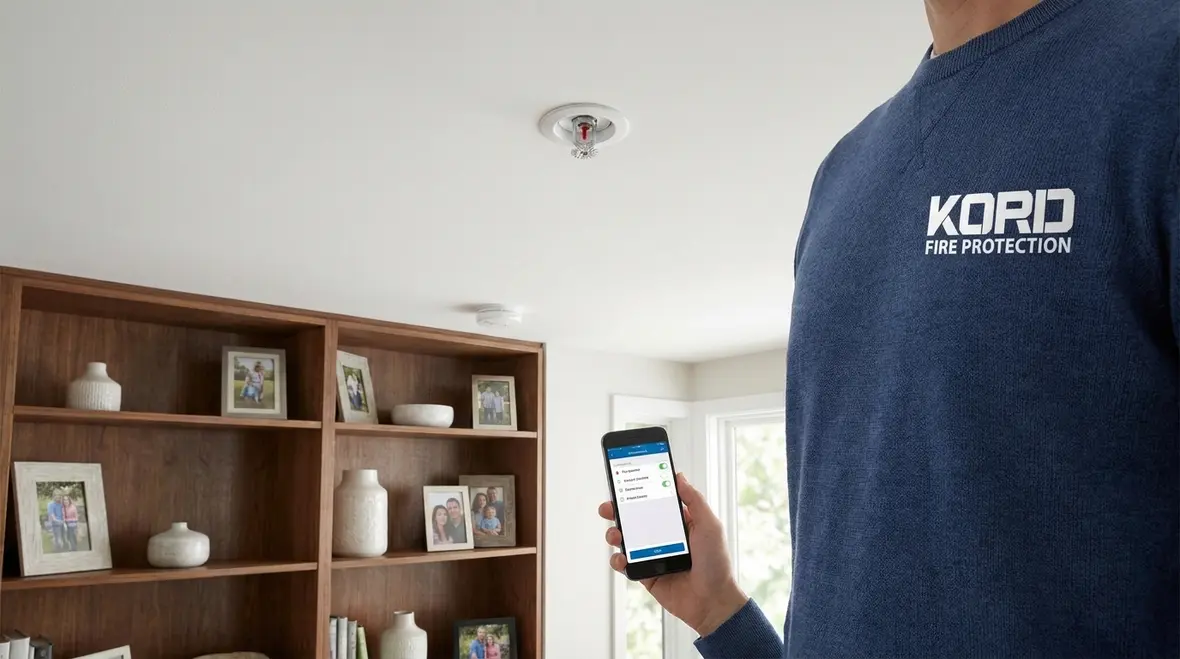
NFPA 13D Section 1.2: Life Safety Purpose Behind Residential Sprinkler Standards
Quick Answer: NFPA 13D Section 1.2 sets the life safety intent for residential sprinkler systems: control a fire long enough to reduce fatalities and support evacuation. The goal is not property protection at the same level as higher hazard standards, but reliable activation and effective water delivery.
For readers comparing residential intent with broader system requirements, fire sprinkler system service from Kord Fire Protection offers a helpful look at installation, inspection, maintenance, and repair priorities across real-world properties.
Why NFPA 13D Section 1.2 exists: the life safety objective
NFPA 13D Section 1.2 residential sprinkler system life safety purpose frames the entire standard for one and two family dwellings and similar residential occupancies. In practice, the standard is built around a simple operational premise: when a fire starts, occupants should have more time to recognize danger, exit safely, and avoid flashover conditions that develop when fire growth accelerates.
That life safety purpose influences design decisions such as sprinkler placement, water distribution performance, supply reliability, and acceptance testing. It also influences how inspectors evaluate systems. The standard expects sprinklers to operate as designed and deliver water in a way that controls fire growth during the evacuation window.
How “life safety” changes design and inspection expectations
Commercial and industrial facilities often adopt design approaches that prioritize property protection and continuity of operations. NFPA 13D shifts the emphasis to occupant survivability in residential settings. This difference affects how the system is intended to behave, what inspectors focus on, and where failures most commonly occur.
1) Activation reliability over maximum property outcomes
Sprinklers must respond promptly to heat and fire conditions. While NFPA 13D does not ignore performance, its life safety purpose reduces the need for the extensive, high pressure, high reliability features used in more demanding hazard classifications. Inspectors still require evidence that the system can operate effectively, including correct spacing, correct sprinkler selection, and clear obstruction checks.
2) Water delivery integrity within the residential hazard concept
Because the purpose centers on controlling fire growth, the system design expects adequate water to reach the operating area. Common compliance challenges include partially blocked piping, incorrect installation of fittings, and misalignment that interferes with discharge patterns. For commercial facilities, the parallel concern is that even small construction errors can cascade into late activation or inadequate flow during real events.
3) System simplicity creates fewer components, but each must be correct
NFPA 13D residential systems are often simpler than building-wide wet pipe systems, which can lower complexity but increases the need for careful installation quality control. A single incorrect pipe slope, a missing cap on a test connection, or an improperly installed valve can compromise the entire intent of the system.
For readers evaluating broader sprinkler installation requirements, Kord Fire Protection provides a practical overview that supports commissioning and verification activities: NFPA 13 overview for automatic fire sprinkler system installation.
Operational reality: what NFPA 13D systems must do during an emergency
The life safety purpose becomes tangible during three phases of fire response: early detection and escalation, sprinkler actuation, and sustained control long enough for evacuation.
Phase 1: Fire growth and sprinkler response timing
Sprinklers are the engineered intervention meant to interrupt rapid fire development. The standard’s life safety basis assumes that occupants may have limited awareness of fire conditions in the first minutes. Therefore, the sprinkler must operate early enough to prevent a transition from localized burning to untenable conditions.
Phase 2: Water discharge pattern and location effectiveness
Effective control requires the sprinkler to discharge water toward the burning compartment area consistent with the intended layout. Installation defects such as ceiling obstructions, incorrect sprinkler orientation, or improper drop distances can reduce coverage and weaken the fire control outcome.
Phase 3: System function under normal maintenance and service conditions
Even if a system is initially installed to meet the standard, it must remain ready for service. The life safety intent means that deterioration that occurs after installation matters. Valves can stick, pressure can drop due to supply issues, and obstructed piping can develop from renovations or improper storage practices.
To support reliable understanding of pump and water supply components used in fire sprinkler systems, facility teams often reference technical resources such as firepumps.org when planning for inspection, testing, and performance verification strategies.
Common failure points that undermine NFPA 13D Section 1.2 life safety intent
Real world failures rarely come from a single dramatic event. They emerge from a pattern of small deviations that accumulate over time. The following issues frequently threaten the NFPA 13D Section 1.2 residential sprinkler system life safety purpose in the field.
Obstructions and ceiling condition changes
Bathrooms, attics, and utility spaces are common locations for retrofit work. After installation, new duct runs, storage racks, insulation changes, and finishing materials can interfere with discharge paths. Inspectors and installers must treat renovation controls as part of life safety. Documentation should capture a repeatable obstruction review process.
Valve position errors and compromised supervisory readiness
Valves that are left partially closed or blocked can prevent proper flow when a sprinkler operates. In residential systems, crews may not have the same level of automation as commercial systems, which makes routine valve verification and tamper checks even more critical.
Water supply issues that reduce effective control
Life safety depends on adequate water delivery at the time of operation. Common supply problems include inadequate pressure, incorrect pump settings where applicable, or supply line constraints introduced during building work. Commercial service providers often use structured testing to avoid assumptions, and the same discipline applies to residential systems when they interface with shared water infrastructure.
Late commissioning and incomplete acceptance testing
If the system is not tested to confirm operational readiness, the life safety purpose becomes theoretical. Practical commissioning checks should verify that all components operate within manufacturer and code requirements, that the system can meet flow intent, and that documentation matches the as built condition.
In commercial, industrial, and retail environments, Kord Fire Protection supports ongoing compliance and maintenance cycles to prevent drift from the intended performance, including inspection planning, corrective action tracking, and service documentation for audits and insurance reviews.
Compliance and maintenance: keeping the life safety purpose achievable
NFPA 25 and local authority requirements typically drive the maintenance and inspection cadence for sprinkler systems. Even where the adoption basis varies by jurisdiction, the operational expectation remains the same: systems must remain capable of performing their life safety function.
Inspection workflow that supports real readiness
- Visual verification: confirm sprinkler inlets and deflectors remain unobstructed and correct for the ceiling environment.
- Valve and control verification: confirm accessibility, correct position, and proper supervision where required.
- Water supply verification: confirm that supply characteristics remain within design intent after site changes.
- Documentation control: maintain as built records to speed corrective actions and reduce recurring errors during renovations.
Service partner value for commercial sites
Although NFPA 13D targets residential occupancies, commercial facilities often interact with residential style risks through mixed use developments, workforce housing, assisted living units, and residential related structures on industrial campuses. Kord Fire Protection aligns field execution with compliance expectations by providing practical service support focused on testing, maintenance, and verification outcomes that protect occupants.
For additional reading on installation fundamentals and verification considerations across sprinkler standards, see: NFPA 13 overview for automatic fire sprinkler system installation.
Frequently Asked Questions
Conclusion and call to action
NFPA 13D Section 1.2 residential sprinkler system life safety purpose sets a clear intent: reliable sprinkler activation and effective fire control to support evacuation. To keep that intent achievable, facilities need disciplined installation quality, controlled renovations, and documented inspection and maintenance. Kord Fire Protection helps manage compliance with practical testing and service processes suited to real world operating conditions. Contact Kord Fire Protection to review your system’s readiness, inspection plan, and maintenance support needs.

Join Our Newsletter!
Get the latest fire safety tips delivered straight to your inbox From our Newsletter.



