
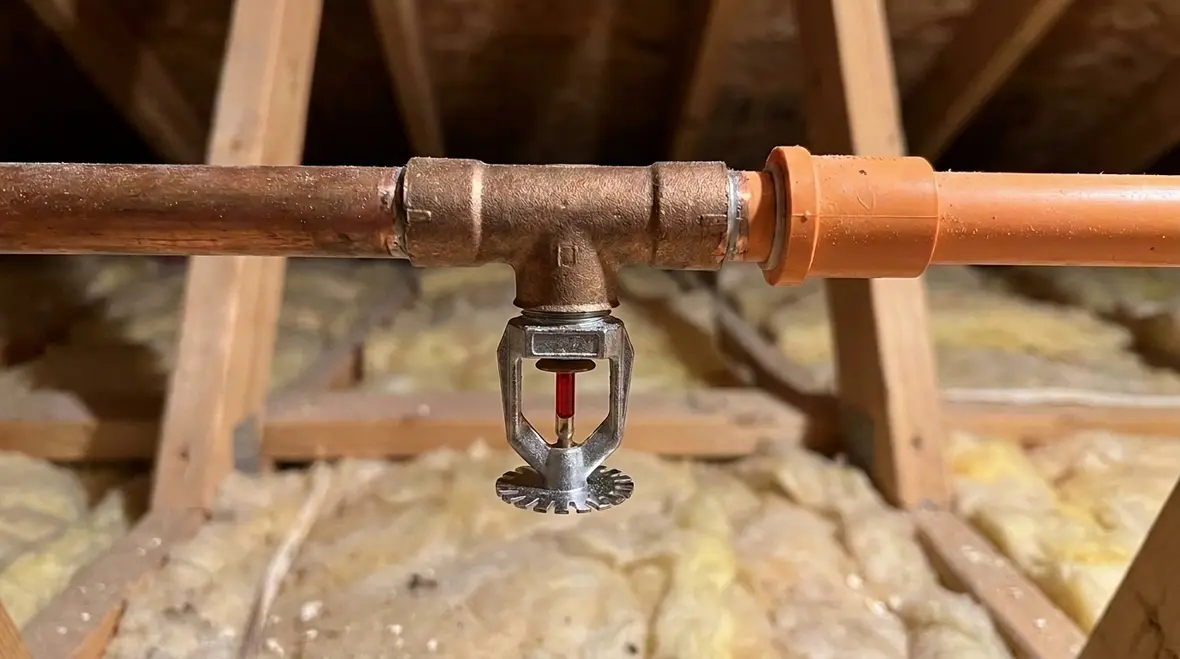
NFPA 13D Section 1.4: Alternative Sprinkler Systems That Meet NFPA 13D Equivalency
Quick Answer
NFPA 13D Section 1.4 allows approved alternative residential sprinkler systems when the design, installation, and performance provide an equivalent level of fire protection. This typically requires documented engineering justification, coordination with the AHJ, and verification through testing, plans, and inspections.
If your project is already navigating design changes, routing issues, or inspection planning, fire sprinkler system service and support can help keep the equivalency discussion grounded in real installation and maintenance conditions.
Why NFPA 13D Section 1.4 equivalency matters on real projects
Designers and facility stakeholders often choose alternative residential sprinkler concepts when standard NFPA 13D approaches create conflicts with building constraints, density limits, piping routing, or commercial facility operational requirements. The intent of NFPA 13D Section 1.4 is not to bypass the code, but to demonstrate that an alternate system achieves an equivalent level of protection and reliability. For teams seeking NFPA 13D Section 1.4 equivalency alternative residential sprinkler system approval, the approval process typically hinges on clear documentation, consistent system performance targets, and a defensible inspection and maintenance plan.
Commercial and industrial occupancies that incorporate residential style coverage also face higher scrutiny. Fire safety leadership must anticipate tighter AHJ expectations, stronger commissioning norms, and more rigorous impairment and maintenance controls than what is common in purely residential settings. For a broader sprinkler planning baseline, review this installation overview: NFPA 13 overview for automatic fire sprinkler system installation.
What Section 1.4 actually requires: “equivalent” performance, not substitute paperwork
NFPA 13D Section 1.4 provides a pathway to approval for alternative sprinkler systems where the authority having jurisdiction (AHJ) determines equivalency. In practice, equivalency means the alternate approach must maintain or exceed the functional outcomes associated with NFPA 13D. Those outcomes usually include reliable water delivery, appropriate spacing and coverage intent, correct sprinkler operation assumptions, and system capability under foreseeable fire and water supply conditions.
Approval conversations frequently fail when projects present a technology swap without addressing operational impacts. A compliant submission typically addresses the full lifecycle:
Design basis: fire dynamics assumptions, sprinkler selection rationale, and how the hazard classification affects performance.
Water supply and hydraulics: available flow, pressure margin, dynamic conditions, and tolerance for pressure fluctuations.
Installation quality: pipe materials, joining method, alignment, slope, and protection from freezing and corrosion consistent with the building environment.
System supervision and controls: notification scheme, valve arrangement, and access for inspection and maintenance.
Operational reliability: how the system resists common failure points such as obstruction, air or debris entrapment, and incorrect sprinkler compatibility.
Common alternative designs considered “equivalent” and the pitfalls to prevent
1. Different sprinkler types and spacing strategies
Alternative sprinkler selections may include different thermal elements, spray patterns, or listing bases. The most common pitfall involves spacing and obstruction assumptions that do not match the listed behavior. Even if sprinklers are listed, equivalency requires that the installed configuration aligns with the design basis used for performance justification.
Failure modes to watch include wrong sprinkler temperature rating placement, incorrect orientation during installation, and mismatched escutcheon and spray clearance that can degrade coverage.
2. Systems using non standard piping constraints
Some projects need routing through constrained corridors, behind finishes, or through shared service zones with mechanical or electrical pathways. Equivalency submissions must address whether tubing, modular racks, or alternative pipe layouts preserve flow characteristics and do not introduce trapping pockets.
Common failure points include improper pipe slope and draining behavior, inadequate support spacing that causes deflection or stress at fittings, and partial obstruction from construction debris during commissioning.
3. Water delivery concepts that alter hydraulics or discharge profiles
Where the alternate system changes discharge patterns, supply method, or zoning approach, the hydraulic basis must show adequate demand at the design operating conditions. AHJs often request conservative checks for worst case scenarios such as simultaneous valve operations, reduced supply pressure, or out of tolerance underground mains.
Teams should also consider the implications for inspection testing. If discharge patterns vary, inspection flow tests and maintenance flushing need to reflect those expectations, or the system may drift from its intended operational state.
Commercial service teams can reduce risk by aligning the alternative design with an inspection regime that detects drift early. This is where ongoing maintenance planning becomes a compliance tool, not an afterthought.
How to package an equivalency submission the AHJ can approve
AHJs evaluate equivalency using the same principle in every jurisdiction: demonstrate that the alternative performs at least as effectively as the code intent, and show the system can be inspected and maintained so reliability does not degrade. High quality submissions reduce back and forth and protect project schedules.
Documentation typically expected
Engineering narrative: what is changing versus the NFPA 13D baseline and why it still meets the functional outcomes.
Hydraulic calculations: include supply pressures, demand curves, and sensitivity analysis for realistic conditions.
Listing and compatibility data: sprinkler listing basis, component approvals, and compatibility with the system method.
Plan set clarity: clear drawings showing locations, pipe routes, valve arrangement, and access pathways for inspection.
Special hazard considerations: how the alternative addresses areas with increased ignition or fire growth risk within the residential intent scope.
Testing and commissioning approach: what will be verified at acceptance and how results will be recorded.
Maintenance and impairment procedures: valve inspection, system flushing or clearing, and how impairment is controlled in occupied commercial environments.
For teams working on broader sprinkler code coordination across system types, this referenced resource supports design and installation context: firepumps.org.
Where projects usually stumble
Weak inspection pathway: alternative systems installed in concealed spaces without safe access for inspection and testing.
Unclear valve control and supervision: arrangements that complicate impairment management and delay corrective action.
Incomplete acceptance criteria: no documented verification plan for coverage, drainage behavior, and obstruction prevention.
Maintenance mismatch: maintenance practices that fit NFPA 13D expectations, but not the unique mechanics of the alternative system.
Inspection, testing, and maintenance: the equivalency keeps working only if the program stays intact
Equivalency approval does not end at installation. In commercial, industrial, and retail settings, the AHJ and insurers often expect stronger evidence that the system will remain operational. For alternative systems, inspection routines must validate not only basic function, but also the specific failure points introduced by the alternative design.
Operational checks that matter
Obstruction control: visual inspection and documented checks for construction debris, cap misuse, and concealed component contamination.
Water supply verification: confirm that actual pressure and flow remain within design intent after seasonal and infrastructure changes.
Valve integrity: confirm valve position, tamper seals, supervision device function, and clear identification for maintenance crews.
Drain and flow performance: ensure drainage mechanisms and air release strategies do not trap air or degrade response time.
Sprinkler compatibility: confirm the correct sprinkler temperature rating and K factor for each location category.
Kord Fire Protection supports project teams with compliance centered installation verification, documentation control, and ongoing testing and maintenance planning. This reduces the most common real world breakdowns that undermine equivalency, including poor handover documentation, incomplete commissioning records, and maintenance programs that do not reflect the alternative system mechanics.
Where commercial standards change the conversation (industrial, retail, and mixed use)
Although NFPA 13D focuses on residential occupancies, mixed use and commercial facility standards often drive additional scrutiny. Facilities may integrate residential style sprinkler systems into apartments within retail centers, warehouse office combos, or light industrial buildings. In these cases, the AHJ and stakeholders may request stronger controls over impairment, notification, and access to test points.
Commercial operations also require practical scheduling for testing to limit downtime and interference. The equivalency strategy should therefore include an operations aligned plan for:
Impairment and return to service: procedures that control risk during valve work, component replacement, or flushing.
Maintenance ownership: a clear responsibility matrix for inspection and corrective actions.
Recordkeeping: retention of calculation references, test results, and component change history for audit readiness.
Teams can streamline coordination and reduce administrative risk by establishing equivalency requirements early, then aligning installation and maintenance execution to match the approval basis.
Frequently Asked Questions
Conclusion and call to action
Achieving NFPA 13D Section 1.4 equivalency alternative residential sprinkler system approval requires more than product substitution. It requires a defensible engineering narrative, a hydraulically sound and installation realistic design, and an inspection and maintenance program that preserves performance over time. Kord Fire Protection helps commercial teams build approval ready submittals, validate installation details, and maintain compliance with practical testing and documentation workflows. Start with an early compliance consult before drawings finalize and the schedule tightens.

Join Our Newsletter!
Get the latest fire safety tips delivered straight to your inbox From our Newsletter.



