
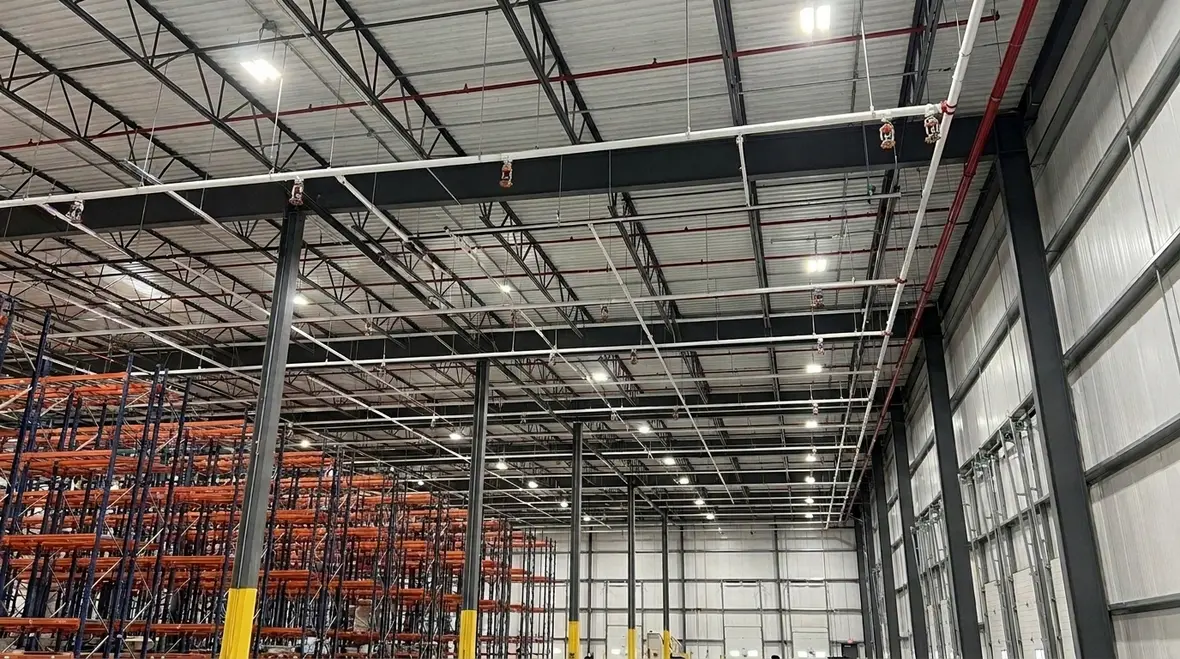
NFPA 13 Section 14.1 — ESFR Sprinkler Installation: General Requirements
NFPA 13 Section 14.1 ESFR Sprinkler Installation: General Requirements
Quick Answer: NFPA 13 ESFR sprinkler installation general requirements set the baseline for reliable early suppression. ESFR systems must be installed in accordance with NFPA 13 Section 14.1, covering head placement, mounting, hydraulic design, and clearances relative to storage. Proper execution reduces risk and ensures timely activation.
If you want the bigger code picture before diving into ESFR specifics, Kord Fire’s NFPA 13 overview for automatic fire sprinkler system installation is a solid companion read. And if your facility is already dealing with system upgrades, repairs, or compliance work in the field, Kord Fire’s fire sprinkler service team can help connect the code language to what actually has to happen above the ceiling.
Scope and purpose of NFPA 13 Section 14.1
The section provides general requirements guiding the installation of Early Suppression, Fast Response (ESFR) sprinklers. It establishes design intent, listing compatibility, and installation tolerances that ensure ESFR devices perform as intended in commercial, industrial, and retail environments. Compliance with these requirements supports predictable hydraulics, unobstructed spray patterns, and reliable activation during a fire.
Key design elements of ESFR installation
- Head placement and spacing: ESFR heads must be located to provide unobstructed discharge within the design area, considering storage arrangements and ceiling geometry. Incorrect spacing can create dead zones or short cycles in suppression.
- Deflector orientation: Deflectors must be installed per listing and manufacturer guidance to ensure proper spray distribution and coverage under expected storage conditions.
- Storage configuration compatibility: High pile and modular storage layouts demand careful coordination with ESFR head locations to maintain sequence of release and adequate water reach.
- Ceiling and obstructions: Lighting, HVAC diffusers, and structural elements must not impede sprinkler spray patterns. Clearances specified by the listing must be maintained to avoid performance degradation.
- Pipework and mounting: Supports, hangers, and seismic bracing should align with system design and building loads. Improper support can shift sprinkler alignment and affect hydraulics.
- Hydraulic design integration: Hydraulic calculations assume certain head coverage and flow rates. The installation must align with the calculated demand to ensure timely suppression under fire conditions.
Installation practices and common pitfalls
Successful ESFR installation requires strict adherence to listing data and NFPA 13 guidance. Common pitfalls include placing sprinkler heads too close to walls or storage, misaligning deflectors, and introducing obstructions that break the spray pattern. Other issues involve insufficient clearance for ceiling-mounted equipment, inadequate hanger spacing, and improper insulation or fasteners that compromise performance. Contractors should verify part compatibility, verify pressure zones, and confirm that all devices are clearly labeled and accessible for maintenance and testing.
Hydraulic design and calculations
Hydraulic design under NFPA 13 Section 14.1 relies on accurate area calculations, pipe sizing, and water supply evaluation. ESFR systems demand robust supply pressure to achieve the intended discharge density over the required area. Designers must document friction losses, equivalent pipe lengths, and the influence of storage configurations on hydraulics. Verification during installation ensures the actual system meets the calculated demand and maintains reliability during a fire event.
Inspection, testing, and maintenance requirements
Post installation, the ESFR system undergoes commissioning, periodic inspections, and functional testing. Regular maintenance focuses on sprinkler head integrity, deflector condition, leakage checks, and valve operation. Documentation of test results, valve positions, and hydraulic data is essential for ongoing compliance. In commercial facilities, timely maintenance supports reliable performance and aligns with local code enforcement and insurance expectations.
Compliance challenges in commercial facilities
Commercial, industrial, and retail facilities often face unique compliance hurdles when implementing NFPA 13 ESFR sprinkler installation general requirements. High pile storage, irregular ceiling planes, and mixed-use spaces can complicate head placement and hydraulics. Coordination with storage manufacturers, building owners, and authority having jurisdiction is crucial to validate designs, update drawings, and schedule testing without disrupting operations.
Frequently Asked Questions
Conclusion: Ensuring NFPA 13 ESFR sprinkler installation general requirements are met requires disciplined design, precise installation practices, and rigorous ongoing maintenance. Work with a trusted partner to translate code requirements into practical, day-to-day compliance for your facility.
Call to Action: For comprehensive design reviews, installation supervision, and proactive maintenance that keeps your ESFR system in peak compliance, contact Kord Fire Protection. Our team delivers code-aligned ESFR solutions for warehouses, distribution centers, manufacturing sites, and large retail spaces. Schedule an on-site assessment, receive a detailed corrective action plan, and establish a long-term maintenance program tailored to your facility and budget.

Join Our Newsletter!
Get the latest fire safety tips delivered straight to your inbox From our Newsletter.


