
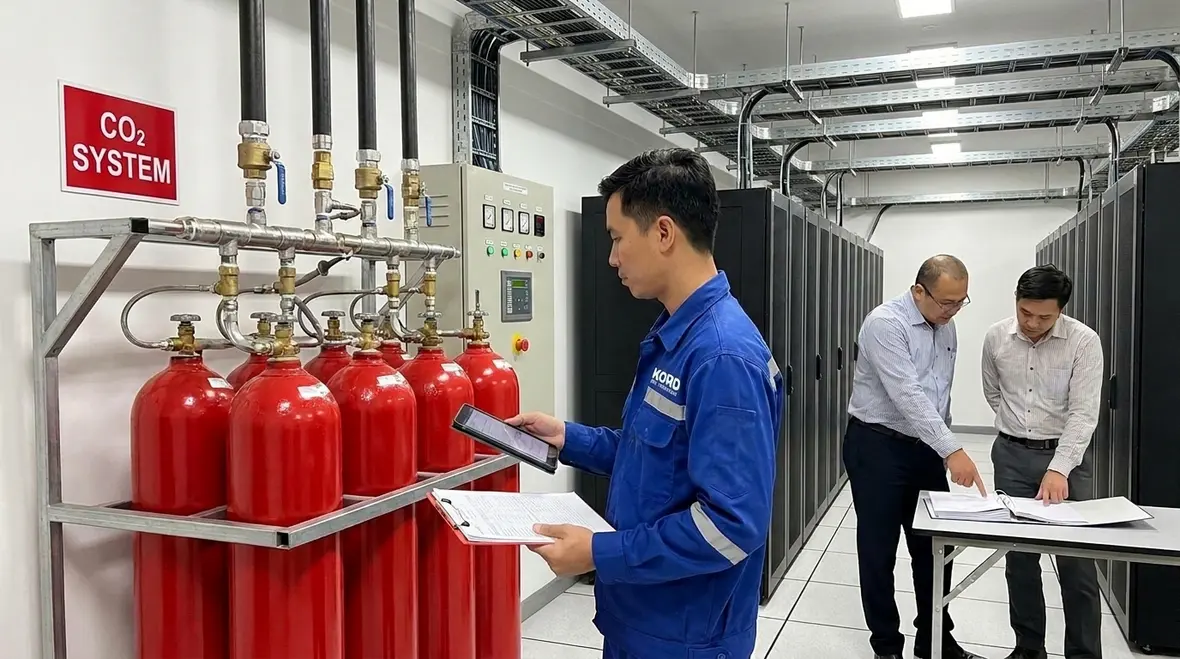
NFPA 12 Section 2.4: Mandatory Section References in CO2 Standards
NFPA 12 Section 2.4 Mandatory Section References in CO2 Standards
Quick Answer: NFPA 12 Section 2.4 requires explicit cross references to related NFPA sections that govern design, installation, testing, maintenance, and operation of CO2 systems. For commercial facilities, recognizing NFPA 12 mandatory section references helps verify compliance, ensure consistent documentation, and reduce downstream failures during inspection and commissioning.
For teams building a broader compliance roadmap, this NFPA 12 compliance guide for carbon dioxide extinguishing systems offers a useful companion resource. If you are also evaluating field support, CO2 fire suppression system services can help connect the code language to actual design, inspection, and maintenance work on the ground.
Understanding the Scope of NFPA 12 Section 2.4
NFPA 12 mandatory section references anchor the CO2 suppression standard to the broader NFPA framework. By requiring these cross references, the standard ensures that a CO2 system is not treated in isolation but is integrated with design criteria, electrical safety, detection and alarm provisions, and ongoing maintenance practices. This alignment supports coherent project specifications and reliable field performance across commercial, industrial, and retail facilities.
What Constitutes the NFPA 12 Mandatory Section References and Why They Matter
The scope of NFPA 12 mandatory section references includes citing the exact NFPA sections that apply to related aspects such as design criteria, installation practices, commissioning, testing procedures, maintenance intervals, and operational controls. Integrating these references into project documentation guarantees that every component and procedure is evaluated against the correct standards and that responsibilities are clearly assigned among engineers, installers, and facility managers.
Practical Compliance Challenges in Commercial Facilities
Commercial facilities often face retrofit projects, multi tenant environments, and complex occupancy patterns that complicate cross references. Inadequate recordkeeping or inconsistent documentation can create gaps during inspections. Converging multiple contractor workflows increases the risk that mandatory section references are outdated or mismatched to current system configurations. A proactive, documented approach helps prevent noncompliance and costly rework.
Inspection, Testing and Maintenance Practices Aligned with 2.4
CO2 systems require rigorous inspection and testing protocols that align with the cross referenced standards. When planning tests, teams should verify that all NFPA 12 mandatory section references are reflected in the procedure manuals, commissioning checklists, and confirmation documents. Key activities include pre discharge verification, functional tests of critical safety interlocks, valve and actuator testing, agent concentration monitoring, leak detection, and post discharge ventilation assessment. Documentation should clearly map each test to the referenced NFPA sections to support traceability during audits.
Design and Equipment Reliability Considerations
System design must address occupancy risk, hazard analysis, safe operation under different scenarios, and robust interlocks between detection, release, and ventilation control. The NFPA 12 mandatory section references ensure that design packages tie each component to the appropriate referenced standards, reducing ambiguity in wiring diagrams, valve actuation schemes, and control logic. Emphasis on reliable components, proper siting of discharge nozzles, and fail safe controls helps minimize false discharges and improve occupant safety.
Documentation, Training and Facility Management
Maintaining a living documentation set is essential. The cross reference lists should be reviewed and updated with every standard revision, facility modification, or equipment change. Training programs for operations staff, facility managers, and maintenance technicians should include the meaning and application of NFPA 12 mandatory section references, how to update references, and how to respond when referenced standards evolve. Clear ownership and revision control reduce risk over the system lifecycle.
Role of Kord Fire Protection in Maintaining NFPA 12 Compliance
Kord Fire Protection serves as a trusted commercial partner for ongoing compliance, testing, and maintenance of CO2 suppression systems. The team conducts compliance audits, gap analyses against NFPA 12 mandatory section references, periodic testing, and documented commissioning. By integrating cross reference management with routine maintenance, Kord Fire Protection helps commercial, industrial, and retail facilities achieve durable risk management and operational readiness.
Frequently Asked Questions
Conclusion and next steps: To maintain robust NFPA 12 compliance, engage a qualified partner to perform a thorough cross reference audit, implement a living documentation process, and establish a disciplined maintenance program. Kord Fire Protection specializes in CO2 systems for commercial facilities and can guide audit, testing, and ongoing maintenance to keep your operation compliant and safe. Schedule a consultation today to align your CO2 protection with NFPA 12 mandatory section references and reduce risk across your portfolio.

Join Our Newsletter!
Get the latest fire safety tips delivered straight to your inbox From our Newsletter.


