NFPA 1 Section 41.3 Hot Work Fire Prevention Precautions
Quick Answer: NFPA 1 Section 41.3 requires strict fire prevention steps before, during, and after hot work. That means controlling sparks, clearing combustibles, assigning fire watches, and checking the area after the job ends. For industrial, retail, and commercial sites across Australia, these measures help cut fire risk fast and keep work moving safely.
Hot work can look simple on the surface. A welder strikes an arc, a grinder throws sparks, and a repair crew gets the job done. Yet one small spark can turn into a serious site fire before anyone says, “we should have checked that pile of rags.” That is why hot work fire prevention NFPA guidance matters so much. It sets a clear standard for welding fire precautions and hot work safety measures that protect people, property, and production. For busy industrial, retail, and commercial sites in Australia, the right controls help avoid shutdowns, injuries, and costly damage.
Near the top of any practical fire risk plan, many facilities also benefit from broader fire protection services that connect inspections, suppression readiness, alarms, and ongoing support into one coordinated approach.
What NFPA 1 Section 41.3 requires on a hot work site
NFPA 1 Section 41.3 focuses on fire prevention around hot work activities such as welding, cutting, brazing, grinding, and soldering. The rule is simple in spirit, even if the job site is not. Hot work should only happen when the area is made safe, the fire load is controlled, and a trained team manages the risk.
In practice, this means the site team must check for combustible materials, protect nearby surfaces, and make sure fire extinguishing equipment is ready before work starts. It also means the team must keep watch during the job and after it ends. Sparks do not care about schedules, and they certainly do not respect a lunch break.
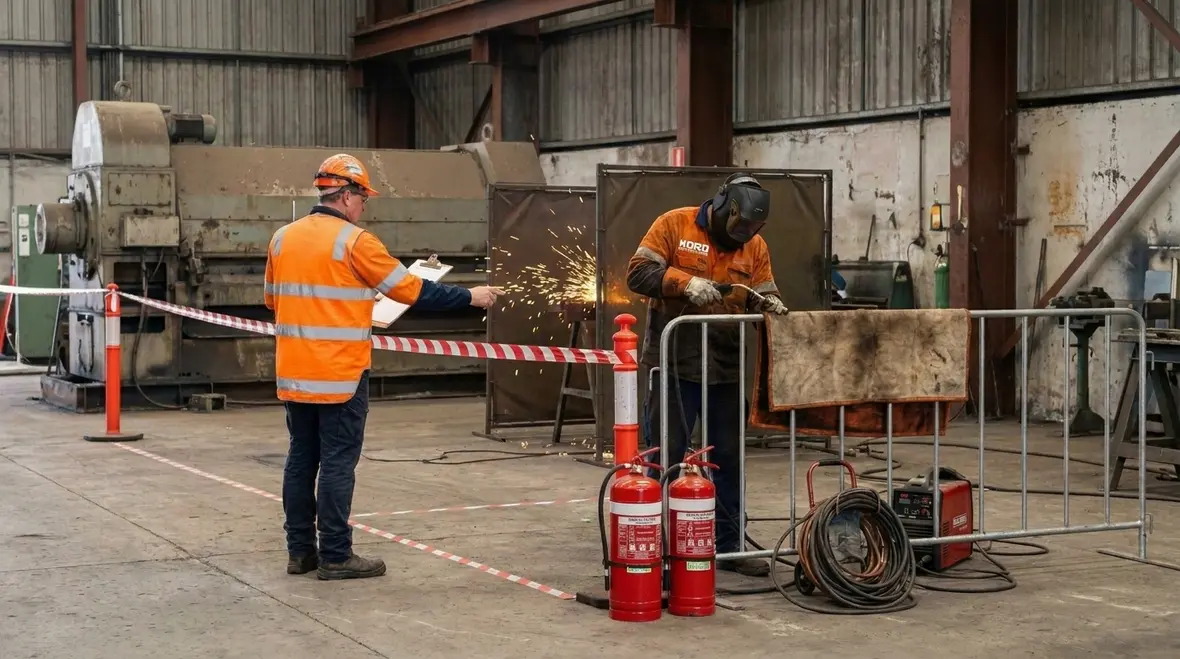
How hot work fire prevention NFPA controls reduce risk
Strong fire prevention starts with planning. A job should not begin until the area has been inspected and the hazard zone has been defined. This includes nearby walls, ceilings, floor gaps, vents, dust, packaging, and stored stock. In retail and commercial sites, even common items like cardboard displays and cleaning chemicals can raise the risk fast.
The best hot work fire prevention NFPA approach also looks at the work method itself. For example, a grinder may throw sparks farther than expected, while welding can send heat into hidden spaces. Therefore, the crew should shield the area, remove combustibles where possible, and keep non essential staff clear. A clean site is not just neat. It is safer, and it helps stop a tiny spark from auditioning for a disaster movie.
This is also where process discipline pays off. Teams that mark the hazard zone clearly, control access, and review the task sequence before starting are far less likely to be surprised halfway through the job. Hot work rarely becomes dangerous because one person intended to create a problem. It becomes dangerous because small details stack up, and no one stops the pile from getting taller.
Risk points crews often miss
- Hidden voids above ceilings and behind walls
- Openings in floors where sparks can travel below
- Dust, lint, and fine debris near mechanical equipment
- Packaging, stock, and temporary materials brought into the area
- Changes in airflow that push heat or sparks farther than expected
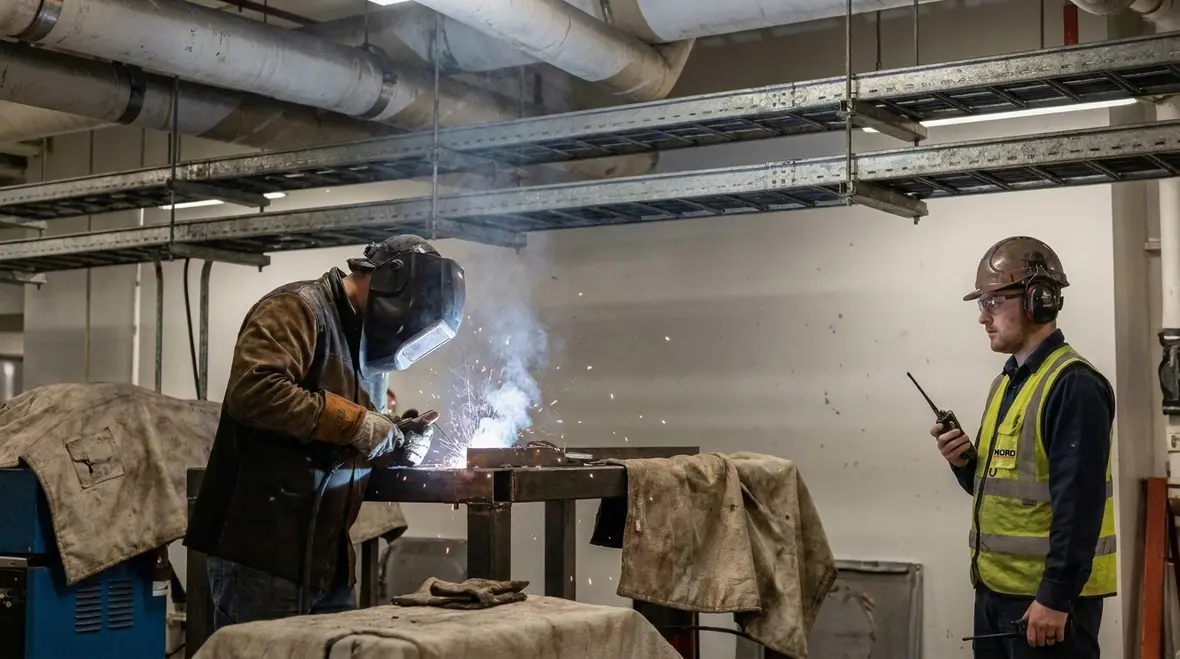
Welding fire precautions for industrial and commercial spaces
Welding fire precautions should match the space, the task, and the materials present. Industrial facilities often deal with metal dust, oils, insulation, cable trays, and machinery. Retail and commercial locations may face stock, fit outs, ceilings, signage, and hidden voids. Because of that, the same hot work plan does not fit every site.
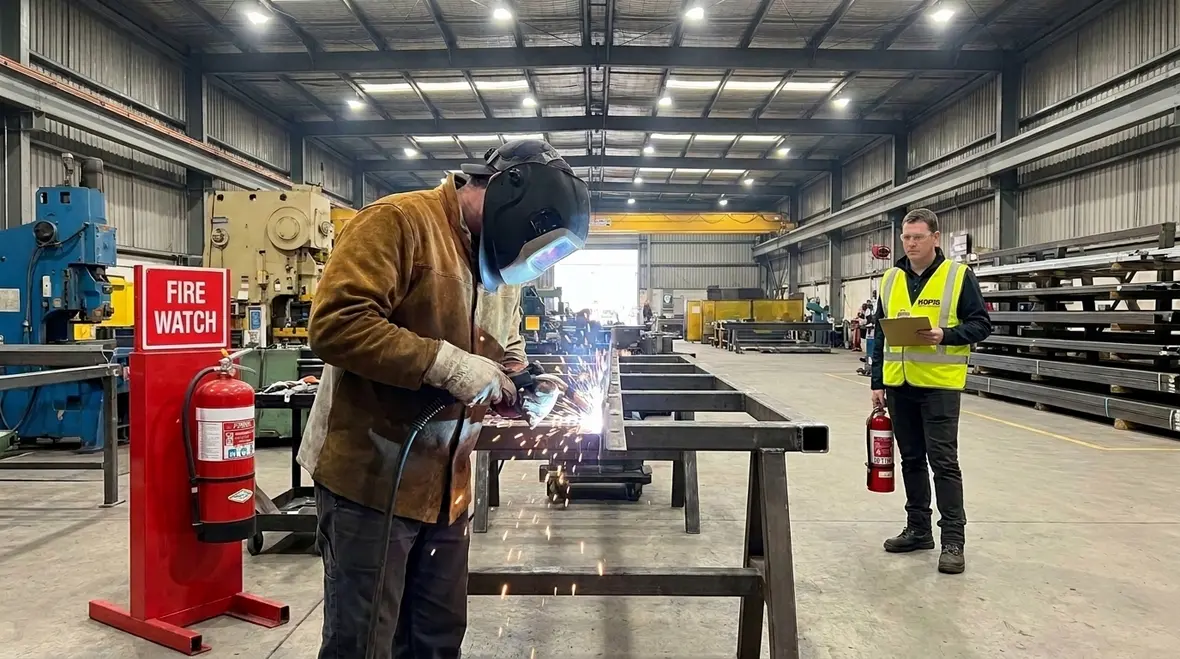
Good precautions usually include a proper permit review, a check of the work envelope, fire extinguishers placed where they are genuinely reachable, and a clear line of responsibility for the person watching the area. That last point matters more than people think. If everyone assumes someone else is watching for sparks, then nobody is really watching at all.
Before the job
- Inspect the permit area and remove or shield combustibles
- Confirm fire extinguishers and suppression gear are close by
- Check floors, walls, and overhead spaces for hidden risk
- Verify that nearby operations will not introduce new hazards
- Make sure access routes stay clear for response and exit
During the job
- Assign a fire watch when the task creates spark or heat risk
- Keep access clear for quick response
- Stop work if conditions change
- Monitor adjacent spaces where heat may travel
- Maintain communication between the operator and the watcher
These steps support solid welding fire precautions and keep the crew focused on the job instead of reacting to avoidable trouble. They also help contractors and site managers speak the same language. That alone can prevent a lot of confusion, which is useful because confusion and sparks make a terrible team.
Hot work safety measures that every site should enforce
Hot work safety measures go beyond the torch and the grinder. They include permit systems, site checks, worker training, emergency response planning, and post work inspection. When these parts work together, the site gains a stronger safety net.
Training matters because crews need to know what fire risk looks like in real life. A worker may spot a spark landing in insulation, but only training teaches that person to treat it as a hidden threat. Likewise, permits help management confirm that the area is ready, the controls are in place, and the work can proceed with clear responsibility.
Post work inspection is often the forgotten hero. Fires can smoulder in voids, behind panels, or under debris long after the torch is off. So the area should be checked again when the task ends, and sometimes after a set cooling period. That final look can save the whole site from a very bad evening.
A simple enforcement checklist
- Use a permit system with named responsibility
- Inspect the area before work begins
- Remove or protect combustible materials
- Keep extinguishing equipment ready and visible
- Assign a fire watch where needed
- Recheck the site after the work is finished
How Kord Fire Protection can support the job
Kord Fire Protection can become a vital partner for hot work jobs because this kind of work needs more than just good intentions. It needs practical fire protection support, site minded planning, and systems that help teams control risk from start to finish.
Kord Fire Protection can help industrial, retail, and commercial sites by supporting fire safety planning, checking readiness for hot work, and helping teams align with hot work fire prevention NFPA expectations. In a busy facility, that kind of support can make the difference between a smooth repair and a costly interruption. And let’s be honest, nobody wants a simple weld to become the headline of the day.
For readers who want broader code context around prevention planning, NFPA 1: A Comprehensive Guide to Fire Prevention and Safety pairs naturally with hot work controls and helps connect the day to day precautions with the larger fire safety picture.
Why Australian facilities benefit from strong hot work control
Across Australia, facilities face a wide range of conditions. Some sites run large production floors, while others manage packed retail spaces, logistics hubs, plant rooms, or commercial fit outs. Because of that mix, hot work needs a control plan that fits the site, not a one size fits all guess.
Strong controls help reduce damage, protect workers, and support business continuity. They also help site managers show due care, which matters when contractors, insurers, and compliance teams all want clear answers. When the process is consistent, the job moves with less stress and fewer surprises.
Just as important, these controls help build a safer work culture. People notice when fire safety gets real attention. They also notice when someone treats a spark like it is “probably fine.” That attitude usually ages about as well as milk in the sun.
FAQ
Keep hot work controlled and compliant
Hot work should never rely on luck. With the right hot work fire prevention NFPA approach, strong welding fire precautions, and practical hot work safety measures, sites can reduce risk and keep work on track. Kord Fire Protection can help make that possible.
For industrial, retail, and commercial facilities across Australia, now is the time to strengthen hot work control before the next spark lands. A better plan today is far cheaper than a fire report tomorrow.

Join Our Newsletter!
Get the latest fire safety tips delivered straight to your inbox From our Newsletter.