
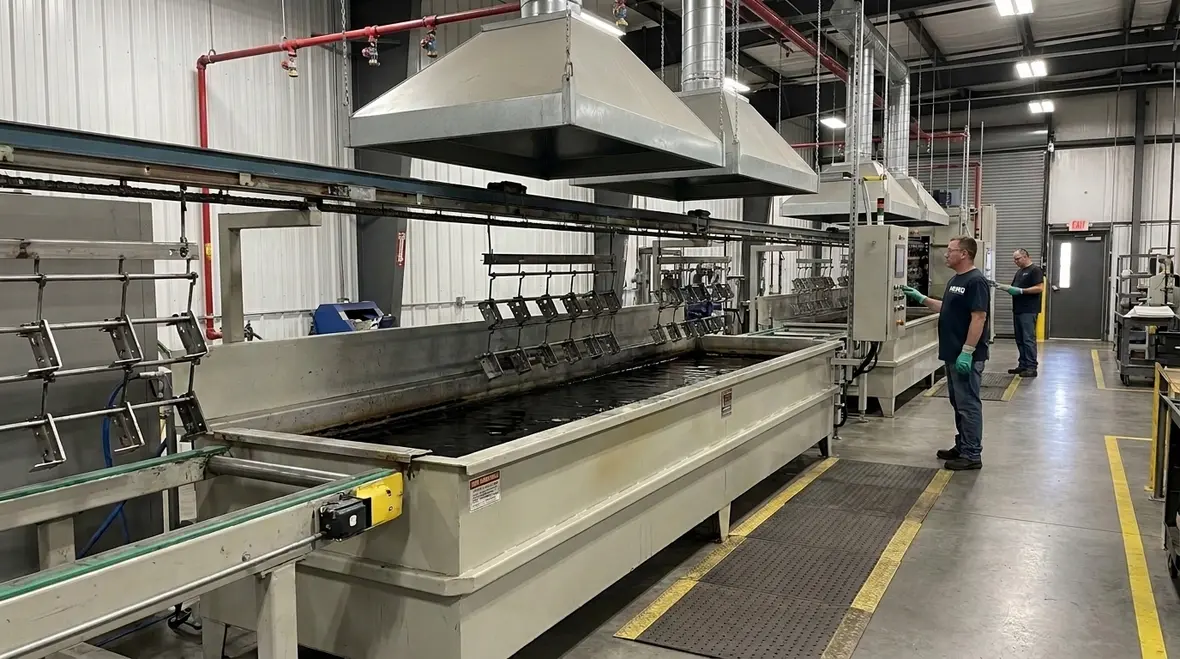
NFPA 34 Section 1.4 Retroactivity: Existing Processes and the 2024 Edition
Quick Answer: NFPA 34 Section 1.4 addresses how the 2024 edition applies to existing dipping coating processes. It clarifies when compliance is required immediately versus when changes are phased, while still demanding hazard control, maintenance, and documented upkeep for ongoing operations.
If your facility is reviewing code-driven fire risk management for coating operations, it also helps to compare your program with a structured commercial fire safety audit process so gaps in testing, documentation, and corrective actions do not sneak up on you later.
What does NFPA 34 retroactivity mean for existing dipping coating operations?
For commercial, industrial, and retail facilities that run dipping coating lines, the core compliance challenge is not just “what NFPA 34 requires,” but “how and when the 2024 edition applies to already operating equipment.” Facility owners and safety managers often ask whether they must retrofit entire systems immediately, or whether NFPA 34 retroactivity provisions focus on protecting life safety and controlling hazards over time.
This article explains how NFPA 34 retroactivity existing dipping coating processes are typically evaluated under Section 1.4 in the 2024 edition, with emphasis on practical implementation issues such as sprinkler and detection expectations, ventilation, ignition source control, housekeeping, and process change management.
How NFPA 34 Section 1.4 evaluates existing conditions
NFPA 34 Section 1.4 establishes a framework for applying edition requirements to facilities already using dipping, coating, and related application processes. In practice, the standard’s retroactivity language aims to balance two goals: (1) prevent unacceptable risk and (2) avoid forcing costly replacements when existing systems still provide reasonable safety.
Facility compliance teams typically translate Section 1.4 into a gap assessment workflow. That workflow starts by identifying each regulated fire hazard feature associated with the process, then determining whether the existing condition meets the intent of the 2024 edition. Where the existing setup is not reasonably protective, Section 1.4 often drives interim hazard controls immediately, even if full system replacement is scheduled later.
Operational areas usually scrutinized under Section 1.4
- Ignition source control: electrical classification boundaries, hot work controls, fixed ignition sources, and equipment grounding and bonding practices.
- Ventilation and vapor management: capture and exhaust performance, duct integrity, and maintenance of fans and hoods.
- Fire protection and detection interfaces: how protection features integrate with process controls and emergency response.
- Process stability and spill control: overflow handling, drip management, containment, and housekeeping frequency.
- Controls and interlocks: functional testing of pumps, heaters, agitation systems, and shutdown logic.
When existing systems must change versus when they can be managed
Most retroactivity outcomes in existing dipping coating lines fall into one of three categories. Understanding these categories helps facilities plan capital budgets and inspection readiness, and it reduces the likelihood of surprise corrective actions during AHJ review or insurance surveys.
1) Immediate action for hazard-critical deficiencies
If the existing configuration creates an unacceptable risk, facilities commonly must implement corrective measures right away. Examples include broken vapor capture arrangements, uncontrolled electrical hazards, repeated overflow events, or missing emergency shutdown capability that prevents safe cessation of fire generating processes.
2) Time-phased upgrades tied to reasonable equivalency
Where current protection is present but does not precisely match the 2024 edition language, compliance teams often pursue time-phased upgrades. Facilities may demonstrate reasonable equivalency through documented maintenance records, test results, and engineering evaluation of existing protection performance.
3) Continued operation under a strengthened maintenance and documentation program
Some existing setups can remain in service if they already provide protection consistent with the standard’s safety intent. However, this typically requires strict documentation: inspection logs, calibration records, inspection frequencies, and evidence that the process does not drift out of safe parameters over time.
For facilities managing multiple product lines and coating chemistries, this third category often hinges on operational discipline. A dipping line that looks compliant on paper can still become noncompliant in practice if maintenance lapses or process changes increase vapor loads beyond what the existing controls can manage.
What inspectors and engineers often check on existing dipping lines
Even when Section 1.4 allows continued operation, inspections tend to focus on real-world performance, not just installed components. Existing dipping coating systems commonly fail during routine operations due to wear, drift in settings, or delayed repairs. The items below represent high-frequency failure points that influence whether a deficiency becomes an immediate retroactivity requirement.
Ventilation performance and duct condition
Hoods and exhaust systems often lose effectiveness due to duct corrosion, fan degradation, blocked filters, or misalignment after maintenance. Inspectors commonly look for evidence that ventilation continues to capture vapors under normal operating conditions and during process start up and shutdown.
Detection, alarm, and interlock verification
Facilities must confirm that process shutdown logic actually performs as designed. Common issues include bypassed interlocks, sensor contamination, disconnected alarm outputs, or control software changes that alter safety behavior. Documented functional testing and verification are critical to sustaining compliance posture on existing systems.
Electrical and ignition source boundaries
Electrical classification and wiring integrity are recurring concerns. Aging conduit, loose bonding jumpers, deteriorated seals, and improperly maintained panels can create ignition opportunities. In retroactivity reviews, these problems often trigger immediate corrective action because the hazard can escalate quickly.
Housekeeping, spill management, and containment
NFPA 34 places strong emphasis on controlling fuel loads and ignition pathways. Existing processes must demonstrate stable drip and spill collection practices, maintained containment, and consistent cleanup. Facilities that rely on ad hoc cleaning often see deterioration in hazard conditions that force remediation under retroactivity provisions.
Building a defensible retroactivity compliance plan for 2024
A practical way to manage NFPA 34 retroactivity existing dipping coating processes is to treat Section 1.4 as a continuous hazard management obligation rather than a one-time checkbox. Facilities should implement a structured plan that captures process-specific details, equipment condition, and verification results.
Recommended approach for commercial and industrial operators
- Inventory the process components and configurations: Each dip tank, heater, drying step, transfer method, filtration arrangement, and ventilation feature should be listed with its installed configuration and operating parameters.
- Perform a gap assessment mapped to the 2024 edition: Identify where existing arrangements do not align with the intent of required safety features. Categorize findings by hazard criticality.
- Document equivalency and mitigation: For items that can remain in place, document how existing performance meets safety intent, supported by testing records and maintenance history.
- Prioritize corrective actions with timelines: Address high-risk issues first, then develop a time-phased upgrade schedule for lower risk differences.
- Implement verification and audit cadence: Ensure recurring testing, inspection frequencies, and staff training remain current to prevent drift.
Facilities that operationalize this approach usually reduce both downtime risk and compliance surprises. Kord Fire Protection supports this type of ongoing compliance work by helping commercial operations keep life safety and fire protection features functional through inspection, testing, and maintenance programs designed for real production environments.
Where to focus for ongoing safety program readiness
Retroactivity reviews become easier when a facility can quickly show that protection features remain reliable. That means maintaining the “system as operated,” not just the “system as installed.” For facilities building or refreshing a fire safety program, Kord Fire Protection can be a practical partner for compliance support that aligns with ongoing inspection expectations.
For an operationally grounded perspective on how facilities manage fire risk, see Kord Fire Protection services and related support capabilities for commercial fire safety maintenance.
You may also want to read NFPA 1 Section 43.10 dipping, coating, and printing fire safety for a related look at how these operations are evaluated in day-to-day fire protection planning.
Frequently Asked Questions
Next step: validate your existing process against Section 1.4
Confirm how NFPA 34 retroactivity applies to your exact dipping coating line by completing a documented 2024 edition gap assessment, prioritizing hazard-critical deficiencies, and establishing a verification and maintenance cadence. If your facility needs support to keep systems functional and inspection-ready, contact Kord Fire Protection to plan ongoing compliance testing and maintenance that protects production and reduces interruption risk.

Join Our Newsletter!
Get the latest fire safety tips delivered straight to your inbox From our Newsletter.



