NFPA 1 Section 38.3 for Cannabis Fire Protection
Quick Answer
NFPA 1 Section 38.3 sets the fire protection direction for cannabis facilities, with a strong focus on safe system design, installation, and upkeep. For industrial, retail, and commercial operators across Australia, it helps reduce risk, protect stock, and support compliance. Kord Fire Protection can serve as a vital partner by delivering practical system support, inspections, and ongoing fire safety service.
NFPA 1 Section 38.3 matters because cannabis sites carry higher fire loads, complex equipment, and strict control needs. In the first 100 to 150 words alone, the link is clear: cannabis facility fire protection, marijuana grow operation sprinklers, and cannabis fire suppression NFPA all sit at the center of safe operations. These sites do not have the luxury of guesswork. They need systems that work, records that hold up, and a partner who knows how to keep the whole setup calm under pressure. A fire system should not behave like a dramatic supporting actor. It should do its job quietly, every time.
Near the top of the planning process, it also helps to connect code thinking with real service support. That is where fire sprinkler system service fits naturally, especially for facilities that need design guidance, inspection planning, repairs, and long-term readiness. If a cannabis site wants systems that perform in the real world and not just on a neat drawing set, practical service support belongs in the conversation early.
What NFPA 1 Section 38.3 Covers for Cannabis Sites
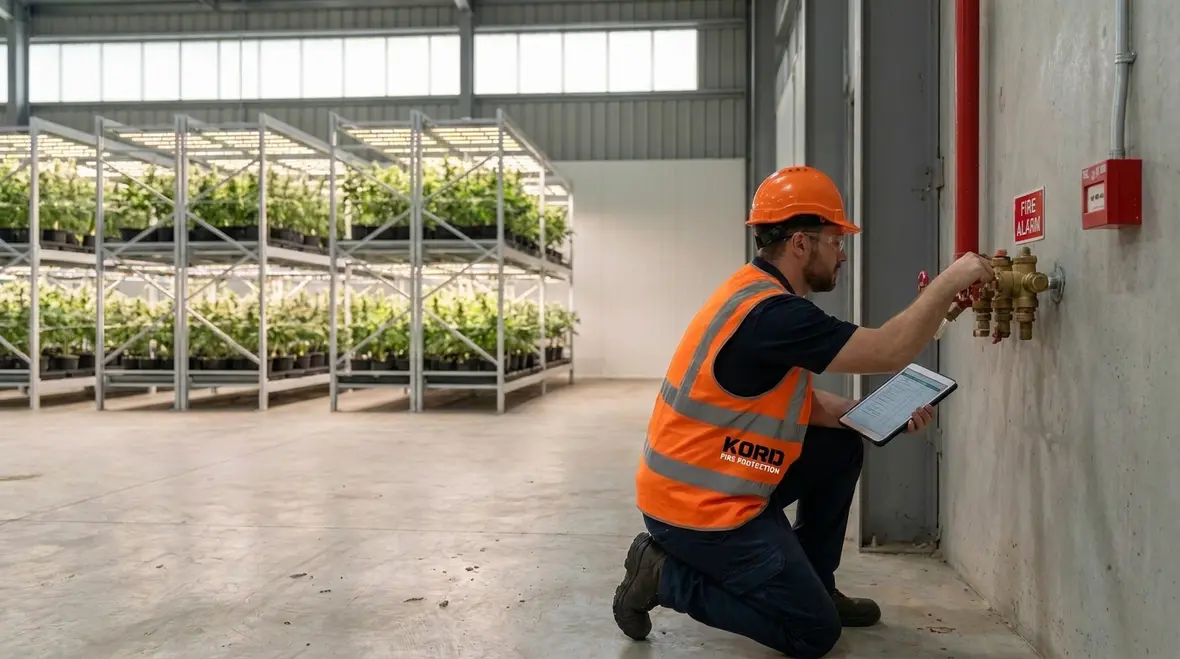
NFPA 1 Section 38.3 gives cannabis facilities a fire safety framework built around risk control. It guides how a site should manage ignition sources, electrical loads, storage, access, and suppression. As a result, it helps operators reduce the chance of fire spreading through grow rooms, processing areas, and storage zones.
For large commercial and industrial facilities, the section supports planning from the start. It also pushes owners to think beyond basic installation. A system must match the space, the crop cycle, the processing method, and the building use. That matters because one poorly managed room can create a chain reaction faster than a season finale cliffhanger.
In practice, that means the code conversation is not limited to where sprinkler heads go. It reaches into how rooms are separated, how combustible materials are stored, how utilities are arranged, and how staff move through the building during normal operations and emergencies. Cannabis facilities are operationally busy places. They have moisture, power, plant matter, packaging, equipment, and often a steady rhythm of changes. Fire protection has to keep up with all of that without becoming the overlooked extra in the background.
From code language to room-by-room reality
The useful part of Section 38.3 is that it encourages facilities to look at actual hazards rather than treating the whole site like one simple box. A cultivation room does not behave like a reception area. A drying room does not behave like a utility space. An extraction room definitely does not behave like anywhere else, because it tends to arrive with extra hazard complexity and a personality that keeps engineers alert. Good protection planning works when it respects those differences.
Why Cannabis Facility Fire Protection Needs a Site Specific Plan
Cannabis facilities are not simple warehouse spaces. They often include grow rooms, dry rooms, extraction areas, packaging zones, and utility rooms. Each one brings different heat, moisture, and fuel loads. Therefore, a site specific fire plan becomes essential.
Good cannabis facility fire protection starts with the building layout, then moves to hazard spotting, then to system selection. For example, a grow room may need sprinkler coverage that suits dense plant rows and overhead equipment. Meanwhile, a processing area may need added detection and stronger attention to electrical risk. In short, one system does not fit every room, and anyone who says otherwise is selling fairy dust with a clipboard.
A site specific plan also improves decision making when the facility changes over time. Many cannabis operators expand, shift room usage, add racks, upgrade HVAC, or alter storage layouts as production needs evolve. Those changes can quietly affect coverage, access, visibility, and maintenance routines. If the fire protection plan stays frozen while the facility keeps changing, the gap between paper and reality starts growing teeth.
That is why many operators benefit from pairing their plan with broader service support. Kord Fire Protection’s full fire protection services can fit naturally into cannabis environments that need coordinated sprinkler, alarm, suppression, extinguisher, and fire pump attention under one roof. Fewer silos usually means fewer missed details, which is a lovely outcome in any building and an especially lovely one in a cannabis facility.
How Marijuana Grow Operation Sprinklers Support Risk Control
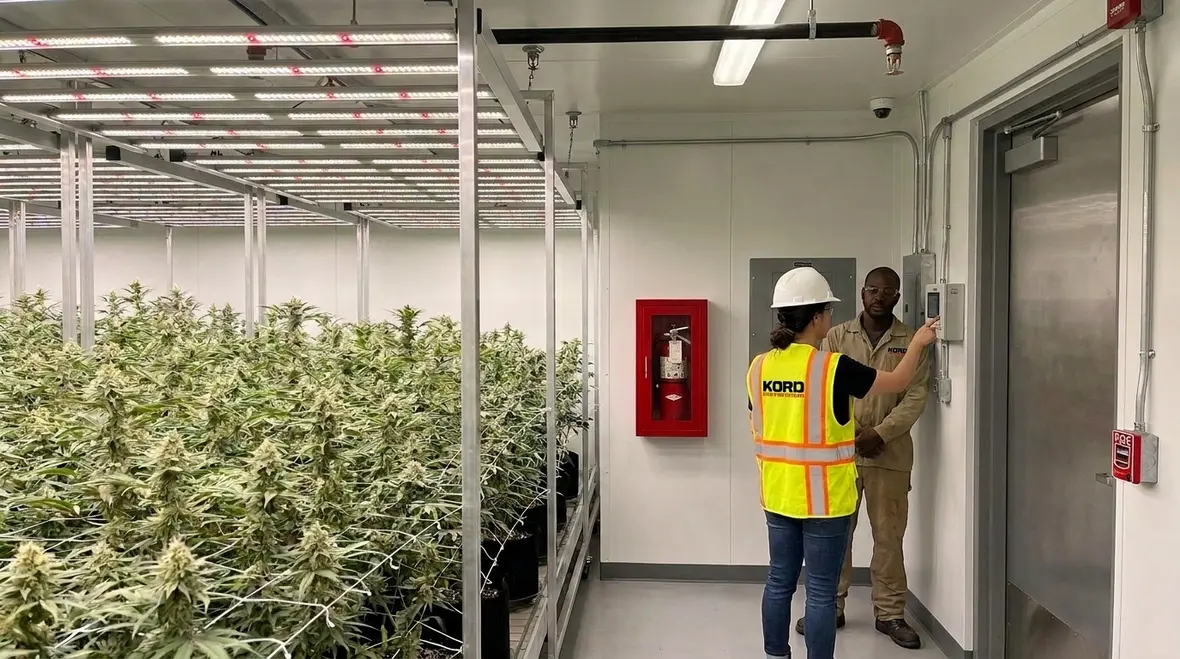
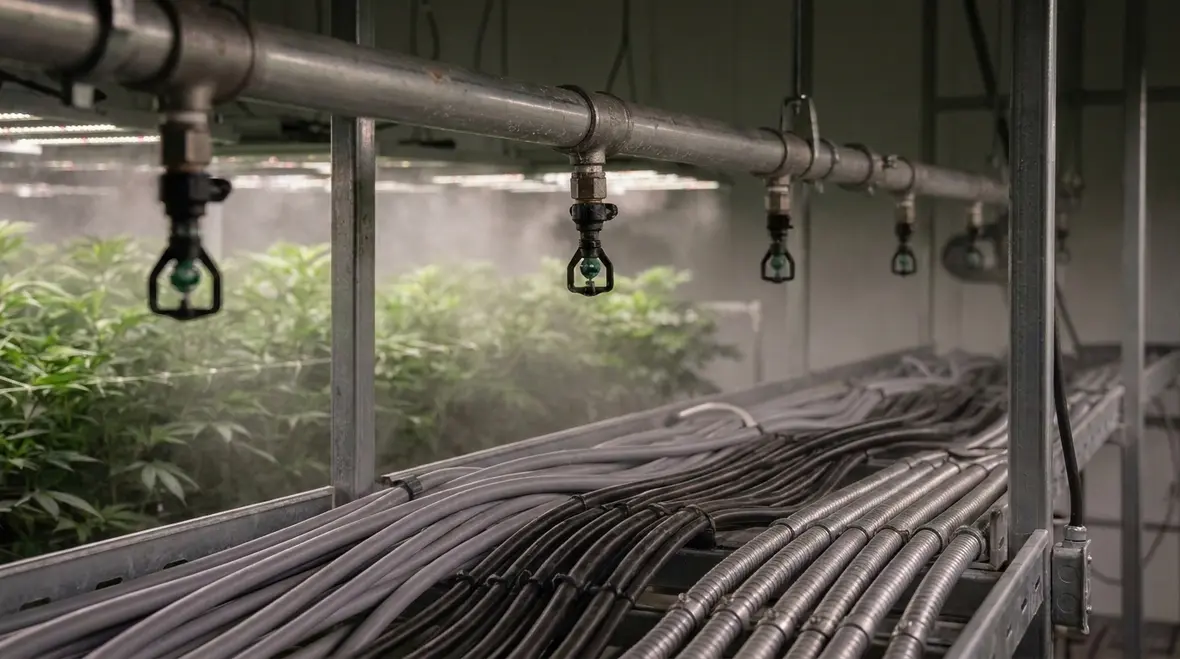
Marijuana grow operation sprinklers play a major role in stopping fire from spreading before it takes over. In a grow operation, lights, ballasts, pumps, wiring, and fans all add risk. At the same time, irrigation and humidity control can create hard to read conditions for fire safety planning.
Sprinklers help control heat and suppress flame growth. However, they only work well when they match the hazard class and the building design. That is why professional review matters. A system must support the crop environment without causing avoidable damage or false confidence. After all, “it looked fine in the test” is not a fire strategy.
Reliable sprinkler performance is also tied to the less glamorous things that facilities sometimes postpone: inspection routines, valve supervision, obstruction control, pressure awareness, and clean documentation. Those tasks are not flashy, but they are the reason a system behaves well when everyone in the building suddenly cares a lot about whether it works. If a sprinkler network has hidden impairment issues, the reveal will be memorable for all the wrong reasons.
Sprinklers have to match the environment, not fight it
Grow spaces tend to be equipment-dense and operationally sensitive. Overhead fixtures, hanging systems, irrigation components, and crop layouts can all influence discharge patterns and access for service. The goal is not just to install a compliant system and walk away. The goal is to maintain a sprinkler arrangement that still makes sense after the room gets used by real people with real schedules and real habits. Rooms have a talent for drifting away from their original drawings. Fire protection planning has to notice that.
Where Cannabis Fire Suppression NFPA Fits in Daily Operations
Cannabis fire suppression NFPA standards influence more than the initial build. They also shape how a facility runs every day. Operators must keep valves clear, alarms tested, records current, and equipment accessible. In addition, staff need simple training so they know what to do when a system activates or when an alarm sounds.
This is especially important in sites with mixed use functions. A retail front, a processing back area, and a controlled grow space all need different levels of attention. Therefore, suppression systems must align with the actual use of each zone, not just the floor plan on paper. The paper may look neat, but fire never sends a calendar invite.
Daily operations also benefit from broader code awareness. Facilities that want context beyond this section can review NFPA 1: A Comprehensive Guide to Fire Prevention and Safety, which provides a wider foundation for understanding how prevention, suppression, and operational discipline work together. It is useful when teams need the bigger picture and not just the part where everyone stares at the ceiling and hopes the sprinklers are happy.
Support Areas That Need Equal Attention
Area | Fire Protection Focus |
Grow rooms | Sprinkler layout, heat detection, electrical load control |
Drying and curing rooms | Airflow review, ignition control, suppression readiness |
Extraction areas | Hazard review, suppression design, ventilation checks |
Storage zones | Commodity spacing, access, alarm coverage |
Retail and office spaces | Clear egress, detection, inspection schedules |
What this table really shows is that support areas cannot be treated as background scenery. Dry rooms and storage zones often become blind spots because they are not where the most visible production happens. Yet those spaces can hold meaningful fuel loads, airflow challenges, and access issues. The glamorous rooms do not get all the risk. Fire has range.
Why Kord Fire Protection Can Be a Vital Partner
Kord Fire Protection can play a vital role in helping cannabis facilities stay ready, compliant, and protected. First, the team can help assess the site and identify weak points before they become costly problems. Then, it can support design choices, system upgrades, inspections, and maintenance so the facility keeps pace with daily operations.
For Australian industrial, retail, and commercial sites, that kind of partnership matters. Fire safety rules, local requirements, and facility changes can move fast. As a result, operators benefit from a partner who keeps the system practical, not just compliant on paper. Kord Fire Protection can help reduce downtime, protect assets, and keep critical systems working when it counts.
That partner role becomes even more useful when a site is balancing production pressure with inspection readiness. Facilities rarely have the luxury of pausing everything for endless system coordination. They need clear findings, realistic next steps, and service that fits around real operations. That is one reason cannabis teams often value a provider that can connect testing, maintenance, repairs, and broader planning without turning each issue into a mini saga.
What Facilities Should Ask Before Choosing a Fire Partner
Before selecting a provider, a facility should ask a few direct questions. Does the team understand cannabis site risks? Can it support sprinkler systems, inspections, and maintenance? Will it help document the work clearly? Can it respond across multiple site types in Australia?
Those questions matter because the right partner does more than install equipment. It helps the site stay ready for audits, staff changes, and day to day wear. In other words, the best fire partner brings both skill and follow through, which is rare enough to deserve applause.
Can the provider explain how protection priorities shift between grow, drying, extraction, storage, and retail areas?
Will the team spot when facility changes may affect sprinkler coverage, detection performance, or access to critical equipment?
Does the provider give documentation that is clear enough for compliance reviews, handovers, and recurring maintenance planning?
Can the relationship scale if the site adds rooms, adjusts layouts, or centralizes multiple services under one provider?
FAQ
Conclusion
NFPA 1 Section 38.3 gives cannabis facilities a clear path toward safer operation, but the real value comes from steady action. Kord Fire Protection can help facilities turn that path into a working system that protects people, property, and production.
For Australian operators ready to strengthen cannabis facility fire protection, the next step is simple: bring in a partner who knows the terrain and keeps the fire plan sharp. That is how compliance becomes practical, readiness becomes routine, and the fire system stays blessedly boring in the best possible way.

Join Our Newsletter!
Get the latest fire safety tips delivered straight to your inbox From our Newsletter.