NFPA 1 Section 27.1 Manufactured Home Site Fire Safety
Quick Answer
NFPA 1 Section 27.1 sets the baseline for manufactured home site fire safety by focusing on spacing, access, utilities, and clear fire protection planning. For parks, sites, and multi unit housing areas, it helps reduce ignition risks, improve emergency access, and support safer operations. Kord Fire Protection can help turn those rules into a practical, reliable compliance program.
NFPA 1 Section 27.1 matters because manufactured housing fire protection is not just about boxes of homes sitting on land. It is about site layout, safe access, fire service response, utility control, and ongoing risk checks. In a mobile home park fire code NFPA setting, the rules aim to reduce the chance that one problem becomes a row to row disaster. For industrial, retail, commercial, and facility operators, that same thinking helps build safer, better managed sites. And yes, fire safety can be serious without becoming painfully dull. Even the fire code likes a clean plan.
If your site also needs broader system support, Kord’s full fire protection services fit naturally into this conversation because layout compliance only works well when alarms, sprinklers, extinguishers, and inspections are all moving in the same direction.
What NFPA 1 Section 27.1 covers
Section 27.1 focuses on manufactured home sites as a fire safety environment, not just as separate dwellings. It looks at how sites are arranged, how emergency crews reach them, and how fire hazards stay controlled. In plain terms, the standard helps make sure a site does not become a maze with bad lighting and worse timing.
For operators, this means checking more than the buildings themselves. It includes access roads, spacing between units, utility safety, and the condition of shared areas. As a result, the fire risk drops when the site design supports fast movement, safe evacuation, and quick fire brigade entry.
That bigger picture lines up with Kord’s broader overview in NFPA 1: A Comprehensive Guide to Fire Prevention and Safety, which explains why the code treats fire prevention as a system instead of a string of isolated tasks.
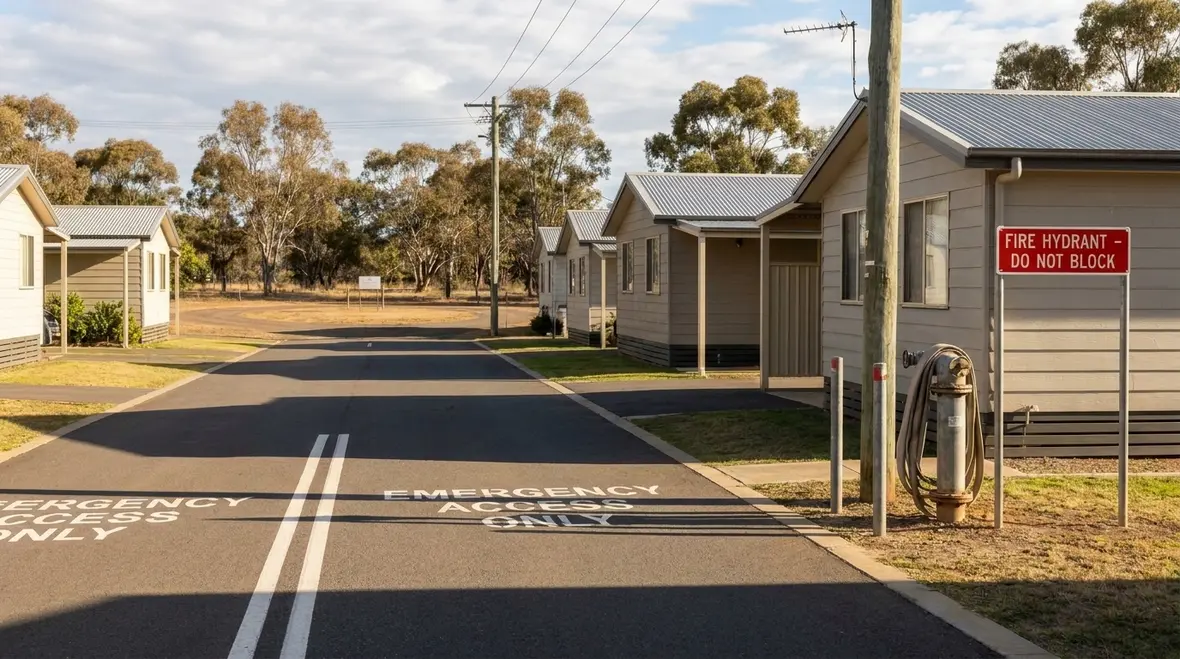
Why site layout matters
Spacing, access, and response time all work together
Good layout does more than look neat on a plan. It gives emergency crews room to work, keeps heat from spreading too fast, and lowers the chance of damage reaching nearby units. In manufactured home site fire safety, distance and access are often the first line of defence.
Clear driveways, turning space, and marked routes help first responders reach the problem without delay. Meanwhile, well placed units and service points reduce crowding and confusion. That is not glamour work, but it is the kind of planning that saves time when every second starts charging interest.
Layout also shapes evacuation. Residents, staff, contractors, and visitors need a site they can understand quickly under pressure. When roads dead end into parked equipment, storage spills into common paths, or lighting turns shared areas into guessing games, a small event can grow teeth fast.
The practical lesson is simple: if the site is hard to navigate on a calm Tuesday, it will not become charmingly efficient during an emergency. Manufactured housing fire protection starts long before the first alarm, and site arrangement is one of the least flashy but most powerful ways to prevent a bad night from becoming a headline.
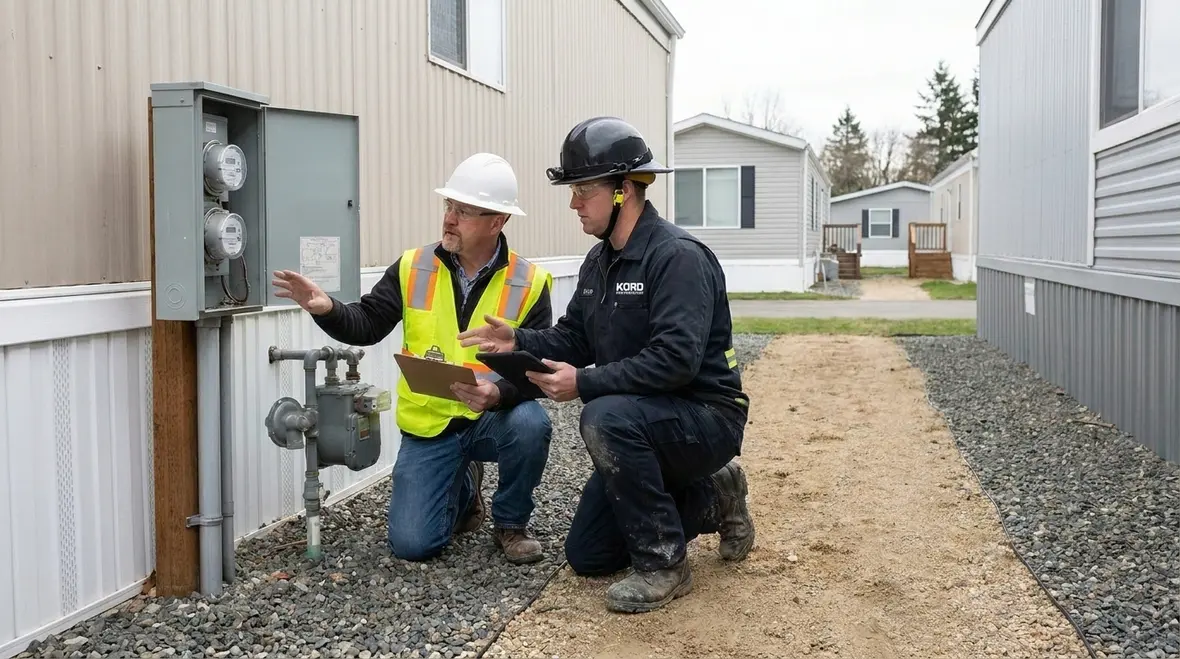
Key risks in manufactured housing fire protection
The usual suspects are rarely dramatic at first
Manufactured housing fire protection has a few common trouble spots. Electrical faults, gas issues, poor storage, blocked access paths, and unmaintained shared spaces can all raise risk. In addition, site changes over time often create problems that were not in the original plan. A parked trailer here, a storage cage there, and suddenly the fire path has become a comedy of errors, minus the laugh track.
- Blocked emergency access
- Combustible storage near units
- Poor external lighting
- Damaged hydrants or hose access points
- Unsafe electrical or gas connections
Those risks tend to stack, not stay politely separate. Poor lighting makes blocked access harder to spot. Utility defects can turn a small ignition source into a rapidly growing fire. Combustible storage fills the gap between one problem and the next unit. This is why site managers cannot rely on a once a year glance and a hopeful shrug.
Another issue is informal site drift. Over time, practical shortcuts become normal. Residents add storage where there used to be clearance. Contractors leave materials in common areas. Temporary fixes quietly receive permanent status. Nobody announces that the layout is getting riskier, but the site tells the story if someone is willing to walk it with open eyes.
How compliance works in day to day operations
| Area | Operational focus |
|---|---|
| Access and movement | Keep roads open, marked, and wide enough for emergency response |
| Spacing and layout | Maintain separation that slows fire spread and supports safe evacuation |
| Utilities | Inspect electrical and gas systems for damage, overload, or unsafe changes |
| Housekeeping | Remove clutter, combustible waste, and stored items that add fuel to a fire |
This dual view helps facilities teams see both the rule and the job behind it. Therefore, compliance becomes part of normal site management instead of a panic exercise before an inspection. It also gives leaders a better way to brief contractors and staff without turning the process into a mystery novel.
A solid program usually includes scheduled walkthroughs, documented findings, corrective actions, and follow up checks that confirm the fix actually happened. That sounds wonderfully unglamorous, because it is. But consistency beats heroics in fire safety. The best inspection is the one that catches the boring issue before it auditions for a larger role.
Teams also benefit when expectations are easy to translate. Access routes should stay clear every day, not just during audits. Utility changes should be reviewed before they become normal. Shared spaces should be managed like part of the fire plan, because they are. When operations and compliance speak the same language, fewer things fall through the cracks.
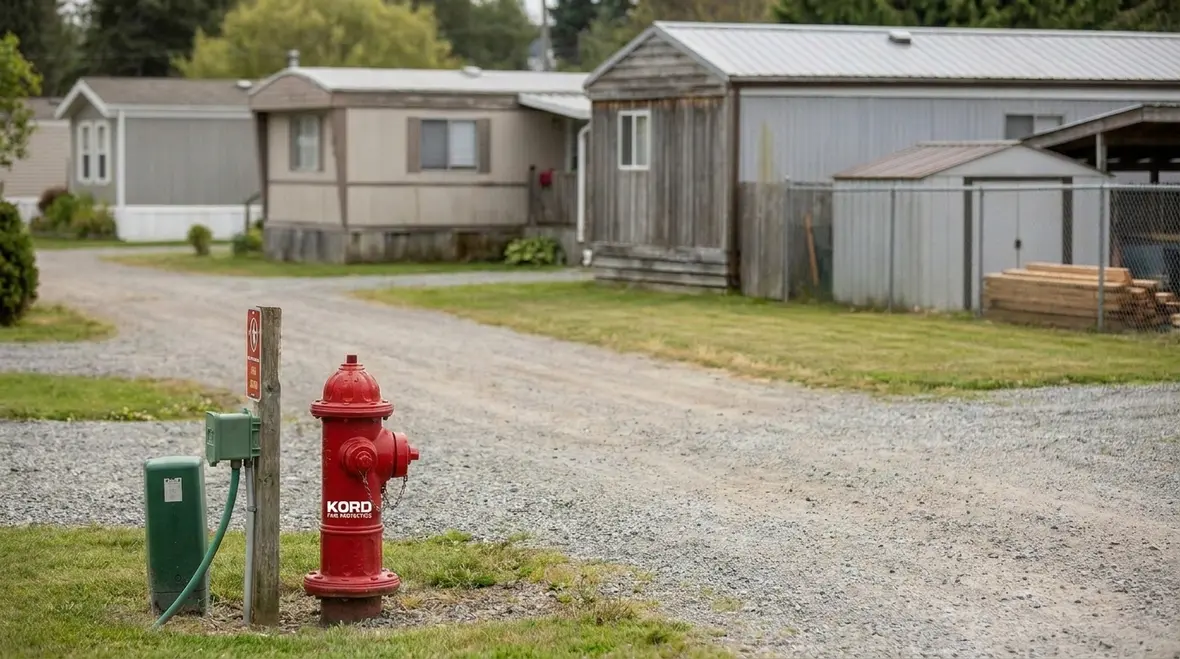
What site managers should inspect first
Start with what affects fire growth and response speed
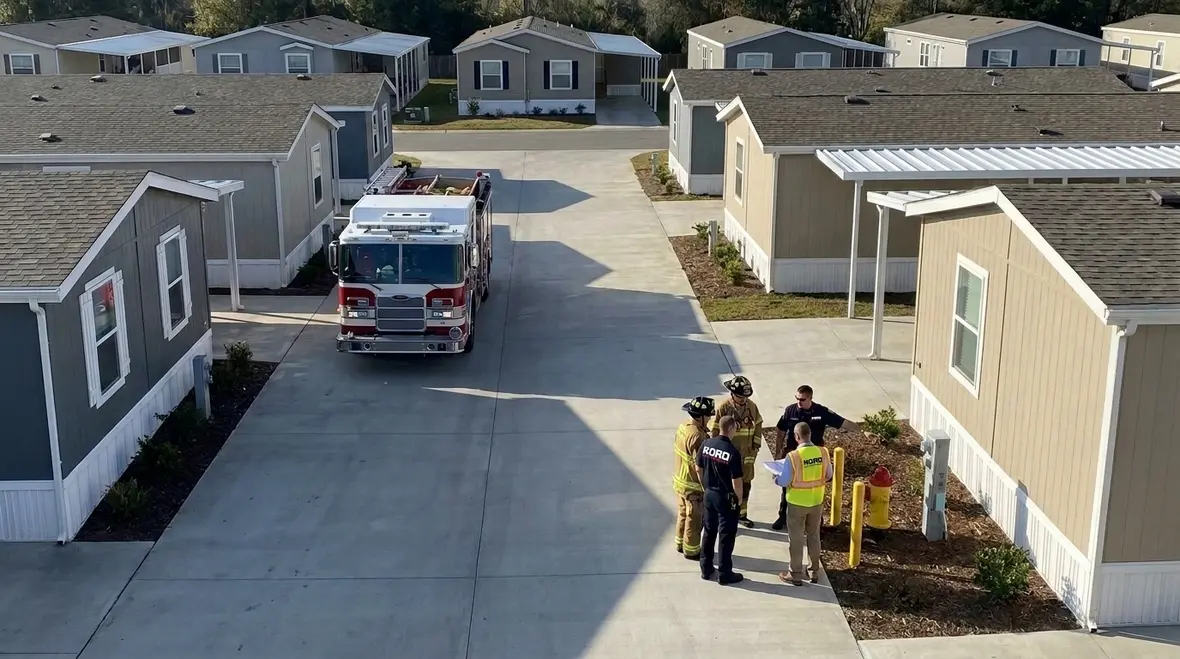
The best place to start is with the items that can affect response time and fire growth. First, check whether fire trucks can enter and turn without delay. Next, review whether shared service areas and common paths remain clear. Then inspect utility connections, exterior lighting, and any storage that could feed a fire.
In addition, managers should document defects and fix them fast. Small issues often grow when nobody owns the task. A bent gate, a locked route, or a broken light may seem minor until it meets smoke, heat, and a stressed response team.
After that, review the site like a responder would. Can crews identify entry points quickly. Are hydrants or hose access locations visible and unobstructed. Do unit numbers make sense at night. Can someone unfamiliar with the property get where they need to go without a scavenger hunt. These questions sound basic because they are basic, and basic problems are still perfectly capable of making a mess.
Managers should also watch for repeat offenders. If the same storage area keeps overflowing or the same access route keeps getting blocked, the issue is no longer housekeeping alone. It is a control problem. Good compliance programs do not just note recurring defects. They change the process causing them.
How Kord Fire Protection can help
Kord Fire Protection can become a vital partner in this service and job by helping operators move from basic awareness to real control. The team can support fire system planning, site risk reviews, inspection programs, and practical compliance guidance. That matters because manufactured home site fire safety works best when every piece of the site fits the fire plan.
Just as important, Kord Fire Protection can help identify weak points before they turn into costly problems. For commercial and industrial facilities, that means better coordination, stronger documentation, and a smoother path through audits or site checks. In other words, they help keep the fire code from becoming the main character in a very expensive drama.
That support can include inspection planning, system review, maintenance coordination, and practical recommendations that fit the way the site actually operates. The goal is not to bury teams in paperwork. The goal is to make the paperwork reflect real control, real readiness, and real follow through.
How Kord supports mobile home park fire code NFPA needs
Tailored support matters because no two sites drift the same way
Kord Fire Protection can assist with routine inspections, service schedules, risk advice, and practical improvements that match the mobile home park fire code NFPA expectations. Because every site has its own layout and challenges, tailored support matters. One park may need access changes, while another may need better detection coverage or stronger maintenance records.
With the right partner, operators can protect assets, reduce downtime, and improve safety culture across the site. As a result, fire protection becomes part of business continuity, not just compliance paperwork sitting on a shelf collecting dust like an old office printer nobody admits owns.
The real advantage is that support can be scaled to the site’s conditions. Some properties need help tightening inspections and records. Others need sharper attention on fire alarm readiness, sprinkler support, or common area risk reduction. Either way, the outcome is the same: fewer blind spots, clearer priorities, and a site that makes more sense when it matters most.
FAQ
Conclusion
NFPA 1 Section 27.1 gives manufactured home sites a clear fire safety framework, and smart operators use it to protect people, assets, and operations. Its value comes from the basics done well: spacing, access, utilities, visibility, housekeeping, and follow through. None of that is flashy, but flashy has never been the gold standard in fire safety.
Kord Fire Protection can help turn those requirements into real site action. For safer compliance, better planning, and less risk, a conversation with Kord is a solid next move. When the site, the systems, and the routine all support the same fire plan, operations get safer and the code stops feeling like an ambush.

Join Our Newsletter!
Get the latest fire safety tips delivered straight to your inbox From our Newsletter.