NFPA 1 Section 22.9 Wrecking Yard Fluids and Hazardous Materials
Quick Answer: NFPA 1 Section 22.9 sets clear expectations for wrecking yards that store, drain, or handle vehicle fluids and other hazardous materials. It focuses on safer storage, spill control, fire risk reduction, and clean work habits. For Australian industrial, commercial, and facility operators, this is where Kord Fire Protection can step in as a trusted partner.
Across wrecking yards, salvage yards, and large auto dismantling sites, the risks are never far away. One careless spill, one weak storage plan, or one missed fire control step can turn routine operations into a costly emergency. That is why wrecking yard fluid storage, salvage yard hazardous materials, and auto junkyard fluid fire safety matter from the first day of site planning. NFPA 1 Section 22.9 gives these operations a serious framework, and for many businesses, it reads less like paperwork and more like survival with a clipboard.
Near the start of that planning, it also helps to look at broader full fire protection services so fluid hazards, ignition control, extinguisher placement, inspections, and emergency readiness do not get treated like separate jobs in separate worlds. In wrecking yards, all of those pieces tend to meet in the same messy, fast-moving reality.
What NFPA 1 Section 22.9 Means for wrecking yards
NFPA 1 Section 22.9 addresses the handling of fluids and hazardous materials found in wrecking yards. In plain terms, it expects operators to control fuel, oil, coolant, brake fluid, batteries, refrigerants, and other unsafe materials before they create fire, release fumes, or pollute the site. The rule aims to keep dangerous material from sitting around like a villain waiting for a dramatic entrance.
For industrial and commercial operators in Australia, the value is simple. Better control means less fire risk, fewer shutdowns, and a safer site for staff, contractors, and visitors. It also supports stronger compliance habits that can help align a site with local fire and environmental duties. When a yard gets these basics right, it becomes easier to manage the rest of the operation without every fluid-related task feeling like a tiny gamble.
Why this section matters beyond the paperwork
Many operators hear a code reference and immediately picture binders, clipboards, and someone asking awkward questions at the worst possible time. Fair enough. But this section is useful because it deals with very real day-to-day problems: leaking tanks, mixed containers, open drums, poor drainage control, and work zones where sparks and vapours can get a little too friendly. It is practical risk control disguised as compliance language, which is honestly how many important rules sneak into the workplace.
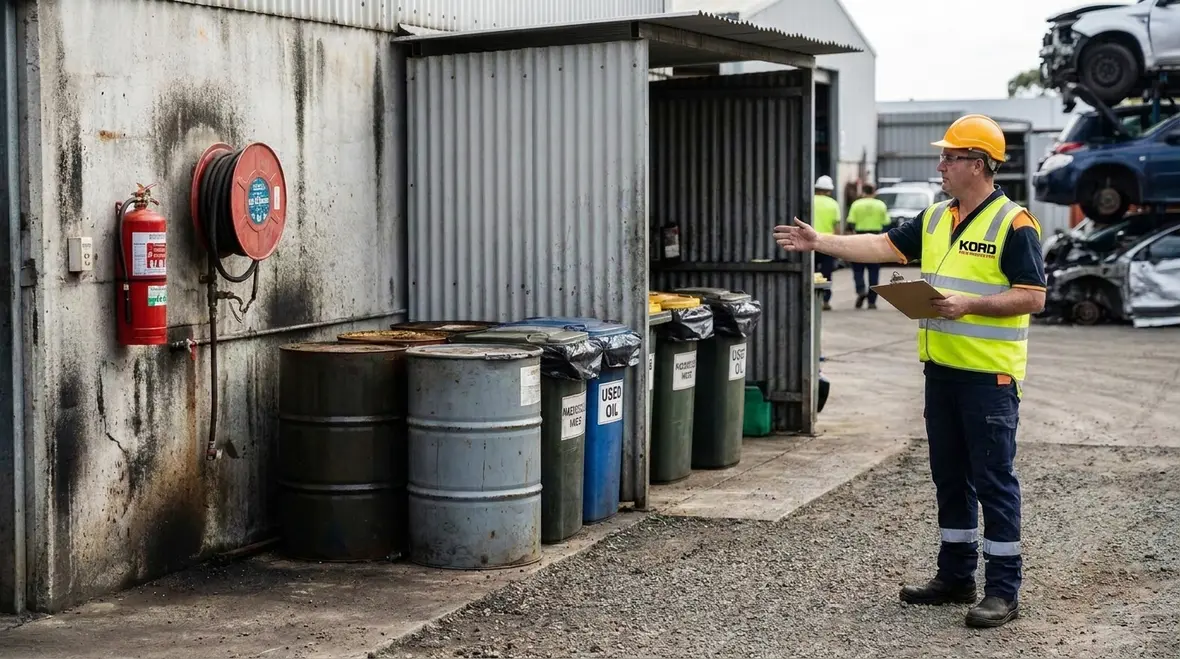
Why wrecking yard fluid storage matters
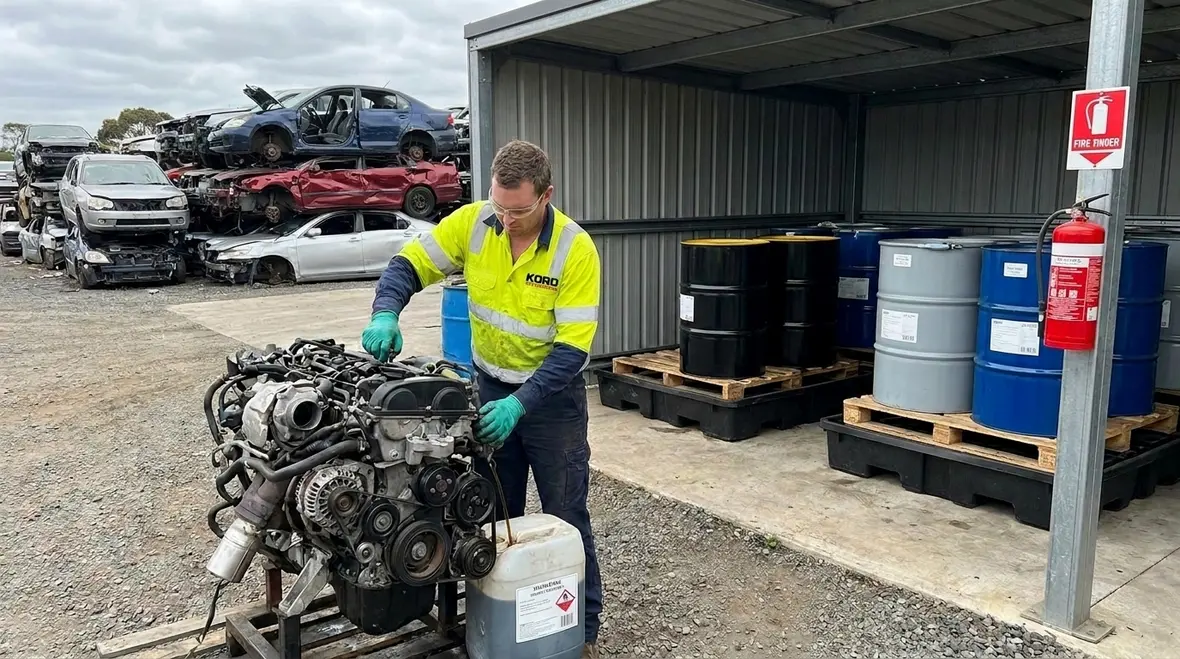
Proper fluid storage starts with separation. Different liquids should not all end up in one corner because that corner looks tidy. Oils, fuels, and chemicals need clear containers, correct lids, strong labels, and safe placement away from heat and ignition sources. In many yards, the issue is not one major mistake. Rather, it is a series of small shortcuts that build into a large problem.
Good storage also reduces the chance of leaks reaching drains, soil, or hot equipment. Therefore, every drum, tote, and recovery tank needs a place, a purpose, and regular checks. A site that treats storage as part of the daily routine usually avoids the kind of surprise nobody wants before lunch.
Common storage mistakes that create avoidable risk
The most common failures are rarely dramatic at first. An unsealed lid here. A fading label there. A waste container parked too close to active work. A half-drained vehicle left sitting longer than planned. None of those choices announces itself as the big one, yet together they create the conditions for spills, vapour release, contamination, and fire spread. That is the part many sites underestimate. Risk likes to arrive assembled from small lazy decisions.
- Use containers suited to the fluid being collected
- Label everything clearly and consistently
- Store incompatible materials separately
- Keep containers closed when not in active use
- Inspect storage points as part of normal operations
Those habits are not glamorous, but they are effective. Wrecking yards do not need magic. They need discipline that survives busy days, rushed staff movements, and the occasional temptation to say, “I will fix that later,” right before later becomes a problem.
How salvage yard hazardous materials should be controlled
Salvage yard hazardous materials call for a clear process from arrival to disposal. Vehicles often come in with fuel in tanks, oil in engines, coolant in systems, and gas in air conditioning units. In addition, batteries and airbags bring their own hazards. Each item needs safe removal by trained staff using the right tools and procedures.
Strong control depends on three actions:
- Identify hazardous materials early when vehicles arrive
- Drain, isolate, and store materials in approved containers
- Move waste through licensed disposal or recycling pathways
When these steps happen on time, the yard lowers fire risk and reduces the chance of a spill that spreads fast. Moreover, clear handling systems help staff work faster with fewer errors. They also make it easier to train new team members because the process is visible, consistent, and less dependent on whoever happens to be “the one guy who knows where everything goes.”
Control starts the moment the vehicle arrives
A solid yard process begins with intake. Staff should know what to check, what to isolate first, and where the vehicle goes next. That means identifying obvious leaks, confirming whether the battery is still present, spotting damaged fuel systems, and deciding whether special handling is needed before standard dismantling begins. Waiting until later invites confusion, and confusion is a terrible storage method.
For broader code context, operators can also review NFPA 1: A Comprehensive Guide to Fire Prevention and Safety to connect this section with wider prevention principles across active work sites.
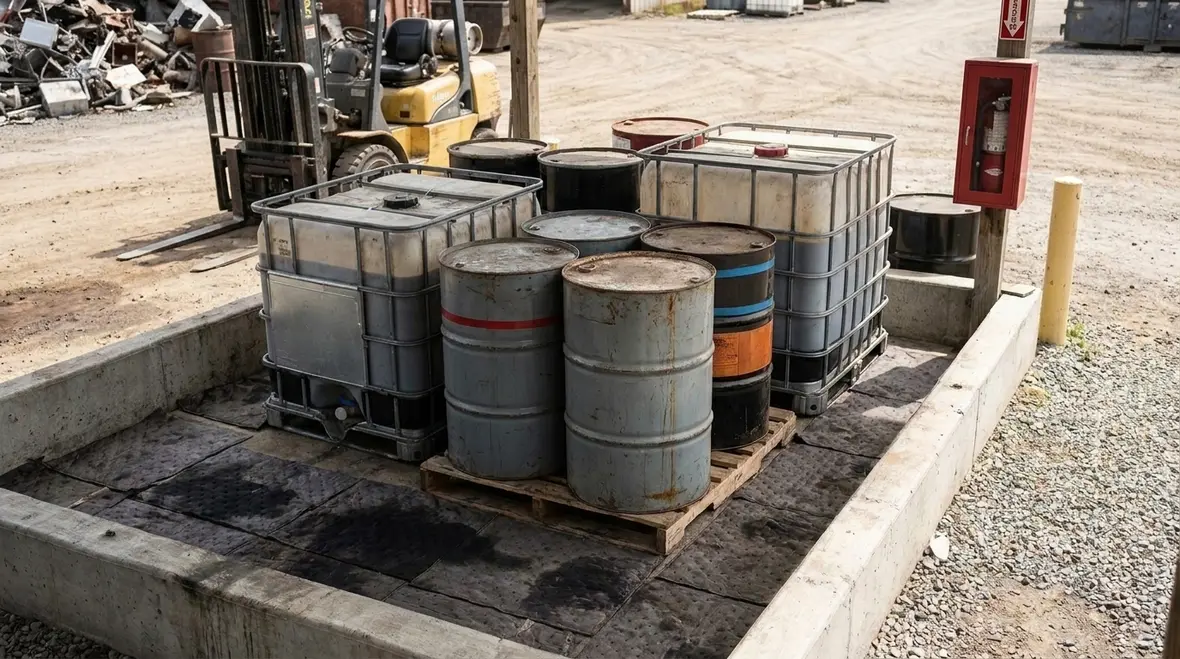
How auto junkyard fluid fire safety reduces major risk
Auto junkyard fluid fire safety is not just about having a fire extinguisher on the wall. It involves control of ignition sources, safe hot work practices, spill cleanup, and fire ready layout planning. Fluid vapours can travel, and sparks do not care about good intentions. They only need fuel and oxygen.
Fire safety also depends on housekeeping. Piles of oily parts, open containers, and poor waste segregation can feed a fire once it starts. As a result, the site should keep work areas clean, maintain clear access for emergency response, and inspect storage zones often. A well managed yard gives fire less to chew on, which is always a wise move.
Fire risk usually builds where fluids and habits intersect
The dangerous mix is often not just the fluid itself. It is the fluid plus friction, heat, static, battery activity, grinders, torches, smoking areas, poor ventilation, or sloppy cleanup. A site can own the right equipment and still create the wrong outcome if routine habits are weak. That is why inspections and daily visual checks matter so much. Good fire safety is usually boring to watch, and that is exactly the compliment it deserves.
- Control hot work tightly around drained and undrained vehicles
- Remove oily waste before it accumulates
- Keep extinguishers visible and accessible
- Protect emergency access lanes from stock creep
- Train staff to report spills and ignition hazards immediately
Where Kord Fire Protection becomes a vital partner
Kord Fire Protection can become a vital partner for wrecking yards, salvage yards, and auto dismantling operations that need practical fire safety support. Because these sites often handle fuels, oils, and mixed waste streams, they need more than a basic box of equipment. They need a partner that understands risk, layout, compliance, and real world site demands.
Kord Fire Protection can help with fire system advice, equipment planning, inspection support, extinguisher placement, and site specific fire risk thinking. In addition, a strong fire protection partner can help businesses build better emergency readiness, train staff on response steps, and improve confidence across daily operations. That matters because when a site handles hazardous fluids, the margin for error gets thin very quickly.
Practical support beats generic advice
Sites like these do not benefit much from vague safety slogans pinned to a wall. They need support that reflects actual yard layout, actual workflows, and actual fuel and waste exposure. That may include reviewing extinguisher coverage, checking access around hazard zones, helping shape response plans, and supporting inspection readiness before a small oversight becomes a large and very expensive lesson.
Dual column view of the main compliance focus
Operational control
- Drain fluids early
- Use sealed, labelled containers
- Keep ignition sources away
- Inspect storage areas often
Fire protection focus
- Match extinguisher coverage to the risk
- Keep access routes open
- Plan spill response and emergency steps
- Review systems with a fire protection partner
What Australian operators should do next
Australian industrial, retail, and commercial facility managers should treat wrecking yard fluid storage and hazardous material control as part of core site management, not as side work. First, they should review how vehicles are received and drained. Next, they should check whether storage containers, labeling, and spill controls still suit current volumes and work patterns. Then, they should look at fire protection coverage with fresh eyes.
Because operations change, risk changes too. New stock, new equipment, and new staff can all change the site profile. Therefore, regular review keeps the yard ready instead of merely busy. That is a far better place to be when conditions turn rough.
A useful review checklist for busy sites
- Check intake procedures for hazardous materials identification
- Review fluid draining locations and containment methods
- Confirm storage labels are visible and current
- Inspect spill kits and extinguisher access
- Walk emergency routes and remove obstructions
- Review response roles with staff and contractors
That kind of review does not need to become a dramatic annual event with ten clipboards and one terrible coffee urn. It works best when folded into normal operations and repeated often enough that the site stays honest about its own condition.
FAQ
Final word for safer yard operations
Wrecking yards that handle fluids and hazardous materials need steady control, clear storage, and a strong fire safety plan. NFPA 1 Section 22.9 gives a solid guide, and Kord Fire Protection can help turn that guide into daily practice.
For sites ready to improve safety, reduce risk, and stay prepared, now is the time to review the system and make the next move. A cleaner process today is usually much cheaper than a fire story tomorrow.

Join Our Newsletter!
Get the latest fire safety tips delivered straight to your inbox From our Newsletter.