NFPA 1 Section 16.1 Construction Fire Safety and Kord Protection
Quick Answer
NFPA 1 Section 16.1 sets the baseline for safe construction sites by requiring fire prevention, clear site control, proper hot work rules, access for responders, and strong temporary protection. In practice, that means construction teams need a live fire safety approach instead of a box-ticking exercise. For projects needing reliable system support, full fire protection services can help keep evolving risks under control. Kord Fire Protection can help teams meet these demands with practical temporary fire protection construction support and code-focused planning.
In industrial, retail, commercial, and facility projects, construction fire safety NFPA standards matter because a work site can turn risky fast. Sparks, fuels, dust, timber, plastics, and half finished systems do not mix well. That is where building construction fire code compliance and temporary fire protection construction controls step in. They help protect workers, assets, schedules, and the people who expect the site to open on time. And yes, fire does not care about deadlines, which is rude but true.
What NFPA 1 Section 16.1 Means for Construction Sites
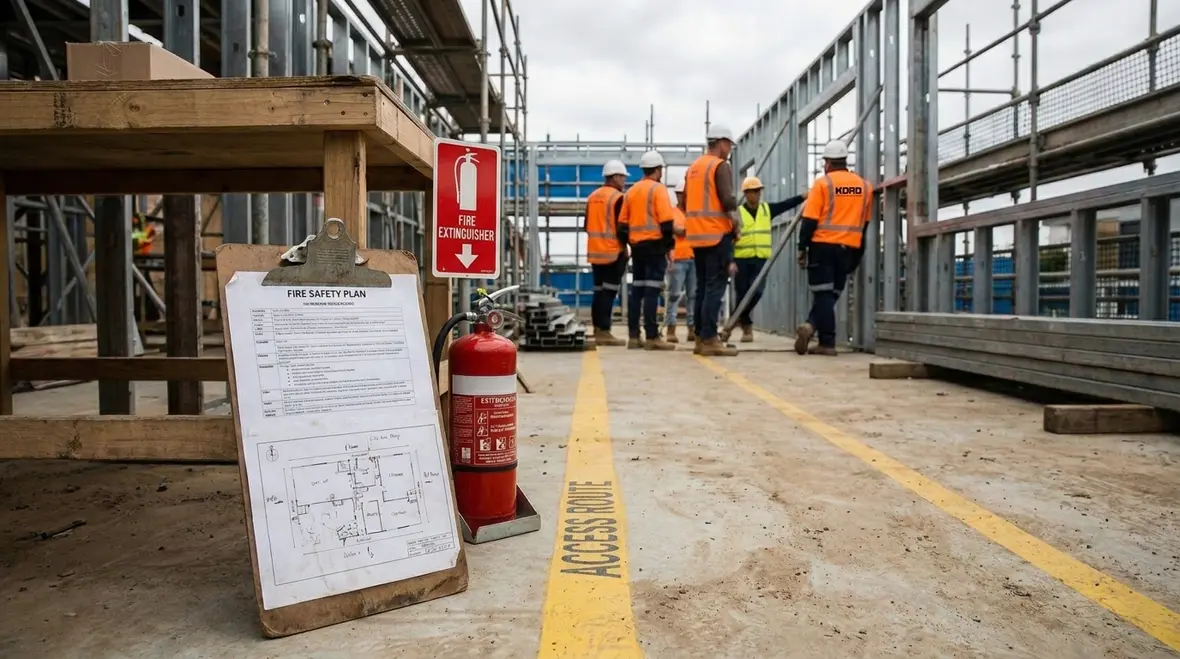
NFPA 1 Section 16.1 focuses on general fire safety requirements during construction, alteration, and demolition. In plain terms, it tells site teams to keep fire risks under control while the building is still taking shape. That includes safe storage of flammables, good housekeeping, site access, fire watch needs, and proper control of ignition sources. Because a worksite is always changing, the fire plan must change too.
This section matters because the site is often packed with temporary power, welding gear, fuels, packaging, and stored materials. As a result, the normal fire protection systems may not be live yet, or they may be partly disabled during works. NFPA 1 Section 16.1 helps close that gap with rules that support safe work from the ground up. Teams that already follow broader guidance like NFPA 1 fire prevention and safety principles usually find it easier to build a site specific process that actually works day to day.
The big idea behind the section
The point is not simply to react after a problem appears. The point is to reduce the chance of ignition, slow down fire spread, and make emergency response easier if something does go wrong. Construction sites are messy by nature, so the code expects active control, not wishful thinking and one lonely extinguisher hiding behind stacked materials.
Why Temporary Fire Protection Matters on Active Projects
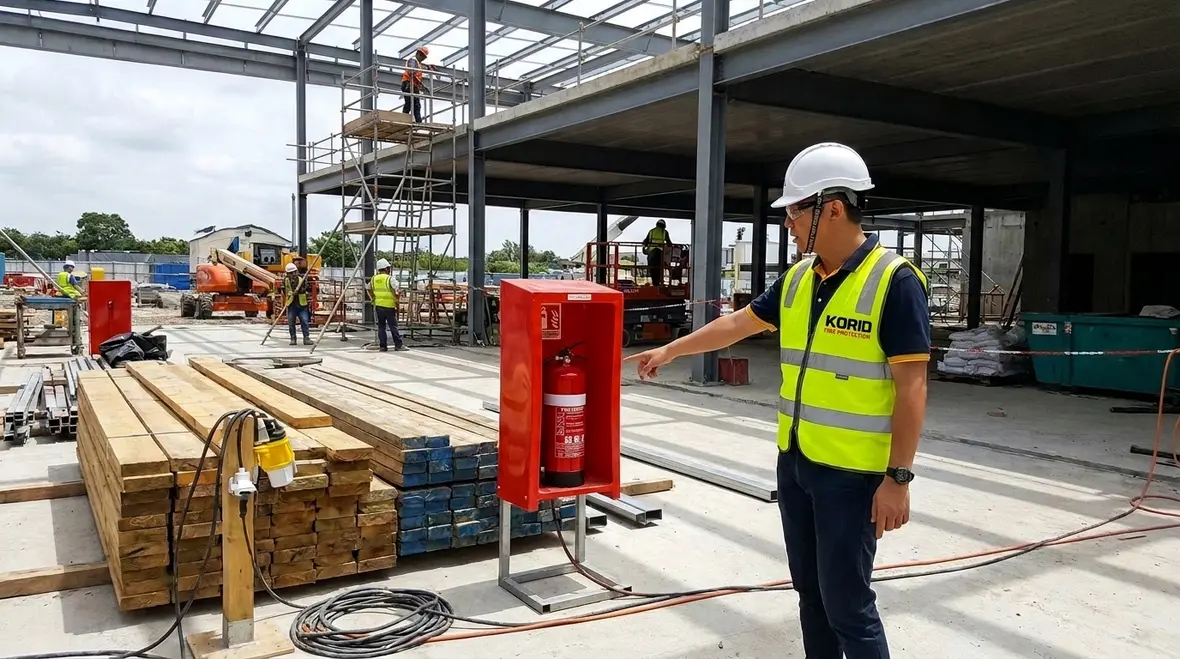
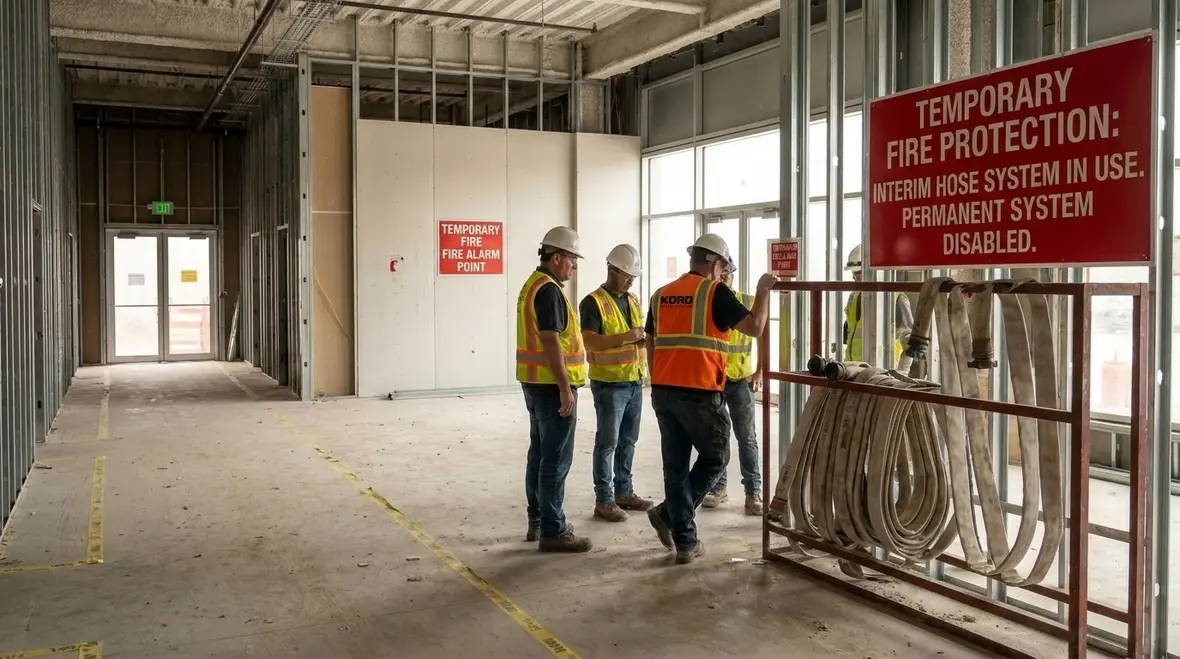
Temporary fire protection construction measures are the safety net when permanent systems are not ready. These can include portable extinguishers, fire blankets, alarms, signage, fire watch procedures, temporary hose setups, and interim suppression devices. They also include planning, training, and clear lines of responsibility.
Without these controls, even a small incident can become a major loss. For example, hot works near dust or stored products can create a fast moving fire. Meanwhile, blocked exits or poor access can slow evacuation and emergency response. That is where disciplined site planning saves the day. No cape needed, just good process.
Temporary systems fill the dangerous gap
A lot of construction fire risk lives in the gap between what the building will eventually have and what the site has today. If the permanent alarm is not commissioned, if sprinklers are not active yet, or if part of the system is isolated during work, the project still needs protection. That is why interim controls are not optional in any practical sense. They bridge a vulnerable stage where risk is high and systems are incomplete.
What a Site Team Must Control Under Section 16.1
NFPA 1 Section 16.1 expects construction teams to manage the core fire risks before they grow. The main duties usually include:
- keeping work areas clear of rubbish and waste
- storing flammable liquids and gases safely
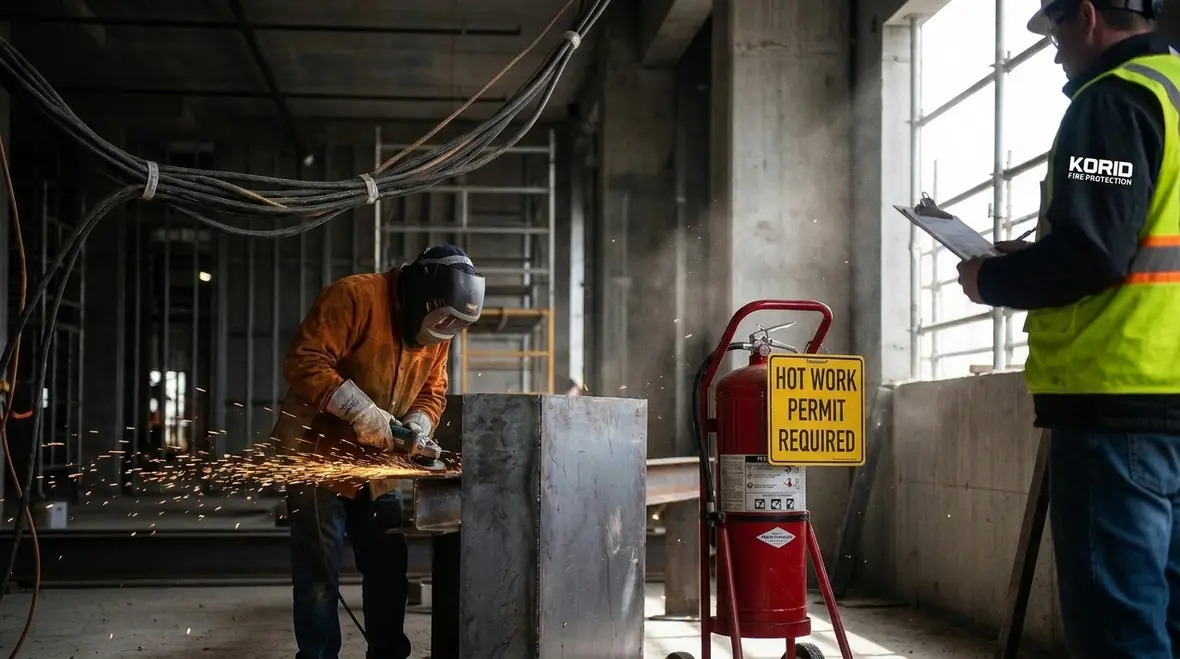
- controlling hot works with permits and fire watch
- maintaining clear access for fire services
- protecting temporary power and ignition sources
- ensuring exits stay open and usable
- keeping extinguishers available and maintained
These steps sound simple, yet they often get missed when schedules tighten. Therefore, strong site discipline becomes just as important as the physical protection equipment. A site can own the right devices and still fail badly if materials are piled in exits, permits are ignored, or hot works drift ahead without post work checks.
Control is daily, not occasional
The strongest construction fire programs are the ones that make these controls part of normal supervision. Daily walks, shift handovers, permit reviews, and housekeeping checks do more than polished paperwork created after the fact. Fire safety works best when it is built into the rhythm of the project and not treated like the guest star who only shows up when an inspector is due.
How a Construction Fire Safety Plan Should Work
The best fire plan does not sit in a folder collecting dust like an old movie prop. Instead, it guides daily work. It should show where hazards exist, who checks them, what happens during hot works, and how the team reacts to an emergency. It should also match the phase of the job, since a fit out site needs a different setup from a new build or demolition job.
A practical plan also defines communication, escalation, and accountability. Who calls the stop if an unsafe setup appears. Who confirms extinguishers are where they should be. Who signs off isolation and restoration steps. Those details matter because confusion spreads fast on a busy site, and confusion during a fire event is about as helpful as a screen door on a submarine.
Site Need
- Hot works
- Stored materials
- Temporary power
- Disabled permanent systems
Fire Safety Response
- Permit system, fire watch, nearby extinguishers, post work checks
- Safe separation, tidy storage, limited ignition exposure
- Inspection, load control, cable management, fault checks
- Temporary protection, alarms, monitoring, active risk review
This kind of structure helps the crew act fast and stay aligned. It also makes inspections easier, which every site manager appreciates almost as much as a Friday knock off.
How Kord Fire Protection Supports Construction Teams
Kord Fire Protection can become a vital partner because compliance is not only about equipment. It is also about knowing what the site needs, when it needs it, and how to keep it working as the project moves. That support can include site assessments, temporary fire protection planning, extinguisher placement, suppression solutions, and guidance for fire safety controls during construction.
For large commercial and industrial sites, that kind of help can reduce confusion and lift confidence. In addition, Kord Fire Protection can help teams align their fire controls with the building construction fire code and other project duties. This matters because a site can face pressure from builders, tenants, facility teams, and inspectors all at once. A strong fire partner brings order to that mess.
Support that keeps pace with the job
Construction is not static, so fire protection support should not be static either. As the build changes, temporary hazards shift, access routes move, and system availability changes. A useful fire protection partner helps review those transitions, close gaps early, and keep the project from stumbling into avoidable risk during critical stages.
When Fire Protection Services Add the Most Value
Fire protection support becomes most valuable during high risk stages. These usually include steel works, fit out works, roof works, demolition, temporary shutdowns, and periods when permanent systems are offline. At these points, the risk rises while the margin for error gets thin.
So, a good service partner helps the site stay ready. They can identify gaps before they become incidents, recommend temporary controls, and help maintain compliance through changing site phases. That kind of foresight can save time, money, and a great deal of stress.
What Industrial and Commercial Sites Should Focus On
Site teams should treat construction fire safety as a working part of project control, not a side task. The goal is to protect people, reduce downtime, and avoid damage that can stall handover. Because many projects involve mixed contractors and fast paced work, fire safety must stay visible every day.
That means regular checks, clear responsibility, active supervision, and a fire strategy that changes with the site. It also means bringing in the right partners early, rather than waiting until something smells hot in the wrong way.
FAQ
Keep Your Project Safe and Moving
NFPA 1 Section 16.1 gives construction teams a clear path to better fire safety, and the right partner makes it easier to follow. Kord Fire Protection can help keep your site protected, your people safe, and your project on track.
For practical temporary fire protection construction support, talk with Kord Fire Protection early and build safety into the job from day one. A little planning now beats a major fire problem later every single time.

Join Our Newsletter!
Get the latest fire safety tips delivered straight to your inbox From our Newsletter.