NFPA 1 Section 13.9 Non Listed Fire Protection
Quick Answer
NFPA 1 Section 13.9 gives clear direction for non listed fire protection equipment, and that matters when a system does not carry a standard listing. It helps owners, managers, and contractors handle unlisted fire suppression gear, meet fire equipment listing requirements, and reduce risk. For facilities that need broader system support, full fire protection services can help connect inspection, documentation, testing, and practical compliance planning into one workable path. It also helps to understand the broader code context through NFPA 1: A Comprehensive Guide to Fire Prevention and Safety.
NFPA 1 Section 13.9 sits at the sharp end of fire safety. It deals with non listed fire protection equipment, which means gear that does not follow the usual product listing path. For many facilities, this area can feel a bit like the deep end of the pool without the inflatable swan. Still, it matters because unlisted fire suppression systems and related devices can raise big questions around safety, compliance, and long term performance. Understanding fire equipment listing requirements helps teams avoid gaps that can lead to delays, costly fixes, or worse.
What NFPA 1 Section 13.9 Means for Facilities
Section 13.9 focuses on how non listed fire protection equipment should be treated when it appears in a building or site. In simple terms, it asks whether the equipment can be shown to perform safely, reliably, and in a way that matches the fire risk. That matters because a fire system does not earn points for style. It must work when heat, smoke, and pressure show up uninvited.
For facility teams, this section creates a clear duty. They must know what was installed, why it was chosen, and whether it meets the right standard for the job. As a result, owners can avoid using equipment just because it is available or cheaper. In the world of fire safety, “good enough” can turn into “not enough” with very little warning.
The core question behind unlisted equipment
When a component is not listed, the conversation shifts from assumed acceptance to demonstrated suitability. That means teams need evidence. Design intent, engineering judgment, testing information, site conditions, installation quality, and service history all start carrying more weight. A listed product arrives with part of its credibility already packaged. A non listed one needs its credibility built the hard way.
Why Non Listed Fire Protection Equipment Needs Care
Non listed fire protection equipment often appears in older buildings, custom industrial sites, special hazard areas, and retrofit projects. Sometimes it was chosen because no listed option fit the space. Other times, it may have been installed before current rules became stricter. Either way, it deserves close review.
Here is the main issue. Fire equipment listing requirements exist for a reason. They help prove that a product has been tested and accepted for a defined use. Without that listing, the owner must rely on other evidence such as design details, performance data, engineering support, and inspection records. Therefore, the burden of proof grows heavier. That is not drama. That is just fire safety doing its usual serious work.
Why listing requirements carry so much weight
Listing requirements reduce uncertainty. They help confirm that a product has been evaluated for specific operating conditions and intended uses. Once that listing is missing, uncertainty creeps into every discussion: will the system actuate as intended, is the discharge pattern appropriate, can replacement parts be sourced, and will authorities or insurers accept the arrangement? Suddenly, one awkward little gap on paper becomes a very large conversation in real life.
Where Unlisted Fire Suppression Shows Up in Real Sites
Unlisted fire suppression can show up in places where standard solutions struggle to match the site. Think of plant rooms, heavy process areas, storage zones with unusual materials, specialty equipment enclosures, or older commercial assets with mixed upgrades. In these cases, the system may still provide useful protection, but only if someone evaluates it properly.
Facility leaders should ask three things immediately: what was installed, how it was designed, and what evidence supports its use. Those questions help build a practical path to compliance. They also reduce surprises during audits, insurer reviews, or fire authority checks. Nobody enjoys a surprise visit from a compliance issue. Not even the most optimistic operations manager.
Common situations that trigger deeper review
- Older buildings with legacy suppression hardware and incomplete records
- Retrofit projects where newer hazards were layered onto older systems
- Custom industrial processes that use special enclosure protection or niche discharge arrangements
- Storage or manufacturing spaces where listed off the shelf products did not fit the geometry or hazard profile
- Sites that changed occupancy, stock, or process loads without fully updating system documentation
How Section 13.9 Affects Compliance Planning
NFPA 1 Section 13.9 pushes teams to treat non listed fire protection equipment as a managed risk, not a casual shortcut. That means compliance planning should include documentation, inspection, service history, and performance review. It also means teams should compare the installed solution against the site hazard, the building use, and the expected fire load.
When this process works well, it supports better decisions across the whole building. Maintenance teams know what to inspect. Managers know what to replace or retain. And owners gain a clearer view of where the risks sit. In other words, the plan gets smarter, not just louder.
A practical review path for teams
- Identify each component and verify whether it has a recognized listing for its installed use.
- Match the equipment to the actual hazard, occupancy, and fuel load present on site.
- Collect records such as design drawings, commissioning notes, service logs, and prior assessments.
- Review physical condition, accessibility, impairment history, and maintainability.
- Decide whether the equipment can remain with supporting evidence, needs modification, or should be replaced.
Dual Column Snapshot
Focus Area
- Non listed fire protection equipment
- Unlisted fire suppression
- Fire equipment listing requirements
- Documentation and inspection
Why It Matters
- Needs proof of suitability because it lacks standard product listing
- May work in special hazards, but needs strong design and service records
- Help confirm safety, performance, and acceptable use for the site
- Support compliance, audits, and long term reliability
Why Kord Fire Protection Matters Here
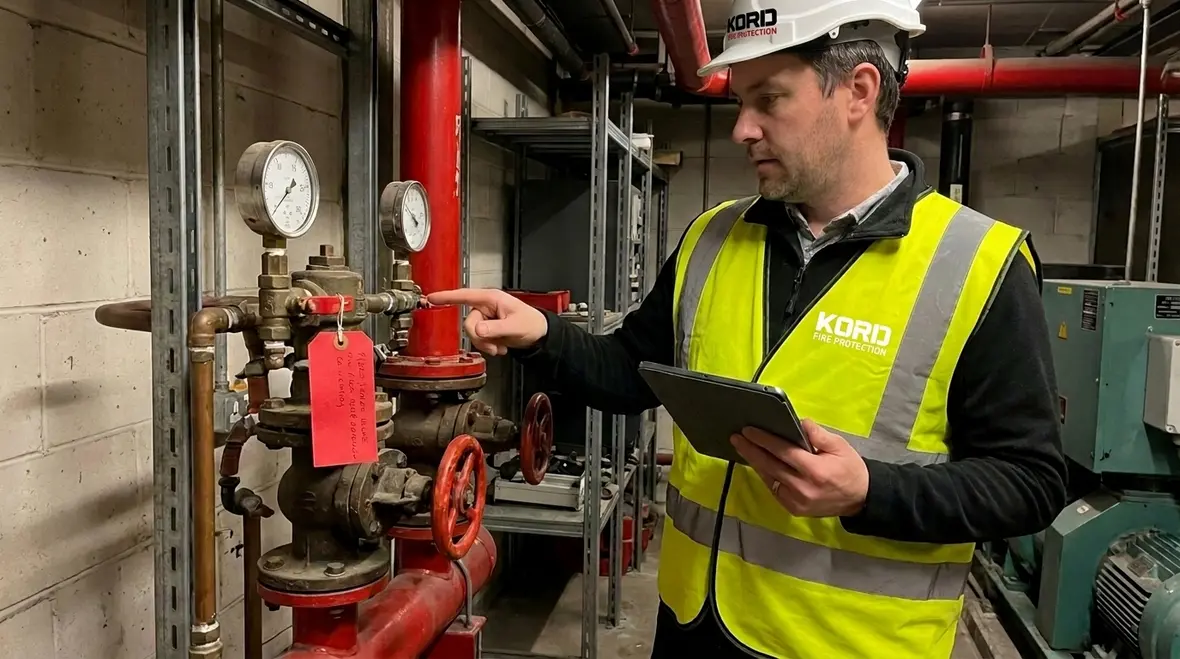
Kord Fire Protection can become a vital partner for facilities that deal with this kind of equipment. That is because this work is not just about pipes, nozzles, panels, or cylinders. It is about understanding the full system, the site conditions, and the compliance path behind it. A capable partner can help assess existing gear, identify gaps, and guide upgrades where needed.
That support becomes even more useful when non listed equipment is tied into broader system maintenance, inspections, and lifecycle planning. Kord’s approach to the full lifecycle of fire protection servicing fits naturally here because non listed components do not just need a one time opinion. They need ongoing attention, evidence, and clear decision making as the facility changes around them.
For industrial, retail, and commercial clients, that support is especially valuable. Sites often run under tight schedules and cannot afford long shutdowns. So, a trusted fire protection partner helps reduce downtime while keeping safety front and center. Kord Fire Protection can also assist with reviews, maintenance planning, and practical recommendations that fit real operations instead of textbook fantasy. Because yes, fire safety should be rigorous, but it should also be workable.
What Facility Teams Should Do Next
Teams should begin with a full equipment review. Then they should check whether each item has a listing, whether it qualifies as non listed fire protection equipment, and whether the current use still suits the site risk. After that, they should gather design records, service logs, and any engineer or installer support. Finally, they should set a plan for corrections, upgrades, or ongoing monitoring.
This process works best when it happens before an audit or incident. That way, the site stays in control. It also gives management a clear story to tell if questions come up later. And in compliance, a clear story beats a confused one every time.
Keep the review practical, not theatrical
The goal is not to turn the facility into a paperwork museum. The goal is to confirm that each system can protect the space it serves and that the evidence behind it is solid enough to stand up under scrutiny. Good planning removes confusion, strengthens maintenance priorities, and helps everyone stop treating hidden system risk like an awkward family topic no one wants to bring up at dinner.
FAQ
Conclusion
NFPA 1 Section 13.9 gives facility owners and managers a clear path for handling non listed fire protection equipment with care and confidence. It reminds teams that when a product listing is missing, evidence and judgment have to step forward. That means documentation, inspection history, design review, and practical risk assessment all become part of the real compliance picture.
For industrial, retail, and commercial facilities, the right partner makes the difference between guessing and knowing. Kord Fire Protection can help assess existing systems, guide next steps, and support the work so compliance does not become a guessing game. That is a much better outcome for the site, the people in it, and everyone who would prefer their fire protection to be dependable instead of adventurous.

Join Our Newsletter!
Get the latest fire safety tips delivered straight to your inbox From our Newsletter.