NFPA 1 Section 10.13 Combustible Vegetation Fire Safety
Quick Answer
NFPA 1 Section 10.13 sets the standard for managing combustible vegetation around buildings and sites so fire has fewer places to start and spread. For industrial, retail, and commercial facilities across Australia, it supports safer grounds, better access for crews, and stronger defensible space fire safety. Kord Fire Protection can help turn that code into practical, site ready action.
For businesses that also need a broader compliance partner, full fire protection services can fit naturally alongside vegetation risk planning, especially when site safety depends on more than one line of defense. And for a wider code context, this guide to NFPA 1 fire prevention and safety is a useful companion read.
NFPA 1 Section 10.13 Explained for Australian Sites
NFPA 1 Section 10.13 focuses on combustible vegetation fire safety by reducing fuel near structures, access roads, and critical assets. In plain terms, it asks a site to manage grasses, shrubs, leaves, and other plant matter before they become a fire path. That matters for warehouses, shopping centres, processing plants, and large facilities where one small spark can create a very expensive day. Fire does not care about schedules, and it certainly does not care about stock rotation.
For Australian operations, this topic fits well with combustible vegetation fire code thinking, especially where heat, wind, and dry conditions raise risk. A good program does not rely on luck. Instead, it uses inspection, clearance, maintenance, and clear site control to reduce ignition and slow fire spread. The point is not to strip a site bare or make it look like a lunar experiment. The point is to stop vegetation from becoming a convenient runway for flame movement toward buildings, stock, and people.
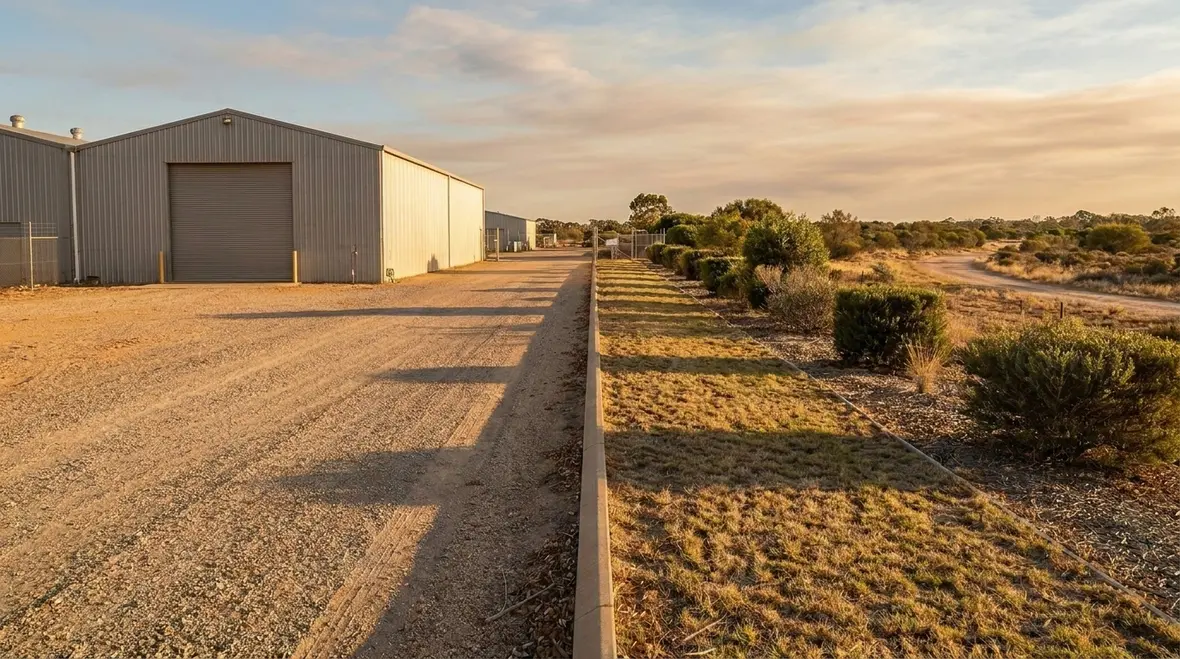
What this looks like in practice
On a practical level, Section 10.13 thinking usually means looking at the entire property edge, service corridors, external storage areas, and every awkward little corner where dry growth loves to settle in and pretend it belongs there. Facility teams are not just cutting grass for appearances. They are controlling fuel continuity. That is a much fancier way of saying they are trying to stop one burnable patch from connecting neatly to the next like a terrible game of fire dominoes.
Why Defensible Space Matters Around Commercial Property
Defensible space fire safety gives emergency crews a better chance to defend a site and protect people, stock, and equipment. When vegetation grows too close to buildings, fences, transformers, loading zones, or fuel areas, it can carry flames fast. Therefore, site teams should treat the property edge like a safety buffer, not a garden feature for a reality show makeover.
Well managed space helps in three big ways. First, it lowers available fuel. Second, it improves visibility and access. Third, it gives fire systems, staff, and responders more time to act. For multi site businesses, that buffer can also reduce downtime, insurance pressure, and costly repairs. When every minute matters, the value of a simple cleared zone suddenly looks a lot less boring and a lot more brilliant.
Key benefits beyond compliance
- Cleaner property edges that are easier to inspect
- Safer access for maintenance and emergency crews
- Reduced chance of flame spread toward walls and service areas
- Better visibility around utilities, storage zones, and gates
- Stronger support for day to day fire risk management
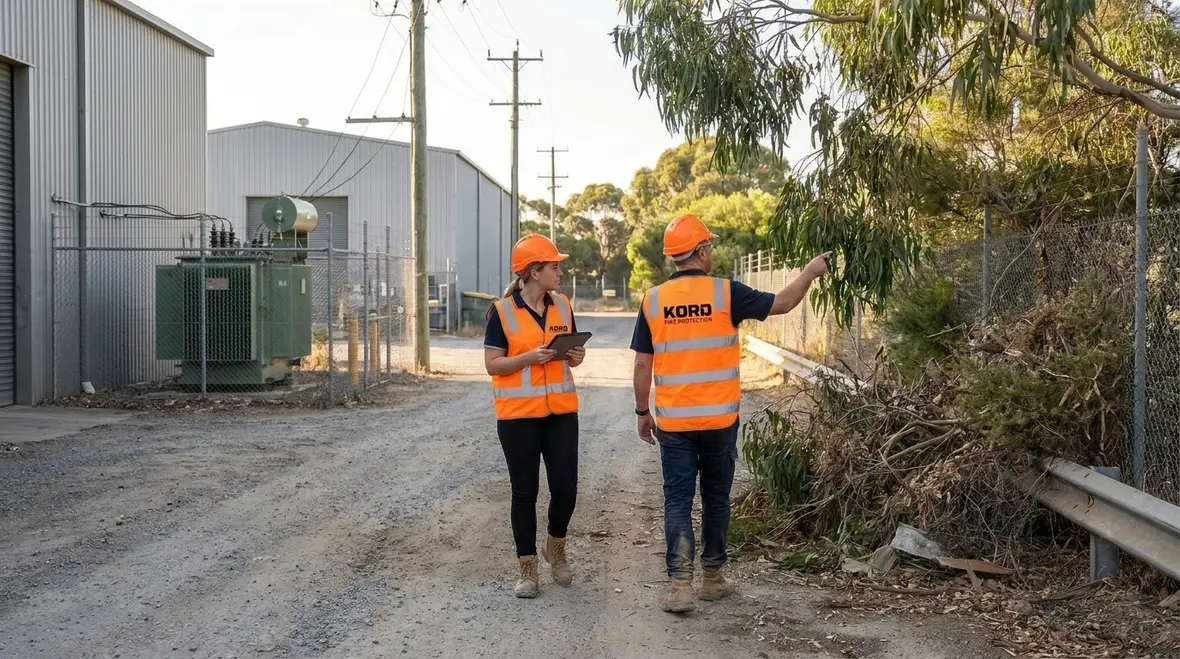
How Vegetation Clearance Fire Prevention Works on Site
Vegetation clearance fire prevention starts with a simple question: what can burn, how close is it, and how fast can fire reach the asset? From there, the site team can set trimming cycles, removal plans, and inspection points. The work should cover grass height, low hanging branches, leaf litter, dead plants, and any buildup near walls, air intakes, drains, or storage areas.
It also helps to focus on the flow of the site. For example, loading docks need clear routes, plant yards need wide access, and utility zones need space for safe maintenance. Meanwhile, debris should not be left to collect after storms or routine landscaping. Small piles of dry plant matter can turn into large problems with very little drama, which is exactly the kind of surprise no manager wants.
The smartest programs also work on a repeatable cycle. Inspect the grounds, note the hazards, assign the work, verify completion, and then do it again before conditions build back up. This is not glamorous work, but neither is explaining to leadership why a neglected fence line became the opening scene of a very preventable incident report.
Areas that deserve extra attention
- Perimeter fencing and remote boundary lines
- External plant equipment and transformer areas
- Loading docks, bin enclosures, and waste zones
- Road shoulders and emergency access paths
- Wall lines, roof runoff zones, and air intake areas
What NFPA 1 Section 10.13 Means for Facility Teams
NFPA 1 Section 10.13 gives facility teams a clear framework for reducing fuel loads and keeping property safer. However, the code works best when it becomes part of daily operations rather than a once a year tidy up. That means assigning responsibility, documenting checks, and making vegetation control part of broader fire risk management.
Facility managers should look at seasonal changes, site use, and local weather patterns. For instance, a site that looks fine in winter may become a high risk area during hot, dry months. Therefore, a plan should change with the conditions, not just sit in a folder collecting dust like an old prop from a bad crime drama.
This is where good documentation earns its keep. A short record of inspections, corrective actions, contractor visits, and follow up checks can make the difference between a managed risk and a guessed at one. If a site has multiple buildings or large open grounds, consistency matters even more. Without it, one tidy section of the property can hide another area that is quietly building a fuel problem of its own.
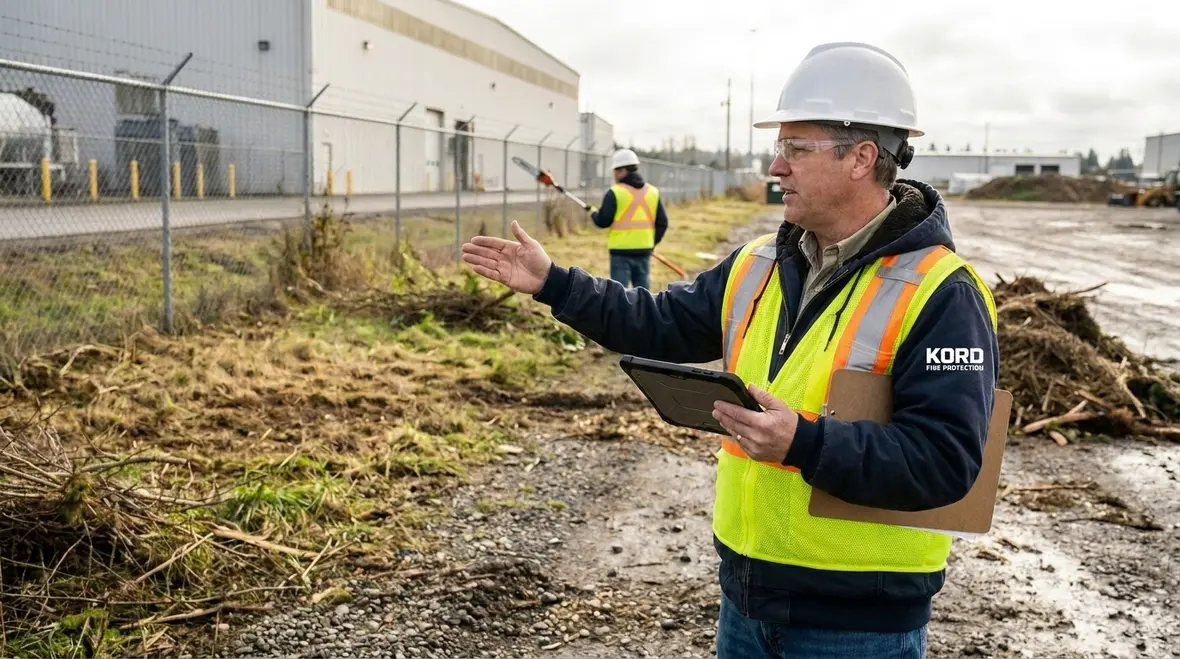
Where Kord Fire Protection Adds Real Value
Kord Fire Protection can become a vital partner by helping businesses translate code requirements into practical site action. Their role can include reviewing risk, identifying vegetation hazards, supporting compliance plans, and aligning maintenance work with fire safety goals. As a result, the business gains more than a checklist. It gains a partner that understands how fire risk works in the real world.
Kord Fire Protection can also support ongoing monitoring so issues do not return after one service visit. That matters for large commercial sites, where conditions change fast and teams already juggle a hundred priorities before lunch. With expert support, the business can improve defensible space fire safety while keeping operations smooth and disruption low.
For teams already reviewing sprinklers, alarms, extinguishers, suppression, or pumps, bringing vegetation control into the same fire safety conversation simply makes sense. Kord Fire’s broader service approach shows how compliance works best when site conditions and system readiness are treated as parts of the same protection picture.
Two Column View of Common Risk Areas and Control Actions
Common Risk Areas
- Perimeter fences with dense grass
- Loading docks with leaf buildup
- Transformer and plant rooms with dry shrubs
- Access roads blocked by overgrowth
- Waste zones with unmanaged organic debris
Control Actions
- Trim and remove fuel on a set schedule
- Keep clearance around walls and critical assets
- Check after storms and high wind events
- Maintain clear routes for emergency access
- Document work and review conditions often
How to Build a Better Compliance Routine
A strong routine begins with inspection, then moves to action, then finishes with review. First, the site should map high risk areas and list what needs clearing. Next, crews should carry out trimming, removal, and cleanup in line with the site plan. After that, managers should verify the work and record what changed. This simple cycle supports combustible vegetation fire code goals without slowing the business down.
It also helps to train staff to spot warning signs early. Dry growth, blocked drains, and debris near heat sources should trigger a response. In addition, regular contractor checks can keep the site aligned with seasonal risk. When the routine stays active, the site stays safer.
A simple rhythm that works
- Inspect high risk zones on a scheduled basis
- Assign trimming, removal, and cleanup tasks quickly
- Verify completed work instead of assuming it happened
- Record seasonal changes and repeat problem areas
- Review the plan before hot, dry, and windy periods
FAQ
Keep the Site Safer Before Fire Finds the Weak Spot
Commercial sites do not need to wait for a fire scare to take vegetation risk seriously. With the right plan, the right checks, and the right partner, they can improve safety and reduce exposure. Kord Fire Protection can help businesses put NFPA 1 Section 10.13 into action with steady, practical support.
The result is simple: less fuel, better access, and stronger protection when it matters most. That is a much better outcome than learning about vegetation risk only after fire has already found the one weak spot everyone meant to deal with next week.

Join Our Newsletter!
Get the latest fire safety tips delivered straight to your inbox From our Newsletter.