NFPA 1 Aerosol Products Fire Safety Requirements
Facilities handling aerosol products need a safety plan that does not leave anything to chance. For a broader look at protecting high risk environments, special hazard fire suppression in Australia offers useful context for sites balancing compliance, protection, and day to day operations.
Quick Answer
NFPA 1 Section 61.2 sets the basic fire safety rules for aerosol products used in commercial settings. It covers safe storage, labeling, ventilation and inspection. For industrial and retail facilities across Australia, following these requirements reduces risk and simplifies audits. Kord Fire Protection can be a vital partner in achieving and sustaining compliance.
NFPA 1 aerosol products basic fire safety requirements What it means for your facility
Facilities that use aerosol products must follow a clear framework. The standard calls for proper labeling and secure storage away from heat sources, clear segregation from incompatible materials, and routine inspections. Ventilation is a must to prevent concentration build up, and access to extinguishing equipment and emergency exits must be unobstructed. Regular maintenance ensures that containers, systems and alarms work when they are needed most.
In practice this means planning ahead rather than reacting after a near miss. It also means training staff so everyone knows how to respond if a release occurs. In short the rules are not a hindrance they are a map to safer workplaces.
Applying NFPA 1 aerosol products basic fire safety requirements in Australia
While NFPA 1 is a U S standard, many Australian facilities adopt its framework to strengthen risk control. Local sites should align with the general intent of the rules while meeting national and state requirements. This often means coordinating with fire safety professionals to review storage rooms layout, ventilation rates and access paths. Kord Fire Protection can tailor the NFPA 1 approach to Australian workplaces ensuring practical implementation without slowing operations.
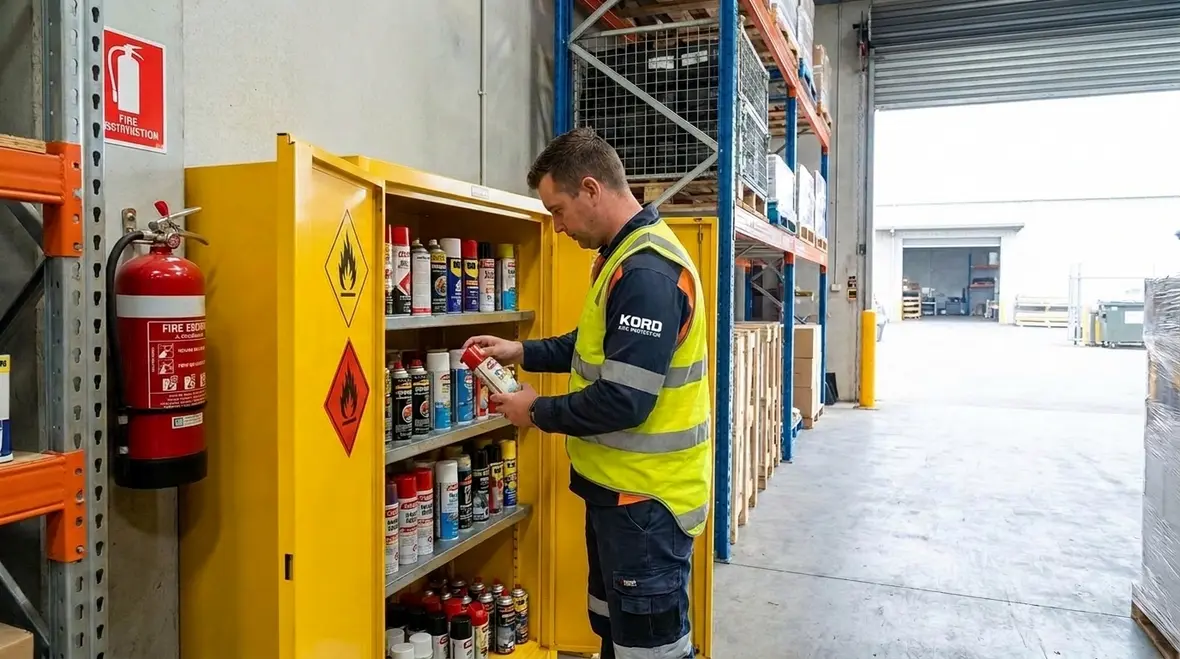
The right application blends clear labeling with physical safeguards. Containers should be kept in approved cabinets or cages and kept away from ignition sources. Regular checks of gauges seals and valves help prevent leaks and accidental releases. Teams that embrace these practices create a culture of safety rather than a box checking exercise.
Core rules you will encounter
Key points include testing and maintenance of aerosol systems, documented procedures for handling and transport, and ongoing staff training. The safety plan should spell out who is responsible for each task and how often tasks are completed. Audit trails prove compliance during inspections and help identify areas for improvement. When teams stay proactive issues stay small and manageable.
Regular communication is essential. Updates to the fire safety plan should reflect changes in product use facility layout or occupancy. Transition words aside safety is about consistency and clarity. The more predictable the process the easier it is to maintain compliance.
Supporting compliance with related guidance
If your team wants a wider prevention framework around these storage and handling controls, Kord also offers a useful overview in NFPA 1 a comprehensive guide to fire prevention and safety. It fits naturally with aerosol product planning because the strongest compliance programs connect prevention, response, and maintenance instead of treating them like distant cousins at a family barbecue.
Compliance steps for Australian sites
- Inventory and classify all aerosol products in use
- Review safety data sheets and product labels for accuracy
- Assess storage locations and ensure proper separation from heat and ignition sources
- Verify ventilation capacity and airflow in storage areas
- Implement a written handling procedure and ensure staff training
- Schedule regular inspections and keep records for audits
In addition to these steps, facilities should plan for emergency response drills and keep a clear signage system. Coordination with local authorities and fire services improves readiness and confidence. The aim is to reduce risk while keeping daily operations smooth and productive.
Dual column readiness plan
Dual column approach keeps readiness organized. Preparation items focus on policy and training while protection measures focus on physical safeguards and maintenance.
Preparation
- Create a written aerosol product plan that assigns responsibilities
- Train staff on labeling storage and spill response
- Establish checklists for weekly inspections and monthly tests
Protection
- Use approved cabinets and fixed storage away from heat
- Maintain ventilation and ensure clear access to exits
- Schedule regular system inspections and replace worn parts
This structure helps teams act decisively when a situation arises and shows auditors that safety is embedded in daily work.
Kord Fire Protection partner role
Kord Fire Protection brings a practical hands on approach to aerosol product safety. They conduct site assessments review local regulations and tailor NFPA 1 practices to the actual environment. They help with storage design installation and ongoing maintenance. By combining technical expertise with responsive service they turn safety rules into reliable protection rather than heavy paperwork.
Their team can deliver training mock drills and checklists that fit a busy workplace. With a steady cadence they help facilities stay up to date and ready for inspections. The result is fewer incidents better compliance and peace of mind for leadership and staff alike.
Industries served across Australia
Industries that benefit include industrial facilities retail chains and commercial offices across the country. From large manufacturing hubs to storage facilities and multiple retail sites the approach remains practical and scalable. The goal is clear safe handling and consistent compliance across all sites.
A steady partnership with Kord Fire Protection ensures that whether a site runs high risk aerosols or occasional uses the safety program adapts to changing needs. The emphasis remains on prevention rather than cure and on steady progress over quick fixes.
Frequently asked questions
Conclusion and call to action
Industry leaders in Australia rely on practical safety programs to protect people and property. NFPA 1 aerosol products basic fire safety requirements offer a solid framework when applied with local insight. Kord Fire Protection stands ready to partner with you to design implement and sustain a compliant aerosol safety program. Contact Kord Fire Protection today and secure a safer future for your facilities.

Join Our Newsletter!
Get the latest fire safety tips delivered straight to your inbox From our Newsletter.