Mining Equipment Fire Suppression for People, Assets
Mining equipment fire suppression: protecting people, assets, and production
Mining operations run on heat, friction, sparks, and stubborn equipment. That is why mining equipment fire suppression deserves more respect than a coffee machine on day shift. In the real world, fire can start fast, spread faster, and turn an entire operation into a story nobody wants to tell OSHA about. Proper fire suppression helps stop flames, limit heat damage, and protect critical systems so crews can keep moving.
And while teams can handle inspection and basic controls, Kord Fire Protection can step in as a vital partner when the job gets complex. For sites that need reliability, documentation, and fast response planning, Kord Fire Protection brings the kind of support that keeps downtime from becoming a habit.
Where fires start in mining and why prevention alone is not enough
Even the best maintenance program cannot remove every ignition source. In mines, fire often begins in places that take a beating every shift. For example, electrical panels can fail due to dust, vibration, and moisture. Hydraulic lines can leak, and if a hot surface is nearby, ignition follows. Then there is friction from belts, couplings, and moving parts that operate under load.
Furthermore, the environment adds fuel to the problem. Dust and fine particulates can act like a quiet accelerant. In addition, poor access to response routes can slow down early action. Therefore, prevention matters, yet it cannot be the only defense. A well designed suppression approach covers the moments when prevention runs out of options.
Why mining hazards stack fast
Mining equipment rarely works in a clean, calm, air conditioned paradise. It operates in punishing conditions where components age faster, grime gets everywhere, and minor issues become bigger ones with surprising speed. That is why passive prevention measures alone struggle to keep up. Once heat, fuel, and oxygen align in a tight machine space, the timeline gets very short.
What mining equipment fire suppression systems actually do
A suppression system does more than “put out fire.” It detects an event, triggers fast discharge, and reduces oxygen around the flame or interrupts the chemical reaction, depending on the technology used. Consequently, the goal stays consistent: stop the fire early enough to prevent catastrophic damage.
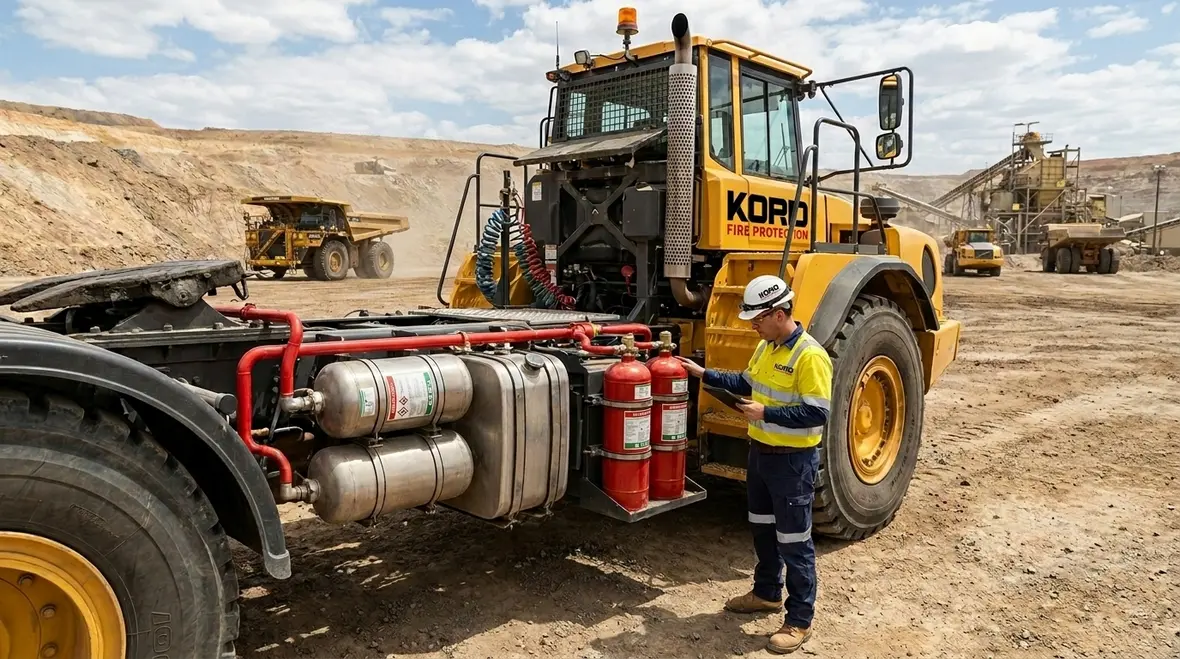
For mining equipment, the approach often focuses on local protection at high risk areas such as engine compartments, electrical cabinets, and hydraulics spaces. Meanwhile, the design can include manual activation and automatic release so crews can respond even when they are moving or occupied.
Just as importantly, the system should work in harsh conditions. Shock, temperature swings, dust exposure, and vibration can all affect performance. So a quality design, proper placement, and verified discharge coverage matter as much as the agent itself. In short, the system must match the machine, not the brochure.
From detection to discharge
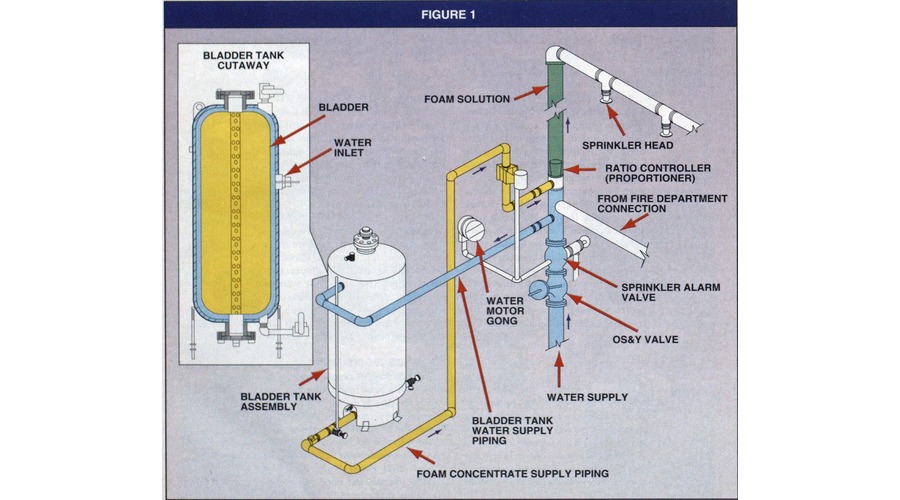
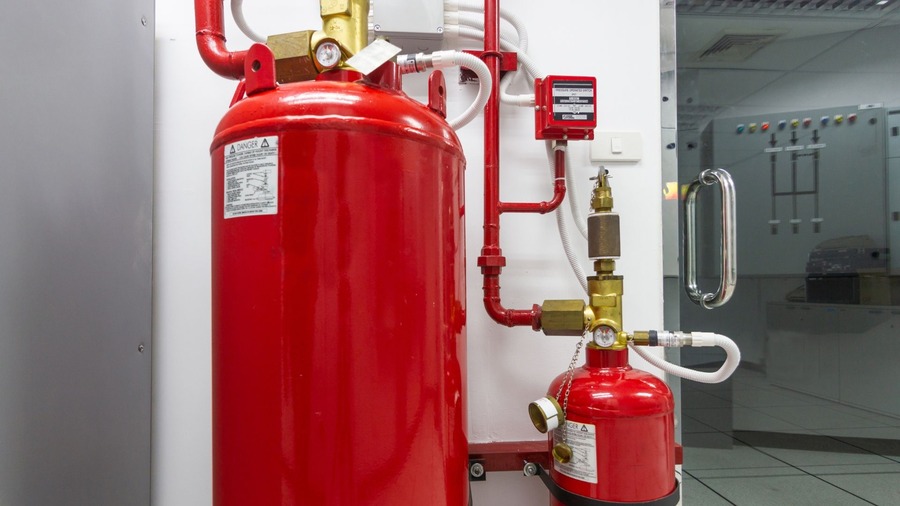
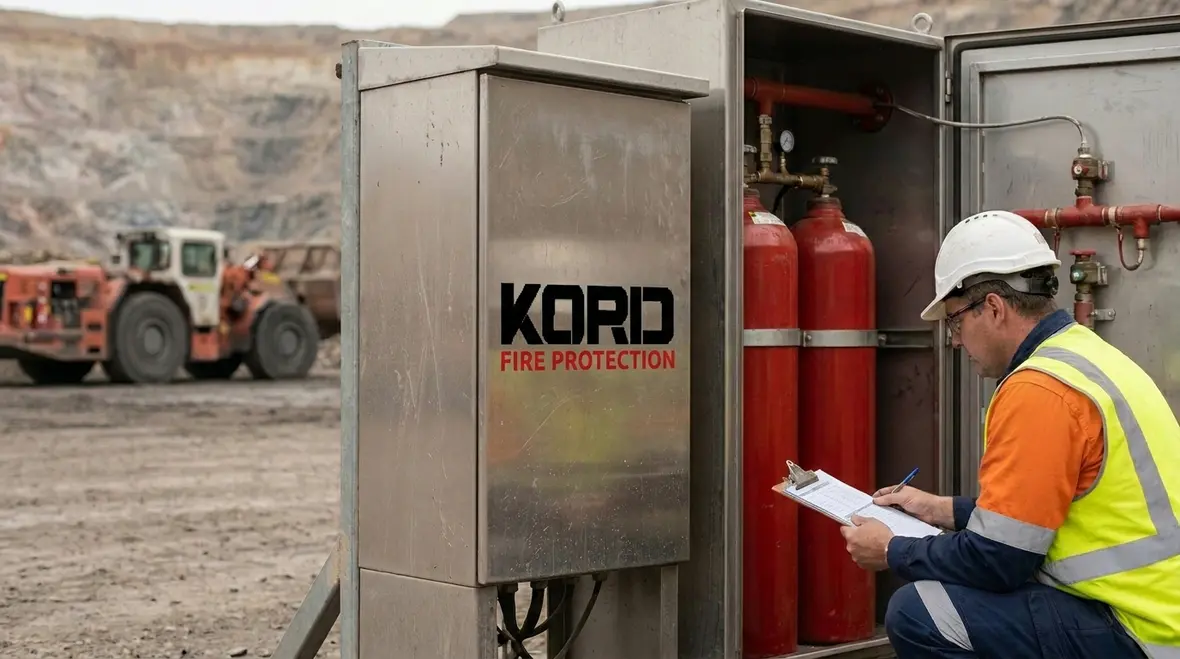
The practical sequence matters. A proper system identifies heat or flame, communicates the event, releases the selected agent, and buys time for shutdown and safe evacuation. According to Kord Fire Protection’s vehicle fire suppression systems service page, these systems commonly rely on detection sensors, a control panel, tanks with fire fighting agent, manual or automatic discharge capability, and a distribution network. That framework translates well to mining fleets because it protects the exact areas where failure hits hardest.
Choosing the right suppression method for different machines
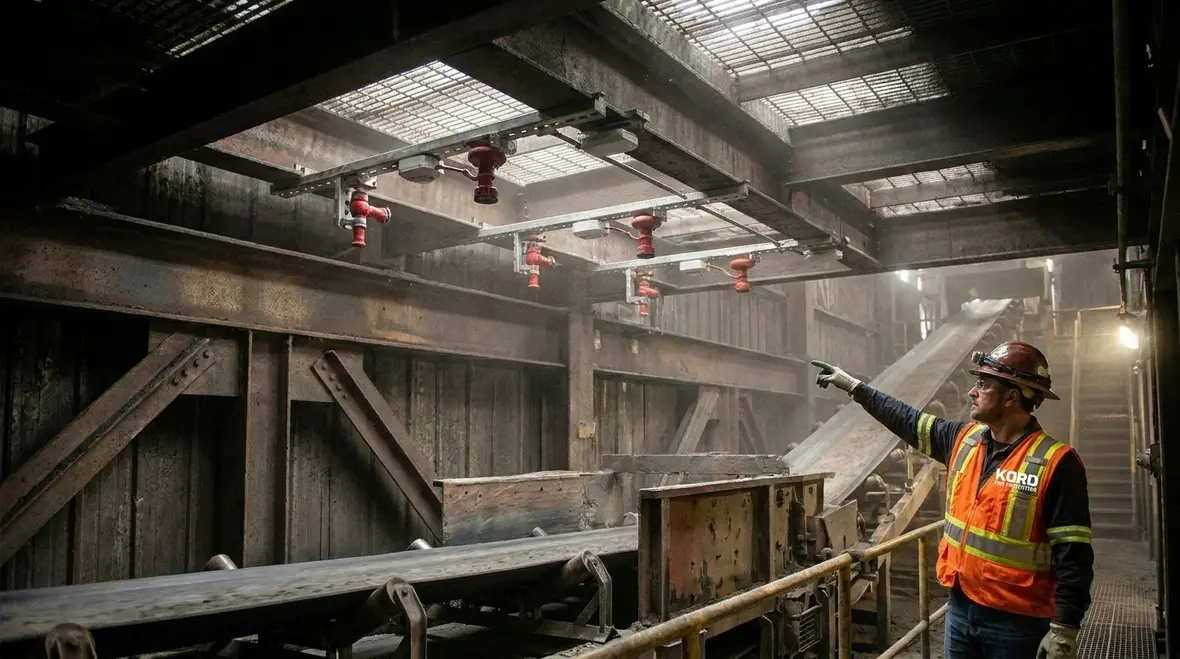
Different pieces of equipment present different hazards. A conveyor motor room needs coverage that reaches hidden pockets. A loader’s engine bay often needs fast detection and tight discharge patterns. A mobile unit operating underground may require a different strategy due to airflow and confined space behavior.
Typically, companies evaluate several factors before selecting an approach. These include compartment volume, airflow, typical ignition points, ventilation patterns, and operational temperatures. In addition, they consider the agent’s effect on nearby components and whether cleanup affects maintenance schedules. After all, downtime is expensive, and “we saved the machine but now we wait for days to clean it” does not help.
Kord Fire Protection can assist teams in mapping risk to real equipment layouts. Then they align the system design with the environment, so the solution does not rely on luck. Because in mining, luck is a short term business plan.
Agent choice is never one size fits all
Kord Fire Protection’s vehicle suppression material also explains that different agent types suit different hazards, including dry chemical, liquid agent, and dual agent configurations. That matters for mining operations where one machine may need rapid flame knockdown while another benefits from cooling and reignition resistance. The right answer depends on the machine’s layout, the fuel load, service conditions, and how the site balances cleanup against restart speed.
How compliance, inspection, and documentation keep the system ready
Suppression systems only matter when they work the day someone needs them. That means inspections, testing, and documentation cannot be treated like a monthly checkbox exercise. Crews need confidence that detection devices are clean and functional, that cylinders and valves remain within service limits, and that no wiring or components were altered during maintenance.
Moreover, mining sites often operate under changing conditions: new attachments, modified layouts, altered power systems, and moving components around. Therefore, the fire suppression plan should remain current. When the equipment changes, the fire protection strategy should be verified too.
Kord Fire Protection can act as a dependable partner for ongoing support, helping sites maintain records and streamline compliance workflows. In turn, this reduces the “we are sure it works” guessing game and replaces it with evidence. And evidence is the thing inspectors actually respect.
Readiness lives in the details
Kord Fire Protection notes on its fire suppression services page that suppression systems should be tested and inspected on a semi annual basis. Its vehicle fire suppression systems maintenance guide also emphasizes pre shift and monthly inspections with additional testing at least every six months. For mining teams, that kind of rhythm helps catch moved components, clogged nozzles, cracked hose sections, or grime covered detectors before those problems wait for the worst possible moment to introduce themselves.
Integrating suppression with site response planning and training
Even the best mining equipment fire suppression system needs a plan around it. Crews must know when to activate the system, when to evacuate, and how to secure power. They also need clear steps for investigating the root cause after the event.
Training should include hands on familiarization with alarms, discharge sounds, and post activation procedures. Additionally, the site should define roles during an incident so decisions happen quickly. Who contacts control room? Who verifies ventilation status underground? Who monitors for reignition?
When people practice these steps, the operation becomes calmer under pressure. And yes, calm under pressure still sounds like a dream until it is real, and then it becomes policy.
Dual column view: common risk points and what teams should do
Common risk points
- Engine and power compartments
High heat, fuel presence, and confined geometry raise the stakes quickly. - Electrical cabinets and control panels
Spark potential, dust buildup, and vibration can create sneaky failure points. - Hydraulic systems and hose runs
Leaks near hot surfaces can turn a fluid issue into a fire issue in a hurry. - Conveyors and rotating equipment
Friction, hot bearings, and dust loads make these areas repeat offenders.
Suppression and readiness focus
- Engine and power compartments
Use compartment specific coverage, verify detection placement, and confirm discharge reaches likely ignition areas. - Electrical cabinets and control panels
Protect high heat and spark sources, keep inspection schedules tight, and ensure wiring paths stay intact after service. - Hydraulic systems and hose runs
Plan for leaks near hot surfaces, confirm agent selection matches the hazard profile, and train crews on shutdown steps. - Conveyors and rotating equipment
Address friction and hot bearings, verify access for maintenance, and ensure detection works despite dust load.
These are not theory topics. They are places where suppression performance gets tested in real conditions. Therefore, teams should treat design reviews and service as part of production, not a pause in it.
FAQ: mining equipment fire suppression
Conclusion: ready for fire protection that does not guess
Mining equipment fires do not wait for ideal conditions. They ignite, spread, and damage quickly, and that is exactly why mining equipment fire suppression matters. When a site connects suppression design with inspection discipline, training, and response planning, it reduces downtime and protects people. Kord Fire Protection can help make that plan practical, documented, and ready when it counts.
If the team wants a dependable partner, reach out to Kord Fire Protection to review current protection and plan next steps. For sites that need broader support beyond one machine or one hazard zone, explore Kord Fire Protection’s fire suppression services for installation, maintenance, testing, and inspection support that helps keep systems inspection ready.
Need a stronger vehicle fire strategy?
See how Kord Fire Protection supports high risk mobile equipment with vehicle fire suppression systems built around real operating conditions, not wishful thinking.

Join Our Newsletter!
Get the latest fire safety tips delivered straight to your inbox From our Newsletter.