Los Angeles Building Owner Fire Safety Guide
In a city where sunshine is constant and wildfires make the evening news with unsettling regularity, los angeles building owner fire safety responsibilities carry real weight. Property owners cannot treat fire protection as a dusty binder on a shelf. They must treat it as a living, breathing system that protects tenants, investments, and reputations. Throughout Los Angeles, building owners face strict codes, evolving standards, and serious penalties for non compliance. Fortunately, professionals like Kord Fire Protection technicians help translate the rules into clear action steps. What follows is a practical, grounded guide to understanding those duties and meeting them with confidence.

The Legal Framework Behind Fire Safety Compliance in Los Angeles
First, every building owner must understand that local and state fire codes are not suggestions. They are enforceable laws. The Los Angeles Fire Code works alongside the California Fire Code, and together they outline inspection schedules, equipment standards, and emergency planning requirements.
Because Los Angeles presents unique risks, including earthquakes and seasonal wildfires, the city often enforces stricter oversight. Therefore, owners must keep fire suppression systems operational, maintain proper egress paths, and ensure alarms function at all times. If an inspector finds violations, the city may issue citations or even restrict occupancy.
Moreover, insurance carriers often demand proof of compliance. A lapse in inspection records can trigger higher premiums or denied claims. In other words, ignoring fire safety does not save money. It quietly builds a much larger bill.
Kord Fire Protection technicians often explain it this way: codes are like traffic laws. Most days, nothing dramatic happens. However, when something does go wrong, those rules determine who stays safe and who faces consequences.
For a deeper dive into how Los Angeles enforces sprinkler testing and documentation, many owners reference guides like Fire Sprinkler Testing in Los Angeles County, which breaks down inspection timelines, recordkeeping expectations, and how local authorities apply NFPA 25 standards.
Core Duties Every Building Owner Must Fulfill
Although each property type has its own standards, several responsibilities apply across the board. Owners must actively manage systems rather than assume they work. After all, a silent alarm system is not proof of safety. It may simply be disconnected.
Key responsibilities include:
- Scheduling routine fire alarm inspections and testing
- Maintaining automatic sprinkler systems
- Ensuring fire extinguishers are accessible and serviced
- Keeping exit routes clear and properly marked
- Providing emergency lighting with battery backup
- Maintaining fire doors and rated assemblies
Additionally, documentation matters. Inspectors expect organized service reports and proof of corrections. Consequently, owners who keep detailed logs move through inspections with far less stress.
When discussing los angeles building owner fire safety responsibilities, Kord Fire Protection technicians emphasize consistency. Systems degrade over time. Batteries fail. Valves get bumped. Therefore, steady oversight protects both occupants and the building itself.
If you want to see how these responsibilities translate into a full program of inspections, repairs, and upgrades, the main Kord Fire Protection services page outlines how alarms, sprinklers, suppression, and extinguishers work together as a complete compliance strategy.
How Often Do Systems Need Inspection in Los Angeles?
Many owners quietly wonder how frequently inspections must occur. The short answer is more often than most expect.
Fire alarm systems typically require annual testing, while certain components demand quarterly or semiannual checks. Sprinkler systems also follow strict inspection schedules, including annual flow tests and five year internal pipe inspections. Furthermore, fire extinguishers must undergo annual maintenance and monthly visual checks.
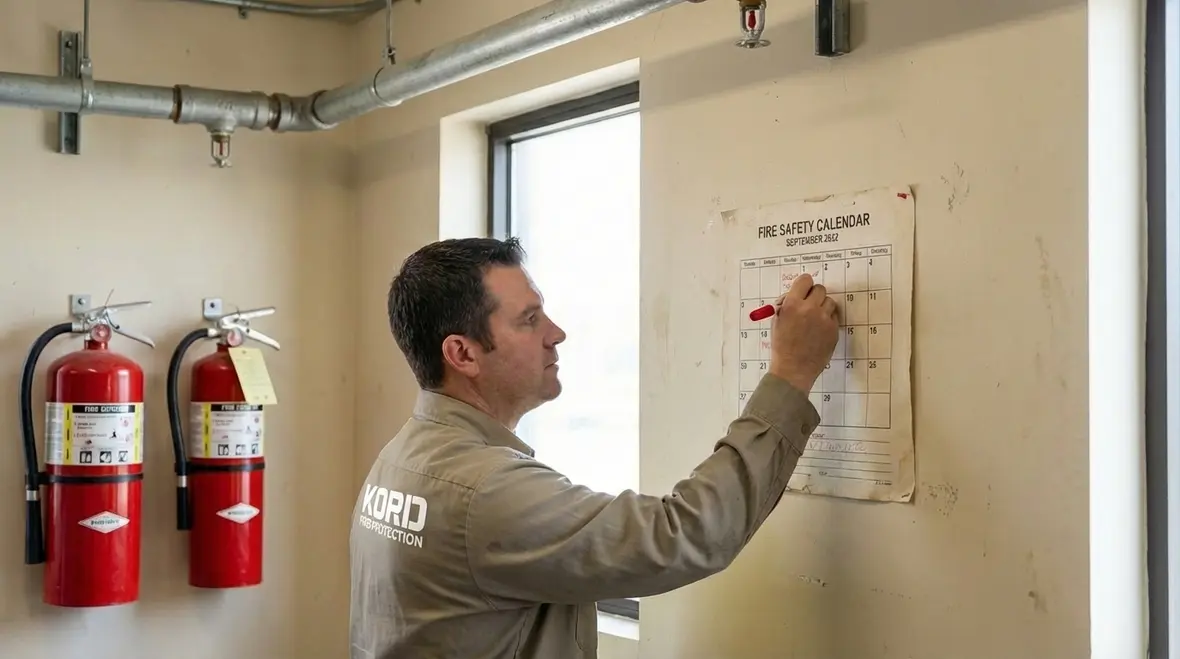
Because these timelines overlap, organization becomes critical. Kord Fire Protection technicians often create structured inspection calendars for clients. As a result, owners avoid missed deadlines and last minute panic.
Think of it like dental cleanings. Skip a few appointments and eventually the bill becomes memorable. Stay on schedule and life remains calm. Buildings, much like teeth, appreciate routine care.
If you are mapping out your own calendar, articles such as Commercial Fire Sprinkler System Requirements 101 (Los Angeles Edition) and the detailed fire sprinkler testing guide for Los Angeles County offer helpful benchmarks for monthly, quarterly, annual, and five year tasks.
Linking Inspections to Insurance and Liability
Inspection frequency is not only about appeasing the fire department. Insurance carriers may request proof that systems were tested and maintained according to NFPA and local requirements. Gaps in that history can complicate claims or lead to coverage disputes after a fire event, especially in a high risk market like Los Angeles.
Fire Risk Assessment and Hazard Management
Beyond equipment, owners must assess how people use the space. For instance, restaurants pose different hazards than office buildings. Storage facilities face different concerns than apartment complexes. Therefore, risk assessments must reflect real world conditions.
Owners should evaluate:
- Electrical load and panel conditions
- Storage of flammable materials
- Cooking equipment safeguards
- Occupant load and crowd flow
- Construction type and fire resistance ratings
In Los Angeles, wildfire exposure adds another layer. Properties near brush zones may require defensible space and exterior hazard reduction. Consequently, building owners cannot limit their thinking to interior systems alone.
Kord Fire Protection technicians frequently walk properties with owners, identifying vulnerabilities that may not appear obvious. Sometimes the fix is simple, like relocating storage away from sprinkler heads. Other times, upgrades are necessary. Either way, proactive assessment prevents costly emergencies.

Documentation, Training, and Emergency Planning
Compliance extends beyond hardware. It also includes people. Tenants and staff must know how to respond during an emergency. Therefore, emergency action plans play a vital role in meeting los angeles building owner fire safety responsibilities.
Owners should provide:
- Written evacuation plans
- Posted exit diagrams
- Fire drill coordination when required
- Clear communication procedures
Additionally, training ensures extinguishers are used properly rather than becoming expensive wall decorations. Kord Fire Protection technicians often conduct on site demonstrations. They explain how PASS works, pull, aim, squeeze, sweep, in a calm, steady tone that makes even nervous participants feel prepared.
Moreover, maintaining updated records of drills and training sessions strengthens compliance. If an incident occurs, documentation demonstrates diligence. That evidence can prove invaluable during investigations or insurance reviews.
If extinguishers are a weak spot in your plan, the Fire Extinguisher Service & Certification page lays out inspection and servicing expectations, while this guide on fire extinguisher walk ins in Los Angeles explains how teams can get quick inspections and refills handled without slowing operations.
Common Violations and How to Avoid Them
Even responsible owners can overlook details. However, inspectors rarely overlook anything. Consequently, understanding common violations helps prevent unpleasant surprises.
Frequent issues include:
- Blocked electrical panels
- Painted or obstructed sprinkler heads
- Expired fire extinguishers
- Non functioning exit signs
- Unlabeled fire alarm control panels
Although these may seem minor, they signal neglect. Therefore, routine internal walk throughs remain essential. Some owners schedule monthly reviews, treating them like a safety stroll through the property.
Kord Fire Protection technicians often remind clients that inspectors appreciate effort. When systems are clean, labeled, and documented, inspections move smoothly. When they are not, well, let us just say no one enjoys surprise citations before lunch.
Comparing Owner Duties by Property Type
Not all buildings face identical obligations. While the core principles remain steady, occupancy type influences specific requirements. The table below highlights general differences.
Property Type
Commercial Office
Apartment Complex
Restaurant
Industrial Facility
Primary Focus Areas
Alarm testing, clear exits, occupant load signage
Smoke alarms in units, common area sprinklers, evacuation plans
Kitchen hood suppression systems, grease duct cleaning
Hazardous material storage, specialized suppression systems
Because each category carries unique details, owners benefit from expert guidance. Kord Fire Protection technicians tailor inspection programs based on occupancy. As a result, compliance efforts remain precise rather than generic.
Working with Fire Protection Professionals
Managing compliance alone can feel overwhelming. Codes evolve. Equipment ages. Tenants change. Therefore, partnering with experienced professionals reduces uncertainty.
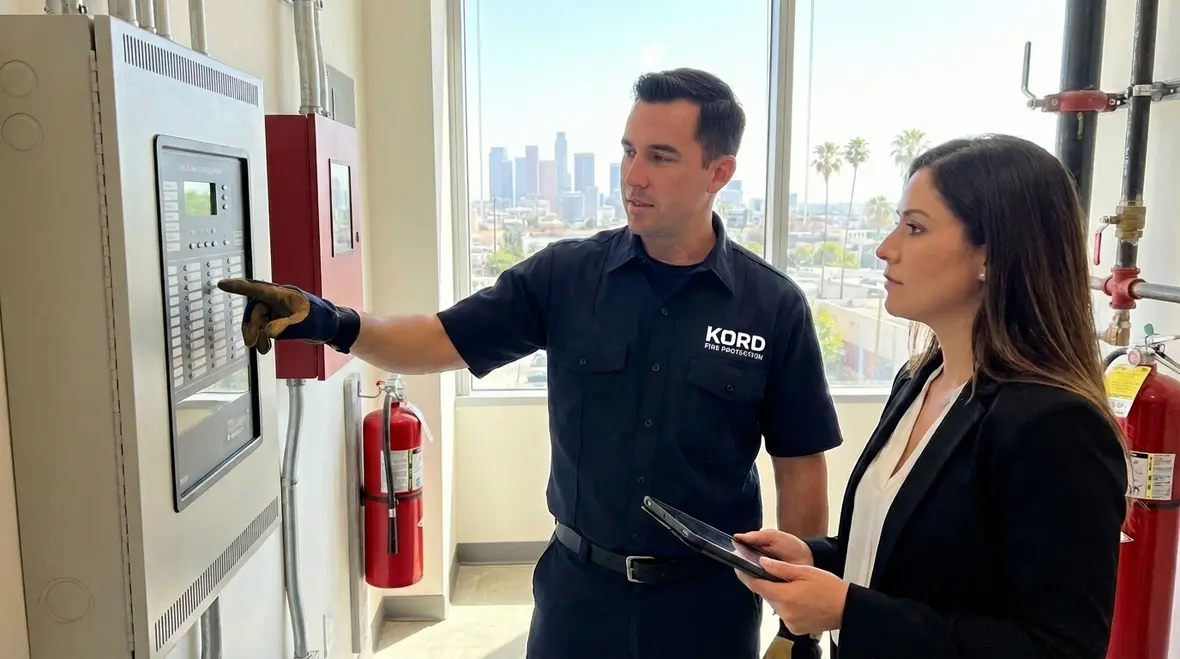
Kord Fire Protection technicians approach buildings with methodical care. They inspect systems, explain findings clearly, and recommend corrective actions without drama. Moreover, they help owners plan budgets for upgrades instead of reacting to emergencies.
Importantly, professionals also stay current on regulatory changes. Thus, when the city updates requirements, clients adapt quickly. In a place like Los Angeles, where regulations shift as steadily as traffic patterns on the 405, staying informed proves invaluable.
Ultimately, los angeles building owner fire safety responsibilities demand attention, but they do not require sleepless nights. With structure, documentation, and expert support, owners protect lives and preserve property value.
Plan Your Next Step with a Service Partner
Whether you are overdue for alarm testing, need a Reg 4 sprinkler certification, or simply want a fresh set of eyes on your documentation, starting with a full service partner can simplify everything. From fire sprinkler services and repair to Regulation 4 complex fire alarm testing, Kord Fire Protection offers bundled solutions that align with Los Angeles enforcement practices.
Frequently Asked Questions
Conclusion and Next Steps
Fire safety in Los Angeles demands more than good intentions. It calls for steady action, clear records, and trusted expertise. Building owners who treat compliance as an ongoing practice protect their tenants and their investments. Kord Fire Protection technicians stand ready to guide that process with clarity and care.
Schedule an inspection, review current systems, and take confident steps forward. Because when preparation meets responsibility, safety becomes more than a requirement. It becomes peace of mind. To move from reading to action, connect with Kord Fire through their Contact Us page and request a tailored fire protection plan for your Los Angeles building.
Know Your Weapon Before You Fight the Flame
Kord Fire Protection is your go-to when it comes to all things fire protection. For over 20 years, we’ve been serving Southern California with the quality service and equipment to keep your home or business safe at all times. Our competitive prices reflect our unwavering commitment to protecting what matters most in the event of a fire emergency. Give us a call, send an email, or use that form!

Join Our Newsletter!
Get the latest fire safety tips delivered straight to your inbox From our Newsletter.