
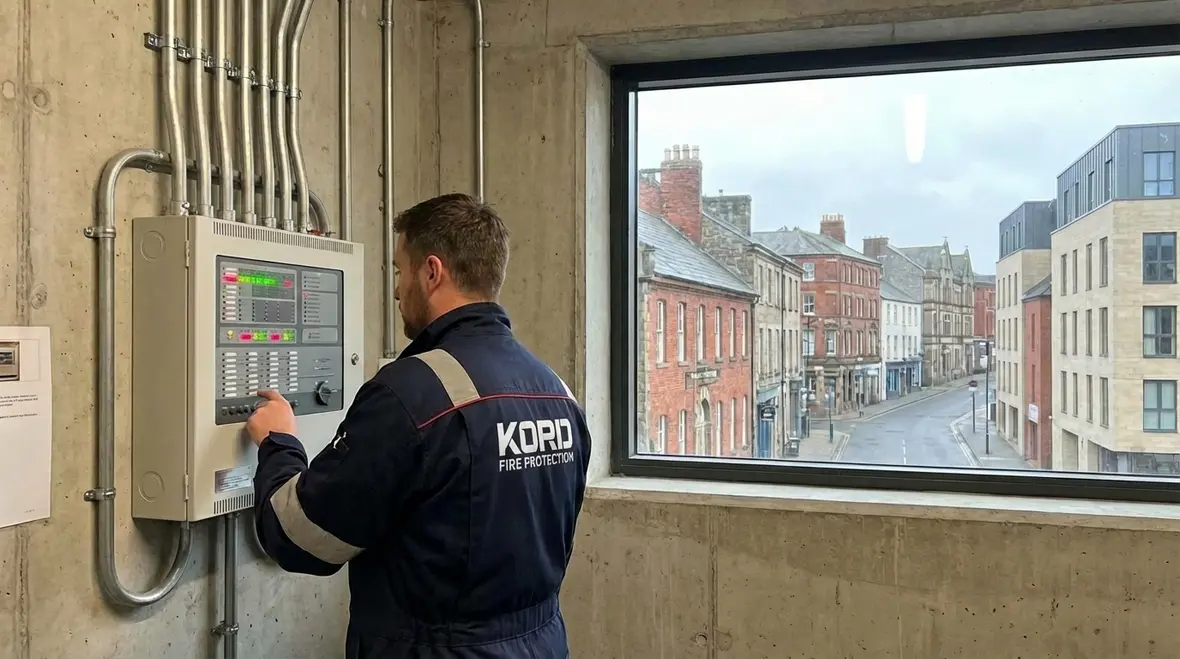
Lancaster Fire Alarm Monitoring Guide for Owners
Fire Alarm Monitoring in Lancaster What Property Owners Need
In a city where history sits comfortably beside modern growth, safety must bridge the old and the new. That is where Lancaster fire alarm monitoring steps in. Within the first few seconds of smoke or heat detection, a professionally monitored system can alert emergency responders long before someone smells trouble. Property owners across Lancaster rely on this layer of protection not just to meet code, but to protect people, property, and peace of mind. As Kord Fire Protection technicians often explain, a fire alarm without monitoring is like a smoke detector with stage fright. It makes noise, sure. But who is listening?
Therefore, understanding how monitored fire systems work and why they matter can help owners make smarter, safer decisions. This guide walks through the essentials with clarity and a calm, steady voice.

How Lancaster Fire Alarm Monitoring Protects Buildings Around the Clock
Fire does not wait for business hours. It does not check calendars. Consequently, buildings need protection that operates every minute of every day. Lancaster fire alarm monitoring connects a property fire alarm system to a supervising station staffed by trained professionals. When the alarm triggers, the signal travels instantly to that center. From there, operators verify the alert and dispatch emergency responders.
As a result, response time shrinks dramatically. In many cases, fire crews are on their way before anyone on site has fully processed what is happening. That speed can mean the difference between minor smoke damage and a total loss.
Kord Fire Protection technicians often walk property managers through this process step by step. They explain how signals move from control panels through secure communication lines. They also review backup systems that keep signals flowing even during power outages. Because in real life, storms knock out power at the worst possible moment. Fire systems, however, do not get snow days.
For owners who want to see how this plays out beyond Lancaster, Kord’s broader fire alarm monitoring for faster emergency response guide shows how monitoring centers support faster dispatch times and better outcomes across many property types.

Why Property Owners in Lancaster Cannot Ignore Monitoring
Code compliance, insurance, and duty of care
First and foremost, many commercial buildings are required by code to have monitored fire alarm systems. Local regulations align with national safety standards that aim to reduce risk to occupants and first responders. Therefore, compliance is not optional for most businesses, apartment complexes, healthcare facilities, and schools.
However, compliance is only part of the story. Insurance providers often offer better rates when professional monitoring is in place. From their perspective, a monitored building presents lower risk. Faster response times often reduce the severity of claims.
Additionally, landlords and property managers have a duty of care. Tenants trust that their workplace or home includes reasonable safety measures. A monitored system demonstrates commitment. It shows that ownership values lives over shortcuts.
Kord Fire Protection technicians frequently remind clients that while a fire alarm panel may look like a quiet metal box on the wall, it carries serious responsibility. Monitoring gives that box a voice that reaches beyond the building.
In Lancaster specifically, partnering with a local team that already supports nearby properties through services like Lancaster Fire Protection Services helps owners stay aligned with local inspectors, expectations, and enforcement patterns.
What Happens After an Alarm Signal Is Sent
From detector to dispatcher
Many owners ask what actually occurs when a signal leaves the building. The process is both simple and highly structured.
When detectors sense smoke, heat, or flame, they send a signal to the fire alarm control panel. Immediately afterward, the panel communicates with the monitoring center. Trained operators receive the alert, identify the property, and follow established protocols. In most cases, they contact emergency services without delay.
Meanwhile, they may also notify designated contacts such as property managers or maintenance supervisors. This layered communication ensures that someone with authority knows what is happening.
Because time matters, monitoring centers use redundant communication paths. These can include cellular, internet, and radio connections. If one path fails, another carries the signal. As Kord Fire Protection technicians like to say, good systems plan for bad days.
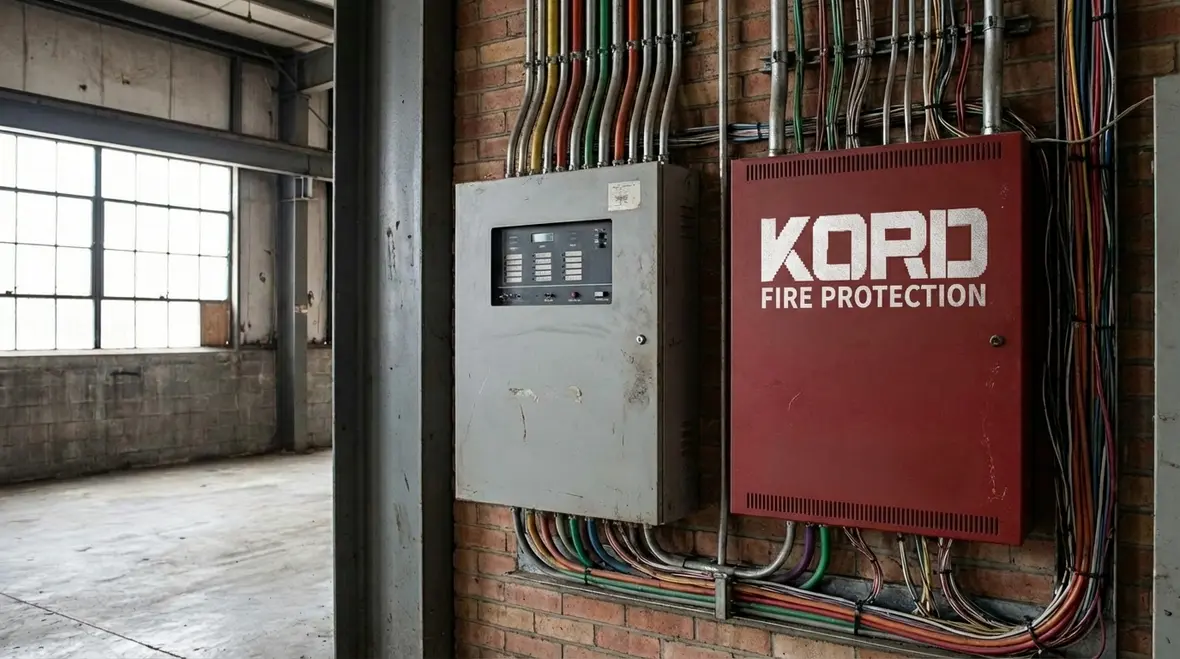
Choosing the Right Monitoring Setup for Different Property Types
Not every building shares the same needs. A small retail shop differs from a multi building apartment complex. Therefore, selecting the right configuration requires careful evaluation.
Below is a simplified comparison to help property owners understand typical considerations.
Column One: Smaller Commercial or Retail Spaces
- Compact control panels with essential detection devices
- Cellular primary communication paths
- Fewer zones for simplified management
- Lower occupant load but high asset value
Column Two: Larger Residential or Institutional Buildings
- Advanced panels with multiple zones and addressable devices
- Dual communication paths for redundancy
- Integration with sprinkler and suppression systems
- Higher occupant load requiring detailed evacuation planning
While this overview offers guidance, Kord Fire Protection technicians conduct on site evaluations to match equipment and monitoring plans to actual risk. They examine layout, occupancy type, and local code requirements. Then they explain options in plain language. No jargon. No smoke and mirrors. Just clear recommendations.
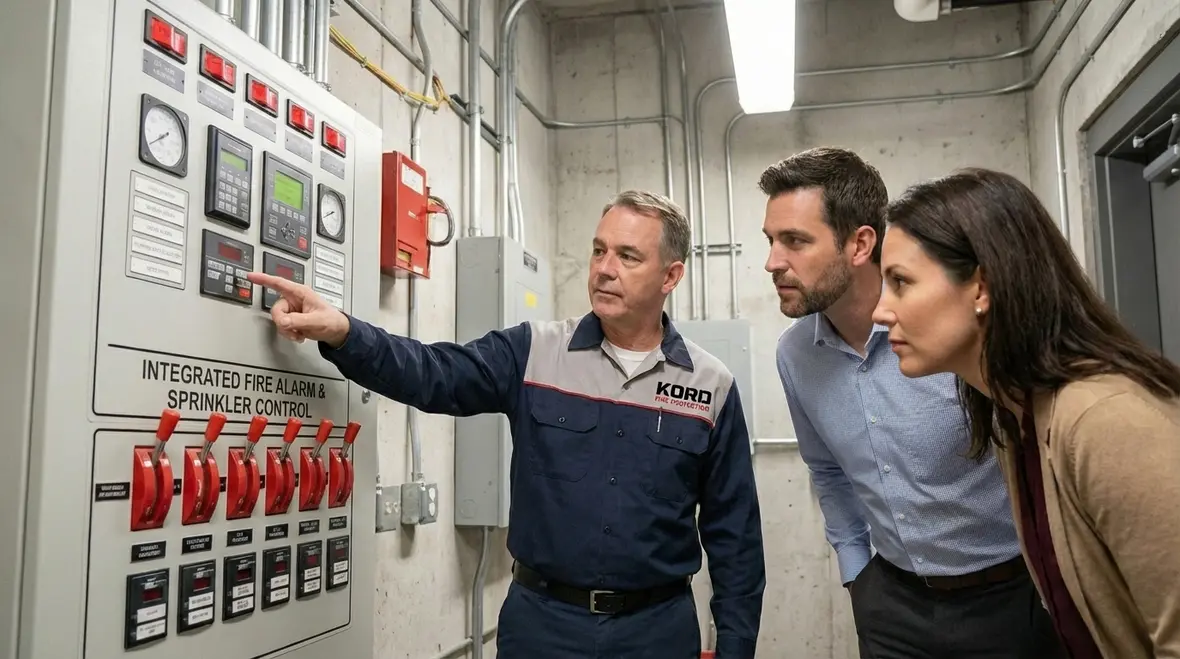
How Often Should Fire Alarm Monitoring Systems Be Tested
Inspections, testing, and documentation
Here is the question many property owners type into search engines at two in the morning. How often should these systems be tested?
The short answer is regularly and according to code. Most commercial systems require annual inspections, and many components demand more frequent checks. Additionally, monitoring connections must be tested to confirm signals reach the supervising station.
Testing is not a casual button press followed by a hopeful nod. Certified technicians inspect detectors, control panels, batteries, and communication paths. They document results and correct deficiencies.
Kord Fire Protection technicians emphasize that testing protects more than hardware. It protects credibility. If an alarm fails during a real emergency and records show missed inspections, liability concerns rise quickly. Therefore, consistent testing supports both safety and legal protection.
Owners who want to understand the testing backbone behind many monitored systems often review Kord’s NFPA 72 overview, which explains national standards for design, installation, maintenance, and testing of fire alarm systems.
Common Misconceptions About Monitored Fire Systems
False alarms, cost myths, and the 911 shortcut
Despite clear benefits, a few myths still float around like smoke in a poorly ventilated room.
One common belief is that monitoring leads to constant false alarms and unnecessary fire department visits. In reality, modern systems include verification features and improved detection technology. Proper installation and maintenance significantly reduce false alerts.
Another misconception suggests that monitoring is too expensive for smaller properties. However, when owners compare the cost to potential fire damage, business interruption, and liability exposure, the investment often appears modest. As the old saying goes, the most expensive alarm system is the one installed after a loss.
Some assume that local staff can simply call 911 if a fire starts. Yet, emergencies create confusion. People hesitate. They investigate. They debate. Meanwhile, seconds pass. Professional monitoring removes that delay.
Integrating Monitoring With Broader Fire Protection Strategies
Making monitoring part of a complete Lancaster fire plan
Lancaster fire alarm monitoring works best as part of a larger safety plan. Detection systems, sprinkler systems, emergency lighting, and clear evacuation routes must operate together. Therefore, coordination matters.
Kord Fire Protection technicians frequently collaborate with building owners to review entire fire protection strategies. They check that sprinkler flow switches communicate with alarm panels. They confirm that pull stations function properly. They also ensure that monitoring accounts receive updated contact lists.
Moreover, they encourage regular staff training. After all, even the most advanced system cannot replace informed occupants. Employees should know how to respond when alarms sound and where to gather outside. Monitoring handles notification. People handle movement.
When these elements align, response becomes smoother. Fire crews arrive with accurate information. Occupants evacuate quickly. Damage remains limited. That harmony is not accidental. It results from planning.
Frequently Asked Questions
Conclusion
Safety is rarely dramatic when it works well. It hums quietly in the background, steady and dependable. Lancaster fire alarm monitoring provides that quiet strength for property owners who value readiness over regret. Kord Fire Protection technicians stand ready to evaluate systems, explain options, and keep buildings protected day and night.
Property owners who want confidence, compliance, and calm assurance should take the next step and schedule a professional consultation today. For help beyond monitoring alone, explore Kord’s dedicated Lancaster Fire Protection Services page to coordinate fire alarms, sprinklers, testing, and full service protection under one trusted local team.
Know Your Weapon Before You Fight the Flame
Kord Fire Protection is your go-to when it comes to all things fire protection. For over 20 years, we’ve been serving Southern California with the quality service and equipment to keep your home or business safe at all times. Our competitive prices reflect our unwavering commitment to protecting what matters most in the event of a fire emergency. Give us a call, send an email, or use that form!

Join Our Newsletter!
Get the latest fire safety tips delivered straight to your inbox From our Newsletter.


