Is NICET Level 1 Worth It for Entry Level Fire Alarm Techs
Is NICET Level 1 Worth It for Entry Level Fire Alarm Technicians: a practical view from Kord Fire Protection technicians
Entry Level Fire Alarm Technicians often ask a simple question before they spend time or money: should they chase NICET Level 1 right away
In the real world, Kord Fire Protection technicians see the answer depends on goals, job support, and how quickly someone wants to grow. Some techs treat NICET like a speed pass through a maze. Others treat it like homework that actually pays rent. Either way, the choice shapes hiring, hands on confidence, and how fast an entry level tech turns into a steady, trusted professional.
What NICET Level 1 actually measures and why it matters on site
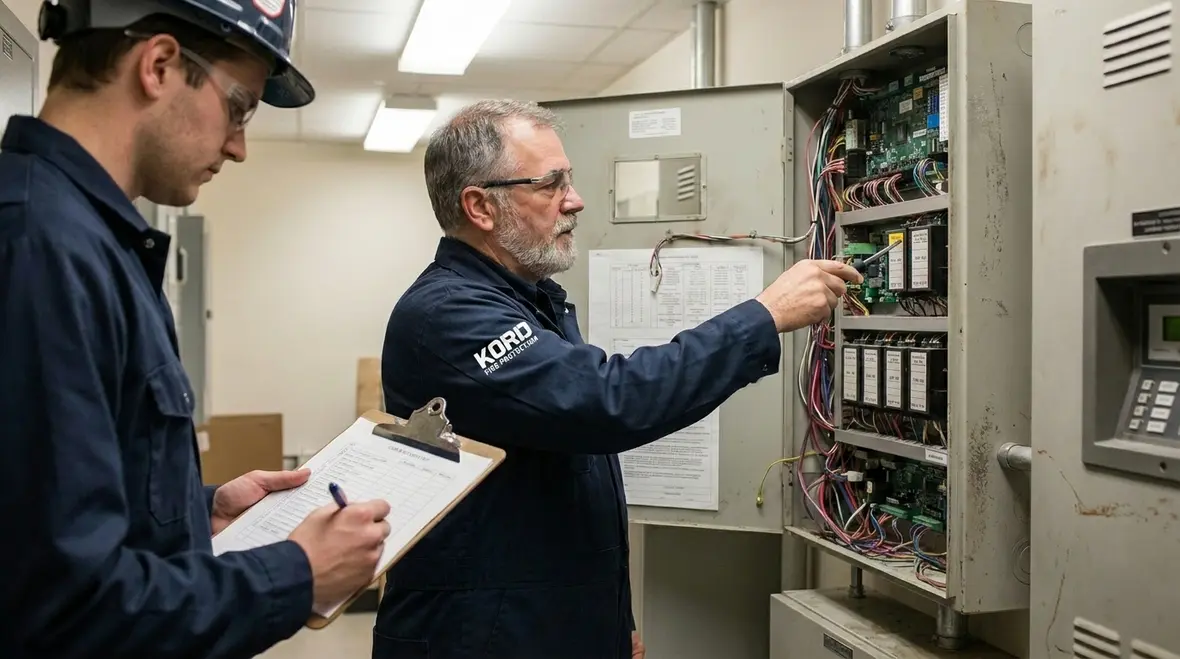
NICET Level 1 focuses on core knowledge and practical understanding for fire alarm systems. It does not demand advanced design calculations or a senior level of responsibility. Instead, it checks whether a technician can handle foundational tasks with accuracy and safety in mind. Entry Level Fire Alarm Technicians benefit because the work they do every day requires consistent judgment. And yes, judgment beats guessing every single time. Even Star Wars knew that.
When Kord Fire Protection technicians explain the program to new hires, they emphasize one key point: NICET Level 1 helps reduce “trial by mistake.” It trains people to follow proper process, understand system components, and connect theory to what they see in closets full of wires. So the credential supports better field performance, not just a line on a resume.
Moreover, the exam and related requirements push candidates to learn code basics and product behavior at a level that matches real inspection and service work. As a result, an entry level tech spends less time stumbling and more time finishing tasks correctly.
Why that matters before a tech works alone
The early stage of this trade is where habits harden fast. A tech either learns to slow down, read signals, and document correctly, or learns the expensive sport of going back to the same panel twice. NICET Level 1 does not make someone a veteran overnight, but it can sharpen the basics that show up over and over in service calls, device checks, and inspection support.
How NICET Level 1 can help an entry level tech get hired faster
Hiring decisions often come down to risk. Fire alarm work affects life safety. Therefore, employers look for proof that someone can learn quickly and follow standards. That is where NICET Level 1 can carry weight. For many Entry Level Fire Alarm Technicians, the credential signals readiness, especially when the resume otherwise reads like “new to the game.”
Still, it does not magically replace experience. Instead, it complements the experience people gain through apprenticeships, install ride alongs, and supervised service calls. In practice, Kord Fire Protection technicians often see hiring managers respond to NICET Level 1 because it suggests structured learning.
Additionally, the credential can help during promotion conversations. When a company assigns more responsibilities, they want to know the person can handle more than basic tasks. NICET Level 1 can make those next steps feel less random. And honestly, random is fun only until the panel keeps trouble logging at 2 a.m.
That same logic matters inside companies too. Supervisors often need a reason to trust a newer tech with more direct responsibility. A certification does not replace their judgment, but it can give them one more reason to invest in someone who is clearly trying to build a career instead of just punching a clock.

When NICET Level 1 helps most and when it feels like extra weight
NICET Level 1 shines when a technician already works around fire alarm systems and wants to build a clear path. It helps most when someone plans to stay in the trade for the long haul. It also helps when their employer supports training time, gives access to jobsite experience, and respects credentials.
On the other hand, it can feel heavy if a person has limited exposure to real systems. If someone does not touch panels, devices, loops, or documentation yet, then studying may feel disconnected. Then the exam becomes a memorization sprint rather than a true skill builder. Kord Fire Protection technicians often advise candidates to match their timeline to their job reality.
So, the “worth it” answer often comes down to timing. If someone can apply what they learn within weeks, the value rises fast. If not, the credential can still help, but the payoff takes longer.
A simple way to tell if the timing is right
If a tech spends their week around panel checks, device testing, service paperwork, or supervised troubleshooting, the material usually sticks better. If they are still on the edge of the trade and mostly observing, the same study load can feel like carrying bricks uphill for cardio nobody asked for. Timing is not everything, but it is close.
Dual column reality check: cost, time, and job impact
Here is a simple look at how the trade often weighs NICET Level 1. Kord Fire Protection technicians use this kind of comparison when they coach new hires who are unsure.
| Factor | Typical outcome for Entry Level Fire Alarm Technicians |
|---|---|
| Study time | Improves fundamentals fast if the tech can tie lessons to jobsite tasks |
| Exam effort | Builds confidence and reduces guesswork during inspections and service calls |
| Resume value | Helps during hiring and internal moves, especially when candidates compete |
| Employer support | Accelerates results when the company trains and mentors |
| Stress factor | Rises if the schedule conflicts with real work demands, then it drains energy |
Where the payoff shows up first
For most new techs, the first payoff is not a parade and definitely not a brass band. It is usually smaller and more useful: fewer mistakes, better note taking, stronger vocabulary during service conversations, and less dependence on pure guesswork when a panel starts speaking in trouble codes.
Where the friction usually lives
The friction usually comes from schedule pressure. When a technician is balancing new field work, travel, paperwork, and study time, certification prep can start feeling like a second shift. That does not make it a bad move. It just means the plan needs to be realistic enough to survive a normal workweek.
How Kord Fire Protection technicians recommend preparing so the credential pays off
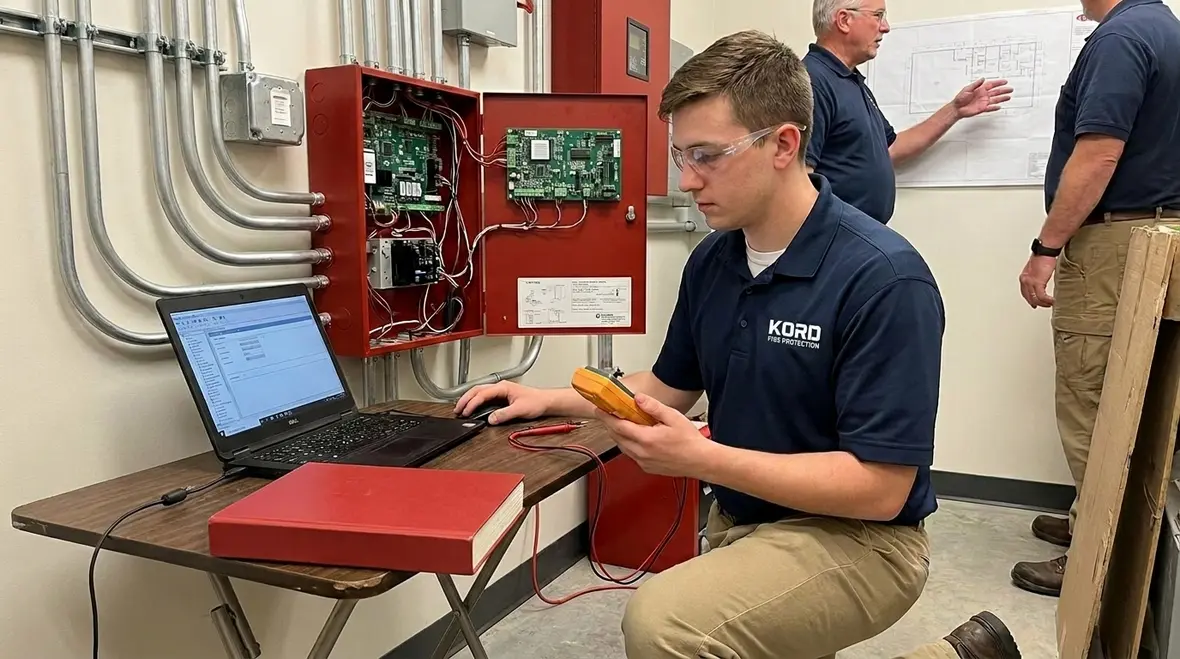
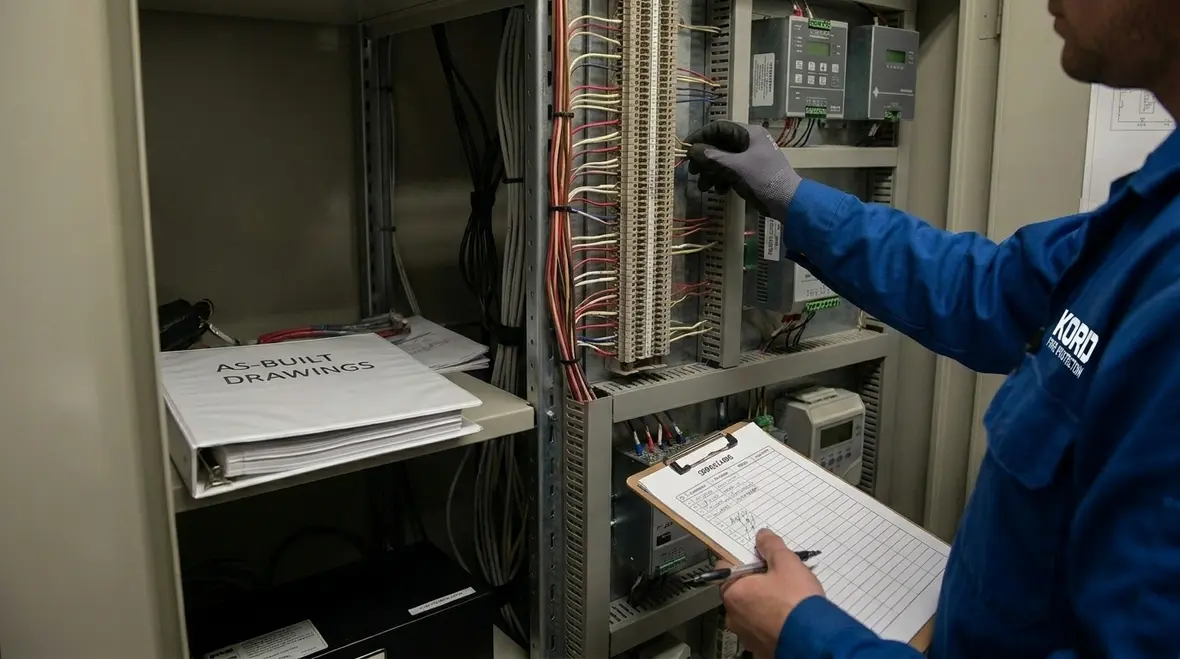
Preparation matters because fire alarm work punishes careless thinking. Kord Fire Protection technicians encourage a steady approach rather than last minute cramming. First, a technician should learn the system basics that show up everywhere: panel function, device types, supervision concepts, and typical documentation.
Next, they should study with jobsite context. For example, when someone learns about notification appliances, they should also look at how those devices get labeled, wired, and tested during real projects. Then the learning sticks. And it also reduces the risk of making “paper mistakes” that look fine on a quiz but fail during commissioning.
Then, they should practice with real materials. That includes wiring diagrams, as built records, and test procedures. Transitioning from theory to procedure creates a smoother path. Most importantly, Entry Level Fire Alarm Technicians should ask questions early, not after the third “quick fix” that becomes a “why is this trouble again” call.
Finally, they should coordinate with their supervisor. When the company supports the schedule, the technician keeps momentum and builds credibility at the same time.
Good prep looks a lot like good field behavior
The strongest study plan usually looks boring in the best possible way. Repeat the basics. Review notes. Compare drawings to the actual installation. Learn what each device is supposed to do before trying to be a hero with a meter. The trade rewards calm, repeatable habits far more than dramatic last second saves.
A clear decision framework for whether NICET Level 1 fits now
To make the call, a technician can use a simple checklist. If someone wants a long term career, works around fire alarm systems, and has access to mentoring, NICET Level 1 usually fits well. It supports growth in a way that feels practical, not performative.
However, if the technician has limited job exposure, struggles to study during shifts, or plans to switch fields soon, then waiting may make more sense. In that case, they can build hands on hours first, then pursue the credential when it connects to daily work.
Also, the credential should match the next step. If a company rewards training and certifications, then NICET Level 1 can open doors. If not, the tech can still gain value from learning, just without expecting instant payoff. Kord Fire Protection technicians often say it like this: earn the right to get paid more. NICET Level 1 can be one tool that helps, but it works best with real experience.
For technicians who want to sharpen their understanding of system performance in the real world, Kord Fire Protection also covers topics like fire alarm system reliability and battery health and what fire alarm monitoring is and how it works. Those are useful reads when the goal is not just passing a test, but understanding what makes systems dependable when it actually counts.
FAQ for quick answers
Final word: take the next step with Kord Fire Protection
NICET Level 1 can be worth it for Entry Level Fire Alarm Technicians when it matches their timeline, job exposure, and career plan. Kord Fire Protection technicians often see the strongest results when people learn with real panels in front of them and build skills that show up during service, testing, and documentation. If that sounds like your path, talk with your supervisor about study support and a plan to earn the credential. Then move forward with confidence, not guesswork.
If you are looking for a company that works with real world fire alarm systems every day, explore Kord Fire Protection’s fire alarm services to see how professional installation, maintenance, monitoring, inspections, and repairs support safer buildings and stronger technician experience in the field.

Join Our Newsletter!
Get the latest fire safety tips delivered straight to your inbox From our Newsletter.