Intelligent Upgrades for Automated Fire Alarm Notification Systems
Quick Answer: Intelligent upgrades turn fire detection into fast, coordinated alerts and safer outcomes across industrial, retail, and commercial sites. Automated fire alarm notification systems help route signals, verify device health, and support tailored evacuation plans. When paired with Kord Fire Protection, the installation, documentation, testing, and ongoing support become far less chaotic.
Upgrading to intelligent fire notification infrastructure starts with one simple goal: keep people safe while cutting down on delays, confusion, and guesswork. When businesses deploy automated fire alarm notification systems, they gain faster alerting and clearer action guidance than a basic panel can deliver on its own. However, the real value shows up after installation, during day to day operations, testing cycles, and real events. And yes, fire systems still need humans, but humans deserve good tools, not interpretive dance with flashing lights.
For facilities that want a broader partner at the same time, full fire protection services can help connect alarm work with inspections, maintenance planning, and code ready support instead of treating the notification upgrade like an isolated project.
Why intelligent fire notification upgrades matter for commercial facilities
Industrial, retail, and commercial facilities face different hazards, layouts, and visitor patterns. As a result, notification needs to match the site, not a one size template. Intelligent infrastructure helps teams manage alarms with greater control, which leads to quicker decisions and fewer false alarms causing unnecessary disruption.
In practice, this means the system can support staged alerts, priority messaging, and zone based communication that aligns with how a site actually moves. For example, a loading dock and a showroom should not receive the same notification sequence. Moreover, intelligent workflows can help supervisors confirm that evacuation steps begin in the right area first. That reduces the “everyone gather and stare at the panel” moment that no one wants, especially not under pressure.
This is where a smarter notification strategy starts paying for itself. Instead of blasting the same generic signal everywhere and hoping people sort it out, a properly designed system gives people useful direction. That difference matters in occupied spaces where customers, contractors, office staff, and site managers may all respond differently in the first few moments of an incident. Clearer alerts create calmer decisions, and calmer decisions tend to produce better outcomes.
Key components that strengthen notification performance
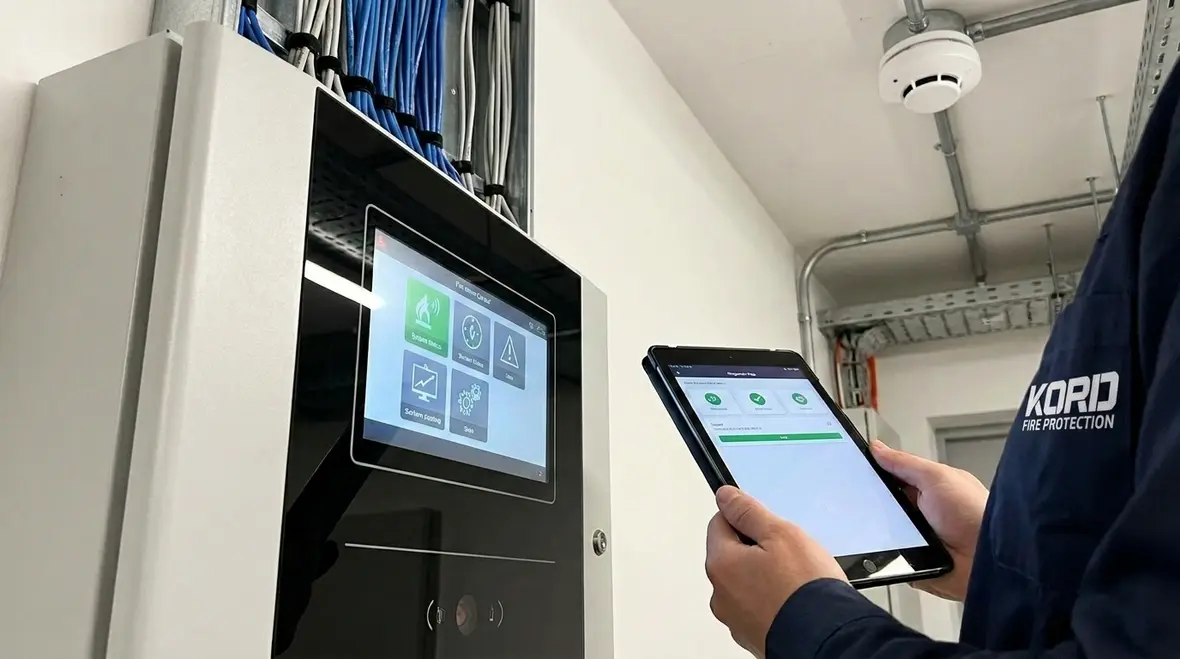
Intelligent upgrades are not just a new control panel and a few new speakers. They involve connected elements that work together like a well rehearsed team. When these pieces integrate properly, the system can communicate faster and more clearly across the whole facility.
Notification and message design
Modern fire notification relies on clear audio, visible alerts, and signage guidance where appropriate. When designed well, employees and contractors understand what to do without waiting for someone to translate the alarm like it is ancient text.
Networking and intelligent routing
Many facilities require distributed coverage across multiple buildings or wings. Therefore, the system should route signals efficiently and keep communication consistent even when networks face everyday stresses like maintenance outages. Kord Fire Protection also covers related coordination topics in its article on commercial fire alarm integration for building automation safety, which helps explain why linked systems need to speak the same language.
Device health and monitoring
Teams also need visibility into system status. With monitoring, the solution flags issues early, so faults get fixed before they become “surprise” events. And instead of scrambling at the worst time, maintenance follows a planned approach. That is one reason Kord Fire Protection also discusses what fire alarm monitoring is and how it works as part of a dependable life safety program.
Interface with operational workflows
Where appropriate, the notification infrastructure can align with other safety processes. Consequently, security teams, site managers, and incident controllers receive information that supports faster verification and better coordination. The goal is not to make the system clever for its own sake. The goal is to make it useful when real people need real direction in real time.
Once these components are designed as one coordinated setup instead of a loose collection of devices, the site gains consistency. Messages are easier to understand, device behavior is easier to test, and service teams can troubleshoot with less detective work. That means fewer headaches during inspections and fewer unpleasant surprises when a signal actually needs to move fast.
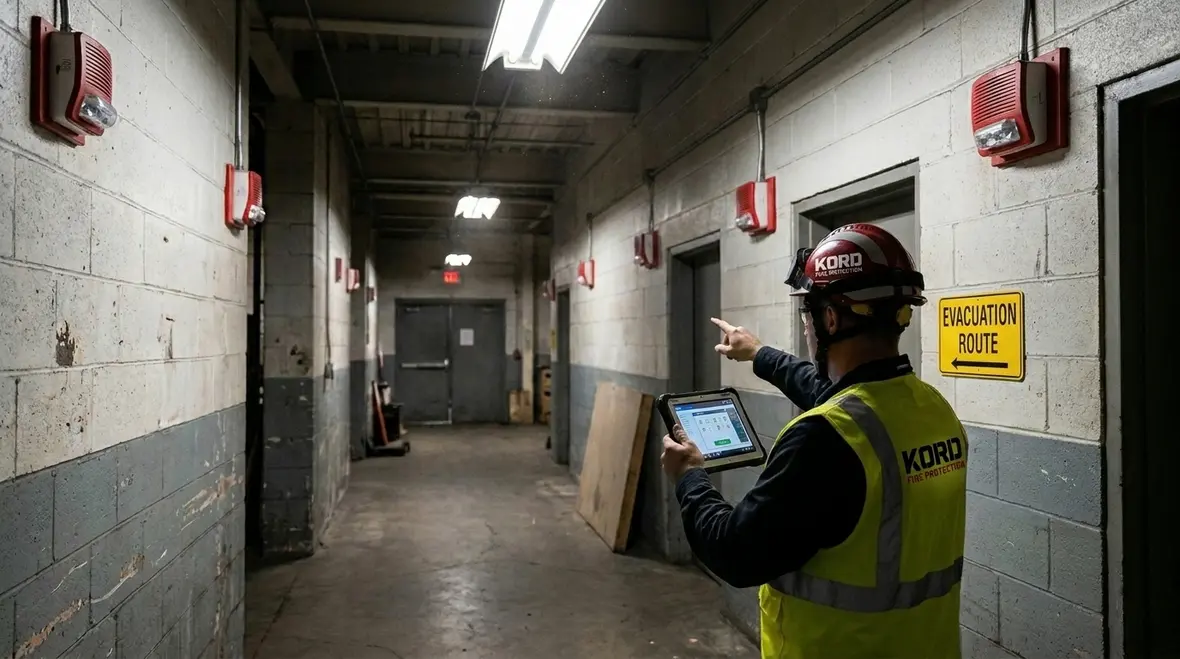
How automated fire alarm notification systems reduce alarm chaos
During an emergency, seconds matter. Automated fire alarm notification systems help facilities avoid the typical cascade of confusion that happens when signals arrive at the wrong place or at the wrong time. Instead of a single generic alert, the system can direct messages based on location, event type, and site conditions.
Consider a large retail or mixed use commercial site with offices, storage, and public areas. An intelligent notification upgrade can support targeted alerting that reduces unnecessary evacuations when a situation is contained, while still meeting compliance expectations for life safety.
Also, automation supports consistency. In other words, staff do not rely on individual memory or informal hand signals. The system delivers structured guidance and keeps the incident response repeatable. That is business value, not just a safety upgrade.
Of course, there is no magic wand. Facilities still need testing, training, and clear procedures. But the upgrade makes those steps more efficient, because the right message and the right zone get called out automatically. If you have ever seen an alarm event devolve into five people asking the same question in five different directions, you already understand why structured notification is worth the effort.
A well planned system also helps decision makers separate urgent action from unnecessary disruption. That can be especially valuable in facilities that mix public traffic, critical equipment, and restricted access zones. Smarter routing and better notification sequencing create a more controlled response, which is exactly what you want when adrenaline is trying its best to become the project manager.
Phased upgrade planning without shutting down operations
Facilities rarely have the luxury of complete downtime. Therefore, many projects work through phased installation: one area at a time, then commissioning, then verification. This approach keeps production running, keeps retail open, and keeps safety standards intact throughout the transition.
To plan effectively, teams should start with a site assessment that maps hazards, airflow considerations, typical occupancy, and emergency routes. Then they can define notification zones that match how people actually evacuate. From there, integration decisions become easier because the system architecture aligns with real movement patterns.
A phased plan also supports faster snag resolution. Instead of discovering issues at the end of the project, teams test each phase, document results, and address gaps before moving on. As any project manager can confirm, finishing strong beats sprinting through a pile of problems like it is the finale of a reality show.
Phasing is also practical from a communication standpoint. Staff can be introduced to updated notification behavior in manageable stages rather than all at once. That makes drills easier to run, reduces confusion during transition periods, and gives facility leaders time to confirm that each zone behaves the way it should before the next zone comes online.
Why Kord Fire Protection becomes a vital partner on the job
Upgrading to intelligent infrastructure requires more than equipment. It needs disciplined execution, compliant documentation, reliable testing, and a support mindset that lasts beyond the handover. This is where Kord Fire Protection becomes a vital partner.
Kord Fire Protection can support the full lifecycle of the service, including system design input, installation coordination, commissioning, and ongoing service planning. Therefore, facilities get a solution that does not just work on day one, but continues to perform under routine operational demands.
And because sites vary widely from industrial plants to retail precincts, Kord can help teams manage the differences that matter: zone layouts, public access considerations, ongoing maintenance windows, and the documentation needs that keep stakeholders confident. In business terms, it reduces risk and reduces rework. In safety terms, it supports clearer, faster notification when it counts.
That practical approach lines up with the way Kord Fire Protection discusses notification performance in its article on industrial fire alarm notification appliance circuit optimization, where the focus stays on real world performance instead of theory floating in a vacuum.
Testing, documentation, and ongoing service that keeps the system trusted
After installation, the real work begins. Intelligent systems still need structured testing and careful documentation so stakeholders can trust outcomes. Automated alerting performance relies on verified device behavior, correct zone mapping, and stable configuration.
Teams should plan for routine checks that cover alarms, notification devices, monitoring functions, and fault reporting. Additionally, they should review message clarity and ensure staff training remains aligned with the updated notification sequences. When staff understand the process, the system works as intended.
Documentation also matters. Inspection records, commissioning notes, and maintenance logs support compliance and help future upgrades run faster. Moreover, strong records reduce confusion during handovers, audits, and property transactions.
Trust in a fire notification system is built over time. Every successful inspection, every documented repair, and every clearly run drill reinforces confidence that the system will behave properly when needed. Without that discipline, even good equipment can become a source of uncertainty. With it, the system becomes part of normal operations rather than a mystery box mounted on a wall.
Featured snippet FAQ
Final words: take action now, not later
Intelligent fire notification upgrades strengthen safety, reduce confusion, and support clearer incident response across industrial, retail, and commercial facilities. When facilities plan the project in phases, test properly, and maintain the system with discipline, the results last.
Kord Fire Protection helps organizations move from concept to compliant operation with fewer surprises. Contact Kord Fire Protection to plan the upgrade and secure dependable performance when it matters.

Join Our Newsletter!
Get the latest fire safety tips delivered straight to your inbox From our Newsletter.