Fire Alarm and Building Automation Integration in Australia
Quick Answer
A smart integration between fire alarms and building automation systems helps facilities in Australia coordinate alerts, control HVAC, manage doors, reduce nuisance events, and create cleaner event visibility for operators. When done well, it improves response time, keeps operations stable, and supports compliance. Kord Fire Protection can act as a vital partner to design, test, and maintain the solution.
Near the start of that conversation, it also helps to look at the underlying fire alarm services involved, because strong integration only works when the life safety side is designed and maintained with equal care. For more context on connected systems, Kord Fire Protection also covers fire alarm integration for smarter building safety, which fits naturally with this topic and reinforces how coordinated building response should behave.
In the real world, fire life safety systems and day to day building operations often seem like they speak different languages. Yet with modern technology, fire detection and control can connect smoothly to building automation, delivering the fire alarm system integration benefits that facilities actually feel: faster outcomes, fewer surprises, and clearer guidance for occupants and responders.
That is especially true across industrial, retail, and commercial sites in Australia where uptime matters and the building never truly rests. And yes, the goal is not to turn a fire panel into a gadget that does everything, like some kind of safety themed superhero. The goal is reliable coordination, tested and maintained, so the right actions happen at the right time.
Why fire alarm and building automation need to work as one system
Fire alarms protect people, but building automation protects the process. When these systems stay separate, teams often face extra friction during emergencies. For example, the fire alarm may trigger evacuation, while HVAC continues to run until another system takes over. That mismatch can increase smoke spread, raise temperature, and add confusion to the scene.
By integrating controls and status signals, operators get a clearer chain of events. In addition, maintenance crews reduce guesswork during drills and after incidents. Therefore, the site behaves like a single coordinated safety plan rather than a collection of independent devices.
Also, integration supports better decision making. Controllers can use verified alarm states to run only the needed actions. That keeps normal operations stable until the building truly needs to transition. In a well planned setup, the fire alarm system remains the authority while the automation layer carries out approved responses without improvising like an overconfident side character.
Why coordinated response matters beyond the panel
The biggest win is not flashy software. It is predictable behavior. Doors release when they should, fans stop or shift when they should, and operators do not have to translate five different screens while everyone else is wondering what exactly just happened. That kind of order makes emergencies easier to manage and routine testing easier to trust.
Key integration points for industrial and commercial sites
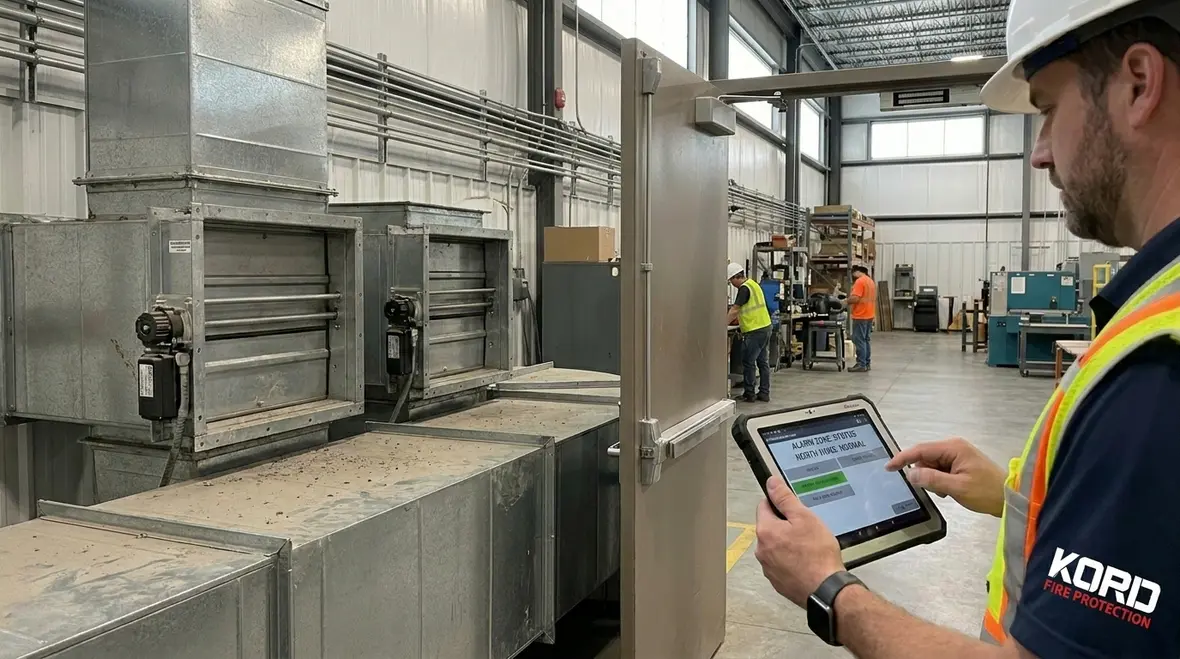
Integration works best when the facility targets high value control points. Instead of trying to connect everything, a well planned design connects what truly improves safety and response.
Common points of coordination
- Smoke control and HVAC shutdown sequences: Fire alarm states can command fans, dampers, and air handling units to support smoke management.
- Fire door and smoke barrier control: Door holding releases can align with alarm verification and zoning logic.
- Elevator recall and machine space logic: Controllers can place lifts into a safe mode when alarms activate.
- Firefighter communication interfaces: Status signals and panel states can support clear guidance to responders.
- Building management alerts and logging: Monitoring systems can capture alarm time stamps, zones, and device states for review.
Then comes the part that most people skip at their own peril. The integration must include health monitoring and fault handling. If a link fails, the site still needs to operate safely. In other words, the building cannot assume everything is fine just because a screen says it is.
This is also where clear zoning, tagging, and point mapping pay off. If an event from one smoke compartment appears under a vague or misleading label, operators lose precious time sorting out what belongs where. Clean data is not glamorous, but neither is explaining to three departments why the wrong sequence ran.
How Kord Fire Protection supports integration that stands up to reality
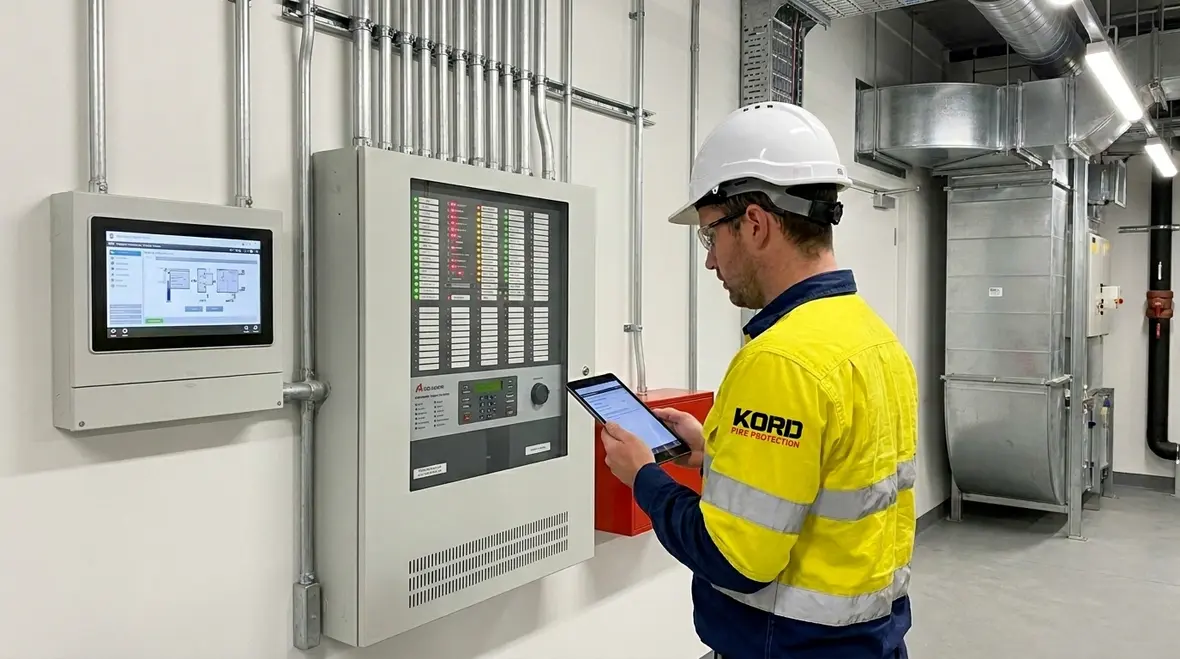
Kord Fire Protection can become a vital partner with this service job by helping facilities move beyond diagrams and into proven outcomes. Many integration projects stall during commissioning because teams discover hidden complexity: device mapping issues, mismatched zoning rules, unclear control priorities, and documentation gaps.
When Kord Fire Protection supports the process, they help ensure coordination is designed around the fire alarm system, not the other way around. That matters because fire life safety remains the authority. Meanwhile, building automation acts as the trusted execution layer for non life safety functions.
In practice, that partnership can include
- Review of existing fire alarm design and control intent before integration work starts
- Zone mapping and point to point signal planning that avoids incorrect actions
- Programming support for safe control logic and priority rules
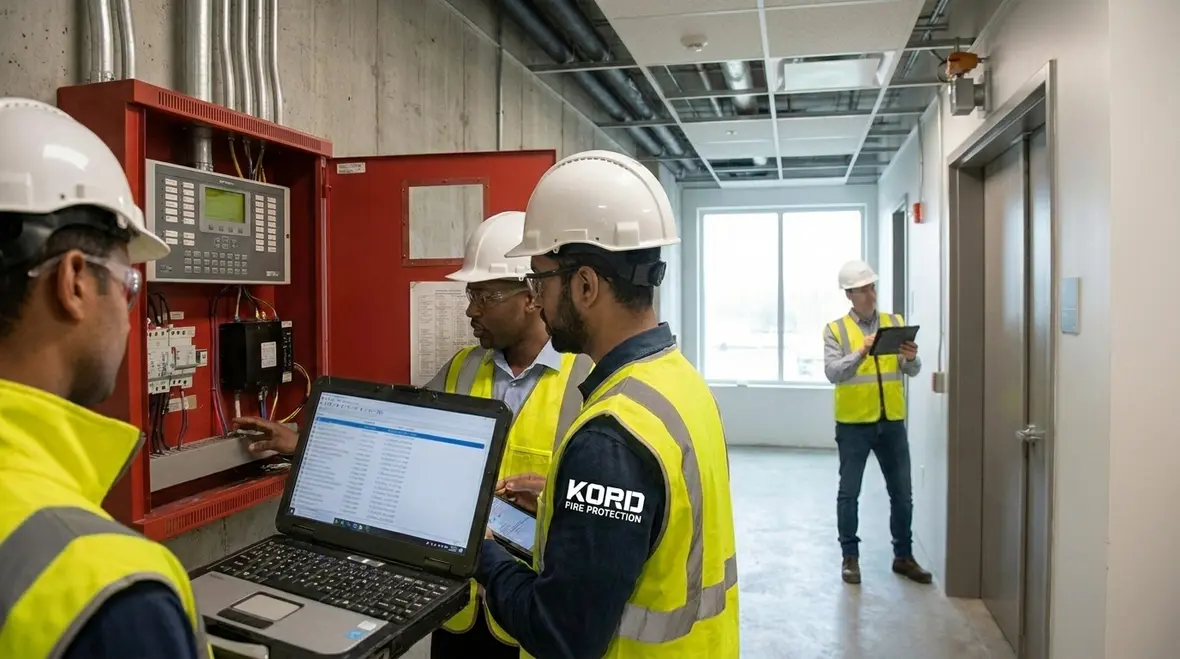
- Commissioning, functional testing, and evidence packs for operational teams
- Ongoing maintenance planning that keeps the integration stable over time
And for the record, the most expensive thing in an emergency is not hardware. It is confusion. Kord helps reduce that risk with clear verification and practical testing. That support becomes even more valuable on sites with multiple vendors, multiple tenants, or enough legacy equipment to make every plant room feel like a time capsule with cables.
Designing safe control logic without creating nuisance alarms
Integration fails when control logic reacts too aggressively. That is how nuisance events become busy events, and busy events become people ignoring alarms, which is a fun idea in movies but a terrible idea in real facilities.
To avoid that, teams should define how the building automation will react to each alarm state. For example, the logic may only command HVAC actions on confirmed conditions, or it may use delays that match the evacuation strategy.
Transitioning from normal to alarm mode also requires careful priority. If multiple zones alarm at once, the system should follow a clear rule set that prevents conflicting actions. Therefore, the design must include
- Alarm state definitions and control priority levels
- Fail safe behavior when a signal is missing or delayed
- Time delays and interlocks that match site procedures
- Verification steps for commissioning and post change checks
Additionally, integration should include a disciplined approach to point naming and tagging. When the building automation dashboard uses confusing labels, technicians troubleshoot by guesswork. That guesswork costs time. It also costs calm.
Why restraint is part of smart design
A good system does not react to every input like it has had too much coffee. It responds with intent. That means defining which events trigger which actions, which states require confirmation, and which outputs must fail safe if communications disappear. Smart integration is not about doing more things. It is about doing the right things every single time.
Commissioning and testing that proves the system under pressure
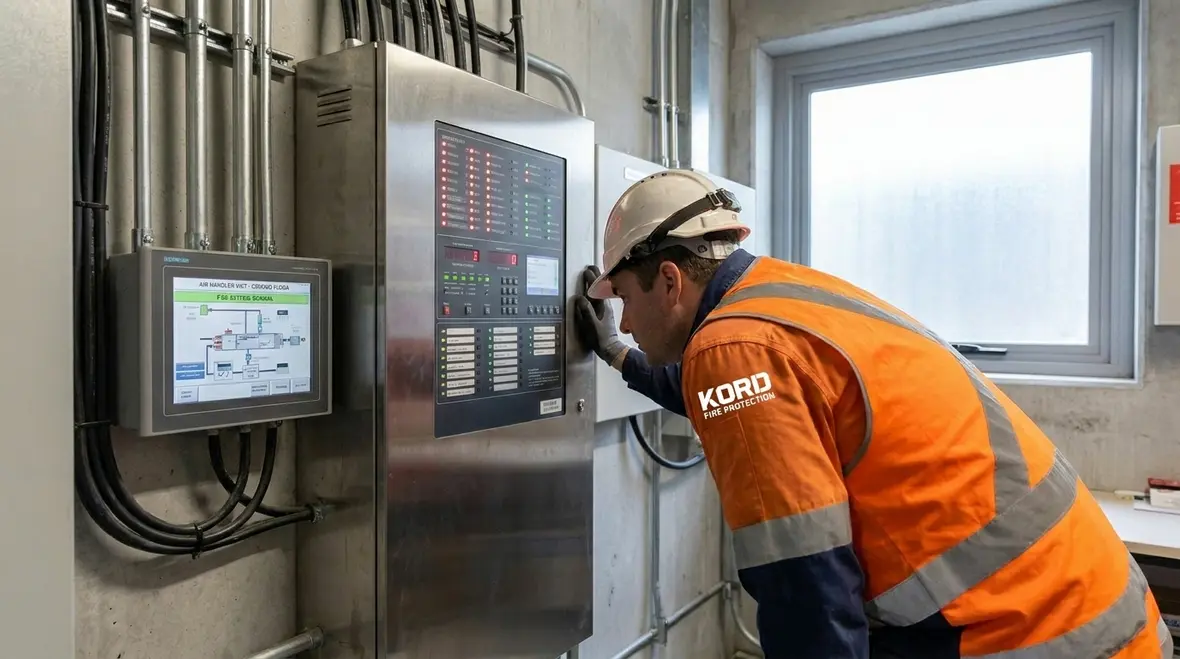
Once design is complete, the real work begins. Commissioning should test the entire chain: device to panel to automation controller to field output. If a team only tests the fire panel, it leaves a gap. Similarly, if they only test the building automation screens, it hides the real life safety behavior.
Effective testing in an Australian commercial setting often includes
- Functional tests per alarm zone, including expected automation responses
- Smoke control sequence validation with safe simulation methods
- Door release and damper operation checks with correct timing
- Alarm logging verification for post incident review
- Operator walkthroughs for clarity during actual emergencies
Then, after commissioning, teams should plan retesting whenever changes occur. A new tenant, revised ductwork, or replaced controller can affect the logic. Therefore, integration requires a living process, not a one time event.
This is where the longer term service side matters. Kord Fire Protection can help facilities keep the integration aligned with the fire alarm system and the building’s evolving footprint. Because buildings change. Systems get upgraded. Somebody relocates a wall, adds a tenancy, or swaps a controller, and suddenly yesterday’s sequence is today’s mystery.
What facilities in Australia should plan for before integrating
Facilities across Australia often involve multiple buildings, varied ages, and different vendor ecosystems. That means integration planning should start early and stay structured.
Planning steps that reduce delays
- Confirm the fire alarm system capabilities and available interfaces
- Document device zoning, control points, and intended responses
- Review building automation controller capacity and communication paths
- Assign responsibility for programming, wiring, and testing
- Define documentation deliverables and change control rules
When teams skip these steps, they often discover problems near go live. At that point, schedules start to sweat, and stakeholders start to bargain like it is a late night auction. The better approach is to plan so the site gets a dependable solution without chaos.
Early planning also makes documentation stronger. Teams can define who owns point lists, who signs off on sequence changes, and how evidence from testing will be recorded for future maintenance. That prevents the familiar situation where everybody remembers approving something, but nobody can find the paperwork.
FAQ
Conclusion: make integration a dependable safety investment
Integrating fire alarms with building automation systems strengthens coordination, supports smoke control, and improves response clarity. However, it only delivers real value when the logic is safe, documented, and tested end to end. That is what turns integration from a technical idea into a dependable operating strategy for real facilities.
Kord Fire Protection can help facilities across Australia implement and maintain this approach as a vital partner. If the site is ready to move from guesswork to proven sequences, it is time to plan the next step with them and build a response system that stays calm even when the building definitely is not.

Join Our Newsletter!
Get the latest fire safety tips delivered straight to your inbox From our Newsletter.